3 simple micro-habits to support hygienists’ well-being and resilience
Key Highlights
- Begin each day with a self-check-in and containment hug to promote calmness and emotional regulation.
- Implement micro-habits like hydration and breaks to prioritize your health without adding stress to your routine.
- Use somatic exercises at the end of the day to close stress response cycles and restore balance in your body.
- Recognize the importance of self-care in preventing burnout and sustaining a long, enjoyable career.
- Make conscious choices today that support your physical and mental well-being for a healthier future.

Are you a new hygienist who goes into work exhausted? How about when you head home? I’m not talking about just being tired. I’m talking about being emotionally tapped out, where the best you can do is get home, heat up some leftovers, and crawl into bed.
Maybe you’ve become short-tempered. Maybe you feel guilty for being so exhausted that you can’t show up for your family or friends. Or maybe you’re struggling with anxiety that sets in days before you have to go to work.
As dental hygienists and health-care professionals, we’re in a giving role. When we clock in, we’re “on,” taking care of patients, being a team player, multitasking, and navigating difficult and complex oral health-related conversations with patients.
There’s an unspoken expectation for those in caregiving roles. We’re expected to show up with smiles, energy, and empathy, to be pleasant and accommodating no matter the circumstances, and to take care of others at the expense of our own physical and emotional needs.
This is what stress and burnout experts refer to as human giver syndrome (HGS), which affects those in caregiving roles and is a large contributor to burnout.¹ However, being a hygienist and taking care of patients day after day doesn’t mean you must fall victim to HGS. Preventing it comes down to healthy stress management. Regardless of whether you’re trying to recover from or prevent HGS, these three strategies require minimal energy and take very little time.
Set yourself up for success
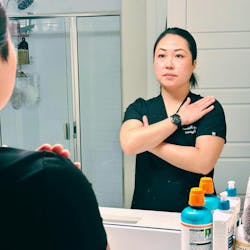
How you begin your day sets the tone for the day, so it’s important to begin by prioritizing yourself. Take 60 seconds to stand in front of the bathroom mirror for a morning self-check-in. Give yourself a containment hug (figure 1) and sway from side to side. The containment hug brings feelings of safety, security, and calmness, and the bilateral (side-to-side, repetitive, rhythmic) swaying helps regulate the nervous system.²
Then talk to yourself. I know this sounds a little crazy, but talk to yourself as if you’re talking to the child version of you. Ask, “Hey, how’re you doing this morning? I know you’re anxious, I see that. How can I show up for Little Me today? How can I reassure myself I matter?” What commitments can you make to yourself to take care of your needs today?
Commit to yourself via daily micro-habits
Some of the commitments to Little You are easy to forget, and when they become chronically neglected, the nervous system speaks up.³ This can show up in the form of anxiety. The body and brain mount stress responses that tell you they need attention and care. One of the easiest ways to reestablish that lost trust in yourself is to prioritize your basic needs—no exceptions.
This doesn’t mean neglecting your responsibilities, but it does mean working on a mindset shift that moves you from urgency and guilt to balance, self-love, and self-appreciation. You can also incorporate daily micro-habits (tiny habits that can stand alone or piggyback off another routine) into your day to build momentum toward bigger, long-term lifestyle changes.
Start small and practice just a couple of micro-habits throughout the day, such as drinking water between each patient and committing to snack and bathroom breaks as needed. My goal for you is to identify three micro-habits to work into your day that prioritize your immediate and long-term wellness, identify where you’ll practice those habits, and then execute them. It’s OK if you’re not perfect from the start—the goal is progress, never perfection.
Close the day, close stress loops
Have you ever had a workday where you didn’t feel stressed at all? Yeah, me neither. Whether it’s the stress of small daily obligations or long-term chronic stress, stress is stress, and it accumulates in the body. It can show up as tension, headaches or migraines, poor emotional regulation, and even health issues such as stroke, heart disease, and mental health conditions.
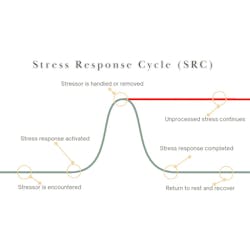
It’s imperative that you close stress response cycles (figure 2), which are the cycles the body mounts in its attempt to keep us safe.⁴ If SRCs are not completed and are allowed to accumulate, your physical and mental wellness will begin to decline.
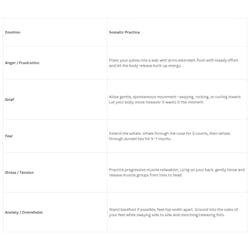
There are several ways to discharge stress, and somatic exercises and movement are excellent options. They’re fun, don’t take much time or energy, and can be done anywhere. “Soma” comes from the Greek word meaning “body,” so you’re literally using the body to heal the body. You can also pair somatic exercises with specific feelings and emotions you’re struggling to release.⁵
Figure 3 is a list of emotions paired with exercises and descriptions. When practicing these exercises, tune in to your physical sensations and your thoughts and feelings. Somatic exercises are a powerful way to communicate with yourself when it’s difficult to process emotions verbally.
Take five minutes at the end of your day to close out SRCs and bring your mind and body back to a state of balance and regulation. This can be added to your nightly skincare and oral hygiene routine or practiced between leaving work and arriving home. Regardless of when you carve out this me time, you’re showing up for yourself and committing to your well-being.
This is your reminder as we kick off another year. The decisions and commitments you make and practice today have a cumulative effect. What you choose to do with your time and energy now determines your trajectory.
Will you choose the path that leads to a fulfilling and enjoyable life with a long, fun career as a dental hygienist? Or will you choose a path that leads to physical pain and illness, a shortened career or career change, and a decline in quality of life?
You always have a choice, and being a new graduate puts you in a unique position to establish healthy habits from the start. Burnout, stress, and HGS can knock you down. But remember, you’re never alone.
References
1. Nagoski E, Nagoski A. Burnout: The Secret to Unlocking the Stress Cycle. 2020. New York, NY. Ballantine Books.
2. Gökbayrak NS, Aybar S. 4 somatic therapy exercises for healing from trauma. Psych Central. Updated July 21, 2021. https://psychcentral.com/lib/somatic-therapy-exercises-for-trauma
3. van der Kolk B. The Body Keeps the Score: Brain, Mind, and Body in the Healing of Trauma. New York, NY: Viking; 2014.
4. Understanding the stress response. Harvard Health. April 3, 2024. https://www.health.harvard.edu/staying-healthy/understanding-the-stress-response
5. Somatic self-care. Johns Hopkins Medicine. Accessed December 26, 2025. https://www.hopkinsmedicine.org/connection-support/somatic-self-care
About the Author
 Heather DeJonge, RDH, CSMC, RYT
Heather DeJonge, RDH, CSMC, RYT
Heather DeJonge, RDH, CSMC, RYT, is a clinical dental hygienist with over 16 years of experience and is known on social media as The Relaxed Hygienist. She’s a stress management and burnout consultant for dental hygienists, a registered yoga teacher, somatic practitioner, and mindfulness coach. Through CE and MeTreats—her virtual CE and wellness retreat weekends—Heather supports hygienists with practical, compassionate tools rooted in her own burnout recovery journey, helping them build sustainable self-care and long, fulfilling careers.