How dental hygiene educators can use volunteer work to elevate student learning
Key Highlights
- Blended learning in lectures and clinical settings helps reach diverse student needs and reinforces course material through practical application.
- Volunteer experiences provide students with real-world insights, foster ethical development, and enhance their resumes for future employment.
- Community outreach projects, such as working with disabled populations, empower students and demonstrate the impact of public health initiatives.
- Encouraging research and participation in volunteer work cultivates leadership, critical thinking, and technological skills essential for future roles.
- Integrating community service into dental hygiene education aligns with professional values and promotes a lived example of ethical practice.
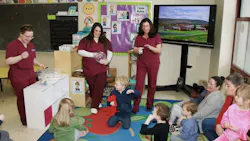
The concept of leadership is rooted firmly in education. We must understand this to be effective dental hygiene educators. We must implement blended learning styles in lectures and clinical settings to reach every student, and lead by example.1
One way that educators can lead by example is by promoting professional educational learning opportunities for their students. It’s one thing for a student to attend lecture, review course lecture materials, and read resources. But courses that provide outreach opportunities truly help students understand the purpose and retain a grasp of course material. Hands-on learning experiences emphasize the importance of the lecture.2-6
Another idea is to encourage students to research additional volunteer experiences. This can provide expanded opportunities during their educational journey and become a gateway to volunteerism. Educators that promote student volunteer opportunities provide leadership not only to their students but needed services to communities as well.
Why volunteer experiences deepen student learning
Not only will volunteer work help students truly learn the course material, but it will also give them a sense of purpose. Promoting volunteer work in the community instills ethics in students that they will carry out after graduation into their careers. It teaches character to give back with no expectations except a lived and learned experience. Students feel fulfilled and feel the impact of the difference they made.2-6
The roles of dental hygienists are amplified in volunteer work. Students may use the role of public health to bring awareness, preventive measures, and oral hygiene education to populations in need. The dental hygienist becomes the researcher when developing and creating the outreach for the populations in need. Should the student decide to write about or publish the experience to encourage other dental hygiene students, they also become a vessel of knowledge.
The role of the dental hygiene educator is created in the student as they develop lesson plans to assist the community. Creative critical thinking and technology skills are emphasized. Students get a glimpse of what they’re capable of. The experience allows them to bring their knowledge to their future office and communities. This allows them to create more volunteer events and demonstrate leadership roles in public health.7,8
Volunteering as a student boosts a student’s résumé and makes them stand out. It’s considered professional experience and makes them a cut above to potential employers. It also highlights the student’s moral and ethical character. All are important qualities employers look for.2-5,7,8
Transformative outcomes of community-based education
It’s fulfilling for an educator to be able to implement course material while helping make an impact in the community. Educators watch students carry out the course lessons in real life and gain that experience. When I taught community health lab, it was gratifying to see many students volunteer for Children’ Dental Health Month. They had required outreach assignments at local elementary schools that they were graded for. Another volunteer experience that was not required was at Springbrook, the leader for disabled patients in the state of New York.2-5,7,8
Central Region New York Dental Hygiene component joined forces with Springbrook to bring oral health education to this population in need. Although several assignments and clinical requirements were also due, many students still expressed interest. They wanted to take part in this experience and did everything they could to juggle their schedules to attend.8
The students did not fully comprehend that the experience would be such an empowering educational opportunity that would catapult them forward with advanced professional experience. I watched them implement what we discussed in the course lab, and they shined. It was such a special day, and the children at Springbrook were the genuine stars! There is plenty of excitement to volunteer again at Springbrook.8
I encourage dental hygiene educators to offer volunteer opportunities to their students. Research what is offered in your community, reach out to populations in need, and make it happen. Learning is fun and giving back to the community is what dental hygiene community health is all about. It teaches future registered dental hygienists that we must live what we teach and teach by lived example.9,10
References
1. Ashraf MA, Yang M, Zhang Y, Denden M, Tlili A, Liu J, Huang R, Burgos D. A systematic review of systematic reviews on blended learning: trends, gaps and future directions. Psychol Res Behav Manag. 2021;1(14):1525-1541. doi:10.2147/PRBM.S331741
2. Northouse PG. Introduction to Leadership: Concepts and Practice. 6th ed. Thousand Oaks. Sage Publications
3. Canavesi A, Minelli E. Servant leadership and employee engagement: a qualitative study. Employ Respons Rights J. 2022;34(4):413-435. doi:10.1007/s10672-021-09389-9
4. Lynch CD, Blum IR, Wilson NHF. Leadership in dental education. J Dent. 2019;87(8):7-9. doi:10.1016/j.jdent.2019.07.011
5. Tuononen TA, Kauhanen M, Suominen AL, Hyvärinen ML. Leadership and work community - views of graduating dental students. Leadership Health Serv (Bradf Engl). 2023;(ahead-of-print):511-523. doi:10.1108/LHS-10-2022-0102
6. Dye CF. Leadership in Healthcare: Essential Values and Skills. 4th ed. Chicago (IL): Health Administration Press: 2023
7. Professional roles of an RDH. American Dental Hygienists Association. December 30, 2024. https://www.adha.org/becomeahygienist/degree-options/dental-hygiene-programs/professional-roles-of-an-rdh/
8.Nielsen-Nathe C. Dental public health & research: Contemporary practice for the dental hygienist. 4th ed. 2017. Pearson
9. Oral conditions. Office of Disease Prevention and Health Promotion. 2025. Oral Conditions. Healthy People 2030. https://odphp.health.gov/healthypeople/objectives-and-data/browse-objectives/oral-conditions
10. Healthy people 2030: Oral health. Centers for Disease Control and Prevention. 2025. https://www.cdc.gov/oral-health/php/healthy-people-2030/index.html
About the Author
 Katie L. Pondolfino, BSDH, RDH, MAAL
Katie L. Pondolfino, BSDH, RDH, MAAL
Katie is an adjunct professor at Empire State University, where she teaches community health, leadership in health care, and health-care ethics; an adjunct professor at the University of Bridgeport in Connecticut, where she teaches dental practice management; and an instructor at SUNY Broome Community College, where she assists with all student levels in the hygiene program. She has 18 years of clinical experience and was a dental coordinator at the Greater Binghamton Health Center, a public health hospital.