When sharp instruments aren’t enough
Key Highlights
- Grip force—not just sharpness—may be driving hand fatigue. Excessive gripping during instrumentation increases muscle strain, even when instruments are properly sharpened.
- Instrument design influences ergonomics. Handle texture, diameter, and design can affect grip force, while powered scalers help reduce repetitive hand workload.
- Small changes can ease musculoskeletal strain. Evaluating grip habits, trying ergonomic instruments, and incorporating mechanized scaling may help reduce hand fatigue and improve long-term comfort.
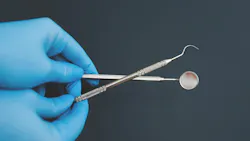
Most of us know that dull instruments require more effort to use. A dull blade leads to increased lateral pressure, more strokes, greater muscular effort during instrumentation and increased operator fatigue. Maintaining sharp instruments has long been considered one of the most effective strategies for reducing hand fatigue and improving scaling efficiency.1
Yet many dental hygienists continue to experience hand discomfort despite working with well-maintained instruments. So, what are we missing?
The topic takes me back to hygiene school. At one point, I thought my fulcrum finger would lose feeling forever. My hands were so tired and sore that learning how to use mechanized scalers became nonnegotiable. Was it all just being new? Not exactly.
Research has identified repetitive instrumentation, forceful exertions, awkward postures, and static work positions as significant contributors to musculoskeletal disorders among dental professionals.2 While these factors are well recognized, grip force is another key factor influencing muscle activity and fatigue during instrumentation.
Why grip force matters
Pinch force has been studied extensively in dental instrumentation because of its relationship to muscle activity and fatigue. Research by Dong and colleagues demonstrated that instrument design can significantly influence both pinch force and hand muscle load during simulated scaling tasks.3
The harder a clinician must grip to maintain control, the greater the demand placed on the muscles responsible for stabilization and pinch force generation. Factor in a wet environment and things can feel significantly less controlled. While a single stroke may not be significant, the cumulative effect of thousands of strokes performed over the course of a workday can be.
Handle characteristics matter
Most discussions surrounding ergonomic instruments focus on handle diameter and weight. Those factors are important, but they are not the only characteristics that influence grip force. Handle texture also plays a role.
Research evaluating dental instrument handles found that surface texture can influence the interaction between gloved fingers and the instrument handle.4 In other words, some handles simply feel more secure than others. Think about that slippery smooth octagon handle that’s been in the cassette since the Bush administration versus a handle with significant knurling patterns. Night and day, right?
Not every instrument demands the same workload
Instrument design influences the amount of muscular effort required to perform clinical tasks. Studies evaluating ergonomic instrument designs have demonstrated reductions in pinch force and muscle activity when clinicians use instruments designed to reduce physical workload, such as tapered ends.3
Similarly, mechanized scalers help reduce the cumulative demands associated with prolonged hand scaling by shifting much of the heavy grip workload from the clinician to the device itself. I often tell my patients that it does the “bulk of the work so I can fine scale more effectively for their comfort” (and my own).
The brain wants control
Every time you pick up an instrument, your brain is constantly assessing whether it feels secure in your hand. Physical factors such as handle texture and instrument design influence that assessment, but so can mental fatigue, stress, and distraction. When an instrument feels stable and predictable, the muscles of the hand and forearm can reduce the level of activation and constant intense contraction. When an instrument feels less secure, however, we respond instinctively by increasing grip force.
This response is largely subconscious. The brain prioritizes control and precision, particularly during repetitive fine motor tasks such as periodontal instrumentation.
While no single instrument can eliminate hand pain, reducing unnecessary gripping effort throughout the day may help decrease overall physical strain. If hand discomfort persists despite maintaining sharp instruments, consider evaluating other contributors to grip force:
- Assess whether you are routinely gripping harder from stress.
- Evaluate handle design and texture.
- Consider sampling instruments that are outside your normal.
- Incorporate powered instrumentation with as many patients as possible.
- Continue maintaining sharp cutting edges or consider sharpen-free instruments.
Sharp instruments remain one of the most important tools for reducing operator effort. However, sharpness is only one part of the equation. If your hand still hurts despite maintaining your instruments, it may be worth looking beyond the blade edge.
Sometimes the problem isn’t the blade, but instead the death grip your hand is using to maintain control.
Editor's note: This article appeared in the August/September 2026 print edition of RDH magazine. Dental hygienists in North America are eligible for a complimentary print subscription. Sign up here.
References
- Åkesson I, Balogh I, Hansson G-Å. Physical workload in neck, shoulders and wrist/hands in dental hygienists during a work-day. Appl Ergon. 2012;43(4):803-811. doi:10.1016/j.apergo.2011.12.001
- Hayes MJ, Cockrell D, Smith DR. A systematic review of musculoskeletal disorders among dental professionals. Int J Dent Hyg. 2009;7(3):159-165. doi:10.1111/j.1601-5037.2009.00395.x
- Dong H, Loomer P, Barr A, LaRoche C, Young E, Rempel D. The effect of tool handle shape on hand muscle load and pinch force in a simulated dental scaling task. Appl Ergon. 2006;38(5):525-531. doi:1016/j.apergo.2006.09.002
- Laroche C, Barr A, Dong H, Rempel D. Effect of dental tool surface texture and material on static friction with a wet gloved fingertip. J Biomech. 2007;40(3):697-701. doi:10.1016/j.jbiomech.2006.01.018
About the Author
 Katrina Klein, RDH, CEAS, CPT
Katrina Klein, RDH, CEAS, CPT
Katrina is an 18-year registered dental hygienist, national speaker, author, competitive bodybuilder, certified personal trainer, certified ergonomic assessment specialist, and biomechanics nerd. She’s the founder of ErgoFitLife, where she teaches that ergonomics and fitness are a lifestyle to prevent, reduce, and even eliminate workplace pain. You can reach Katrina at [email protected].