Why the conversation about bleeding gums is overdue for an update
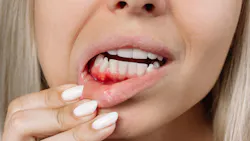
The conversation around bleeding gums may be stuck in the past. Camille Zenobia argues that it's time for dentistry to move beyond simply cleaning teeth and start thinking of the mouth as a dynamic ecosystem where the microbiome, immune system, and inflammation are constantly interacting—and influencing overall metabolic health.
In this episode of the RDH podcast, Zenobia joins Jackie Sanders and Andrew Johnston to explore why the oral microbiome deserves a fresh perspective, how emerging inflammation-based diagnostics could change patient care, and what it will take for dentistry to embrace a more biologically driven approach to prevention. It's a thought-provoking discussion that challenges conventional thinking and offers a glimpse at the future of oral-systemic care.
Episode transcript:
Jackie Sanders: Welcome back, everyone, and thank you for joining us. My name is Jackie Sanders, chief editor of RDH Magazine, and today I am spending some time with my co-host, Andrew.
Andrew Johnston: Hey, hello. Thank you for having me again, Jackie Sanders. I love joining you on this show. I'm Andrew Johnston, editor-in-chief at DentistryIQ, DentistryIQ.com. We have yet another amazing RDH Under One Roof preview show that I'm very excited about.
Jackie Sanders: We are bringing on ... Hello, Camille. How are you? Introduce yourself.
Camille Zenobia: Hi, I'm Camille Zenobia. I'm a PhD, so I'm an unusual flavor for this conference, but I've been all in on oral care.
Jackie Sanders: Excellent flavor for this conference. You're actually speaking on Friday, and to shorten the title, it's Mouth to Guts, but it's all about oral-systemic healing. Tell us a little bit, in a nutshell, about this course and why you're not going to want to miss it.
Camille Zenobia: You're not going to want to miss it because I think that the dialogue around bleeding gums is archaic. We know so much more than when we started this journey.
Andrew Johnston: Sorry, I love it. I'm giggling over here. This is great. That is how you start a podcast, everybody. Oh, by the way, the thing that we've been doing our whole entire lives—dumb, way outdated. Camille, please continue. I'm so sorry.
Camille Zenobia: I've been studying where the microbiome meets the immune system. This has been my whole career, essentially, and it's where I got excited. In science, there are so many places we know a ton about. Somehow, we first saw microbes in our mouth, and we still don't know what is happening in that landscape.
It's wild to me that we've come so far and we've dissected the gut and all sorts of other places—the brain—and yet we're still caught in this very basic science space when it comes to the mouth. It's hurting us because we know now that the mouth is the entrance to our metabolic health, and our metabolic health is really suffering in this moment.
I think anti-aging has evolved into longevity, and we know that metabolic health is the crux. We're starting to pay more attention to the mouth, but we still have these old, archaic tools. So how can we update our thinking around this space?
Why toothpaste may be teaching the immune system
Camille Zenobia: One of the things that I came across about five years ago is a pharmaceutical company called Intro Immune. They're using sublingual immune therapy to overcome allergy. Do you know what they're using to do it? Toothpaste. They're taking toothpaste, compounding it with the allergen, and titrating it. I was like, "That seems basic."
Andrew Johnston: That seems so easy.
Camille Zenobia: Right? I say it and people are like, "Why didn't anybody else think of that?" Then I started asking, what does my toothpaste do currently?
I really wanted to get at what we're using in our mouths. What are we teaching our immune system? If we're treating allergies with toothpaste, but we're not understanding what our current toothpaste is teaching our immune system, I think we've lost the thread.
Why hasn't dentistry caught up?
Andrew Johnston: That's a question I don't know if anyone's asking besides you. This is fascinating.
Can I ask something that might be way off what you want to talk about today? Is the reason we're not there yet, like other fields are, because we don't have smart enough people working on it?
Camille Zenobia: No, heck no. Some of the smartest people I know have been innovating in this area deep in academia. Maybe their challenge is communicating it to the public, but we know a lot. It's just not being applied.
Andrew Johnston: So it's not necessarily figuring out what's going on or how to combat the issues. Is it that we don't have the tools developed through R&D, or is it really that we know what's going on, we have ways to address it, but we're simply not doing it?
Camille Zenobia: I think it's multifactorial. We have a lot of tools at our disposal, but we have this stubborn industry that's hooked on one drug, really. I think it was a mistake to ever think we didn't need ongoing innovation.
The FDA monograph situation kind of hinders us because of the amount of investment needed to get over the hump. There's also this fixation on enamel health. While that's important, our gum health really sets the stage for all of it. Again, we're missing the boat on the actual crux of the issue.
If we think enamel health is the pinnacle of oral health, we're still thinking like we did 120 years ago. We're still saying, "I'm cleaning a dirty surface." That's not what we're doing. We're balancing a biological system that gets insulted constantly throughout the day.
Encouraging curiosity in the profession
Jackie Sanders: We have a population of dental professionals who are stuck in their ways and don't want to learn anymore. How do we regain curiosity? How do we get people wanting to be better and wanting to do more? Is the answer simply more education?
Camille Zenobia: I do think the providers coming out of school are more curious inherently. They're more willing to get creative, and I see that a lot.
It's the old cottage industry that's kind of stuck in the old way because they don't have to stretch as much. Once we bridge a fair number of new providers with communicating directly to the public about what's happening—because many people still think the microbiome only exists in the gut—we'll continue expanding that conversation. But it's a nuanced issue that takes time.
I think all of us need to be talking to the public more about this space because then they're going to demand things. With my own dentist, I asked, "Why aren't we using Curodont before drilling?" He said, "Because I don't know if it'll always work." I said, "I don't care. I want you to try it before we ever get out a drill. I'll experiment because I'm willing to wait and see if biology does its thing."
Looking beyond products
Andrew Johnston: Fascinating. We talk a lot about reparative products and even preventative products. It's products, products, products. Is there a diagnostic tool or something on that level that you wish we were using more?
Camille Zenobia: Yes. In fact, I just wrote a Substack because it's something I've been trying to communicate for a long time.
I basically equated metagenomic analysis to the microbiome because our genes matter for cultivating a specific type of ecology. That's going to set the stage, but it's not the whole story. Your mood plays a part. Your environment, where you grew up, everything you do in the world.
We have genetic markers that predict what's going to happen, but when I grow up in a completely different environment, I'm going to have a different landscape of bacteria teaching my immune system. That genetic backdrop isn't always going to match what we're seeing in different populations.
I think of it as an ongoing marriage. If we see it as an ongoing relationship instead of a static system, we won't feel trapped by these cycles. Everybody has been in some kind of long relationship where there are moments you're all in and moments you want to run away. It's the same.
When I get really stressed out, my microbiome gets thrown off. Everything from top to bottom is affected. Then I have to meditate my way out of it and use products that matter. But do I have to do that forever? Probably not. This isn't a static system where I'm going to use the exact same thing for the rest of my life.
Measuring inflammation instead of chasing bacteria
Andrew Johnston: So it sounds like you're leaning toward genetics and that kind of testing. Are there systems in place for that?
Camille Zenobia: I think what matters is who's angry. Who's angry in your situationship in your mouth?
Today I'm pretty relaxed, so I think the relationship is going well. Earlier this month I had way too much on my plate, and I was not okay. I'm guessing everything inside me wasn't okay either. I was passed out for two days afterward.
In those moments, I have to take extra care. I have to do the extra work to make sure I come back to my set point instead of staying at that chronic level.
Andrew Johnston: How do you find that, though? There are so many components that it doesn't seem like one diagnostic tool could tell you all of that.
Camille Zenobia: There's one that gives you a pretty good baseline, and that's inflammation.
There's one I'm really excited about: perio monitors. They're already available in Canada, and I'm waiting like a little puppy dog down here in the United States. It feels really close, but not close enough.
It's going to be about a $12 assay that you can eventually even do at home. Right now it'll probably be chairside. It takes about 10 minutes and gives you a color-coded range. If you're dark purple, you're in deep trouble. If you're very light purple, maybe you have a mild situationship happening.
Andrew Johnston: I still feel like my little pea brain can't quite understand. If you know there's inflammation, how do you know where you're looking? Is it oral inflammation? Is it systemic inflammation?
Camille Zenobia: That would be oral.
When you have inflammation in your oral cavity, you have neutrophils—white blood cells—moving through your gingival tissues. There are about 40,000 neutrophils per minute in a healthy mouth. That's a lot. In immunology we'd call that an infection, but it's actually healthy tissue function.
They're required for turnover and for having that ongoing conversation with our microbiome. When they increase and change their mood, then we're in trouble. If it's temporary, they return to healthy numbers and everything balances back to normal.
If they're chronically activated, the microbiome becomes a completely different beast. The bad bacteria grow out of control, change their metabolic functions, and become more pathogenic. They were once our friends, cleaning up tiny bits of inflammation, but now they're feeding that inflammatory state because inflammation is their food.
We have to starve them by controlling the inflammation. If we simply remove the bacteria, they'll come back by the end of the day. But if we remove their food source, they can't win. They have to die.
I think inflammation is the game.
Leaving listeners curious
Andrew Johnston: I think you're hearing that more and more. This is fascinating. I love the way your brain works. More importantly, you're explaining it in a way that makes sense to someone like me—an everyday hygienist. You're communicating it in a way that's meaningful and impactful.
I wish we had another 35 minutes to talk about this. Unfortunately, we don't. But you do have a course coming up, so we'll bring it full circle.
Camille Zenobia: I did two hours. I can talk about this all day. Let's go.
Andrew Johnston: I mean, seriously, it sounds like it.
Jackie Sanders: You have definitely stirred curiosity, and that's exactly what everybody needs to hear. If we're going to lead this change and this education, we have to spark that curiosity first. You've definitely done that. I know you have mine.
Andrew Johnston: I'm very fascinated.
Camille, before we let you go, if anyone has questions or wants to check out your Substack, where can they find you?
Camille Zenobia: I'm on Instagram as Oral Health Activist. I'm on LinkedIn as Camille Zenobia. My Substack combines Let's Get Oral, which is my podcast, and Oral Health Activist into one profile.
About the Author
 Jackie Sanders, MBA, RDH
Jackie Sanders, MBA, RDH
Chief Editor, RDH magazine
Jackie Sanders, MBA, RDH, is a respected dental industry leader with more than 40 years of experience in dental hygiene, marketing, and professional relations. As chief editor of RDH, she is dedicated to advancing the dental profession through education, innovation, and collaboration. Prior to this role, she served as manager of professional relations and communications for Sunstar/GUM, building strong connections with industry associations, educational institutions, and dental professionals nationwide. Jackie has also contributed her expertise through committee service with organizations including the American Dental Education Association and the American Academy of Pediatric Dentistry.