What the microscope reveals: How one early experience can shape the clinician you become
Key Highlights
- Viewing biofilm under a microscope shifts understanding from “plaque removal” to managing a dynamic, living microbial ecosystem and recognizing dysbiosis earlier.
- Visualizing microbes enhances patient education—seeing their own oral environment increases engagement, trust, and motivation to participate in care.
- Combining microscopy with microbial testing provides a more complete clinical picture, supporting earlier intervention, individualized treatment, and more proactive long-term disease management.
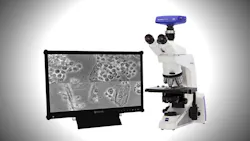
Sometimes the moments that shape us most don’t seem dramatic at the time. An ordinary day in practice may end with a tool placed in our hands before we fully understand what it will teach us. Early in our careers, many of us experience a shift that changes the way we practice forever. For me, one of those moments came when I first looked through a microscope. What I saw changed the way I understood disease, prevention, patient education, and the kind of clinician I wanted to become.
In my first practice out of dental hygiene school, I was introduced to the microscope, and it changed the way I saw oral health forever.
Up to that point, I understood plaque, as it was commonly called then, the way many of us are first taught: something we detect, disrupt, and remove. But when I began looking at slide after slide from patients’ mouths, I realized I was looking at a living, changing microbial community. I saw movement, density, behavior, and imbalance. I began to understand that oral disease is not simply about what we can see clinically; it is also about microbial shifts within the oral microbiome and what happens when that environment becomes dysbiotic.1
Seeing disease differently
The microscope can teach us to think more critically. It can move us beyond simply identifying disease and into considering what may be driving it. It can make us more curious, more observant, and more committed to early intervention.
When you begin to recognize imbalance sooner, you can respond sooner, with less invasive treatment and better long-term preservation of tissue and bone. That kind of thinking changes clinical care.
Just as importantly, the microscope can transform the way we educate patients.
There is something powerful about a patient seeing their own slide. A conversation about inflammation, infection, or biofilm becomes much more real when patients can watch activity from their own mouth on a screen. Patients begin to understand that biofilm is not just something sitting passively on the teeth. Instead, it is a living ecosystem, and when that ecosystem becomes unhealthy, the consequences may extend well beyond the mouth.2
Many of us have seen what happens when a patient can visualize what we have been trying to explain. They become more engaged. Instead of passively receiving information, they become active participants in their care.
That kind of participation matters. Patients are no longer simply being told what is wrong. They are discovering it alongside their dental professional, and that creates understanding, motivation, and trust. Research on visual aids and behavior-centered communication supports what many of us have seen in practice: patients understand, remember, and act more effectively when communication is interactive, visually clear, and personally relevant.3
A more complete picture
As much as I value the microscope, I do not believe it should be used alone. I pair it with microbial testing because together they give us a more complete clinical picture.
The microscope helps assess whether the oral microbiome appears more balanced or more dysbiotic in real time. It allows us to observe morphotypes and patterns. We may see spirochetes, amoebas, trichomonads, yeasts, and other visible forms. But the microscope does not tell us exactly which species are present, nor does it fully define risk on its own. The periodontal literature has long noted that microscopy can be useful for observing microbial shifts, while also cautioning that morphotype counts alone have limits when it comes to predicting disease activity.4
That’s where microbial testing adds value.
Microbial testing can help identify specific pathogens that may be contributing to the disease process. That matters because not all bacteria behave the same way. Some species are more destructive, some are more strongly associated with inflammation and breakdown, and some may impair host response in ways that influence healing. Microbial information can help you make more individualized decisions. Emerging evidence suggests that microbial biomarkers may also hold value in identifying risk for future progression during supportive care, although the literature still calls for continued refinement and validation.5
Microbial testing also helps us think more clearly about treatment endpoints. Clinical improvement matters, of course, but healthier-looking tissues do not always tell the whole story. We want to know whether we are truly moving the patient toward health, not simply toward temporary visual improvement. Then, at continuing care visits, the microscope can help monitor patterns over time. If signs of dysbiosis begin to return, we may have an opportunity to intervene earlier and often more conservatively.
That is one of the greatest benefits of using these technologies together. They can support proactive care. They can help us preserve as much natural tooth structure, attachment, and bone as possible. They can help us identify risk earlier, respond sooner, and partner with patients in a way that leads to stronger understanding and greater acceptance of care.
Technology in the service of healing
These technologies also deepen our awareness of oral-systemic connections.
When microbial testing identifies specific pathogens, it broadens the clinical conversation. It reminds us that what we are seeing in the mouth may not be isolated to the mouth. Periodontal pathogens and inflammation have been associated with a range of systemic conditions, and that knowledge should sharpen our judgment and expand our sense of responsibility as clinicians.6
No technology does everything. But some technologies help us see more clearly, communicate more effectively, and intervene more thoughtfully. That is where the microscope and microbial testing stand out.
Together, they can help us become better clinicians, better educators, and better partners with our patients. They help us recognize imbalance earlier, explain it more clearly, and support healing more consistently. And when that foundation is paired with sound periodontal therapy, targeted antimicrobials when appropriate, and strategies that support microbial balance and host health, we often see more meaningful healing.
Looking back, I can see that the microscope gave me much more than a view of bacteria. It gave me a way of seeing patients, disease, and prevention that has stayed with me throughout my career.
At its best, the microscope does more than magnify microbes. It sharpens the way we think, strengthens the way we communicate, and reminds us that behind every slide is a person depending on us to help them heal. When technology helps us recognize disease earlier, explain it better, and guide patients with greater precision and compassion, it becomes far more than a clinical tool. It becomes part of how we protect health, preserve hope, and elevate the care we provide every day.
Editor’s note: This article first appeared in RDH eVillage newsletter, a publication of the Endeavor Business Media Dental Group. Read more articles and subscribe.
References
- Yu N, Van Dyke TE. Periodontitis: a host-mediated disruption of microbial homeostasis. Curr Oral Health Rep. 2020;7(1):3-11. doi:10.1007/s40496-020-00256-4
- Hajishengallis G, Chavakis T. Local and systemic mechanisms linking periodontal disease and inflammatory comorbidities. Nat Rev Immunol. 2021;21(7):426-440. doi:10.1038/s41577-020-00488-6
- Mbanda N, Dada S, Bastable K, Ingalill GB, Schlosser RW. A scoping review of the use of visual aids in health education materials for persons with low-literacy levels. Patient Educ Couns. 2021;104(5):998-1017. doi:10.1016/j.pec.2020.11.034
- Greenstein G, Polson A. Microscopic monitoring of pathogens associated with periodontal diseases. a review. J Periodontol. 1985 Dec;56(12):740-747. doi:10.1902/jop.1985.56.12.740
- Chew RJJ, Goh CE, Sriram G, Preshaw PM, Tan KS. Microbial biomarkers as a predictor of periodontal treatment response: a systematic review. J Periodontol Res. 2023;58(6):1113-1127. doi:10.1111/jre.13188
- Bui FQ, Almeida-da-Silva CLC, Huynh B, et al. Association between periodontal pathogens and systemic disease. Biomed J. 2019;42(1):27-35. doi:10.1016/j.bj.2018.12.001
About the Author
 Kathryn Gilliam, BA, RDH, MAAOSH, HIAOMT
Kathryn Gilliam, BA, RDH, MAAOSH, HIAOMT
Kathryn is a Lead Clinical Coach for Inspired Hygiene. Kathryn’s interest in the medical side of dentistry led her to years of advanced study with the American Academy for Oral & Systemic Health. Voted the Nifty Thrifty Hygiene Educator of the Year, Kathryn delivers impactful continuing education with humor and enthusiasm. To learn more about integrating oral-systemic science into your clinical protocols, contact Kathryn at [email protected].