What clinicians miss in oral cancer screening: It’s not just intraoral
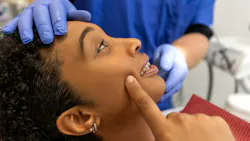



A thorough screening is less about adding time and more about applying structure—what gets assessed, documented, and followed is what ultimately defines clinical value.
Episode description
This episode outlines a structured approach to oral cancer screening that integrates medical and dental history, patient-reported symptoms, and comprehensive extraoral and intraoral evaluation. Particular attention is given to identifying risk factors such as HPV exposure, recognizing oropharyngeal symptoms, and conducting systematic palpation of lymph nodes, thyroid, and oral tissues.
The discussion also challenges common documentation shortcuts, emphasizing the importance of detailed recording, baseline measurements, and photographic tracking of abnormalities. The result is a more defensible, clinically rigorous screening process that supports early detection and ongoing patient monitoring.
You can download a guide to the Cotten Method of Screening here.
Key takeaways
- Oral cancer screening begins before the clinical exam, with targeted medical and dental history questions that surface risk factors such as HPV exposure and prior lesion identification.
- Patient-reported symptoms—including dysphagia, voice changes, and unexplained pain or masses—can signal oropharyngeal concerns that warrant further evaluation.
- A complete extraoral exam includes visual and tactile assessment of facial structures, lymph nodes, thyroid, and high-risk areas like the vermilion border.
- Intraoral evaluation should systematically assess all mucosal surfaces, salivary gland function, tongue anatomy, and oropharyngeal structures.
- “WNL” documentation is insufficient; clinicians should record specific findings, variations of normal, and measurements to establish meaningful baselines.
- Photographic documentation of abnormalities supports early detection, monitoring, and clinical decision-making over time.
Editor's note: This episode was originally published April 25, 2024, and this page was updated with new information about the episode on April 8, 2026.
Full episode transcript
Andrew Johnston
You're listening to Fast Facts: Ask the Expert with Katrina Sanders.
Katrina Sanders
Hello, and welcome to Ask the Expert. My name is Katrina Sanders, and this week I will be your expert, guiding you through the importance of a comprehensive extraoral and intraoral examination. And most specifically, I will be walking through the keys to an effective oral cancer screening.
Oral cancer awareness and clinical responsibility
Happy April, and happy Oral Cancer Awareness Month. It is important for us as oral healthcare practitioners to recognize that oral cancer is, in fact, the cancer of our profession. And with increasing levels of patients experiencing HPV-related oral cancer lesions, it becomes critical for us to be prudent clinicians in identifying potential complications of oral cancer patients.
Starting with the medical and dental history
So let's start with the beginning. And by that, I mean the moment the patient sits down in the chair and we perform a medical history review. This medical history review can look for some of the risk factors associated with oral cancer, like gastroesophageal reflux disease, for example.
Many of us are already asking our patients things like, have you been vaccinated for HPV? Or even asking about genetic history of lesions running in the family. We can also capture a dental history, asking the patient if they've had previous providers explain that there were variations of normal or unique types of lesions detected in the head and neck region. Oftentimes, patients are having dermatologists evaluate the head and neck area or other providers evaluating things like the thyroid area.
So this offers us an opportunity to really partner alongside many of our medical colleagues.
Patient-reported symptoms and risk indicators
Then, after we perform that medical history and dental history examination, we're going to move on to patient report. We want to ask our patient things like, do you experience ear pain, jaw pain, popping or clicking of the jaw? Do you ever notice that your jaw locks, either open or closed?
Do you experience headaches? This can give us a lot of information about TMJ issues. We could ask our patient things like, are you noticing numbness in the back of the throat? Do you notice any changes in the quality of your voice, hoarseness of your voice? Does it feel like it's difficult for you to swallow?
Do you experience any pain, or do you feel any lumps or masses? These persistent signs, stages, or symptoms could be another key indicator of a potential oropharyngeal issue.
Extraoral evaluation
Then we glove up, and we go in. And this begins with an extraoral evaluation. The extraoral evaluation should begin with a visual examination, looking at things like facial symmetries and even curvature of the spine.
We can evaluate the skin of the face, the nose, the ears; for our balding patients, even the top of the scalp. And we are looking for observations and changes in pigmentation. Perhaps we're looking for things like xanthomas or fatty deposits, facial varicosities, or even yeast or fungal infections.
We palpate the temporomandibular joint to assess for any TMJ disorders, the entirety of our lymph nodes—that would be our submental, submandibular, sublinguals, as well as our deep cervicals and our supraclaviculars. We would even do an assessment of that vermilion border, which we know is absolutely an area of concern for potential skin cancers. Finally, we would palpate the thyroid area, asking the patient to swallow to evaluate for movement.
Intraoral examination
Then we perform our intraoral examination. And that intraoral examination comprises visualization, tactile palpation of the mucosal tissues, buccal and lingual mucosa. We are palpating the floor of the mouth, that mylohyoid area.
We're oftentimes milking those salivary glands to see if we're seeing any movement of saliva out of those portals. We're also evaluating the tongue, looking at those lateral borders, the dorsal and ventral surfaces of the tongue. We're also looking at the oropharyngeal areas.
So, beginning with that hard palate, then moving to the soft palate, the uvula, evaluating that back wall of the throat and looking at tonsillar or adenoid relationships. So, looking at tonsillar pillars and palatine tonsils, and many of us are capturing things like a Mallampati classification to identify potential airway complications.
Many of us are also looking at the various frenal pulls in the oral cavity, evaluating risks for ankyloglossia, and also evaluating the movement of that maxillary labial frenum.
Documentation and clinical rigor
This combination of medical history review, patient report, then performing visual and tactile extraoral and intraoral evaluation should be comprehensively documented. Gone are the days of putting in WNL, which jokingly stands for “we never looked,” and instead capturing the details of even variations of normal, measuring things like a patient's tori, for example, which, if we observe growth, may require intervention down the road.
Of course, any time that you see a concern, an abnormality, documenting the size, the shape, the bordering, color observations, and capturing an intraoral photograph of the area is critical for early assessments, early documentation, and, of course, subsequent monitoring.
Closing perspective and resource
My hope is that this provided a nice over-the-balcony view of what a relatively comprehensive, effective oral cancer screening should look like. Although, yes, we do, in fact, talk about the importance of screening for oral cancers, we know that various changes in the tissues of the head and neck can give us a lot of information about our patients' overall health.
And so, becoming diagnosticians and optimal assessment clinicians when it comes to changes of these tissues is a critical aspect of our ability to screen our patients. I do want to do a shout-out to my dear friend, Susan Cotton, the inventor, the beautiful brains behind the Cotton Method.
In the show notes below, I'm going to include a link for you. This link is to a resource where you can download the Cotton Method Guide, a chairside screening guide developed by the incredible Susan Cotton to aid in comprehensive oral cancer evaluations.
With that, thank you so much for joining me, Katrina Sanders, for another episode of Ask the Expert. I look forward to seeing you next month. Please feel free to reach me on Instagram at thedentalwinegenist or on my website, www.katrinasanders.com. Cheers.
Andrew Johnston
Thank you for listening to Fast Facts: Ask the Expert. If you have a topic you'd like one of our experts to answer, simply email me at [email protected], and we will get on the air as soon as possible. Thanks for listening.
About the Author
 Andrew Johnston, RDH
Andrew Johnston, RDH
Andrew Johnston, RDH, is your everyday hygienist who is passionate about sharing education and knowledge to others. Practicing in Washington State since 2009, Andrew enjoys utilizing his full scope of practice through traditional and restorative procedures on any given day—still working in the operatory 40-plus hours each week. In 2015, he started the wildly popular dental hygiene podcast A Tale of Two Hygienists with his cofounder Michelle Strange. Because of the podcast's success, they were able to begin a new chapter in dental audio content with The Dental Podcast Network, which consists of 10 short-format shows on different dental topics airing each day of the work week.
 Katrina M. Sanders-Stewart, MEd, BSDH, RDH, RF
Katrina M. Sanders-Stewart, MEd, BSDH, RDH, RF
A clinical dental hygienist, author and international speaker, Katrina is passionate about elevating the dental profession by creating an undeniable movement that educates, encourages, and empowers the profession to rise in its power. Known as the “Dental WINEgenist™,” she pairs her desire for excellence in the dental industry with her knowledge and passion for wine. She is the Clinical Liaison for Hygiene Excellence at AZPerio, founder of Sanders Board Preparatory and has been published in various publications including RDH Magazine and Dental Academy of Continuing Dental Education. Recently, Katrina proudly received the University of Minnesota Distinguished Alumni Award and the 2024 Sunstar Award of Distinction. @TheDentalWINEgenist [email protected].