5 tips to the perfect inferior alveolar injection
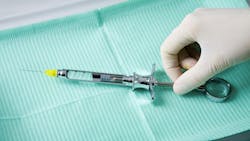
The inferior alveolar (IA) nerve block is one of the most frequently administered local anesthetic techniques you’ll do as a clinician, yet it is one of the most technique-sensitive. Failure rates are often related not to the anesthetic solution itself, but to errors in landmark identification, needle depth, aspiration technique, or rate of deposition. Understanding and refining key elements can significantly improve anesthetic success and patient comfort.
Here are five tips to make sure your IA is successful.
RDH CLINICAL TOOLS
Keep this protocol handy. Download a printable quick-reference guide to the inferior alveolar nerve block, including landmarks, syringe positioning, aspiration, and common technique errors.
Look for consistent external landmarks to get the correct angle
Proper syringe alignment begins before needle insertion. Position the syringe barrel over the premolars, which typically aligns with the contralateral labial commissure when the patient opens widely. This external landmark helps guide the syringe toward the pterygomandibular space and maintain proper orientation. Incorrect barrel positioning can cause the anesthetic to be deposited too far anterior or posterior, reducing effectiveness.
Visualize the pterygomandibular depression
Successful IA anesthesia requires accurate placement within the pterygomandibular depression, which is the depression between the pterygomandibular raphe and the coronoid notch. Clinicians should palpate the coronoid notch, identifythe internal oblique ridge, and visualize the target area prior to insertion. Relying on a thorough understanding of three-dimensional anatomy, rather than guessing, improves predictability and reduces failed blocks. Inserting at the right height into the fossa will get you above the lingual which overhangs the mandibular foramen. To better visualize the pterygotemporal depression, check out this video.
Insert the correct depth of needle insertion
You have to get as close to the inferior alveolar nerve that runs right along the bone before it enters into the mandibular foramen. Insert two-thirds to three-fourths of the long 25-gauge needle, approximately 20 to 25 mm. You’ll find that the bone may be gently contacted. If you do contact bone back up 2-3 mm, aspirate and deposit. Inserting too shallow may result in inadequate anesthesia, while over-insertion increases the risk of premature bony contact or patient discomfort. Slow, controlled advancement allows the clinician to gauge resistance and adjust as needed.
Aspiration is key to ensure patient safety
The inferior alveolar region has a higher incidence of positive aspirations compared to other injection sites. Standard recommendations include aspirating at least twice on two planes. Rotating the syringe between aspirations to sample different planes. Proper aspiration reduces the risk of intravascular injection, which can lead to systemic reactions or complications. Aspiration should be deliberate and never rushed.
Control the rate of deposition
The injection pain is often related to tissue distension caused by rapid deposition. A slow delivery allows tissues to accommodate the solution and significantly improves patient comfort. The recommended rate is 1.5 mL of anesthetic over a minimum of 60 seconds. Maintaining a slow, steady pressure not only reduces pain but also enhances patient trust and overall experience.
Achieving consistent success with the IA injection requires attention to detail, anatomical knowledge, and controlled technique. By using reliable landmarks, inserting to the correct depth, aspirating appropriately, and delivering anesthetic slowly, clinicians can improve anesthesia outcomes while minimizing patient discomfort. Refining these fundamentals supports both clinical excellence and patient-centered care.
About the Author
 Shelley Brown, MEd, BSDH, RDH, FADHA
Shelley Brown, MEd, BSDH, RDH, FADHA
Shelley is a dental educator, speaker, content creator, and mobile clinician dedicated to advancing accessible and innovative dentistry. As co-owner of HYGIENE edgeUCATORS, she empowers dental educators through professional development. Since 2009, she has taught at the Utah College of Dental Hygiene and founded Homebound Smiles, a mobile dental practice serving underserved patients. She received the 2026 Sunstar World Dental Hygienist award for her work in public health. You can find her on social media as Shelley_The_Hygienist and at www.shelley.dental.