Social media and mouth taping benefits: Facts or fiction
Key Highlights
- Social media platforms such as TikTok, Instagram, and YouTube are driving the rise of mouth taping, often promoting health claims that lack strong scientific evidence.
- Current research shows limited clinical support for mouth taping’s alleged benefits—such as improved sleep, reduced snoring, and caries prevention—while potential risks and side effects are frequently underreported online.
- Dental hygienists play a critical role in countering misinformation by providing evidence-based guidance, fostering open patient conversations, and promoting critical evaluation of health trends shared on social media.
Introduction
In recent years, social media platforms such as Instagram, YouTube, and TikTok have had the greatest impact on individuals' daily activities1—from promoting skincare products to cooking the top-trending recipe. Beyond videos, specific comments and claims on social media platforms can be powerful tools for influencing individuals' beliefs, opinions, and choices regarding particular issues and/or products. Skincare and recipes are just the beginning; when closely examining social media platforms, claims about health-care-related topics can be overlooked or prove highly detrimental. Recently, a trending health-care-related discussion on social media, mouth taping, has become popular, especially among younger audiences.
In today’s digital landscape, social media isn’t just about sharing videos and humorous memes; it has become a platform that shapes our beliefs and choices, particularly when it comes to health and wellness. From skincare routines to trending recipes, these platforms influence what we buy and how we care for ourselves.
One intriguing topic gaining momentum—especially among younger audiences—is mouth taping. This practice has sparked a wave of online discussion, but it’s essential for dental hygienists to examine mouth taping more closely. This has led many individuals to post claims about the benefits of mouth taping, including oral-facial changes, improved sleep quality, reduced snoring, and other health benefits.2 These assertions are often shared with little scrutiny, leading individuals to adopt practices grounded in anecdotal evidence rather than scientific evidence. As individuals navigate their own health decisions, they are increasingly swayed by others' testimonials, which may be rooted in misinformation rather than factual accounts. Consequently, it is imperative for dental hygienists to examine the intricate relationship among social media influence, the emerging body of research on practices such as mouth taping, and the pressing need to engage actively in these conversations.
Background on mouth taping
Mouth taping has become a popular trend on social media platforms due to claims that it enhances sleep, eliminates snoring, prevents xerostomia, improves dental health, and reduces halitosis. This is part of the “Healthy TikTok” trend that many people have gravitated toward, following healthy habits based on unverified claims.3
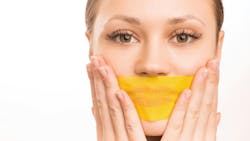
A tape is placed over the lips throughout the night to promote nasal breathing in individuals who mouth breathe. It is composed of either medical- or nonmedical-grade tape and features premade mouth strips, hypoallergenic properties, and athletic tape.4 Mouth-taping products often contain a variety of beauty and skin care ingredients aimed at enhancing overall skin health and appearance. In addition to hyaluronic acid, common ingredients in these products include collagen, aloe vera, vitamin E, jojoba oil, essential oils, peptides, and ceramides. These ingredients can enhance the benefits of mouth taping by promoting hydration and overall skin health during sleep.5 Lastly, the tape can also come in specialized designs such as wide, tall, large, small, different fabrics, and either fully or partially covering the opening of the oral cavity.
What does the evidence say?
In a scoping review conducted by Frangmeyer, Badger, and Thaklar, the authors examined “mouth taping and TikTok.”6 A total of 379 articles were retrieved from databases, including PubMed, Embase, and MEDLINE. Following a thorough screening process, 202 studies were evaluated based on their titles and abstracts. Ultimately, 15 full-text studies were assessed for eligibility, and nine were included in the final review. The study sites were located in various regions worldwide. The study population comprised articles for final review on health subjects, including snorers without sleep apnea, individuals diagnosed with sleep apnea, and patients with symptomatic asthma or respiratory failure during sleep.
Simultaneously, a review of TikTok content suggests that approximately 36% of videos make claims about the benefits of improved sleep quality and enhanced oral hygiene, and that, among the TikTok videos in the study, 24% specifically claim that mouth-taping practices can prevent dental caries. The authors further note that only 20% of the videos discussed risks and side effects. Importantly, the authors report that 24% of the reviewed TikToks featured medical professionals providing information.
Discussion
Many of these claims on social media platforms lack robust scientific evidence, leaving both dental hygienists and patients vulnerable to misinformation/disinformation. The promotion of mouth taping on platforms such as TikTok often relies on anecdotal testimonials rather than data-driven evidence. For instance, videos that advocate mouth taping as a remedy for snoring or sleep apnea fail to cite any systematic reviews or clinical studies that substantiate these claims. Additionally, many influencers neglect to discuss potential risks and side effects, such as anxiety or discomfort associated with restricted breathing during sleep, which could exacerbate underlying health issues for some individuals.
To address concerns about promoting mouth taping, it is essential that more rigorous studies be conducted to assess its safety and efficacy. Current anecdotal evidence does not provide a comprehensive understanding of the potential benefits and risks associated with this practice.
Controlled clinical trials could help determine whether mouth taping genuinely offers relief for conditions such as snoring or sleep apnea and identify any long-term effects on respiratory health. By prioritizing scientific research, we can ensure that dental hygienists and patients are equipped with reliable information, enabling them to make informed decisions regarding their health and well-being.
Dental hygienists play a crucial role in addressing this landscape of misinformation. Their unique position in oral health care enables them to engage in dialogues with patients about emerging trends while providing evidence-based guidance. It is crucial for dental hygienists to remain updated on the latest research concerning mouth taping and its significant effects on both oral and systemic health. Understanding these developments equips dental professionals to provide informed recommendations to their patients. Moreover, being aware of the individual oral hygiene practices that patients engage in daily allows hygienists to tailor advice and interventions that can enhance overall well-being. By prioritizing continuous education in these areas, dental hygienists can better advocate for their patients' health, fostering a more proactive approach to oral care. Staying informed is not just beneficial; it's essential for improving patient outcomes and advancing the profession.
Furthermore, dental hygienists should be prepared to discuss the limitations of social media as a reliable source of information. While these platforms may foster community engagement, they often prioritize sensational content over factual accuracy. By helping patients critically evaluate the information they encounter online, dental hygienists can empower them to make informed decisions about their health.
Encouraging open communication with patients about their interest in emerging practices, such as mouth taping, also allows dental hygienists to dispel myths and clarify misconceptions. It is essential to create a safe space for patients to express their curiosity without fear of judgment. By doing so, dental hygienists not only foster trust but also position themselves as credible sources of information in an era where misinformation spreads rapidly.
As mouth taping continues to captivate attention on social media, dental hygienists must be vigilant in addressing the unsubstantiated claims associated with this practice. By actively engaging in informed discussions, providing evidence-based resources, and guiding patients toward safe and effective oral health practices, hygienists can navigate the complexities of social media influence and ultimately enhance patient care.
Author’s note: This article was written with the assistance of artificial intelligence.
References
- Lau N, Srinakarin K, Aalfs H, Zhao X, Palermo TM. TikTok and teen mental health: an analysis of user-generated content and engagement. J Pediatr Psychol. 2025;50(1):63-75. doi:10.1093/jpepsy/jsae039
- Blum D. Can a piece of tape help you sleep? The New York Times. November 17, 2022. Accessed January 10, 2026. https://www.nytimes.com/2022/11/17/well/live/mouth-taping-benefits-sleep.html
- Mouth taping: the latest social media trend. American Dental Association. Accessed January 10, 2026. https://adanews.ada.org/huddles/mouth-taping-the-latest-social-media-trend/
- Farrell N. I tried 10 different mouth tapes. Here’s what you need to know (and which to try). Wired. August 1, 2025. Accessed January 10, 2026. https://www.wired.com/story/the-wired-guide-to-mouth-tape/
- Rathnayake N, Fadhl BM. The role of hyaluronic acid and other skin care ingredients in dermatology. J Cosmet Dermatol. 2020;19(10):2499-2505. doi:10.1111/jocd.1389
- Fangmeyer SK, Badger CD, Thakkar PG. Nocturnal mouth-taping and social media: a scoping review of the evidence. Am J Otolaryngol. 2025;46(1):104545. doi:10.1016/j.amjoto.2024.104545
About the Author
 Alexia Pham, BSDH(c)
Alexia Pham, BSDH(c)
Alexia Pham is a 2026 candidate for the Bachelor of Science in the School of Dental Hygiene Studies at Pacific University, Hillsboro, Oregon. She earned her Bachelor of Science in Public Health in 2024 from Portland State University. For more information, email her at [email protected].
 Erica Truong, BSDH(c)
Erica Truong, BSDH(c)
Erica Truong is a 2026 candidate for the Bachelor of Science in the School of Dental Hygiene Studies at Pacific University, Hillsboro, Oregon. For more information, email her at [email protected].
 Kristen Simmons, PhD, MHA, BSDH, RDH EPDH, FADHA
Kristen Simmons, PhD, MHA, BSDH, RDH EPDH, FADHA
Kristen is a Pacific University School of Dental Hygiene Studies assistant professor. She earned her PhD in 2020 and MHA in 2010. She has a BSDH from Eastern Washington University and an AAS in dental hygiene from Parkland Community College. For more information, email her at [email protected].