How can I provide quality care in a 45- to 60-minute dental hygiene appointment?
Key Highlights
- Shift the mindset from “do everything now” to long-term care: Focus on moving patients forward over time rather than completing every task in a single visit to reduce pressure and improve outcomes.
- Use efficient biofilm management to reclaim time and reduce strain: Modern techniques can streamline care, improve patient comfort, and free up time for higher-value interactions.
- Prioritize visual, meaningful patient education: Showing patients the “why” behind their condition increases engagement, drives behavior change, and leads to better long-term oral health.
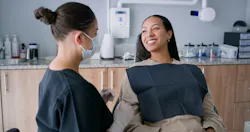
Question: “I only have 45–60 minutes per patient, and I constantly feel rushed trying to complete everything to a high standard. How can I provide quality care without burning out or cutting corners?”
Answer from Sarah Crow, RDH: This may be one of the most common stressors in dental hygiene, hands down. Think about it: hygienists are often operating as a true “one-man-show.” We set up, we break down, we deliver care, we educate, we document, and we manage the clock—all while striving for clinical excellence. The expectations are high, the schedules are tight, and support is limited.
Somewhere along the way, many clinicians begin to normalize the pressure. We tell ourselves, “Just this one time,” as we compromise ergonomics for a patient who can’t tolerate the supine position. We push through discomfort to stay on schedule. We try to fit comprehensive care, medical history review, periodontal charting, radiographs or scanning, biofilm management, patient education, and documentation into an appointment that often doesn’t reflect the true time required.
And the result? Everyone feels it.
The clinician leaves physically and mentally drained. The patient often leaves confused, unsure of what was found, what it means, or what they should do differently. Sometimes they even carry a sense of shame, feeling like they’ve somehow failed, without ever being clearly guided on how to improve. Meanwhile, disease continues to progress every six months.
How we’re using the time we have
It raises an important question: Is the issue really time, or is it how we are using the time we have?
A wise woman once told me, “This is a marathon, not a sprint.” In other words, oral health is not achieved in a single visit. It’s built over time. Dental hygiene care is a long-term partnership, not a one-time performance. If we change our perspective and shift from “completing everything today” to “moving the patient forward today,” the pressure begins to ease and the quality of care often improves.
Modern approaches to biofilm management can make the difference
This is where modern approaches to biofilm management and patient communication can make a massive difference.
Instead of centering the appointment around mechanical removal alone, many clinicians are incorporating technologies and protocols designed to more efficiently disrupt and remove biofilm while enhancing patient comfort. These approaches often use a combination of air, water, and fine powders to gently and effectively remove biofilm from tooth surfaces, restorative materials, and even challenging areas such as around orthodontic appliances or implants.
The benefits are not just clinical—they are practical—and hygienists often report switching to this type of protocol addresses our inherent challenges as dental hygienists.
Meaningful patient education
When biofilm removal becomes more efficient and less physically demanding, clinicians can reduce the time and strain associated with traditional methods. This creates space within the appointment for what I believe is the true purpose of the dental hygiene appointment: meaningful patient education.
Equally important is the use of visualization tools. When patients can actually see the biofilm with disclosing agents, it elevates the conversation. Instead of being told they have inflammation or bleeding, they are shown the cause. As my dear friend Melissa Obrotka always says, “the mind can’t know what the eye can’t see.” This transforms the dynamic from passive compliance to active participation. Patients are no longer being lectured; they are being engaged.
And engagement drives behavior change.
When patients understand what’s happening in their own mouths, they are more likely to take ownership of their home care. That, in turn, reduces the burden on the clinician at the next visit.
A more intentional use of time
Over time, appointments become less about “catching up” and more about maintaining health.
None of this eliminates the time constraints entirely. But it does allow for a more intentional use of time, focusing on what will have the greatest long-term impact rather than trying to do everything at once.
It’s also worth acknowledging the importance of boundaries and advocacy. Not every schedule template supports high-quality care, and not every expectation placed on hygienists is realistic. Creating change may involve conversations with employers about appointment length, workflow efficiency, or the integration of newer technologies that support both patient outcomes and clinician well-being.
By prioritizing efficient biofilm management, enhancing patient understanding and comfort, and embracing a long-term view of care, hygienists can begin to move from a cycle of constant pressure to one of sustainable, effective practice. And perhaps most importantly, both the clinician and the patient can leave the appointment feeling more confident, more comfortable, and more in control of their next visit.
More from the author:
- To side gig or not to side gig?
- Why is my dentist resistant to implementing SDF in the hygiene practice?
Editor’s note: This article first appeared in RDH eVillage newsletter, a publication of the Endeavor Business Media Dental Group. Read more articles and subscribe.
About the Author
 Sarah Crow, RDH
Sarah Crow, RDH
Sarah started in the dental profession in 2004. She’s earned numerous awards, including 2018 Component Hygienist of the Year and the 2021 Massachusetts Dental Society Hygienist of the Year. Sarah serves as president for ADHA Massachusetts and is the cofounder of MDHA’s mentor liaison team. She’s a senior executive consultant for Cellerant Consulting Group and a national trainer in GBT for EMS Dental. Sarah enjoys working chairside with patients where she has opportunity to help them improve their oral and overall health.