Clinical Tips: Understanding AI in dental hygiene practice
Artificial intelligence is becoming a growing topic of conversation in dentistry, and for many dental hygienists, it can feel both exciting and unsettling. Some clinicians view AI as an innovative tool that may improve efficiency and patient care, while others worry about overreliance on technology or the possibility of losing the human element of clinical practice. The reality is likely somewhere in the middle. AI is not designed to replace dental hygienists; rather, it is emerging as a tool that may support clinical workflows, improve communication, and assist with data interpretation when used responsibly.
For hygienists in clinical practice, understanding how AI is already being integrated into dentistry can help reduce uncertainty and encourage more informed discussions about its role in patient care.
AI in radiographs
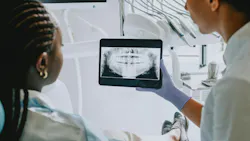
One of the most common clinical applications of AI is radiographic analysis. AI-assisted imaging platforms can identify areas of potential concern on radiographs, such as bone loss, interproximal radiolucencies, restorative discrepancies, or calculus accumulation. These programs use algorithms trained to recognize patterns commonly associated with disease. While this technology may help clinicians evaluate images more efficiently, it is important to remember that AI does not diagnose patients. The hygienist’s assessment skills, clinical judgment, and collaboration with the diagnosing dentist remain essential.
AI in periodontal workflows
AI is also beginning to influence periodontal workflows. Voice-assisted periodontal charting systems and AI-enhanced software may improve efficiency during data collection and documentation. Some systems can identify trends in periodontal findings over time or help organize patient data into more accessible formats. In busy clinical environments, these efficiencies may reduce repetitive administrative tasks and allow hygienists to spend more time focusing on patient education and therapeutic care.
AI in patient experience
Another area where AI may provide value is patient communication. Patients often struggle to understand radiographic findings or periodontal conditions when explanations rely heavily on terminology they do not recognize. AI-supported imaging software can visually highlight areas of concern directly on radiographs or scans, helping patients better visualize inflammation, bone loss, or restorative needs. For many hygienists, this may create more productive conversations and improve patient understanding of preventive or periodontal recommendations.
Documentation is another aspect of clinical hygiene practice where AI is gaining attention. Some systems can assist with organizing clinical notes, treatment summaries, or voice-dictated findings into structured documentation. While this may help improve efficiency and reduce time spent charting, hygienists must still verify all entries for accuracy and completeness. Legally and ethically, the clinician remains responsible for the patient record regardless of how the information was generated.
What AI can’t replace
As with many emerging technologies, concerns about AI are understandable. Questions regarding patient privacy, data security, algorithm bias, and overdependence on automation are valid considerations for all health -care professionals. Dental hygienists should approach AI with curiosity, but also with healthy skepticism and professional accountability. Technology should enhance clinical care, not replace evidence-based decision-making or individualized treatment approaches.
Perhaps the most important concept for hygienists to understand is that AI cannot replicate the human components of care that define the profession. Empathy, trust-building, tactile skill, communication, and patient advocacy remain uniquely human strengths. Patients do not simply return for polished teeth or periodontal maintenance; they return because of the relationships and confidence built with their clinicians over time.
In the end, AI is not the future of dental hygiene—the dental hygienist is. Technology may support the work, but the clinician remains the most important part of the patient experience.
Editor's note: This article appeared in the July 2026 print edition of RDH magazine. Dental hygienists in North America are eligible for a complimentary print subscription. Sign up here.
 Nutritious foods
About the Author
 Bethany Montoya, MBA, RDH
Bethany Montoya, MBA, RDH
Bethany Montoya, MBA, RDH, is a practicing dental hygienist, educator, industry key opinion leader, and editorial director of DentistryIQ’s Clinical Insights newsletter. She has a passion for advancing modern disease prevention. She specializes in exploring the intersection of clinical practice, professional growth, and innovation within oral health care. Through her writing, she aims to educate, inspire, and spark meaningful dialogue in the dental community. She can be reached at [email protected].