Is social media the future of oral health prevention?
Key Highlights
- Patients are increasingly using social media to shape their oral health routines before they enter the dental operatory.
- Platforms such as TikTok, Instagram, and YouTube can spread misinformation, but they can also support preventive education when credible professionals participate.
- Dental hygienists are well positioned to lead online oral health conversations because of their expertise in prevention, patient education, and evidence-based care.
- Social media can extend preventive messaging beyond the appointment by reinforcing home care instructions and patient understanding between visits.
- Social media cannot replace clinical assessment or individualized care, but it can strengthen prevention by supporting patient engagement and long-term behavior change.
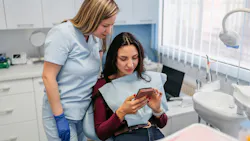
A few weeks ago, I had the cutest patient tell me about someone she followed on Instagram. This patient had great home care but mentioned she was going to change her routine because someone on the platform explained that her dentist excitedly told the influencer she only needed to come in once a year, instead of several times a year for preventive care, because her teeth and gingiva were so healthy. She wanted those same results, turned to me, and asked if she should follow the influencer’s routine.
This patient hasn’t been my only experience with someone asking—or, more commonly, telling me—what they’re doing with their health based on something they saw or read on YouTube, Instagram, TikTok, etc. For many, that reality and these conversations are uncomfortable. Social media has long been viewed as a space filled with misinformation, oversimplification, and trends that prioritize aesthetics, buzzwords, and dramatic claims over science and health.
But what if we’ve been looking at it the wrong way? What if social media isn’t a threat to oral health prevention, but one of the most powerful tools we’ve had?
Prevention is no longer limited to the operatory
Traditionally, oral health prevention has lived inside our operatories. We as dental hygienists educate chairside, if there’s enough time. Patients receive instructions, tools, and encouragement during their appointment, and hopefully, they follow through with those recommendations at home.
But the reality is that we only connect with our patients a few times a year, if they’re indeed coming to a traditional dental office. Social media meets them hourly.
Research shows that social media has fundamentally changed how individuals access health information, form attitudes, and adopt health behaviors.¹,² A recent large-scale systematic review further confirmed that social platforms are now a primary driver of health-related decision-making across multiple domains, including preventive behaviors and lifestyle choices.³
Patients are no longer passive recipients of information from one source. They are active participants, seeking out, evaluating, and applying what they learn online to their own health routines.
Dental hygienists are uniquely positioned
We as dental hygienists are uniquely positioned in this shift. As prevention specialists, educators, and patient advocates, we already possess the skills needed to communicate effectively with the public. We also know how to read, evaluate, and promote proper research to our communities. With this, we can help cut down on the incorrect information that is widely and quickly spread, while promoting research-based practices that actually can promote and improve health.
What are some ways dental hygienists can educate online? The sky’s the limit: demonstrating oral hygiene techniques through short-form video, translating complex periodontal concepts into accessible language, reviewing products and the science behind them, and engaging with our communities in real time.
This represents a form of scalable public health outreach. Research suggests that digital health communication, particularly when delivered in relatable, visual formats, can significantly increase engagement and knowledge retention.⁴ A single piece of content can reach thousands, if not millions, of viewers, which far exceeds the reach of traditional chairside education.
Expanded reach brings expanded responsibility
With expanded reach comes increased responsibility. While social media democratizes access to information, it also introduces variability in accuracy and quality. Studies show that health information shared on social media is often influenced by presentation style, emotional appeal, and perceived relatability rather than scientific accuracy.⁵ Additionally, individuals frequently rely on cognitive shortcuts when evaluating online information, making them more susceptible to misinformation.⁶
This creates a critical opportunity for licensed dental professionals to lead.
When dental hygienists consistently share evidence-based, ethical, and patient-centered information, we can counter misinformation, reinforce preventive behaviors, and build trust with patients even before clinical interaction. In this sense, social media extends the reach of preventive care beyond the operatory. Plus, it highlights the importance of dental hygienists, our education, and how we can shape public health and prevention not only in dental health, but in overall health.
Patients are already bringing social media into the appointment
Social media is also reshaping patient expectations and behaviors, for both good and bad. Have you noticed patients increasingly coming to their appointments with prior exposure to dental information, specific product or treatment questions, or thoughts and beliefs that may or may not be accurate?
Research indicates that social networks play a significant role in shaping health norms and behaviors, with individuals often modeling actions observed within their digital communities.⁷,⁸ While this can present challenges, it also reflects increased patient engagement, which is an essential component of effective prevention.
The hygienist’s role is evolving from a one-time educator to an ongoing guide in a continuous health conversation.
Social media cannot replace clinical care
But can social media replace traditional prevention? I don’t foresee that happening. Social media cannot replace clinical expertise, studying, assessment, or individualized care. However, it can significantly enhance them.
Patients who are exposed to consistent, evidence-based messaging outside the clinical setting are more likely to understand their oral health conditions, accept recommended treatment, and adhere to home care instructions. Digital platforms function as a reinforcement tool, bridging the gap between appointments and supporting long-term behavior change.²
Why credible voices matter online
Despite its potential, do you still feel hesitant to engage on social media? I get it. Since being online, I’ve experienced all the things—from being seen as “not professional,” to peer judgment, to changes in science where content is no longer relevant. It’s a lot to take on.
However, absence from these platforms does not reduce their influence. It simply limits the presence of credible voices. Given the documented impact of social media on health decision-making and the fact that social media will not be going away any time soon, professional engagement is not just an opportunity, but possibly now a responsibility.
Curious about HIPAA and social media? Read our article, "Social media: Proceed with caution."
The future is hybrid
I see the future of oral health prevention as a combination of both traditional and digital approaches. We’ll use clinical care for diagnosis, treatment, and personalized education, and then digital platforms for reinforcement, accessibility, and continuity. This hybrid model aligns with trends in health care, where digital tools are used to extend care beyond physical settings and support patients in a new way.
Social media represents a fundamental shift in how individuals learn about and engage with their world and their health. Evidence consistently demonstrates that these platforms influence not only knowledge but also health behaviors and decision-making. For dental hygienists, this presents an opportunity to expand their impact, advocate for prevention, and reach patients in meaningful ways.
The future of oral health prevention is no longer confined to the dental chair or to a traditional dental office. It is continuous, dynamic, and increasingly digital. Those who choose to engage in this space will not only educate. They will help shape the future of the profession and prevention.
Editor’s note: This article first appeared in RDH eVillage newsletter, a publication of the Endeavor Business Media Dental Group. Read more articles and subscribe.
References
-
Moorhead SA, Hazlett DE, Harrison L, Carroll JK, Irwin A, Hoving C. A new dimension of health care: Systematic review of the uses, benefits, and limitations of social media for health communication. J Med Internet Res. 2013;15(4).
-
Naslund JA, Bondre A, Torous J, Aschbrenner KA. Social media and mental health: Benefits, risks, and opportunities for research and practice. J Technol Behav Sci. 2020;5:245–257.
-
Devi S, et al. The impact of social media on health behaviors: A systematic review. Journal of Medical Internet Research. 2025;27.
-
Ventola CL. Social media and health care professionals: Benefits, risks, and best practices. Pharmacy and Therapeutics. 2014;39(7):491–520.
-
Chou W-YS, Oh A, Klein WMP. Addressing health-related misinformation on social media. JAMA. 2018;320(23):2417–2418.
-
Pennycook G, McPhetres J, Zhang Y, Lu JG, Rand DG. Fighting COVID-19 misinformation on social media: Experimental evidence for a scalable accuracy-nudge intervention. Psychol Sci. 2020;31(7):770–780.
-
Centola D. The spread of behavior in an online social network experiment. Science. 2010;329(5996):1194–1197.
-
Zhang X, et al. Social influence and health behavior change in digital environments. Humanities and Social Sciences Communications. 2024;11.
About the Author
 Melia Lewis, MEd, RDH
Melia Lewis, MEd, RDH
Melia Lewis, MEd, RDH, is a dedicated clinical dental hygiene professional with a passion for advancing oral health education and patient care. Currently, she practices at Aspen Heights Dental in Highland, Utah, and is an adjunct professor at Colorado Northwestern Community College. She is cofounder of Hygiene Edge, an online education platform full of helpful tips and tricks to make dental professionals’ lives a little bit easier, and owns and operates Acuti Sharpening, a dental hygiene instrument sharpening company.
Beyond her work as a dental hygienist and educator, Melia is committed to advancing the profession. Her innovative approach and dedication have earned her recognition as a leader in the field of dental hygiene. Reach out to her at [email protected] or on Instagram @hygieneedge and @meliardh.