Oxygen at night, consequences by day: Oral health effects of CPAP therapy
Key Highlights
- Obstructive sleep apnea (OSA) is linked to systemic disease and oral health changes, making early recognition in the dental setting critical.
- CPAP therapy effectively treats OSA but may contribute to xerostomia, caries risk, gingival inflammation, and occlusal changes.
- Dental hygienists play a key role in OSA screening, monitoring CPAP-related oral effects, and collaborating with medical providers to improve patient outcomes.

Paradise Dental Technologies in partnership with RDH is expanding opportunities for dental hygiene students with its NEW Student Research Award Program. The following article is a recent research project submission.
Understanding CPAP therapy and its clinical management in obstructive sleep apnea care
Obstructive sleep apnea (OSA) is a chronic sleep-related breathing disorder characterized by repeated collapse of the upper airway during sleep, resulting in intermittent hypoxia, disrupted sleep, and increased risk for systemic disease.1 OSA affects millions of adults in the United States and is associated with cardiovascular disease, hypertension, metabolic disorders, and reduced quality of life.1 Women are less likely to be referred for sleep testing than men, even when reporting similar symptoms, and their OSA symptoms are often dismissed by providers as mere side effects of a typical busy female lifestyle or an aging body.2
Continuous positive airway pressure (CPAP) therapy remains the gold standard for the treatment of moderate to severe OSA. While CPAP therapy is highly effective at maintaining airway patency and improving sleep quality, its impact on oral health is frequently overlooked. Dental hygienists routinely perform oral cancer screenings and evaluate intraoral structures. Their ability to recognize oral manifestations associated with both OSA and CPAP therapy positions them as integral members of the interprofessional health-care team.
Obstructive sleep apnea and oral-systemic connections
OSA extends beyond a sleep disorder, presenting broad systemic and oral health implications.1,3 Research demonstrates a significant association between sleep disorders and compromised oral health, including periodontal disease, inflammation, and changes in oral microbial balance.3 Reduced oxygen levels and chronic inflammation associated with OSA can impair immune response, increasing susceptibility to periodontal disease and delayed healing.1,3
OSA is strongly associated with systemic conditions beyond cardiovascular disease, including insulin resistance and type 2 diabetes mellitus, metabolic syndrome, nonalcoholic fatty liver disease, chronic kidney disease, and neurocognitive impairment.4 Recurrent intermittent hypoxia, sympathetic overactivation, oxidative stress, and systemic inflammation contribute to widespread impaired blood vessel function and multiorgan injury.4 Early recognition and effective treatment of OSA are therefore critical not only to reduce cardiovascular risk but also to mitigate its broader systemic complications and improve overall long-term health outcomes.1,4
Dental professionals have the training and skills to recognize early clinical indicators of OSA in patients, such as mouth breathing, scalloped tongue, bruxism, and unexplained periodontal inflammation. Despite this, many dental providers report limited formal training in OSA screening and management, emphasizing an important opportunity for overall care.5
CPAP therapy and its oral health implications
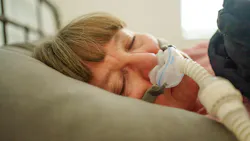
CPAP therapy works by delivering a continuous stream of pressurized air through a mask system to prevent airway collapse during sleep. While highly effective, CPAP use is associated with several oral side effects that can negatively impact dental health. Xerostomia is the most commonly reported complaint among CPAP users, which causes dryness of the oral tissues. Continuous airflow, air leakage from masks, and increased mouth breathing can reduce salivary flow, increasing the risk for caries, gingival inflammation, and mucosal irritation.6 Chronic dry mouth can also alter the oral microbiome, further contributing to periodontal breakdown.3
Additional reading: New treatment for sleep apnea may replace bulky CPAPs for patients
In addition to soft tissue concerns, CPAP therapy has been associated with occlusal changes and tooth movement, particularly in patients using nasal or nasal pillow masks.7 Pliska and Almeida (2018)7 documented tooth movement associated with prolonged CPAP use, emphasizing the importance of routine occlusal monitoring during dental hygiene visits.
Screening for OSA in the dental setting
Dental hygienists are ideal candidates to screen patients for OSA due to frequent patient contact and comprehensive oral assessments. The STOP-Bang questionnaire is a validated screening tool that evaluates key risk factors, including snoring, daytime fatigue, observed apneas, hypertension, body mass index, age, neck circumference, and gender.8 Referral to a primary care provider or sleep specialist is recommended when the STOP-Bang screening results indicate OSA risk. Systemic and oral health outcomes can significantly improve with early identification and interventions.
Clinical considerations and patient education
Dental hygienists can play a vital role in managing CPAP-related oral complications through education, prevention, and ongoing assessment. Clinical strategies include:
- Monitoring for xerostomia, caries activity, gingival inflammation, and occlusal changes
- Checking for enlarged tonsils and an enlarged tongue
- Recommending fluoride therapies and saliva substitutes for patients with dry mouth
- Support patients to seek ongoing care from a sleep specialist on mask fit and mask types
- Promoting diligent oral hygiene practices and individualized recare intervals9
Equally important is educating patients on CPAP cleaning and maintenance. Inadequate cleaning of CPAP equipment can lead to bacterial and fungal growth, increasing the risk of oral and respiratory infections.6 Dental hygienists should reinforce manufacturer guidelines for daily and weekly cleaning routines. Collaboration between dental and medical professionals is essential to ensure comprehensive patient care. Improved communication and referral pathways can enhance treatment adherence and reduce long-term complications.
Additional reading: A modern-day sleep apnea resolution for dental professionals to recommend
Alternative therapies and interprofessional collaboration
For patients unable to tolerate CPAP therapy, oral appliance therapy may be an effective alternative. Joint clinical practice guidelines from the American Academy of Sleep Medicine and the American Academy of Dental Sleep Medicine support oral appliance therapy for select patients, particularly those with mild to moderate OSA.10,11 Additional OSA therapies are available that can be used alone or in combination with CPAP depending on the severity of the condition. However, oral appliances may also contribute to bite changes and jaw discomfort, reinforcing the importance of regular dental follow-up.
Myofunctional therapy has also emerged as a complementary approach for managing OSA. Oropharyngeal exercises aimed at strengthening airway musculature may reduce apnea severity and mouth breathing, though additional research is needed to establish long-term efficacy.12
Conclusion
Obstructive sleep apnea is a complex health condition that has notable oral and systemic implications. While CPAP therapy is an effective treatment for many patients, its oral health implications require careful attention. Xerostomia, gingival inflammation, occlusal changes, and bruxism are common concerns that dental hygienists are uniquely qualified to identify and refer. By incorporating OSA screening tools, monitoring CPAP-related oral changes, educating patients, and collaborating with medical providers, dental hygienists can play a pivotal role in improving outcomes for patients living with OSA. Expanding the hygienist’s role in sleep health represents an important step toward truly integrated, patient-centered care.
Editor’s note: This article first appeared in RDH eVillage newsletter, a publication of the Endeavor Business Media Dental Group. Read more articles and subscribe.
References
- Maniaci A, Lavalle S, Anzalone R, et al. Oral health implications of obstructive sleep apnea: a literature review. Biomedicines. 2024;12(7):1382. doi:10.3390/biomedicines12071382
- Beyond the stereotypes: obstructive sleep apnea in women. ResMed Sleep Institute. July 14, 2025. Accessed March 9, 2026. https://www.resmedsleepinstitute.com/insights/gender-bias-and-osa-diagnosis-in-women
- Kim D, Kim M, Kim Y, Kim S, Choi J, Lee S. Associations between oral health and sleep disorders: a systematic review. Biomedicines. 2024;12(7):1382. doi:10.3390/biomedicines12071382
- Henning RJ, Anderson WM. Sleep apnea is a common and dangerous cardiovascular risk factor. Curr Probl Cardiol. 2025;50(1):102838. doi:10.1016/j.cpcardiol.2024.102838
- Muir JC, Keenan BT, Pack AI. Dentists’ awareness of obstructive sleep apnea and their role in management. Cureus. 2024;16(2):e53812.
- CPAP and dental health: sleep apnea’s impact on your smile. CPAP Water. September 12, 2023. Accessed March 9, 2026. https://cpapwater.com/cpap-and-dental-health/
- Pliska BT, Almeida FR. Tooth movement associated with CPAP therapy. J Clin Sleep Med. 2018;14(4):701-702. doi:10.5664/jcsm.7080
- Cho T, Yan E, Chung F. The STOP-Bang questionnaire: a narrative review on its utilization in different populations and settings. Sleep Med Rev. 2024;78:102007. doi:10.1016/j.smrv.2024.102007
- Schroeder K, Gurenlian JR. Recognizing poor sleep quality factors during oral health evaluations. Clin Med Res. 2019;17(1-2):20-28. doi:10.3121/cmr.2019.1465
- AASM and AADSM issue new joint clinical practice guideline for oral appliance therapy. American Academy of Sleep Medicine, American Academy of Dental Sleep Medicine. 2015. Accessed March 9, 2026. https://aasm.org/aasm-and-aadsm-issue-new-joint-clinical-practice-guideline-for-oral-appliance-therapy/
- Ramar K, Dort LC, Katz SG, et al. Clinical practice guideline for the treatment of obstructive sleep apnea and snoring with oral appliance therapy: an update for 2015. J Clin Sleep Med. 2015;11(7):773-827. doi:10.5664/jcsm.4858
- Rueda JR, Mugueta-Aguinaga I, Vilaró J, Rueda-Etxebarria M. Myofunctional therapy (oropharyngeal exercises) for obstructive sleep apnoea. Cochrane Database Syst Rev. 2020;11(11):CD013449. doi:10.1002/14651858.CD013449.pub2
About the Author
 Kaela Tindall, BSDH(c)
Kaela Tindall, BSDH(c)
Kaela Tindall, BSDH(c), is a 2026 candidate for the Bachelor of Science in the School of Dental Hygiene Studies at Pacific University, Hillsboro, Oregon. For more information, email her at [email protected].
 McKenzie Brennan, BSDH(c)
McKenzie Brennan, BSDH(c)
McKenzie Brennan, BSDH(c), is a 2026 candidate for the Bachelor of Science in the School of Dental Hygiene Studies at Pacific University in Hillsboro, Oregon. She began her college education right after graduating from high school and is currently working toward her first college degree. She is passionate about helping others and improving patients’ oral health through dental hygiene care. For more information, email her at [email protected].
 Jessica Hartz, BSDH(c)
Jessica Hartz, BSDH(c)
Jessica Hartz, BSDH(c), is a 2026 candidate for the Bachelor of Science in the School of Dental Hygiene Studies at Pacific University, Hillsboro, Oregon. She earned her Associate’s of Science in emergency medicine in 2019 from Portland Community College. For more information, email her at [email protected].
 Lesley Harbison, MS, RDH, EPP, FADHA
Lesley Harbison, MS, RDH, EPP, FADHA
Lesley Harbison, MS, RDH, EPP, FADHA, is an associate professor in the School of Dental Hygiene Studies at Pacific University. She earned a Master of Science in dental hygiene from Idaho State University in 2019, a Bachelor of Science in dental hygiene from Oregon Institute of Technology in 2015, and an Associate of Applied Science in dental hygiene from the University of Vermont in 2000. For more information, Lesley can be reached at [email protected].