Patient-centered communications as a tool for reducing dental anxiety and improving preventive care compliance in underserved communities
Key Highlights
- Dental anxiety and systemic barriers often work together, making underserved patients more likely to delay or avoid essential preventive care.
- Patient-centered communication strategies—including tell-show-do, motivational interviewing, and trauma-informed care—can reduce anxiety and build trust.
- Dental hygienists play a critical role in advancing health equity by creating positive experiences that encourage patients to return for ongoing care.

Paradise Dental Technologies in partnership with RDH is expanding opportunities for dental hygiene students with its NEW Student Research Award Program. The following article is a recent research project submission.
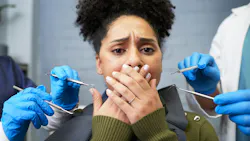
After more than 10 years as a dental assistant, I have watched patients cancel appointments, avoid the chair for years at a time, and leave treatment half-finished not because they did not care about their teeth, but because they were scared. Dental anxiety is not a character flaw. It is a clinical reality that, when left unaddressed, quietly drives some of our most vulnerable patients away from preventive care they need most.
Studies estimate that 13% to 24% of people worldwide experience significant dental fear, with many delaying or foregoing care entirely as a result.1 For patients in underserved communities, like those navigating poverty, language barriers, lack of insurance, or history of receiving dismissive care, anxiety does not exist in isolation. It compounds. And the compounding is what we are not talking about enough.
Why underserved patients face a different barrier
Oral health disparities in the United States are well documented. Low-income adults, patients from racial and ethnic minority groups, immigrants, and rural residents experience significantly higher rates of untreated decay and tooth loss compared to the general population.2 These gaps are not explained by individual behavior alone. They are the result of structural barriers: Medicaid coverage that few providers accept, no access to transportation, clinic hours that conflict with hourly wage work, and language differences that go on unaccommodated.
When patients from these communities do make it to the chair, they often carry something extra with them. Past experiences of being rushed, talked down to, or not understood leave a mark. Armfield’s cognitive vulnerability model explains that dental anxiety intensifies when patients perceive a situation as unpredictable, uncontrollable, or dangerous.1 For patients who have been dismissed by providers before, a routine hygiene appointment can feel like all three. The result is a cycle where anxiety leads to avoidance, avoidance leads to worsening oral health, and worsening oral health leads to more complex and more anxiety-producing treatment down the road.
Additional reading: Airway resistance and dental anxiety: What dental hygienists need to know
This is where dental hygienists can intervene in a way that no other part of the system is positioned to. We are the longest, most consistent point of contact a patient has in a dental office. That matters more than we realize.
Communication that actually helps
Patient-centered communication (PCC) has strong evidence behind it. The approaches hygienists can use are not complicated, but they require intention especially with patients whose trust has already been damaged.
Tell-show-do is one of the most effective tools we have for reducing anticipatory anxiety. Explaining what will happen, showing the instrument before it enters the mouth, and then proceeding gives patients a cognitive map of the appointment. For patients who speak limited English or have low health literacy, this approach is even more valuable because it communicates through demonstration rather than words alone. It reduces the unknown, and the unknown is exactly what anxious patients fear most.
Motivational interviewing (MI) offers another layer. Originally developed in addiction counseling, MI has been adapted for oral health contexts with meaningful results that have been improving both hygiene behaviors and appointment adherence.3 What makes MI particularly relevant for underserved populations is what it is not: it is not prescriptive, it is not top-down, and it does not lecture. It asks open-ended questions. It reflects what the patient says. It lets the patient arrive at their own reasons for returning. For people who have spent years being talked at in health-care settings, being genuinely asked is disarming in the best way.
For patients with prior trauma, whether dental or otherwise, trauma-informed communication is not optional. This means narrating each step before performing it, establishing a stop signal the patient controls, and asking explicit consent before proceeding. Research consistently shows that perceived control is one of the strongest moderators of dental anxiety.1 When a patient knows they can stop at any moment, the procedure immediately becomes less threatening. That one change can be the difference between a patient who tolerates their appointment and the patient who makes their next one.
Cultural responsiveness matters, too, and it goes beyond translation services though those are necessary and nonnegotiable. It means understanding that some patients prefer family members present for care conversations. It means knowing that beliefs about oral health vary across communities and deserve respectful engagement, not correction. It means learning something about the community you serve before you assume you already know.
What this requires of us
None of these strategies demand expensive equipment or extra appointment time. They require hygienists who have been trained to see communication as a clinical skill and not a soft skill—not a nice-to-have, but a core competency that shapes patient outcomes just as surely as instrumentation technique does.
Dental hygiene programs need to teach cultural humility, trauma-informed principles, and motivational interviewing with the same rigor applied to scaling and root planing. Graduates who enter safety net clinics, FQHCs, and school-based programs without these tools are walking into environments where a majority of patients carry exactly that kind of compounded anxiety.
The patients who need preventive care the most are often the ones least likely to return after a single uncomfortable experience. That is not their failure. It is ours, and it is fixable. When hygienists communicate with intention, consistency, and genuine respect, patients come back. They refer others. They maintain their care. Small shifts in how we communicate can produce outcomes that no procedure alone can achieve.
Dental anxiety is a barrier we have the tools to lower. For underserved communities, doing so is not just good patient care. It is a matter of health equity.
Editor’s note: This article first appeared in RDH eVillage newsletter, a publication of the Endeavor Business Media Dental Group. Read more articles and subscribe.
References
- Armfield JM. Towards a better understanding of dental anxiety and fear: cognitive vulnerability model. Community Dent Oral Epidemiol. 2010;38(3):219-229. doi:10.1111/j.1600-0528.2010.00525.x
- Dye BA, Thornton-Evans G, Li X, Iafolla TJ. Dental caries and tooth loss in adults in the United States, 2011-2012. NCHS Data Brief. 2015;197:1-8.
- Rollnick S, Miller WR, Butler CC. Motivational Interviewing in Health Care: Helping Patients Change Behavior. Guilford Press; 2008.
About the Author
Asiana Richard
Asiana Richard is a dental hygiene student at Pima Medical Institute of Houston and former dental assistant with over 10 years of clinical experience in various communities. She is passionate about preventive care, patient education, and closing the gap in oral health equity through communication and evidence-based practice. Her supporting professor is Ms. Carolyn Haynie, program director.