The chair is a checkpoint: How dental hygienists can be a real part of suicide prevention
Key Highlights
- Dental hygienists have a unique opportunity to notice changes and check in with patients they see regularly in a private, trusted setting.
- QPR—question, persuade, refer—provides a practical framework for responding to warning signs without stepping outside the hygienist’s professional role.
- Supporting patient safety starts with supporting clinicians too, making mental health awareness, referral resources, and team wellness important parts of practice.
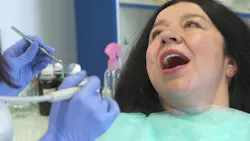
Dental hygienists see patients on a schedule that almost no one else in health care keeps. That recurring, trusted contact makes us a quiet but real part of suicide prevention.
There is a moment in almost every recall appointment that has nothing to do with teeth. The patient settles into the chair, the room goes quiet, and for the next hour it is just the two of us. I ask how they have been. Most of the time the answer is ordinary. Every so often, it is not. And because I have seen this person every three to six months for years, I can hear the difference.
We do not talk about it much, but dental hygienists occupy an unusual place in a person's health care. We see patients on a recurring schedule, often more consistently than they see anyone else. We work inches from their face. We build rapport across years and life changes. That longitudinal, trusted contact is exactly what makes us a meaningful touchpoint in a conversation most people never expect to have in a dental operatory: suicide prevention.
Why this is personal for me
I did not always think about mental health the way I do now. That changed a few years ago, when my aunt lost her battle with mental health.
Grief like that does not arrive in tidy stages. It rearranges you. It sent me back through all the ordinary moments, the visits and the phone calls and the small talk, wondering what any of us might have noticed, or said, or asked. I have had to make peace with the fact that suicide is never one person's to prevent alone, so I do not carry her loss as blame. I carry it as purpose. She is a large part of why I speak about this at all, and why mental health advocacy stopped being an abstract cause for me and became something I feel in my chest.
My aunt was a Southern Belle. In a way, I bring her with me into the operatory. She is part of why I slow down and ask patients how they are really doing, and why I believe our profession can be part of keeping people here.
A public health problem that reaches every operatory
Suicide is not a rare event happening somewhere else. In 2024 there were 48,824 suicide deaths in the United States, a rate of 13.7 per 100,000 people. That figure represented a modest decline from the prior two years, which is genuinely hopeful, but the rate still sits about 32% higher than it did in 2000, and suicide remains among the leading causes of death in this country.1 It touches every demographic. Our patient schedules are a cross-section of our communities, which means that, statistically, some of the people who sit in our chairs are struggling more than their chart will ever show.
Why the hygienist is uniquely positioned
We already think in terms of the oral-systemic connection. We know the mouth is not sealed from the rest of the body. Mental health belongs in that same conversation. Many psychotropic medications used to treat depression and anxiety cause xerostomia, which raises the risk of caries and periodontal disease, so the effects of a patient's mental health can show up on our instruments before they show up anywhere else. That relationship runs both ways, and it is one more reason our vantage point matters.2
Add the cadence of recall to that clinical window. Few providers see a patient with the regularity we do, in a quiet and private setting, enough for an honest exchange. When we slow down and ask how someone is really doing, the question can land differently than it does in a rushed exam room, precisely because it is unexpected and because we have earned a little trust over time.
What we can notice, and what we cannot
Let me be clear about the boundary here, because it matters. There is no reliable oral sign that tells us a person is thinking about suicide, and we are not in the business of diagnosing mental illness from a periodontal chart. What we can do is pay attention to the person, not only the dentition. Oral health professionals are often among the first to notice changes worth a second look: sudden neglect of a previously cared for mouth, signs of self-injury, erosion patterns consistent with disordered eating, indicators of increased substance use, or a flat affect and disengagement that is new for that patient.2 None of these prove anything on their own. They are simply invitations to look up from the mouth and check in with the human attached to it.
Recognizing the warning signs
Beyond what we observe clinically, the clearest signals are often what people say and how they behave. Warning signs can be verbal, such as talking about feeling hopeless, being a burden, or having no reason to go on. They can be behavioral, such as withdrawal, marked mood changes, giving away possessions, or a sharp increase in substance use. The rule of thumb from suicide prevention training is simple: a warning sign should trigger the same instinct as a patient disclosing a significant cardiac history. It changes the appointment. If there is any doubt, we ask.3
How to respond: Question, persuade, refer
The most common reason clinicians stay silent is fear of saying the wrong thing. Here is the reassurance I wish someone had given me earlier: you do not need to be a counselor, and you do not need perfect words. One of the most widely used, evidence-based approaches is QPR, which stands for question, persuade, and refer. It can be learned in about an hour, and it is designed for exactly the role we are in.4
Question means asking directly and with care. Asking someone whether they are thinking about suicide does not plant the idea; it opens a door and often brings relief. Persuade means listening without panic and encouraging them toward help. Refer means connecting them to support and, when needed, making a warm handoff rather than a cold phone number. It is worth saying plainly that QPR and gatekeeper training are recognition and referral tools, not risk assessment. Assessing suicide risk is a professional service performed by trained mental health providers.4 Our job is to notice, to respond with warmth, and to bridge the person to the people equipped to help. In the moment, that bridge can be as concrete as dialing or texting 988 together.
The patients who carry more
Some patients walk to our chairs carrying heavier loads, and the research is clear that this comes from how the world treats them rather than who they are. LGBTQ+ patients, especially youth, and neurodivergent patients face elevated risk, as do older adults and people living with chronic pain. Affirming, patient-centered care is not a courtesy in these cases. It is protective. Correct names and pronouns, sensory-aware adjustments made without fuss, and unhurried patience all communicate safety, and safety travels with a person out of the operatory.
One current, practical note. The specialized 988 option for LGBTQ+ youth was discontinued in 2025 and has not been restored, so for these patients and their families I point directly to The Trevor Project, which continues to offer affirming crisis support by phone, text, and chat.
We cannot pour from an empty cup
No article about suicide prevention in our field is honest if it leaves us out of it. Our profession carries a heavy mental health burden of its own. A 2020 study in the Journal of Dental Hygiene found that nearly 31% of dental hygienists reported burnout.5 A large survey of dental practitioners found that roughly one in six had thought about suicide in the previous year, and about one in four were likely experiencing burnout.6 The strain starts early: studies of dental hygiene students have found around four in 10 reporting moderate to severe depression and close to one in 10 reporting suicidal thoughts in the past year.7 And a 2025 analysis in the Journal of the American Dental Association found that suicide mortality among dentists has run consistently higher than in the general population, with particular concern raised for female dental care professionals.8
If you are the one behind the mask and loupes who is quietly struggling, your well-being matters as much as any patient's. Rest is not a reward you earn after you break. It is maintenance. Peer communities like the Dental Mental Network exist precisely because so many of us need them.
Practical steps for your operatory
You do not have to overhaul your practice to make a difference. Consider completing a gatekeeper course such as QPR, which many teams can do together in an afternoon. Keep crisis resources visible and easy to hand a patient and note them in your referral materials the same way you would any other health resource. Build a short local referral list before you need it, so a warm handoff is possible in the moment. Normalize the simple act of asking a patient how they are really doing. And advocate for wellness on your own team, because a supported clinician is a present one.
The checkpoint stays open all year
Prevention rarely looks like a dramatic rescue. Far more often it looks like an ordinary appointment, one honest question, a minute of real listening, and a resource offered without judgment. That is squarely within our reach, and it is worth stepping into on purpose. The chair is a checkpoint in September, and it is a checkpoint every other month too.
I think about my aunt when I say that. I cannot change what happened to her. What I can change is how present I am for the person in my chair today, and how loudly I am willing to talk about something we were all once too afraid to name. If her story moves even one clinician to ask one more question, then this piece, and the advocacy behind it, is worth every hard word.
Stay rooted in why you started. Rise toward what you're capable of.
Additional reading:
- QPR: How dental professionals can help prevent suicide attempts
- The impact of mental health screenings in dental hygiene
Editor’s note: This article first appeared in RDH eVillage newsletter, a publication of the Endeavor Business Media Dental Group. Read more articles and subscribe.
References
- Suicide statistics (based on CDC Fatal Injury Report, 2024 data). American Foundation for Suicide Prevention. https://afsp.org/suicide-statistics/
- Hopcraft M, Stormon N, McGrath R, Parker G. Factors associated with suicidal ideation and suicide attempts by Australian dental practitioners. Community Dent Oral Epidemiol. 2023;51(6):1159-1168. doi:10.1111/cdoe.12849
- Bercasio LV, Rowe DJ, Yansane AI. Factors associated with burnout among dental hygienists in California. J Dent Hyg. 2020;94(6):40-48.
- Tomasi SE, Lipman R, Bloom F, Nett RJ, Cox-Ganser JM, Fechter-Leggett ED. Suicide deaths among dentists in the United States. J Am Dent Assoc. 2025;156(12):1024-1033.e1. doi:10.1016/j.adaj.2025.08.016
- Beck JA, Kornegay EC, Phillips C, Harmon JB. Assessing students’ mental health in two American dental hygiene programs. Int J Dent Hyg. 2024;22(1):236-243. doi:10.1111/idh.12631
- Suicide prevention from the dental chair: the role of oral health professionals in identifying and addressing mental health issues. American Academy for Oral Systemic Health. 2024. https://www.aaosh.org/connect/suicide-prevention-from-the-dental-chair-the-role-of-dentists-in-identifying-and-addressing-mental-health-issues
- Storz M, Bothwell ED. Screening for suicide may save a life. Dimensions of Dental Hygiene. April 7, 2016. https://dimensionsofdentalhygiene.com/article/screening-for-suicide-may-save-a-life/
- What is QPR? QPR gatekeeper training for suicide prevention. QPR Institute. https://qprinstitute.com/about-qpr
About the Author
 Lisa Huitron, BSDH, RDH, RDA
Lisa Huitron, BSDH, RDH, RDA
Lisa Huitron, BSDH, RDH, RDA, is a California registered dental hygienist with 26 years in the dental profession, two years as a dental hygienist, and a Master of Science candidate in community oral health at the University of Southern California. She serves the California Dental Hygienists’ Association as student relations council chair and trustee for her local component, and her clinical focus centers on nicotine and vaping cessation, the oral-systemic connection, inclusive prevention, and advocacy for the profession.