Primary sclerosing cholangitis: What dental providers need to know
Key Highlights
- Recognize oral manifestations: PSC and chronic liver disease can increase the risk of periodontal disease, xerostomia, caries, mucosal lesions, and delayed healing.
- Review medical considerations: Liver impairment, medications, vitamin deficiencies, and bleeding risk can significantly affect dental treatment planning.
- Coordinate patient care: Thorough medical histories, physician consultation, and individualized preventive strategies can help dental professionals provide safer, more effective care.
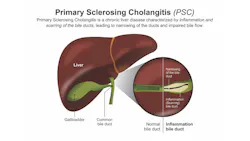
Primary sclerosing cholangitis (PSC) is a rare, chronic liver disease characterized by inflammation and fibrosis of the bile ducts, typically with a strong association to inflammatory bowel disease (IBD).1 With disease progression, there is indication for transplantation as individuals are in end-stage liver disease.1,2 Although there is a very low incidence, patients with PSC and liver disease still require special attention regarding their health-care needs.2 Highlighting liver disease and dental education is essential to provide the highest standard of patient care and improve clinical outcomes.
Demographic characteristics and systemic manifestations
The overall etiology of PSC is not clearly understood, as there seems to be no direct cause. Approximately 60% of patients are male with a diagnosis between the ages of 40 and 59.1,3 Patients are usually nonsmokers and have a history of IBD and/or ulcerative colitis.4 Researchers have been able to identify that the risk of the disease for first-degree relatives, such as siblings, can be nine to 39 times greater for the development of the disease when compared to the general population.5
Many patients can experience several systemic and oral complications: jaundice, vitamin deficiency, abdominal pain, bone disease, chronic itching, varices, polyps, hepatomegaly, splenomegaly, oral disease, and possible malignancies.6-9 Additionally, an unhealthy gut microbiome, associated with systemic inflammation, may be observed in the oral cavity.10
Management of PSC
Due to the rarity of PSC and it being idiopathic in type, treatments are limited in their ability to effectively combat the disease since it is not well understood.10 There is no medical therapy that has been proven to be effective, although patients can attempt to manage symptoms.11 Ultimately, the final treatment option for PSC patients is a liver transplant as it is the most effective way to treat PSC at advanced stages.11 The risk for recurrence of PSC can be as high as 25% once a liver transplant has been completed, which could lead to a subsequent transplant.11
Oral health implications
Periodontal disease has been identified as a possible cofactor in the development and even the progression of liver disease, indicating urgency for these patients to require greater oral health consideration.12,13 Additionally, the development of periodontal disease, including gingival bleeding, has been indicated in 25%–69% of patients with cirrhosis.14
Patients with chronic liver disease take multiple medications, including immunosuppressants, which in turn changes the microbiota in the oral cavity and leads to continued oral health issues.15 These medications have been demonstrated to cause candidiasis and gingival hyperplasia, increasing the incidence of periodontitis as it is difficult to maintain meticulous oral hygiene.16
Xerostomia frequently places patients at an increased risk for caries, periodontitis, mucosal lesions, and stomatitis.17 Recurrent aphthous ulcers are also common and may present several years before the IBD diagnosis. Recognition of these lesions by the dental provider is essential as they may be the first clinician to suspect IBD or associated liver disease.9
As previously identified, this population of patients is more susceptible to vitamin deficiencies, including A, D, E, and K. This can lead to increased susceptibility to decay, inflammation and periodontal disease progression, prolonged bleeding, and delayed wound healing. Additionally, severe deficiency can contribute to intraoral ulcers.16
Considerations for the dental provider
Patients with impaired liver function require dental treatment, either as routine maintenance or during an emergency visit. Close observance of the medical history is important to determine the extent of treatment and need for referral. Prior to receiving any treatment, patients may require a medical consult with a referral for treatment to be completed by a periodontist or oral surgeon to prevent the danger of profuse bleeding.18
If routine treatment is rendered, detailed oral hygiene instruction should be provided. For instance, power toothbrushes are recommended as they report an average plaque reduction of 46%.16 Patients should be advised to brush two times per day with daily fluoride exposure via paste and rinse. Providers may additionally suggest a prescription paste for caries and xerostomia. A neutral rinse such as salt water or hydrogen peroxide can help with mucosal ulcers.
Careful consideration should be given prior to the administration of anesthesia. Hepatic impairment can lead to reduced metabolism of local anesthetics, which may require a lower dosage of these drugs or even total avoidance of anesthesia. When considering changes or additions of medications in patients with PSC, the treating physician should be included in all discussions.19
Conclusion
PSC is a liver disease that can bring about changes within the oral cavity, which can then lead to adverse effects and negative patient outcomes. It is important for dental professionals to be able to identify and consider the appropriate actions necessary for patients with chronic liver disease to help ensure reduced oral health issues and improve overall health.
Editor's note: This article appeared in the October 2026 print edition of RDH magazine. Dental hygienists in North America are eligible for a complimentary print subscription. Sign up here.
References
- Trivedi PJ, Bowlus CL, Yimam KK, Razavi H, Estes C. Epidemiology, natural history, and outcomes of primary sclerosing cholangitis: a systematic review of population-based studies. Clin Gastroenterol Hepatol. 2022;20(8):1687-1700.e4. doi:10.1016/j.cgh.2021.08.039
- Takakura WR, Tabibian JH, Bowlus CL. The evolution of natural history of primary sclerosing cholangitis. Curr Opin Gastroenterol. 2017;33(2):71-77. doi:10.1097/MOG.0000000000000333
- Lazaridis KN, LaRusso NF. Primary sclerosing cholangitis. N Engl J Med. 2016;375(12):1161-1170. doi:10.1056/NEJMra1506330
- Hirschfield GM, Karlsen TH, Lindor KD, Adams DH. Primary sclerosing cholangitis. Lancet. 2013;382(9904):1587-1599. doi:10.1016/S0140-6736(13)60096-3
- Bergquist A, Montgomery SM, Bahmanyar S, et al. Increased risk of primary sclerosing cholangitis and ulcerative colitis in first-degree relatives of patients with primary sclerosing cholangitis. Clin Gastroenterol Hepatol. 2008;6(8):939-943. doi:10.1016/j.cgh.2008.03.016
- Mertz A, Nguyen NA, Katsanos KH, Kwok RM. Primary sclerosing cholangitis and inflammatory bowel disease comorbidity: an update of the evidence. Ann Gastroenterol. 2019;32(2):124-133. doi:10.20524/aog.2019.0344
- Taghavi SA, Eshranghian A, Niknam R, Sivandzadeh GR, Lankarani KB. Diagnosis of cholangiocarcinoma in primary sclerosing cholangitis. Expert Rev Gastroenterol Hepatol. 2018;12(6):575-584. doi:10.1080/17474124.2018.1473761
- Franceschet I, Cazzagon N, Del Ross T, D’Incà R, Buja A, Floreani A. Primary sclerosing cholangitis associated with inflammatory bowel disease: an observational study in a Southern Europe population focusing on new therapeutic options. Eur J Gastroenterol Hepatol. 2016;28(5):508-513. doi:10.1097/MEG.0000000000000596
- Åberg F, Helenius-Hietala J. Oral health and liver disease: bidirectional associations–a narrative review. Dent J (Basel). 2022;10(2):16. doi:10.3390/dj10020016
- Tietz-Bogert PS, Kim M, Cheung A, et al. Metabolomic profiling of portal blood and bile reveals metabolic signatures of primary sclerosing cholangitis. Int J Mol Sci. 2018;19(10):3188. doi:10.3390/ijms19103188
- Mousavere I, Kalampokis G, Fousekis F, Karayjannis P, Baltayjannis G, Christodoulou D. An overview of recent treatment options for primary sclerosing cholangitis. Ann Gastroenterol. 2023;36(6):589-598. doi:10.20524/aog.2023.0834
- Kuraji R, Sekino S, Kapila Y, Numabe Y. Periodontal disease-related nonalcoholic fatty liver disease and nonalcoholic steatohepatitis: an emerging concept of oral-liver axis. Periodontol 2000. 2021;87(1):204-240. doi:10.1111/prd.12387
- Hatasa M, Yoshida S, Takahashi H, et al. Relationship between NAFLD and periodontal disease from the view of clinical and basic research, and immunological response. Int J Mol Sci. 2021;22(7):3728. doi:10.3390/ijms22073728
- Grønkjær LL. Periodontal disease and liver cirrhosis: a systematic review. Sage Open Medicine. 2015;3. doi:10.1177/2050312115601122
- Lins-Kusterer L. Oral diseases and liver pre and post-transplantation disorders. J Transplant Technol Res. 2011;S1:1-4. doi:10.4172/2161-0991.S1-001
- Gehrig JS, Shin DE. Foundations of Periodontics for the Dental Hygienist. 6th ed. Lippincott; 2024.
- Guggenheimer J, Moore PA. Xerostomia: etiology, recognition and treatment. J Am Dent Assoc. 2003;134(1):61-69. doi:10.14219/jada.archive.2003.0018
- Paraschiv C, Gavrilescu C, Cotea I, Esanu I, Ghiuru R, Munteanu D. Oral manifestations in liver disease. Rom J Oral Rehabil. 2011;3(1):24-29.
- Greenwood M, Meechan JG. General medicine and surgery for dental practitioners. Part 5: liver disease. Br Dent J. 2003;195(2):71-73. doi:10.1038/sj.bdj.4810330
About the Author
 Jennifer M. McKinnies, MS, PHDH, RDH
Jennifer M. McKinnies, MS, PHDH, RDH
Jennifer M. McKinnies, MS, PHDH, RDH, has nearly 30 years of experience in the field of dentistry. She currently serves as an assistant professor and program director in the dental hygiene department at Southern Illinois University in Carbondale, Illinois. Jennifer is the founder of the SIU Give Kids a Smile program, which has provided free dental care to more than 2,500 children across Illinois.
 Richard C. McKinnies, PhD, CMD, RT(R)(T)
Richard C. McKinnies, PhD, CMD, RT(R)(T)
Richard C. McKinnies, PhD, CMD, RT(R)(T), is the program director for the radiologic sciences program and holds the designation of professor in the radiation therapy and medical dosimetry programs at Southern Illinois University in Carbondale, Illinois.
 Stacey L. McKinney, EdD, PHDH, RDH
Stacey L. McKinney, EdD, PHDH, RDH
Stacey L. McKinney, EdD, PHDH, RDH, is an associate professor in the dental hygiene program at Southern Illinois University in Carbondale, Illinois. Her teaching responsibilities focus on preventive oral care, advanced periodontics, and board prep. She has more than 15 years of clinical dental hygiene experience in community-based and general practice.