Drying to heal: Principles, applications, and clinical outcomes of dental desiccation therapy
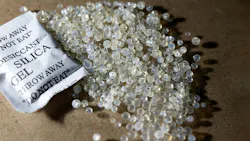
What do those little grainy packets found in shipping boxes and oral health have in common? The use of desiccants! Those packets contain silica gel, and oftentimes the word “desiccant” is written on the outside. By definition, a desiccant is “any material that adsorbs or absorbs moisture and humidity from the environment and can attract and hold gases or liquids.”1
Silica gel is a widely known desiccant because it has a high surface area that absorbs water readily. So those little packets are used to reduce humidity in shipping boxes by absorbing moisture. This same mechanism of action is used in dental desiccation therapy by dehydrating subgingival biofilms to contribute to bacterial cell lysis.
This article will cover common ingredients found in desiccants, benefits for both the patient and clinician, the calculus-softening capabilities of desiccants, and what the evidence says about this adjunctive treatment modality.
Overview of dental desiccation therapy
The oral microbiome consists of 70% water and 10-30% extracellular polymeric substances (EPS). These substances form a protective biofilm matrix and include proteins, lipids, extracellular DNA, and polysaccharides, which are all secreted by microorganisms like bacteria, fungi, and algae into their environment.2 Since the oral microbiome is made up of mostly water, dental desiccation therapy plays a pivotal role here because it involves destroying harmful bacteria and biofilms through rapid dehydration. Unlike antimicrobial mouthrinses that may prevent future plaque accumulation or even antibiotics that target specific metabolic pathways, desiccants disrupt biofilms simply by removing water that is needed for survival.1
Mechanisms of action
Dental desiccants consist primarily of chelating agents and surfactants. Chelating agents include anything that wraps around and attaches to something. For desiccants, this would include sulfuric or phosphoric acid. Both acids are considered hygroscopic agents because they can absorb and retain moisture from the surrounding environment.1
When these acids are introduced into the oral microbiome, they can pull water from biofilms and necrotic tissues. Without the presence of water, an unfavorable environment is created for bacteria, so biofilms denature instantly and are no longer able to adhere to the tooth surface.3,4 While working as a disinfectant, acids like sulfuric and phosphoric acid also remove the dental smear layer. This is an added benefit of desiccants because the smear layer contains endotoxins, bacteria, and contaminated cementum. If nonsurgical periodontal therapy is to be truly successful, the smear layer must be removed.5
In addition, dental desiccants contain surfactants that aid in calculus softening. These molecules help to reduce the surface tension of calculus through the adsorption of calcium, phosphate, and magnesium minerals.6 During this process, surfactant molecules interfere with crystalline bonds, which is what allows calculus to adhere firmly to the tooth surface. When these bonds are disrupted, a micelle will form on the tooth surface, similar to soap in water. This foam is actually carbon dioxide being generated and is what helps drive the desiccant-containing surfactant into hard-to-reach areas. Silica is a common ingredient found in desiccants because of its high affinity for water and its ability to adhere to a large surface area, such as dental calculus.
Indications and contraindications for use
Dental desiccants are transforming dental hygiene practice because they are efficient and can be administered to most case types. Patients with heavy, tenacious calculus are ideal because of the calculus softening capabilities of desiccants. Not only will the clinician benefit from reduced hand fatigue, but the patient could see decreased chair time and easier maintenance appointments. Desiccants are also highly beneficial as an adjunctive therapy to nonsurgical periodontal therapy, periodontal maintenance, and cases of scaling in the presence of gingival inflammation.
As mentioned previously, desiccants have a high affinity for water. For patients who present with inflammation, desiccation therapy is going to reduce the bacterial load and break down biofilms that are contributing to disease progression,simply through dehydration. Unlike antimicrobial rinses that prevent future plaque accumulation and antibiotics that target specific metabolic pathways, desiccants can create an unfavorable environment for viruses, bacteria, and fungi by removing the water needed for survival. Remember the part earlier that mentions the oral microbiome being made up of 70% water? This is how biofilms create their protective matrix, but without water, they can no longer stick to tooth surfaces.3,5,7
Contraindications for use include implants, pregnant individuals, children under the age of 18, and any allergies to sulfur or sodium saccharin. Through our understanding of sulfuric and phosphoric acid on desiccating harmful microorganisms, it would make sense that this therapy could be highly beneficial in cases of peri-implant mucositis and implantitis. However, implants possess a titanium oxide layer that protects the implant against corrosion and prevents titanium particles from being released into the body. There is concern that the acids found in desiccants have the potential to remove this oxide layer.8,9
Along with pregnant individuals and those under the age of 18, until further research is conducted on these case types, desiccants should be avoided for now in patients with implants.
Conclusion
So, the next time you see those little silica packets in your shipping boxes or food containers, think about silica’s ability to cover a wide surface area like calculus and reduce the surface tension, making it easier to instrument. Desiccationtherapy is improving clinical outcomes and making appointments easier for both the patient and clinician. Not only are desiccants targeting harmful microbes, but they are also disrupting the strong crystalline bonds that contribute to the tenacity of calculus. Now clinicians have a product that can be administered in under a minute and is assisting with long-term oral health maintenance and easier calculus removal. As a dental hygiene graduate many years ago, I remember asking myself what else I can do for the patient. I strongly believe that desiccants are the way forward in eradicating inflammation and truly prioritizing maintenance.
Editor's note: This article appeared in the October 2026 print edition of RDH magazine. Dental hygienists in North America are eligible for a complimentary print subscription. Sign up here.
References
-
Desiccant. Science Direct. Accessed July 16, 2024. https://www.sciencedirect.com/topics/medicine-and-dentistry/desiccant
-
Di Martino P. Extracellular polymeric substances, a key element in understanding biofilm phenotype. AIMS Microbiol. 2018;4(2):274-288. doi:10.3934/microbiol.2018.2.274
-
Pardo A, Fiorini V, Zangani A, et al. Topical agents in biofilm disaggregation: a systematic review and meta-analysis. J Clin Med. 2024;13(8): 1-14. doi:10.3390/jcm1308
-
Qi P-X, Xu J-J, Luo J-P, Shi Q. Sorption mechanism, hygroscopic agents, and application of passive water evaporative cooling technology—a review. ScienceDirect. June 2025.
-
Saikaew P, Sattabanasuk V, Harnirattisai C, et al. Role of the smear layer in adhesive dentistry and the clinical applications to improve bonding performance. Jpn Dent Sci Rev. 2022;58:59-66. doi:10.1016/j.jdsr.2021.12.001
-
Turbo-CR. Essential Dental Systems. Accessed July 22, 2025. https://edsdental.com/Turbo-CR/
-
Khalil B, Sulaiman AA, Hajjar BA. Th effects of adjunctive use of a desiccant agent in the treatment of stage III periodontitis (Randomized controlled clinical trial). Saudi Dent J. 2023;35(2):172-177. doi:10.1016/j.sdentj.2023.01.001
-
Zhou Z, Shi Q, Wang J, et al, The unfavorable role of titanium particles released from dental implants. Nanotheranostics. 2021;5(3):321-332. doi:10.7150/ntno.56401
-
de Waal YCM, Winning L, Stavropoulos A, Polyzois I. Efficacy of chemical approaches for implant surface decontamination in conjunction with sub-marginal instrumentation, in the non-surgical treatment of peri-implantitis: A systematic review. J Clin Periodontol. 2023;50(Suppl 26):212-223. doi:10.1111/jcpe.13749
About the Author
 Annie Walters, MS, RDH
Annie Walters, MS, RDH
Annie Walters, MSDH, RDH, has extensive experience as an oral health-care provider. She has spent time caring for individuals in Guatemala and Indian Health Service sites and is passionate about advancing access to care for individuals with specialized health care needs. She is a published author and is trained in Orofacial Myofunctional Therapy. Annie received her graduate degree from the University of New Mexico and currently serves as an assistant clinical professor at Northern Arizona University. Reach her at [email protected].