When the nose knows: Could periodontal disease affect the sense of smell?
Key Highlights
- Periodontitis may be associated with impaired smell, with emerging research linking periodontal treatment to improved olfactory function.
- Ask patients about changes in smell and distinguish olfactory concerns from taste changes, while considering broader health factors.
- Recognize persistent or progressive smell loss as a potential health clue and refer patients for medical evaluation when appropriate.
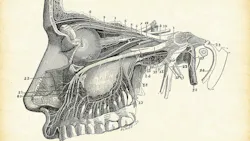
We routinely ask patients about bleeding, sensitivity, dry mouth, and sometimes taste. But when was the last time we asked, “Have you noticed any change in your sense of smell?” It may sound outside our lane, but some new research gives dental professionals a reason to pay attention—and suggests that periodontitis may deserve a place in the conversation.
Smell is far more complex than simply detecting coffee brewing in the morning. Odor molecules activate specialized receptors high in the nasal cavity. Those receptors transmit signals through the olfactory bulb to brain regions responsible for identifying odors and connecting them with memory, emotion, appetite, and behavior. The olfactory system communicates closely with the amygdala, hippocampus, orbitofrontal cortex, and medial temporal lobe. These connections help explain why a familiar aroma can instantly trigger a vivid memory, influence mood, or change the desire to eat.
Causes of changes in smell
Because olfaction depends on the nose, nerves, and brain, changes in smell can have many possible causes. Allergies, sinusitis, and nasal polyps may physically limit odor molecules from reaching the receptors. Viral illnesses, including COVID-19, can inflame or injure the olfactory epithelium. Smoking, certain medications, head trauma, and aging may also reduce olfactory function. Persistent or progressive smell loss can occur early in neurological conditions like Parkinson’s disease, Lewy body dementia, and Alzheimer’s disease, but smell loss alone does not diagnose any of these conditions.
The consequences extend beyond the inability to enjoy a favorite fragrance. Smell influences appetite, food selection, and nutrition, and its decline may contribute to weight change, social withdrawal, depressed mood, and reduced quality of life. It also has a protective function. A person with impaired smell may not recognize smoke, leaking gas, spoiled food, or other environmental hazards. A new, unexplained, or worsening change should not automatically be dismissed as normal aging or a benign occurrence.
The distinction between smell and taste is especially relevant in dental practice. Much of what patients describe as taste is actually flavor, which combines the five basic tastes with aromas that travel from the mouth to the nasal cavity during chewing. A patient who says that food has become bland may still be able to detect sweet, salty, sour, bitter, and umami but have difficulty detecting aroma. Asking whether the patient can smell coffee, perfume, or smoke can help clarify whether the concern is primarily taste, smell, or both. That brings the discussion back to the dental chair: could periodontitis be part of the olfactory story?
Connection between periodontitis and smell
A 2024 multicenter survey provided an early look at the periodontal connection. Researchers collected data from 1,239 university employees in Denmark and the United States. After accounting for age, smoking, xerostomia, diabetes, body mass index, and previous COVID-19, participants reporting periodontitis had 53% higher odds of impaired smell. Halitosis accounted for approximately 21% of the association.1
Halitosis offers one biologically plausible explanation. Periodontal pockets, tongue coating, and bacterial biofilms can produce volatile sulfur compounds and other metabolites. Repeated exposure to unpleasant oral odors could influence a person’s perception of smell or lead to sensory adaptation, in which an odor becomes less noticeable after continued exposure. Halitosis, however, explained only part of the reported relationship. Periodontal inflammation, microbial products, and shared systemic health factors may also contribute.
The limitations of the survey are important. Periodontal status and smell perception were self-reported rather than established through clinical periodontal examination and objective olfactory testing. People who are highly aware of one health concern may also be more likely to report another. The findings therefore demonstrate an association, not proof that periodontitis caused the olfactory impairment.
The evidence moved forward in 2026. Investigators evaluated 108 nonsmokers with periodontitis before and after periodontal treatment. In this study, olfactory function was assessed objectively using Sniffin’ Sticks, a validated testing battery that measures odor threshold, discrimination, and identification. Following treatment, plaque levels, gingival inflammation, probing depths, and tongue coating decreased. Participants also improved across all measured areas of olfactory function. Reduction in probing depth was the strongest independent predictor of improvement in the combined smell score.2
Before announcing that nonsurgical periodontal therapy restores smell, we need to pump the brakes. The study did not include an untreated control group. Participants may have performed better because they had already completed the smell test once, a phenomenon known as a practice effect. Improvements in tongue coating, oral malodor, or other unmeasured factors may also have influenced the results. Nevertheless, the use of objective smell testing and the relationship between probing-depth reduction and olfactory improvement make the findings worthy of attention. They suggest that at least some olfactory impairment associated with periodontitis may be modifiable, while leaving unanswered exactly why improvement occurred.
The discussion broadens
A separate 2025 study broadens the discussion by introducing a possible vascular connection. Researchers studied 166 older adults and found that a greater volume of white matter hyperintensities—a marker associated with cerebral small-vessel disease—was related to poorer olfactory function. Impaired smell was also associated with thinning and reduced connectivity in olfactory cortical regions and other areas supporting memory and executive function. Participants with these changes demonstrated lower episodic memory and slower processing speed.3
Periodontitis does not directly explain those vascular findings. However, periodontitis frequently exists alongside hypertension, diabetes, endothelial dysfunction, systemic inflammation, and other cardiometabolic conditions. Cerebral small-vessel injury can damage the white-matter pathways that allow olfactory, memory, and executive regions to communicate. In some patients, declining smell and declining cognition may therefore reflect shared vascular brain injury rather than one condition directly causing the other. Periodontal inflammation could add to the cumulative inflammatory burden, but current studies have not established that chain of causation.
Practical implications
The clinical response is not to diagnose the cause of olfactory dysfunction or a neurological disorder from the dental chair. It is to become more observant and ask targeted questions. When a patient reports altered smell, ask when it began, whether the change was sudden or gradual, whether it is worsening, and whether taste, appetite, or weight have also changed. Ask about recent infections, smoking, head trauma, sinonasal symptoms, and medications that might affect sensory function. Document relevant oral findings, including periodontal inflammation, tongue coating, xerostomia, and halitosis.
When periodontitis and a change in smell occur in the same patient, the broader health history becomes even more important. Hypertension, diabetes, and dyslipidemia may contribute to endothelial dysfunction, atherosclerosis, and cerebral microvascular injury. Sleep apnea introduces repeated episodes of hypoxia and systemic inflammation. Smoking may directly injure the olfactory epithelium while also increasing vascular risk. A previous stroke may have disrupted an olfactory pathway, whereas a transient ischemic attack may indicate underlying cerebrovascular disease even when it did not produce lasting injury. Head trauma can damage olfactory nerve fibers, the olfactory bulb, or frontal brain regions, and certain medications may alter receptor activity, nasal secretions, or central sensory processing.
The dental professional’s role is to recognize the pattern, obtain a thoughtful health history, and document both the sensory concern and relevant oral findings. Treating periodontitis remains appropriate for controlling local disease and reducing periodontal inflammation, but periodontal treatment should not be presented as a proven therapy for olfactory dysfunction. Persistent, unexplained, or progressive smell loss warrants medical or otolaryngologic evaluation, especially when accompanied by changes in memory, movement, personality, or behavior. What first appears to be a minor sensory complaint may ultimately provide an important clue to a much larger clinical picture.
More about periodontal disease:
- Periodontal disease: A comorbidity?
- Adipokines as immunometabolic bridges: Linking obesity susceptibility, periodontal disease, hypertension, and systemic health
- Characteristics and treatment of necrotizing periodontal disease (NPD)
Editor's note: This article appeared in the November/December 2026 print edition of RDH magazine. Dental hygienists in North America are eligible for a complimentary print subscription. Sign up here.
References
- Cassiano LS, Ribeiro AP, Peres MA, et al. Self-reported periodontitis association with impaired smell and taste: a multicenter survey. Oral Dis. 2024;30(3):1516-1524. doi:10.1111/odi.14601
- Tekin GG, Baran M, Eratilla V. The effect of periodontal treatment on tongue covering and olfactory function in patients with periodontitis. Odontology. Published online: June 15, 2026. doi:10.1007/s10266-026-01446-9
- Eckert MA, Dubno JR, Soler ZM, Schlosser RJ. Cerebral small vessel disease in older adults with olfactory dysfunction. Int Forum Allergy Rhinol. 2025;15(12):1373-1383. doi:10.1002/alr.23639
About the Author
 Anne O. Rice, BS, RDH, CDP, FAAOSH
Anne O. Rice, BS, RDH, CDP, FAAOSH, founded Oral Systemic Seminars after over 35 years of clinical practice and is passionate about educating the community on modifiable risk factors for dementia and their relationship to dentistry. She is a certified dementia practitioner, a longevity specialist, a fellow with AAOSH, and has consulted for Weill Cornell Alzheimer’s Prevention Clinic, FAU, and Atria Institute. Reach out to Anne at anneorice.com.
Related
 Dreamstime M 164597277
 illustrations of the heart, kidneys, ear, tooth, hand