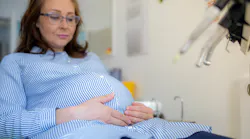
She was eight months pregnant. I collected a sample of her oral biofilm, placed it under the microscope, and started looking. What I saw immediately changed the way I thought about the appointment.
The field was filled with highly motile spirochetes. White blood cells were visibly active. At one point, I watched what appeared to be a spirochete interacting closely with a red blood cell. Was it playing with the red blood cell or attacking it?
I want to be very careful about what a chairside microscope can and cannot tell us. I cannot identify the species of a spirochete simply by looking at its shape and movement under the microscope. I cannot look at one slide and conclude that an organism has entered this woman’s bloodstream, crossed the placenta, or caused a pregnancy complication. Nor can I predict from one biofilm sample whether her baby will be born early, small, or perfectly healthy.
But I can see something else. This oral ecosystem is communicating: loudly and emphatically. I can see dysbiosis. I can see an active host immune response. I can see a microbial environment that deserves more attention than a quick polish and a reminder to floss. And in this particular patient, I was not looking at just one person.
There were two patients in my chair
Pregnancy changes the oral environment. Hormonal changes can amplify the gingival inflammatory response to biofilm, and gingival bleeding during pregnancy is common. But I worry that because it is common, we sometimes begin to treat it as inconsequential.
“Pregnancy gingivitis.”
“Your hormones are making your gums bleed.”
“It will settle down after the baby comes.”
Perhaps. But bleeding is still communication. Inflammation is still communication. And pregnancy is not the time to stop asking why.
Pregnancy gingivitis should not mean “ignore the bleeding”
The American College of Obstetricians and Gynecologists recognizes that periodontal disease is common during pregnancy and recommends oral-health assessment and appropriate dental care during pregnancy. Dental treatment, including periodontal care, is considered safe during pregnancy. So why are so many pregnant women still receiving what amounts to little more than a routine cleaning? I believe we can do better.
Continue reading my blog, “Two patients in the chair: Pregnancy, periodontal pathogens & the placenta.”
More topics from my blog: