Integrative hygiene and biofilm: How airway, nasal, and gut health shape oral disease
Key Highlights
- Biofilm is a living, adaptive microbial ecosystem influenced by saliva, oxygen, inflammation, and host physiology.
- Dry mouth, mouth breathing, and systemic health issues significantly alter the oral environment, promoting pathogenic biofilm growth.
- Disclosing agents serve as diagnostic tools to visualize biofilm patterns, supporting personalized patient education.
- Saliva plays a crucial role in oral and digestive health; reduced flow accelerates biofilm maturation and tissue vulnerability.
- Maintenance intervals are based on biofilm reorganization timelines, especially in patients with systemic or environmental challenges.
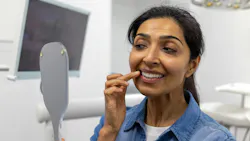
A patient sits in your chair and asks the question you've heard a hundred times: "Why do I keep getting cavities when I brush twice a day and floss every night?"
This is the question integrative dental hygienists hear most often—and the one that traditional explanations don't fully answer. The answer isn't about effort. It's about environment.
Biofilm as an ecosystem
Dental hygiene has always been about biofilm. Every day, we assess it, disclose it, disrupt it, and educate patients about it. What has changed is not our responsibility, but our understanding. Biofilm is no longer viewed as a static layer of plaque that accumulates only when home care fails. It is now understood as a living, adaptive microbial ecosystem influenced by saliva, oxygen, inflammation, immune response, and host physiology.¹
This matters because integrative hygienists see something every day that traditional explanations do not fully address: patients who are doing "everything right" and still struggling with inflammation, decay, or periodontal breakdown. Integrative dental hygiene offers clarity without blame and science without shame.
Biofilm behaves differently depending on the environment in which it lives. When conditions support balance, biofilm remains largely symbiotic. When conditions shift toward dryness, acidity, chronic inflammation, or altered oxygen exposure, biofilm becomes more aggressive and pathogenic. This helps explain why two patients with similar brushing and flossing routines can present with dramatically different clinical outcomes.
The patient who's doing everything right
Consider the patient I mentioned earlier. She reports brushing twice daily, flossing regularly, and using recommended products, yet continues to present with inflammation and new cervical decalcifications. Instead of reinforcing effort-based messaging, I disclose biofilm and observe uneven staining concentrated along dry areas. She mentions waking with a dry mouth and breathing through her mouth at night due to chronic congestion. Her medical history reveals antihistamine use and intermittent digestive discomfort.
Rather than assigning blame, I reframe the situation. The explanation centers on environment rather than effort. I describe how saliva naturally decreases at night, how mouth breathing multiplies dryness, and how biofilm becomes more aggressive in that setting. She learns that saliva is the beginning of digestion and that dry mouth and gut issues influence each other in both directions. When we discuss recare timing, it's framed as ecosystem protection rather than punishment. She leaves informed, empowered, and engaged rather than discouraged.
This is integrative dental hygiene in action.
Saliva: The foundation of oral health
Saliva is one of the most powerful regulators of the oral environment. It buffers acids, supports remineralization, delivers antimicrobial components, distributes minerals, and initiates digestion. Saliva is not simply moisture—it is the foundation of oral and digestive health. When salivary flow is reduced, biofilm matures faster, acids persist longer, and tissues become more vulnerable to disease.²
Salivary flow naturally decreases during sleep as the body enters restorative mode. Protective systems such as continuous swallowing are also downregulated because they are unnecessary while resting. This physiologic reduction is normal. However, when it is compounded by mouth breathing, chronic nasal congestion, medication-induced xerostomia, or postnasal drip, the oral environment becomes significantly more unstable. Moisture loss accelerates, pH balance is disrupted, and biofilm maturation no longer follows a gradual timeline.
Integrative hygienists recognize that chronic dry mouth is rarely the sole cause of disease, but it is frequently the common denominator. Dryness increases caries risk, amplifies gingival inflammation, accelerates periodontal breakdown, and alters the oral microbiome.³ It also has a bidirectional relationship with gut health. Because saliva is the first step in digestion, reduced salivary flow compromises digestive signaling and enzyme activation. At the same time, gut inflammation, reflux, and dysbiosis can change oral pH and tissue response, further contributing to dryness and dysbiosis in the mouth.
Breathing patterns and the oral environment
Breathing patterns play a central role in this cycle. Chronic mouth breathing alters hydration, oxygen exposure, and inflammatory signaling within the oral cavity. We observe the signs daily: dry or erythematous tissues, scalloped tongues, plaque accumulation along gingival margins, cervical decay, and patients who report waking with a dry mouth or sore throat. These findings do not require diagnosing sleep-disordered breathing to be clinically meaningful. They simply reflect an altered oral ecosystem that favors pathogenic biofilm.
An integrative lens also reminds us that the mouth does not exist in isolation. It sits between two powerful biofilm-influencing worlds. Above it lies the nasal airway, responsible for filtering, humidifying, and warming inspired air while supporting nitric oxide production and mucus flow. Below it lies the gastrointestinal tract, where microbiome balance, acid exposure, inflammation, and nutrient absorption influence tissue health throughout the body. Chronic postnasal drip, reflux, gut dysbiosis, and systemic inflammatory conditions all shape the oral environment, often long before advanced disease appears.
Understanding biofilm maturation
Understanding biofilm also requires understanding time. After a professional cleaning or thorough brushing, salivary pellicle formation begins almost immediately. Within four to 12 hours, early colonizing bacteria begin to multiply and organize into microcolonies. If biofilm remains undisturbed beyond 12 to 24 hours, it shifts from a symbiotic, health-supportive state toward a more anaerobic, acid-producing, host-challenging environment.⁴ This timeline explains the clinical rationale behind twice-daily brushing. The goal is not simply food removal, but disruption of biofilm before maturation occurs.
This process accelerates in patients with underlying challenges such as dry mouth, altered pH, chronic inflammation, nasal obstruction, or gut-related immune stress. In these individuals, biofilm matures faster, becomes more virulent, and is less responsive to routine disruption. Excellent home care alone may not be enough to counterbalance these influences.
Disclosing agents make biofilm behavior visible. Rather than serving as judgment tools, they function as diagnostic aids, allowing us and our patients to see where biofilm accumulates, how unevenly it distributes, and how quickly it returns in dry or inflamed environments. This visualization supports personalized education and reframes the conversation away from failure and toward understanding.
Why the three-month interval isn't arbitrary
The same principle of timing applies to periodontal maintenance. Following scaling and root planing, it takes approximately nine to 11 weeks for subgingival microbial communities to reorganize and return to pretreatment levels, particularly in patients with a history of periodontal disease.⁵ The three-month maintenance interval is therefore not arbitrary. It is designed to reset the subgingival ecosystem before it becomes destructive again.
This repopulation occurs more rapidly and aggressively in patients with ongoing contributors such as chronic dry mouth, airway compromise, gut inflammation, or altered pH. Integrative hygienists recognize that maintenance intervals must be individualized, not formulaic, especially for patients with active periodontal disease or systemic risk factors.
Modern approaches to biofilm management
Modern approaches such as guided biofilm therapy and air polishing align with this evolving understanding. By identifying biofilm first and removing it selectively, hygienists can disrupt microbial communities efficiently while preserving hard and soft tissues.⁶ This reflects a shift from aggressive plaque removal toward precision biofilm management and microbiome awareness.
Myofunctional thinking in practice
This functional lens—often referred to as myofunctional thinking—helps integrative hygienists make sense of biofilm patterns. It does not involve diagnosing or treating outside scope. It involves recognizing patterns, educating with clarity, and offering context-based guidance. Conversations may include discussing saliva support, nasal hygiene, or microbiome balance as adjunctive considerations, always framed as education rather than prescription. This naturally supports interdisciplinary collaboration when appropriate.
Ultimately, integrative hygiene replaces shame with understanding. When patients learn that oral disease is influenced by breathing, sleep, saliva, inflammation, and systemic health—not just brushing and flossing—they feel empowered rather than blamed. When hygienists understand biofilm as an ecosystem shaped by time and environment, our recommendations feel purposeful and protective.
The expert tooth sleuth
Biofilm management has always been at the heart of dental hygiene. Integrative dental hygienists simply acknowledge that biofilm responds to the environment we create, day and night. The mouth is part of the airway, influenced by nasal health and systemic physiology.
Integrative hygiene doesn't redefine our role—it restores it. We've always been expert tooth sleuths. Now we're just following the clues beyond the teeth.
Editor's note: This article appeared in the August/September 2026 print edition of RDH magazine. Dental hygienists in North America are eligible for a complimentary print subscription. Sign up here.
References
- Marsh PD. Dental plaque as a biofilm and a microbial community: Implications for health and disease. BMC Oral Health. 2006;6(Suppl 1):S14.
- Humphrey SP, Williamson RT. A review of saliva: Normal composition, flow, and function. J Prosthet Dent. 2001;85(2):162-169.
- Villa A, Abati S. Risk factors and symptoms associated with xerostomia. Oral Surg Oral Med Oral Pathol Oral Radiol. 2011;112(1):e1-e7.
- Kolenbrander PE, Palmer RJ Jr, Periasamy S, Jakubovics NS. Oral multispecies biofilm development and the key role of cell-cell distance. Nat Rev Microbiol. 2010;8(7):471-480.
- Axelsson P, Lindhe J. The significance of maintenance care in the treatment of periodontal disease. J Clin Periodontol. 1981;8(4):281-294.
- Socransky SS, Haffajee AD. Dental biofilms: Difficult therapeutic targets. Periodontology 2000. 2002;28:12-55.
- Hajishengallis G. Periodontitis: From microbial dysbiosis to host modulation. Nat Rev Immunol. 2015;15(1):30-44.
About the Author
 Lauren Smith Kennedy, BS, RDH, OMT
Lauren Smith Kennedy, BS, RDH, OMT
Lauren is the founder of The Myo Coach and creator of the BREATHE RDH Protocol. She is a myofunctional therapist, integrative dental hygienist, and breath and sleep coach who blends airway science, whole-body wellness, and clinical dentistry. She practices in Las Vegas and provides virtual myofunctional therapy and clinician training nationwide.