Stop guessing—start seeing: Advancing modern dental hygiene through perioscopy
Key Highlights
- Perioscopy offers magnified, real-time visualization of subgingival areas, improving calculus removal accuracy and clinical outcomes.
- Studies show endoscopic-assisted debridement is as effective as traditional surgery, with less invasiveness and scope for hygienists to perform these procedures.
- Use of perioscopy in dental education enhances students' tactile detection and instrumentation skills, especially for visual learners.
- Combining endoscopy with regenerative therapies like platelet-rich fibrin can further improve periodontal healing and tissue regeneration.
- Embracing minimally invasive, patient-centered approaches aligns with core dental hygiene philosophies and expands treatment options within scope of practice.
Perioscopy is a minimally invasive procedure that uses a tiny endoscope with magnifications usually ranging between 24-48x. This endoscope goes to subgingival and provides a direct, real-time visualization of that area on a video monitor.
What sparked our interest is that despite its decades of existence, it’s still not widely integrated into mainstream practice. We wondered, could it be a game changer for us future dental hygienists?
Objectives
We wanted to examine the evidence comparing endoscopic assisted debridement to traditional debridement, which relies on the clinican’s experience and tactile detection. Is Perioscopy more effective? Does it improve the accuracy and completeness of calculus removal, not only for registered dental hygienists, but for students alike, if used in an educational environment?
Since Perioscopy falls under the scope of practice of dental hygiene, could it be a less invasive alternative to open flap surgery since that is something we cannot perform as hygienists. Also, can it improve the outcomes when used alongside some adjunct therapies? Finally, how does it correlate to one of our most important practice philosophies, is Perioscopy patient-centered?
Methods of the research
We reviewed a meta-analysis that evaluated the effectiveness of periodontal endoscopic debridement. The authors of the analysis conducted comprehensive research across many major databases. This included Medline, PubMed, etc., these studies only went as far back as December 2024 to ensure current data and specifically focused on randomized clinical trials that compared access surgery and route surface debridement to endoscopic assisted debridement. To ensure reliability, two independent reviewers assessed both the risk of bias and data extraction. A total of five randomized clinical trials were included involving 155 subjects and over 4000 periodontal sites.
Results
Endoscopic assisted debridement showed a significantly higher periodontal probing depth (PPD) reduction compared to repeated root surface debridement alone, with a weighted mean difference of 0.5 mm (95% CI: 0.19–0.81) at the 3-month postoperative follow-up. At the 6-month postoperative follow-up, the weighted mean difference of probing pocket depth and clinical attachment level (CAL) changes were 0.84 mm (95% CI: 0.60–1.09) and 0.89 mm (95% CI: 0.45–1.34), respectively, in favor of endoscopic assisted debridement. In addition, no significant statistical differences were observed between endoscopic assisted debridement and access flap periodontal surgery, with regards to the changes in CAL, PPD and prevalence of pocket resolution. This shows that the use of the endoscopic instrument could be a viable alternative treatment solution that is minimally invasive in comparison. As dental hygienists, this is a treatment option that would fall under our scope of practice.
When it comes to education, the implications were clear. The study that showed that dental hygiene students who received feedback using the periodontal endoscope demonstrated significantly greater calculus detection and removal skills compared to those who did not use the endoscope. Improved outcomes were seen across all the tooth surfaces, indicating that enhance visualization plays a crucial role in developing instrumentation skills; and let’s face it, most students are visual learners, so this could be vital tool for student instruction.
Enrichment
After reviewing the effectiveness of endoscopic assisted debridement, we wanted to explore whether adjunct regenerative therapies could possibly even further enhance patient treatment outcomes. Specifically for this topic, we focused on platelet-rich fibrin therapy. The systematic review that we analyzed focused on adult patients that were 18 years or older and diagnosed with periodontal disease. The Researchers had a control group of patients that underwent a standard root surface debridement, and a test group that underwent the same root surface debridement but with the addition of platelet-rich fibrin therapy. To determine the effectiveness, they evaluated several periodontal parameters including probing pocket depth (PPD), clinical attachment level (CAL), bleeding on probing, gingival recession, gingival index, and plaque index. Some studies even went as far as looking at immunological markers to assess the biologic healing response.
One key outcome was CAL. In this review, the mean difference in clinical attachment level improvement favored the test group by approximately 1.34 millimeters.
Platelet-rich fibrin and other regenerative therapies are great because they promote tissue healing, and periodontal regeneration. However, their efficacy relies heavily on proper root surface preparation and bacterial control. As the research shows, this is exactly where perioscopy or endoscopic assisted debridement can shine. Since the endoscope allows clinicians direct visualization of the root surface, they could then potentially create a cleaner root surface environment prior to regenerative therapy. This improved debridement may enhance the biologic effect of PRF and support improved periodontal healing outcomes. These findings suggest that Perioscopy and regenerative therapies could complement one another with greater outcomes for the patient. Having a skilled clinician with the ability to practice endoscopic aided debridement would be the ideal merging of skills and patient centered care, especially when combined with adjunct therapies like platelet-rich fibrin.
Conclusion
Overall, the evidence demonstrated that endoscopic assisted subgingival debridement was either equivalent or superior to other general practices. There was a significant difference in endoscopic assisted subgingival debridement being more effective than root surface debridement alone. In addition, the evidence suggests that the use of the endoscope, in some cases, can be as effective as access flap periodontal surgery while avoiding the need for an invasive surgical procedure; which would fall under the dental hygiene scope of practice.
This supports the concept of minimally invasive dentistry. Why should we care about minimally invasive dentistry? One of the three most important words that we learn in dental hygiene school is “patient centered care,” because that is a core practice philosophy. We strive to provide the most effective and efficient treatment possible, while minimizing patient risk and damage.
The truth is that minimally invasive dentistry is “patient centered care.” Enhanced visualization tools open a world of treatment combination possibilities, allowing us to present alternative treatment options, that dental hygienists can perform under our scope of practice. However, we must be willing to improve our skills. We are certain that practicing clinicians, much like us students, want to ensure that our skills are never the limiting factor in our patient’s treatment outcomes.
References
-
Tanady M, Tadjoedin FM, Masulili SLC, Harsas NA, Widaryono A. Beneficial effect of platelet-rich fibrin as an adjunct to nonsurgical therapy after subgingival professional mechanical plaque removal for periodontitis: a systematic review and meta-analysis. Clin Pract. 2025;15(7):127. doi:10.3390/clinpract15070127
-
Ho KLD, et al. Effectiveness of endoscope-assisted subgingival debridement versus repeated root surface debridement or access flap periodontal surgery in step 3 periodontal therapy: a systematic review and meta-analysis. Clin Exp Dent Res. 2025;11(4). Published July 31, 2025. doi:10.1002/cre2.70196
-
Fuertes RR, Arnett MC, Evans MD, et al. Periodontal endoscope as an educational tool to improve hygiene students' tactile detection and instrumentation skills. J Dent Educ. Published online 2025. doi:10.1002/jdd.70047
-
Aimetti M, Stasikelyte M, Mariani GM, Cricenti L, Baima G, Romano F. The flapless approach with and without enamel matrix derivatives for the treatment of intrabony defects: a randomized controlled clinical trial. J Clin Periodontol. 2024;51(9):1112-1121. doi:10.1111/jcpe.14028
-
Creative Harvest. Medical. Image. Accessed October 18, 2025. https://creativeharvest.com/wp-content/uploads/2023/04/flyer-8.5x11-perioscopy-color-adjusted-scaled.jpg
Editor’s note: This article first appeared in RDH eVillage newsletter, a publication of the Endeavor Business Media Dental Group. Read more articles and subscribe.
About the Author
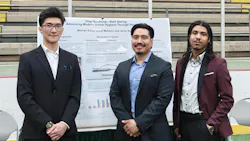
Michael Suruy
Michael Suruy is a dental hygiene student, passionate about preventative care, oral-systemic health, and increasing representation within the profession. After years working as an industrial electro-mechanical technician, he returned to college to pursue healthcare and community service. As co-creator of the DHY Boys platform, Michael hopes to inspire individuals from diverse backgrounds to see themselves represented in dental hygiene and pursue careers that improve access to care, communication, and oral health outcomes within underserved communities.
Mahdi Mohseni
Mahdi Mohseni is a dental hygiene student, co-founder of DHY Boys, with a strong interest in oral health education and emerging technologies, including endoscopic-assisted debridement. As a minority in the profession, he strives to be a leader in promoting oral health awareness within underserved communities, and providing compassionate, culturally responsive care to all patients. He hopes to inspire others from underrepresented backgrounds to consider dental hygiene and help expand access to oral health education.
Javier Ayarza
Javier Ayarza is a dental hygiene student and co-founder of DHY Boys with a passion for promoting oral health and professional growth within dental hygiene. After speaking with a family friend who worked as a Registered Dental Hygienist, he recognized dental hygiene as a meaningful career path. Coming from a diverse background, he hopes to inspire others to explore the profession and improve access to oral health education.