A practical look at prophy, perio, and specialty instruments
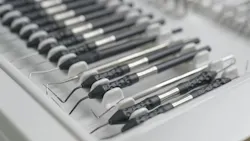



Most hygienists have a favorite instrument setup—the Graceys they reach for without thinking, the Montana Jack that always seems to work, or the universal curette they learned on in school and never questioned.
In this episode of A Tale of Two Hygienists, Andrew Johnston talks with Whitney Howerton, a practicing dental hygienist, educator, and clinical education leader for PDT, about why instrumentation deserves a second look. Whitney explains how many clinicians carry their school instrument habits into practice, why that is understandable, and how small changes in instrument selection can make a real difference chairside.
The conversation covers prophy versus perio setups, how often instruments may need to be replaced, why cassettes can improve organization and safety, and how hygienists can think through instrument equivalents instead of staying locked into one familiar design. Whitney also shares her go-to instruments for prophy appointments, gingivitis cases, perio patients, exposed furcations, and anterior stain or veneer calculus.
The episode closes with a practical look at handle design, tactile sensitivity, sharpness, pinch force, and hand fatigue—topics that matter when your instruments are not just clinical tools, but part of how you protect your body over a long hygiene career.
Episode resources
Download PDT's helpful Instrument Comparison Guide to identify the subtle yet important differences in instruments.
Follow Whitney @whitneyh_pdt or email her at [email protected].
Key highlights
- Why many hygienists stick with the instruments they learned on in school
- How often instruments may need to be replaced, depending on setups, patient load, and calculus type
- The case for separating prophy and perio instrument setups
- Whitney’s go-to instruments for prophy, gingivitis, perio, furcations, and anterior stain
- How handle weight, knurling, sharpness, and grasp affect tactile sensitivity and fatigue
Learn more about instruments
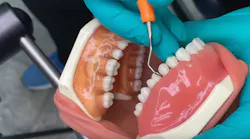
Episode transcript
Andrew Johnston: All right, listeners, welcome to the interview portion of the podcast. Joined today by Whitney. Whitney, thank you for being here.
Whitney Howerton: Thank you, Andrew. I'm so excited to talk to you today.
Andrew Johnston: The thing that listeners don't know is, it was a 1:00 call that we had to record this. It's now 1:30 because we've been chatting about all of the other stuff in life. We're so excited about what the future holds.
And I learned something about you this time. I've always thought the most amazing things of you, but you are a very diverse individual. You have—so what did you call it?
Whitney Howerton: I think my years of experience between clinical practice and being an educator and working in the manufacturing industry and doing kind of clinical education on a domestic and international scale, sometimes I'm surprised at myself at what I've actually experienced as a dental hygienist outside of clinical practice.
Andrew Johnston: And it's funny because everyone's like, “A hygienist just scrapes teeth.” And they're like, “Okay, well, talk to Whitney because she's got some things she wants to say about that.”
Whitney Howerton: Oh man. But there's so many, just like you, Andrew, too, there are so many clinicians that have broadened their realm of what defines a dental hygienist, right?
We've got so many great friends that are key opinion leaders and up-and-coming key opinion leaders, and people in the sales side that we're friends with. There's so much for dental clinicians to do. That's a whole other multiple episodes.
Andrew Johnston: I mean, yeah. Let's talk about that and see if we can collaborate on some really cool things about that.
So listeners, we're going to talk about instrumentation today, but I think before we get into it, I want to know more because I do think that you're among the foremost experts on this topic. But I want to know more about your journey. You were saying you have so many things in your background that kind of led you up to where you're at now. So if you can kind of just give us a quick little overview.
Whitney Howerton: Quick overview. I've practiced clinically for 14 years. I still do practice clinically at an office here in Tennessee.
I've also been full-time faculty at a local program here, and I've been adjunct faculty at the University of Tennessee for eight years. So I transitioned from clinical to faculty, and then I was approached by a manufacturing company to just be a clinical rep for them to promote their products and set up exhibit tables and go to shows, and I fell in love with that.
I've always loved a good side hustle. I've always believed in having a good side hustle, just for fun and something different to break up what you do in life and give you a little extra spending money.
Andrew Johnston: And travel around and see things, right?
Whitney Howerton: That's exactly right. See my dental friends at all these conferences. So I did both of those for a while. And then that opportunity transitioned into a full-time role of building out a new clinical education program for one of the largest dental manufacturers. So I spent several years doing that.
And it was just an amazing opportunity. Then I got a phone call from a large healthcare entity that was opening very comprehensive healthcare. So it was primary care, dental, radiology, audiology, behavioral health, and community health. So I transitioned to that company for the last few years. Unfortunately, they decided to dissolve their business and telehealth business.
And now I'm leading once again a clinical education department for PDT, Paradise Dental Technologies instruments. So back on the manufacturing side, back educating my colleagues, practicing and up-and-coming future colleagues about great products.
So that's kind of full circle of Whitney Howerton. I still teach some adjunct when I can and still practice clinically when I can. So I still love a good side hustle. I haven't changed.
Why instrumentation deserves a second look
Andrew Johnston: You're just doing everything. So let me ask this. I think when many hygienists, especially the tenured ones, are going through—we'll say that we're at a conference and we're looking at all the different courses we could take, we see one that says instrumentation. The reaction of a tenured hygienist is like, “Snooze fest 101.”
So how are you so dang interested still in this topic when a lot of people, maybe misguidedly, think it's very boring?
Whitney Howerton: That is totally fair, Andrew, because we have our favorites, right?
So when you see an instrumentation class, unless you've just never heard of the company before, or you're just really eager to learn, you're probably gonna skip it. You're gonna be like, “Oh, I'd rather learn about something else.” But our problem, as clinicians, is that we don't often do the due diligence needed to see what else is out there.
We learned on a specific cassette of instruments when we were a student. This was our prophy kit or this was our perio kit, or maybe we just had one big kit and we just picked up whatever we thought was going to work.
Or we had maybe a favorite faculty member that really loved this particular instrument, so all of a sudden it became your favorite too, because if that faculty is grading you, you wanted to have used that instrument so they knew that you used their favorite.
Unfortunately, as faculty, we kind of do that sometimes. Our personal bias goes onto the students unintentionally because we pick up the same thing. And I think we just carry that into clinical practice as hygienists once we've graduated our programs, and we never explore what else. We just work with what we have and we make it work.
Andrew Johnston: Absolutely. I feel like that was my first barrier to entry, which is kind of an unfortunate part, because in school I was issued the cassettes that we were gonna use. And then my first practice used something completely different.
And I'm like, “I don't know any of these names.” I kind of recognize the bends and the angles and the shapes, but I am so completely lost on what's going on right now. And it was such an unfortunate thing because as a new graduate, I spent a lot of time staring at the tips of instruments trying to figure it out.
Whitney Howerton: Yes. And that happens too, where you just never know, right? Because the clinicians that you're working with, maybe you're not the only practicing hygienist at that location. They've got their favorites and they've got the kit set up the way they want them. Or maybe you're the only clinician and you're provided the instruments that have been there from the previous clinicians.
Maybe you are or aren't given an opportunity to be like, “These are the ones I want. Can I get new instruments as a new clinician?” And that's something that we need to do a better job as hygienists when we start with a new employer, is trying to negotiate, how often can I get instruments? How often are the instruments replaced? Is there a limit?
We can have those conversations from the very, very front end so we can maybe get some of our favorites, but still try some new things that are out there.
How often should hygiene instruments be replaced?
Andrew Johnston: Can I, while we're on that point though, can we talk about how often we should be replacing instruments? Because I feel like that's a whole spectrum that you hear on the social media forums.
Whitney Howerton: Oh man, it is. And I can't give you a “you have to do it every six months, every one year, every year and a half, every 18 months,” because there are so many factors.
How many setups do you have? Do you have your instruments in cassettes? Do you have perio versus prophy versus perio maintenance? Do you have those kind of one-offs that are sterilized separate that you only pick up when you need it?
How many patients per day are you seeing? Are you reusing—let's say, for example, I see 10 patients a day, but I only have five setups and what I need for perio and prophy are in the same setup. Now I'm using that twice a day. Those instruments are going to wear down faster. I don't care what material they're made of, they're going to wear down faster.
Also, if you're in a perio practice and you're doing a lot more scaling of hard, tenacious calculus, even with using our ultrasonics, it's a different texture, right, that you're scaling versus a soft, pillowy calculus or even biofilm.
So there's a lot of factors there, but general answer is typically a year, year and a half, sometimes 18 months, depending on how many setups you have, the type of patients that you're treating, and just the general frequency of use. But it's not two, three, four, five, 10 years.
When I first started dental hygiene, and I absolutely adore the dentist that gave me my very first job as a dental hygienist. I adore him to this day. The hygiene instruments that I was given to treat my patients were his when he was in dental school. Hello, I wasn't even born then, friend, okay? And they had little tiny, small metal handles.
And there were like hieroglyphics on the handle. It wasn't even like the instrument name. It was like a square and a circle and a triangle. And I was like, “What is this supposed to be?” There was probably an instrument name at some point.
Andrew Johnston: Honestly, I think I know exactly what instrument that is. I think I've seen it.
Whitney Howerton: They were so old though, right? And then of course the clinicians prior to me, they had sharpened them. The curettes were scalers and the scalers were curettes. And it was just like, I might as well sterilize some tweezers or a butter knife and see what happens, because that's kind of what I was given to work with.
But also, me being a new clinician, I didn't negotiate when I got hired to be like, “Can I look at the instruments that you have before I make this decision?” And then negotiate or ask, “Can you buy new instruments for me because this is not going to work?” I was so new and just excited to have a job and was just dumbfounded when I was provided those.
So thankfully, I had my instruments from hygiene school, which of course at that point were already two years old, but I wasn't using them every day, multiple times a day as a student. And then several of my classmates wanted to sell their instruments. So I purchased them just so I could have additional instruments to use that were newer-ish than the ones I was given.
So you never know what you're going to be asked to work with.
Also, we could have a whole other conversation about investing in yourself, right? Because if it's not being provided to you, only you can protect your hands. And those are your moneymakers when you're practicing clinically, and really just everyday life. So it's worth investing in yourself also and seeing what else is out there.
Prophy sets, perio sets, and instrument cassettes
Andrew Johnston: Let me ask you this. So in your experience from what you've seen, what you've heard throughout the industry, do hygienists usually have a prophy setup and a perio setup separately, or is it more of the opposite, where it's all combined?
And then also to that, you mentioned about having, if you don't have a cassette, then it's going to wear down faster. What are the rates on that? Are we seeing about half the people have cassettes?
I feel like coming right out of school, and this wasn't that long ago, this was 15 years ago, no one was using cassettes and we were sticking our hands in there and sorting. So gross what we used to do. And then now it's like, I feel like predominantly, at least I've worked in DSO settings, we all had cassettes. So what are you seeing out there?
Whitney Howerton: I think what I see the most now, and even when I temp or practice, and also just having conversations with hygienists from across the United States who are at these conferences, most clinicians that I've had a chance to speak to have a prophy versus a perio set.
So that's nice to see. Of course, depending on the practice, they may have everything still bundled together. But I like the idea of something separate, right? Because then you're not over-sterilizing an instrument that didn't even get touched or used during that procedure. It's not getting processed over and over again, and you never touched it.
And then from a cassette perspective, I've looked at, I've tried to Google and Bing or search engine, whatever your favorite search engine is. If you try to search, “What's the percentage of dental practices that use cassettes?” it's really hard to get a defined number.
So we really need to partner with probably our distribution partners and say, “How many cassettes do you sell?” So we may know how many we manufacture and sell, but that's not a comprehensive list of everyone who makes and manufactures cassettes.
So if we just pretend and throw a rough number out there, it's probably 15%, 20%. I mean, that would take quite a bit of time to try to validate, but it's not—
Andrew Johnston: Lower than I would have probably thought. Might be kind of interesting to maybe run some polls and stuff on social media because the other thing too is, if you're in a dental hygiene social media forum, you're probably loving the profession a lot and are more engaged and probably a little bit more willing to like, all of the—
Whitney Howerton: Yes, it would definitely require quite a bit of work, right? We have to talk to our manufacturing partners. What are their sales per year? Our distribution partners, because what do they have on hand versus what are they ordering? And we've got a lot of different potential partners to converse with about that. So that's a very, very rough estimate.
Andrew Johnston: Yeah. I mean, listeners, if you're out there and you guys don't have cassettes, I actually do want to hear about it. [email protected], just shoot me an email and be like, “We're not doing it. We're not doing it.” And also, I want to know why, because I think it's really interesting.
Is it really just because the owner or practice owner doesn't want to invest in it? Is it you don't care for it as much? And if there's a legitimate reason for it—I mean, because there are legitimate reasons.
I remember one practice, our autoclave was a teeny tiny little thing. We couldn't get a decent-sized cassette in there. We could only basically have exam kits and things like that. So we had to put them on trays and then load them in individually.
Whitney Howerton: I would guess that's probably going to be, outside of financial investment, which cassettes last a very long time as long as you're good to them, right? Outside of the financial investment, that's probably going to be the biggest feedback that you get, is the size of the autoclave or a limitation of how much can be autoclaved when using cassettes.
But there's so many benefits to it, with organization and proper flow in the ultrasonic solution and proper airflow and steam and everything when you're autoclaving. There's a lot of benefits to having a tray that organizes, or cassette that organizes, the instruments that we use.
Learning instrument equivalents
Andrew Johnston: I want to shift kind of quickly into this notion. And I told you before, I'm happy to say it in public. I am the worst when it comes to instrumentation and knowing the names and labels and numbers and all the things for instruments. And I think, honestly, I do really think that most hygienists are like me.
So I guess the question I have for you is more like, if we grew up on an instrument, how do we know what else is out there that's the equivalent? And what can you tell us about the process for learning that easily? I would say easily, but I know it's not an easy process, but how can we find out about competitors and stuff?
Whitney Howerton: I would definitely go back to our original recommendation of if you see an instrumentation class available at a conference or your local component, or as you're exploring what's available to you, I would take it. Because even if you've been practicing for 10, 20, 30 years and you're very seasoned in your clinical skill, maybe it's time to just try something different.
So for example, Andrew, what was your favorite universal curette?
Andrew Johnston: I am a blue 4R/4L. Well, the handle's blue, but it's 4R/4L.
Whitney Howerton: Okay. So if you like a 4L/4R, 4R/4L, I've heard it called both ways. So it has a nice long terminal shank, universal curette. So we've got a toe, we've got a cutting edge on both sides.
But there's also a Barnhart 5/6. Nice, straight, long terminal shank. There's also a Barnhart 1/2. There's also a Columbia 2L/2R or a Columbia 13/14.
So you've got a family of Columbias. You've got a family of Barnharts. But if you just really like the 4L/4R, why did we never try the other things? Did we need a little bit longer shank, but just thought, “I'll make it work”? But you could have done a Columbia 2L/2R and gotten a little bit longer shank.
Or you could have said, “Okay, this is an adolescent patient. I really didn't need the length of the shank of a 4L/4R.” And you could have used a Columbia 13/14 that has a shorter terminal shank, which is a very similar design to a 204S. It's just the toe version versus the tip version.
So there's so many things that are designed very similar that come in a sickle, pointed tip versus a toe, rounded toe, but the shank designs are very similar. And multiple manufacturing partners have all of those, really in addition to their proprietary instruments that only they manufacture.
Andrew Johnston: Is there an equivalency guide anywhere? That'd be interesting if there was.
Whitney Howerton: I'm not—
Andrew Johnston: I'm not trying to put a project on you, but if you do, let me know. I will put it in the show notes for this episode.
But so I guess my, here's my thing. Let's just go back. Let's take it to the very basics of the things that I recognize. So in those ones that I have physically used in practice is Columbia 13/14, 4R/4L, [unintelligible]. So I guess it should—
You mentioned adolescent patients for the Columbia 13/14. Is there a reason why you couldn't or shouldn't use those on adults or fully developed dentition?
Whitney Howerton: You could absolutely use it on adults. If you're doing a healthy mouth prophy, you don't need those longer shank lengths when you have pockets that are 3 millimeters or less. So a Columbia 13/14 is great for that.
If you have a patient though that has gingivitis, they've got gingival inflammation, maybe it's a perio maintenance patient, they've got either active disease or you've arrested it, but they've got bone loss, you need those longer shanks.
You need those rigid shanks sometimes when you're removing calculus and working in those subgingival pockets. So you can use a Columbia 13/14 really on any patient that you don't need the longer shank because there's not bone loss or inflammation to give you the depth that you need.
Whitney’s must-have instruments for a prophy appointment
Andrew Johnston: So I am a minimalist, I think, when it comes to instruments. But can you give me your must-haves for a prophy appointment? What would you have in your cassette?
Whitney Howerton: Okay, so my must-haves for a prophy. I love a Montana Jack as a posterior sickle. Of course, I also sneak and use it in the anterior like a lot of clinicians do. We kind of use instruments wherever we want to use them. And as long as you know how to use them, that's okay, right? Because you're practicing safely and adapting it correctly.
So I have to have a Montana Jack. I'm a big fan of a Barnhart 5/6. So similar to your 4R/4L that you like, I just like a Barnhart 5/6 because I like the shank design and how it's kind of that 90 degree to the upper shank and terminal shank.
And really, if I add an anterior sickle to that, I like an H5 with a spoon. Or I'm okay with an H6/H7 or a Jack B. Nimble. Just depends on kind of what I like.
But I've got to have some kind of straight shank sickle, like an H5, and I really like a spoon or an O’Hehir, like a scoop-type spoon, for that anterior stain and that veneer calculus that just takes a minute to get off there when you're using your hand instrument sometimes.
Andrew Johnston: Yeah, that's an interesting thing that you mentioned because I think that I was a late adopter of the spoon. And the spoon is glorious. Listeners, if you have not used it before, it's one of those ones that you don't necessarily have to use on every patient.
But think about the upper anterior, especially like 8 and 9, those deep fossas, and your ultrasonic can't get there because of the angulation and the curvature of those fossas.
Whitney Howerton: More challenging to adapt to.
Andrew Johnston: I mean, you just need more. And if you don't have an air polisher of sorts, it's really impossible to do. So that saved my life on hundreds of patients.
And so I'm glad that you brought that one up because that's kind of a little bit different than I think what most of us do.
I'm an H6/H7 person my own self, and I think pretty much everything in there I would also probably use. I might add a Gracey 13/14 just because, while generally on a healthy prophy, you wouldn't probably necessarily need it, I think that there's just a wrist angle that I like just to get further back there. That's all. It's more of a preference, not necessarily a need for that.
So let's now add in, okay, now we have gingivitis kind of coming in. What instruments would we add to the mix for you?
Instrument choices for gingivitis and perio patients
Whitney Howerton: So if a patient has gingivitis, I'd definitely go with the longer shanks. So I look for, I like a Barnhart 1/2. I might put my 4L/4R in there instead of a Barnhart, but you're getting similar shank lengths when you're looking at those, except for like a 2L/2R or a Barnhart 1/2 has a little bit longer shank than the one that's probably known more commonly.
And then I also really like, I do like a 204S, but we need a longer shank. So then I go to a 23 or I go to a Montana 4/5.
Andrew Johnston: What's a 23?
Whitney Howerton: So it's a similar design to a Barnhart 5/6, except it's a sickle tip instead of a rounded toe. So it has a nice long shank, but has a pointed tip. So similar to a Montana 4/5, except you get a little bit different bends.
But you need a little bit longer shank because I always used to teach my students, when two teeth touch, what is the shape in between? What's the shape of an interproximal papilla? It's a triangle. So sometimes you need those triangles, right? And a sickle is a triangle in cross section.
So to get right under those contacts, it's more challenging to adapt a curette where having a sickle with a little bit longer shank—you don't have to go subgingivally with it, but you need it for those contacts and right around those CEJs. And that's where that Montana 4/5 comes in, or a 23 longer shank with a pointed tip for the interproximal.
Andrew Johnston: I love it.
Whitney Howerton: And then I have my Graceys, of course, but I like a 15/16. It's easier to use in a seated position. And I like a Gracey 13/14 for those distals. So I do have my Graceys for my patients with gingivitis and perio.
And then I just either add extended shanks, so the longer shanks for my perio patients, or rigid. And then I really like a mini, like a Gracey 12 mini for my perio patients because you just need to do some of that fine scaling sometimes. I like that miniature blade with that longer shank.
Special circumstances: furcations, scoops, and files
Andrew Johnston: Trying to think of any other outlying, maybe dental anomalies or any other special circumstances where you're like, “What? This is a really good instrument for a special circumstance.”
Whitney Howerton: I've got those too. I told you, box of crayons over here, Andrew.
Andrew Johnston: Of course you do.
Whitney Howerton: Yes, if my patient has exposed furcations, which is not always the case, right? I mean, as we get into deep, higher stages of bone loss for our patients, patients are going to have furcation exposure. I really like the Queen of Hearts.
It has a really large open curve in the shank and it has a 6-millimeter-long cutting edge on both sides of the blade. So as you kind of insert like a probe, so straight down, and then you're making your horizontal and oblique strokes as you work across the root surface, into the furcation. And then because the cutting edge is so long, you can easily kind of turn and adapt into the furca.
It depends on if you're doing a maxillary versus mandibular, how many furcations do you have? Is it class 1, class 2, class 3 furcation?
I also like the O’Hehir scoops. Not a lot of people, I guess, use those if they're not familiar with a spoon. It has a deeper concavity to it and it has a 270-degree cutting edge. So it's really rounded and it really adapts to furcations nicely too, and those curves and contours of those fossae.
So I like a Queen because it's got a really, really long cutting edge. A 6-millimeter-long cutting edge is longer than what most instruments have.
Andrew Johnston: Are you into files at all? Are you a filer?
Whitney Howerton: I'm going to say no. I'm not a huge filer. I would probably use my O’Hehir scoop for that because you could use a push or pull stroke to break that up. And then I go into my ultrasonic.
Andrew Johnston: That's fair. Which, things we grew up on. I grew up on files. I was like, that's the only idea. I'm like, “Okay, this is how we're going to do that.”
Handle design, tactile sensitivity, and fatigue
Andrew Johnston: All right, we have just a few more minutes remaining. I want to talk a little bit more just about handle design and things to look for, and why we need to look for specific items in handle design.
Whitney Howerton: That's a good question. So when you have a lightweight instrument, you have the ability to increase your tactile sensitivity. You also want a nice aggressive pattern. It's also called knurling, kind of a fun little K-N-U-R-L-I-N-G. It's like a fun one to say, and then how in the world you spell it.
So you want a nice pattern on the handle because that helps improve your tactile sensitivity. But when you have a good sharp blade, and you've got a nice light grasp, you can feel what you're scaling and you can feel when you're really exploring what you need to scale and remove.
So when you have a nice light handle, you can reduce your pinch force, especially with a sharper blade to pinch and pop and do that short, sharp bite. You can reduce the actual pressure that you put when you pinch, which then helps ergonomically for your hand and your wrist, and it reduces that hand and wrist fatigue.
So the lighter weight handle helps reduce that fatigue that you could get, but also having a good sharp blade increases patient comfort and also decreases fatigue for the clinician.
How to contact Whitney
Andrew Johnston: I love it. Look, listeners, I hope you got a lot out of this. I think what I would really love is if you have very specific questions for Whitney, just shoot her a message because we didn't cover a lot of the things. There's a lot of terms, words, 204S. There's just things that people are not familiar with.
If you want clarifications or if you want an equivalent to what you currently have, please let her know. Whitney, how can they contact you or how can they find you on social media?
Whitney Howerton: Absolutely. Hunt me down. I have an Instagram. It's WhitneyH_PDT on Instagram. Or you can also email me. It's Whitney.Howerton. So let's spell that. It gets a little fun. So it's [email protected].
Andrew Johnston: I'll make sure I put those in the show notes for everyone so you can just click on that and click through. Whitney, thanks for being here. I appreciate it so much.
Whitney Howerton: Thank you, Andrew. This was fantastic. We just have to figure out our next topic.
Andrew Johnston: Oh, topics. Okay. All right. Thanks, Whitney.
Whitney Howerton: Thank you.
About the Author
 Andrew Johnston, RDH
Andrew Johnston, RDH
Andrew Johnston, RDH, is your everyday hygienist who is passionate about sharing education and knowledge to others. Practicing in Washington State since 2009, Andrew enjoys utilizing his full scope of practice through traditional and restorative procedures on any given day—still working in the operatory 40-plus hours each week. In 2015, he started the wildly popular dental hygiene podcast A Tale of Two Hygienists with his cofounder Michelle Strange. Because of the podcast's success, they were able to begin a new chapter in dental audio content with The Dental Podcast Network, which consists of 10 short-format shows on different dental topics airing each day of the work week.
Whitney Howerton, MDH RDH, CDIPC
Whitney Howerton, MDH, RDH, CDIPC, is a clinician, educator, international speaker and the Sr. Manager of Clinical Education & Innovation for Paradise Dental Technology.
Whitney has shown her dedication to the dental hygiene profession through multiple leadership roles on a local, state, and national level. With experience as a full-time clinical and didactic instructor teaching a wide variety of courses including local anesthesia, head, neck and dental anatomy, special patient care, and advanced instrumentation, Whitney loves educating students and colleagues alike.
In addition to her role at PDT, she currently serves as Adjunct Faculty in the Dental Hygiene Department at the University of Tennessee and practices clinically for a general dentist.
She has built robust clinical education programs for both dental manufacturers and comprehensive healthcare centers focusing on the importance of improved patient outcomes and providing safe, quality care. In her free time, Whitney enjoys cooking, traveling, and getting lost in a great book.