The Pediatric Orthodontic Window: What Dental Hygienists Need to Know
Key Highlights
- 64% of developing dental problems can be corrected or improved early.
- Hygienists are uniquely positioned to screen, document, and refer effectively.
- Oral habits like digit sucking can shape malocclusion if left unaddressed.
- AAO recommends that every child receive an orthodontic evaluation by age seven.
- Active ortho patients need intensified hygiene support to prevent white spot lesions.

Orthodontic problems rarely announce themselves in adolescence. More often, the seeds are visible years earlier, in the form of a primary bite, a narrowed arch, a persistent oral habit, or an anxious child who has never received consistent messaging about what lies ahead in their dental journey. For clinical dental hygienists, these early visits offer a uniquely powerful window of opportunity. No other provider sees a child as frequently, as consistently, or with as much cumulative trust as the dental hygiene team. Understanding the fundamentals of pediatric orthodontics, including when to screen, what to document, how to communicate, and when to refer, is no longer a specialty niche. It is core clinical literacy.
The Mixed Dentition: A Critical and Underutilized Window
The period roughly spanning ages five to thirteen, when primary teeth are progressively replaced by permanent teeth, is known as the mixed dentition phase. This stage is widely recognized as the most clinically actionable window for interceptive orthodontic treatment. Research shows that approximately 15% of developing dental problems can be fully corrected and 49% can be improved with a simple interceptive approach during this phase, underscoring the importance of timely identification and referral.1
Interceptive treatment, also called Phase I orthodontics, encompasses a range of early interventions designed to address skeletal or dental discrepancies before they become entrenched. These include space maintainers after premature loss of a primary tooth, palatal expanders to address posterior crossbites, habit-breaking appliances, and orthopedic devices to guide jaw development. Timing matters considerably. A 2025 systematic review of early versus late treatment for Class II malocclusion confirmed that early orthodontic intervention yields significant improvements in skeletal development, arch dimensions, and airway space.2 Statistically significant differences favor early treatment in these domains, though the same evidence acknowledges that for certain presentations, capitalizing on pubertal growth through later treatment may provide greater skeletal correction.2 This nuance reinforces the clinical consensus: the goal is early assessment, not necessarily early treatment. The earlier the evaluation, the more options remain available to the treating team and family.
For dental hygienists, recognizing signs that warrant further evaluation is the first step. During routine prophylaxis appointments, hygienists should systematically observe the following: posterior crossbite, anterior open bite, Class II or Class III molar and canine relationships, crowding or spacing concerns, ectopic eruption patterns, and any skeletal asymmetry of the face or jaws. Documenting these findings and promptly communicating them to the supervising dentist ensures that children receive appropriate screening referrals before the opportunity for simpler interventions is lost.
The Role of Oral Habits in Malocclusion Development
Pediatric patients commonly present with oral habits that, if persistent, contribute meaningfully to orthodontic problems. The American Academy of Pediatric Dentistry (AAPD) notes that while early pacifier use and digit sucking are considered normal, pacifier use beyond 18 months can begin to influence the developing orofacial complex.3 Children who maintain non-nutritive sucking habits beyond age three have a higher incidence of malocclusions, and increased overjet, and Class II relationships are more strongly associated with finger habits than with pacifier habits.
Dental hygienists are often the first to raise concerns about habits with caregivers, and doing so in a non-judgmental, evidence-informed way builds family trust. Early dental visits provide an opportunity to counsel parents and help children discontinue sucking habits before malocclusion or skeletal dysplasia occurs. For school-aged patients, discussions about bruxism, nail-biting, and clenching are equally appropriate. Documenting habit history in the clinical chart and flagging persistent habits for the supervising dentist creates a clear pathway for intervention.
Timing Orthodontic Referral: Age 7 as a Benchmark
The American Association of Orthodontists (AAO) recommends that children receive their first orthodontic evaluation by age seven. By then, the first permanent molars and incisors have typically erupted, providing the clinician with sufficient information to assess the anteroposterior relationship, the developing arch, and available space. This does not mean treatment always begins at age seven; rather, it allows an informed decision about timing and appropriate counseling for families.
Dental hygienists and other frontline dental providers play a critical role in this referral pathway. Without a clear, standardized referral framework, developing malocclusions may go unrecognized or unreferred until treatment becomes more complex. Researchers have validated a structured orthodontic grading and referral index designed for frontline dental providers to identify and prioritize developing malocclusions by severity, categorizing cases as needing monitoring, standard referral, or urgent referral.¹ While this index is intended for clinical assessment, its existence reinforces a broader point: the dental hygienist's screening observations carry real clinical weight, and systematic documentation of occlusal findings at every child visit is both appropriate and impactful.
Interdisciplinary Collaboration as a Clinical Standard
One of the most consistent findings in the pediatric oral health literature is that siloed care produces inferior outcomes. Collaborative practice in healthcare, as defined by the World Health Organization, occurs when multiple providers from different professional backgrounds work together with patients, families, and communities to deliver the highest quality of care. This model is supported by both the American Academy of Pediatrics and the AAPD as the foundation for whole-child, family-centered oral health care.4 The Health Resources and Services Administration (HRSA) has similarly emphasized the importance of fostering interprofessional relationships to improve patient care, including through its Integration of Oral Health and Primary Care Practice initiative.4
Pediatric dentists and orthodontists share the same patient, often over an extended and overlapping treatment period, yet a significant disconnect in treatment focus and interspecialty communication remains common, and individual patient care suffers as a result.4 Dental hygienists occupy a unique bridging role in this dynamic. They observe the patient over time, build rapport with caregivers, and often absorb concerns that are not formally addressed during the dentist visit. When the hygienist understands the clinical goals of both the pediatric dental team and the orthodontic team, they can reinforce consistent messaging, answer caregiver questions accurately, and help reduce the anxiety that often accompanies transitions between providers.
This concept of a "transfer of trust," the idea that the relationship built within the pediatric dental office must be thoughtfully carried forward as patients move into orthodontic care, has meaningful implications for how hygienists communicate with families. Preparing families for what lies ahead, normalizing the orthodontic journey, and explaining the reasons behind a referral all reduce friction and increase treatment uptake. Parents need consistent messages from both providers; mixed or confusing communication undermines the trust that has been carefully established over years of pediatric dental care.
Oral Hygiene During Active Orthodontic Treatment
For patients already in orthodontic appliances, the hygienist's clinical role intensifies. Fixed appliances dramatically increase the risk of white spot lesions, gingivitis, and caries progression if home care is inadequate. Patients with braces require targeted hygiene instruction that includes interdental brushing, floss threaders or water flossers, and guidance on fluoride supplementation. Emerging trends in pediatric orthodontics also include the use of clear aligners in early intervention, which have demonstrated efficacy and improved patient satisfaction compared to traditional appliances in select cases, though compliance monitoring remains essential.2
Hygienists should document baseline gingival health at the start of orthodontic treatment and track changes at each recall visit. Enamel decalcification around bracket bases is one of the most common and preventable sequelae of orthodontic treatment, and it is most successfully mitigated when the hygiene team is actively involved in reinforcement and monitoring throughout the course of care.
Practical Takeaways for Clinical Practice
Integrating pediatric orthodontic awareness into daily hygiene practice does not require specialized training; it requires intentionality. A few clinical habits can make a substantial difference: conducting a brief occlusal and habit screen at every child appointment; documenting findings consistently and communicating them to the supervising dentist; counseling caregivers on oral habits during anticipatory guidance conversations; and reinforcing consistent messaging about the orthodontic timeline so families receive a unified, trustworthy voice from the entire dental team.
Children benefit most when the professionals caring for them work together, communicate clearly, and understand each other's clinical priorities.4 For dental hygienists, engaging with pediatric orthodontics is an expression of comprehensive, patient-centered care.
References
- Sinniah SD, Venkiteswaran A, Zakaria NN. Development and validation of a novel screening instrument to prioritize the orthodontic referral of developing malocclusion in children: The index for interceptive orthodontics referral. Korean J Orthod [Internet]. 2023 Mar 25 [cited 2026 Apr 20];53(2):116–24. Available from: https://e-kjo.org/journal/view.html?doi=10.4041/kjod22.229
- Dinu S, Igna A, Petrescu EL, et al. Timing of orthodontic intervention for pediatric class II malocclusion: a systematic review on early vs. Late treatment outcomes. Children. Basel, Switzerland; 2025 Nov 13;12(11):1533.
- Almugairin S, Alwably A, Alayed N, et al. Parental knowledge, awareness, and attitudes towards children’s oral habits: a descriptive cross-sectional study. Acta Odontol Scand [Internet]. 2025 Jan 30 [cited 2026 Apr 20];84:65–75. Available from: https://medicaljournalssweden.se/actaodontologica/article/view/42643
- Rapisura KP. Pediatrics with Collaborative Care. J Calif Dent Assoc [Internet]. 2024 Dec 31 [cited 2026 Apr 20];52(1):2406980. Available from: https://www.tandfonline.com/doi/full/10.1080/19424396.2024.2406980
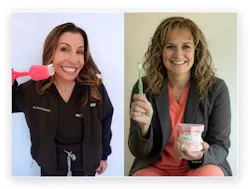
Dr. Lisa Bienstock is a Board-Certified Pediatric Dentist, Fellow of the American Academy of Pediatric Dentistry, and Vice President of the Arizona State Board of Dental Examiners. She serves as Associate Director of NYU Langone’s Advanced Education in Pediatric Dentistry program in Phoenix and owns two thriving private practices focused on creating positive, prevention-driven experiences for children. A graduate of Columbia University/New York Presbyterian Medical Center’s Pediatric Dentistry residency, Dr. Bienstock has held hospital privileges at Phoenix Children’s Hospital since 2013. She is a passionate educator, national speaker, philanthropist, and social media advocate, sharing oral health tips and parenting humor on TikTok and Instagram. She recently appeared in a commercial for Sensodyne Pronamel Toothpaste. Above all, Dr. Bienstock is a proud mom. She and her husband are raising three amazing kids, and life at home is joyful chaos filled with family dance parties, sticky fingers, and laughter. When not practicing dentistry or mentoring future specialists, she enjoys traveling, running with audiobooks, and indulging in Dairy Queen Blizzards with Oreos and cookie dough. Dr. Bienstock brings heart, humor, and energy to everything she does, with one mission: helping children thrive through compassionate, innovative, and comprehensive dental care.
Rachel Miller, RDH, is a dental hygiene professional with more than 30 years at the intersection of dental hygiene and commercial strategy, building a career around translating complex science into meaningful impact for clinicians, patients, and the companies bold enough to reimagine the standard of care. Grounded in 25 years as a clinical dental hygienist and five years as a dental assistant before that, she brings firsthand chairside experience to everything she does, a perspective that shapes how she communicates evidence, builds clinical credibility, and earns the trust of the professionals she works alongside. She is currently completing her Bachelor of Science in Dental Hygiene at the University of Michigan, with a master’s degree to follow in 2027. As a clinical affairs strategist and dental innovation leader, she specializes in building and activating KOL ecosystems, leading clinical validation programs, and driving market adoption of emerging technologies. She works cross-functionally with R&D, Marketing, Sales, and Executive leadership, serving as the bridge between what science supports and what the market needs to hear. At Willo®, she leads strategic outreach efforts to build relationships with dental professionals and elevate awareness around Willo's groundbreaking pediatric brushing technology. She supports clinicians in integrating Willo® into their practices through education, training, and ambassador engagement, championing non-invasive, inclusive, and technology-driven care that helps children build lifelong oral health habits. Her work also includes building strategic partnerships, overseeing usability studies, and authoring study protocols. Her approach is grounded in a conviction that clinical credibility, when built with integrity and activated with strategy, becomes one of the most durable competitive advantages in the industry.