Beyond the Operatory: Behavior-Informed Strategies for Successful Home Oral Care
Key Highlights
- Resistance to toothbrushing is reframed as sensory, emotional, and communication-based, not noncompliance.
- Five behavior-informed strategies: regulation over perfection, predictability, pressure-free practice, reinforcing participation, and individualized tools.
- Person-first and caregiver-centered, acknowledging caregiver guilt, frustration, and exhaustion.
- Positions the hygienist as a trusted partner beyond the operatory.
- Hands-free and adaptive brushing tools framed as approachable, supported by four clinical references.

As dental hygienists, we spend a significant amount of time educating patients and caregivers on oral hygiene recommendations. But for many families, especially those caring for children or adults with sensory sensitivities, developmental disabilities, anxiety, behavioral challenges, or complex medical needs, traditional home care recommendations can feel overwhelming or unrealistic.
In many cases, resistance to toothbrushing is not about “noncompliance.” It is often rooted in sensory discomfort, fear, communication differences, difficulty with transitions, or a history of negative experiences. When we shift from focusing solely on outcomes to understanding the patient’s experience, we can better support caregivers in creating successful and sustainable oral care routines at home.
As hygienists, we are uniquely positioned to coach families beyond the operatory by offering practical, behavior-informed strategies that build trust, predictability, and tolerance over time.
Start with regulation, not perfection
When a patient is dysregulated, overwhelmed, or anxious, learning and cooperation become difficult. Instead of pushing for a “perfect” brushing session, caregivers often benefit from permission to focus on smaller wins first.
For some individuals, success may initially look like:
- Tolerating the toothbrush near the mouth
- Touching toothpaste to the lips
- Brushing for 10 seconds instead of two minutes
- Sitting calmly during part of the routine
Celebrating these micro-successes helps build confidence and reduces stress for both the patient and caregiver.
Make oral care predictable
Predictability can significantly reduce anxiety surrounding oral care routines. Many patients benefit from knowing exactly what to expect and when the routine will end.
Simple strategies may include:
- Visual schedules
- “First/then” language (“First brush teeth, then iPad”)
- Timers
- Consistent sequencing
- Brushing in the same location each day
Breaking oral care into smaller, repeatable steps often improves participation and tolerance over time.
In my own work providing portable and home-based dental hygiene care, I have seen how small environmental and communication adjustments can dramatically change a patient’s ability to participate in care. When patients feel safe and routines feel predictable, resistance often decreases naturally.
Practice without pressure
One of the most helpful concepts caregivers can learn is that oral care practice does not always have to occur during actual brushing time.
For patients with significant resistance, separating “practice” from “performance” can reduce pressure and build familiarity. This may include:
- Exploring toothbrushes during play
- Practicing opening wide in a mirror
- Allowing the patient to brush a caregiver’s teeth first
- Using gradual exposure to oral sensations
This approach helps create positive experiences around oral care rather than reinforcing fear or avoidance.
Reinforce participation, not just completion
Behavior research consistently shows that positive reinforcement increases the likelihood of repeated behaviors.^1 For many patients, verbal praise, visual reward systems, favorite songs, breaks, or preferred activities can help support participation.
Importantly, reinforcement should focus on effort and participation, not only completing the entire task perfectly.
For example:
- “You did a great job letting the toothbrush touch your teeth.”
- “I’m proud of how calm your body stayed.”
- “You brushed three teeth today. That’s progress.”
This shift helps caregivers recognize that tolerance and cooperation are skills built gradually over time.
Adapt recommendations to the individual
As clinicians, we should remember that not every patient can tolerate traditional oral hygiene tools or routines immediately. Offering flexible, individualized recommendations may improve long-term success and reduce caregiver burnout.
Some patients may benefit from:
- Smaller brush heads
- Silicone or sensory-friendly toothbrushes
- Gradual toothpaste introduction
- Shorter brushing intervals
- Caregiver-assisted brushing
- Electric toothbrushes that increase engagement or independence
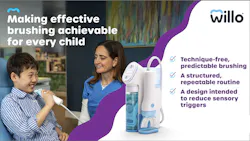
Newer technologies, including hands-free or guided brushing systems, may also help some families establish more consistent home care routines by making brushing feel more approachable and interactive.
Our role extends beyond the operatory
For many families, oral care is emotional. Caregivers often feel guilt, frustration, or exhaustion when daily brushing becomes a struggle. By approaching these conversations with empathy rather than judgment, hygienists can become trusted partners in helping families create routines that feel achievable and supportive.
Sometimes our greatest impact is not delivering a perfect prophylaxis or ideal home care routine. Sometimes it is helping a patient feel safe enough to try again tomorrow.
When we combine preventive dentistry with behavior-informed care, we create opportunities for more inclusive, compassionate, and successful oral health experiences, both inside and beyond the operatory.
References
- Cooper JO, Heron TE, Heward WL. Applied Behavior Analysis. 3rd ed. Pearson; 2020.
- American Academy of Pediatric Dentistry. Management of Dental Patients with Special Health Care Needs. The Reference Manual of Pediatric Dentistry. Chicago, Ill.: American Academy of Pediatric Dentistry; 2024.
- Cermak SA, Stein Duker LI, Williams ME, Dawson ME. Sensory adapted dental environments to enhance oral care for children with autism spectrum disorders: A randomized controlled pilot study. J Autism Dev Disord. 2015;45(9):2876-2888.
- Stein LI, Polido JC, Cermak SA. Oral care and sensory sensitivities in children with autism spectrum disorders. Spec Care Dentist. 2013;33(3):102-110.
Lindsey Vizcay, BSDH, RDHAP, RDH, RDAEF2, is the founder of Home Sweet Hygiene, a portable dental hygiene practice focused on providing inclusive and accessible oral health care for individuals with sensory, behavioral, medical, and mobility-related barriers to traditional dental settings. She is passionate about behavior-informed care, caregiver coaching, and helping patients build positive oral health experiences beyond the operatory.