Don’t take your vision for granted
Key Highlights
- Vision issues are common in dental hygienists due to prolonged screen time, demands of the profession, and stress. The risk for these issues often increase after age 40.
- Conditions like glaucoma can develop without any major warning signs, so early detection can make a huge difference in protecting your vision.
- Four registered dental hygienists share their stories of vision issues, exploring common experiences, treatments, and the impact on their careers.
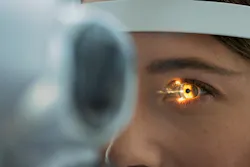
It was my last day of work before I was set to retire from a long career in dental hygiene. I was finishing up my last patient before lunch break, flossing his teeth, when something (prophy paste? saliva?) popped out with the floss, flew over my loupes, and landed in my eye. I quickly finished the flossing, told the patient to rinse, and ran out of the room to rinse my eye out.
The next morning my sclera was completely red, and I made an appointment to see my eye doctor. The doctor gave me medication, and after a few days my eye was back to normal. Fortunately, since I had just retired, I didn’t have to show up at work with a red eye. What a lousy retirement gift my career gave me!
This seemed like a freak accident, but it probably could have been prevented had I continued wearing a face shield. I wore the shield faithfully during the COVID pandemic, but after a few years, I stopped wearing it. The elastic in the back had broken, the shield held the heat of my LED light in, and I always felt the shield blurred my vision slightly no matter how much I cleaned it. It was a nuisance, and I had worked for years using only my loupes with side shields without any problems, so I stopped using it.
In almost 50 years of practice, I’ve had only a few eye incidents. I consider myself lucky that nothing worse happened, considering I began my career at a time when hygienists never used any kind of eye protection. I realize that some of these incidents could have been prevented, but the fact remains that in our profession, our eyes can easily get injured or infected if we’re not extremely careful, and even sometimes when we are.
But not all eye problems are directly related to the practice of clinical hygiene; yet our career depends on having good vision. My eye story, along with the stories of three other hygienists, demonstrates a small fraction of the multitude of things that can go wrong with our eyes. We need to prioritize the health of our eyes.
My eye story
In my twenties, I started wearing contacts. After several years of wearing them, my eyes became very irritated and I had to wear glasses instead, which I didn’t like (ah, vanity!). After suffering for two years and seeing two doctors who didn’t diagnose me correctly, an ophthalmologist finally diagnosed me with blepharitis and gave me antibiotic drops, which cleared up the problem completely.
About 30 years ago, I had LASIK surgery to correct my vision. Although they couldn’t get my vision to 20/20, it was improved enough that I didn’t need to wear contacts or glasses anymore. I was thrilled. But, like most people, I still had to start using reading glasses sometime in my 40s.
Around the same time, I started experiencing dry eyes. As a freelance editor and a bookworm, I read a lot. I thought the dryness was because of the strain of all my reading, but the ophthalmologist told me that my dry eyes were mainly due to large lacrimal puncta (openings of the lacrimal ducts at the inner angles of the eyelids). He inserted permanent silicone punctal plugs and recommended eye drops as well. I have had the punctal plugs for several years and rarely need the drops. I also take an over-the-counter supplement for maintaining eye health as recommended by my ophthalmologist.
Unfortunately, in my early 60s, new eye issues emerged. My husband and I were driving at night when I saw flashes of bright light out of the corner of my eye. I turned to see where the light was coming from and asked my husband if he saw it too. He didn’t. The flashes were so bright that I couldn’t understand how he missed them, but I couldn’t make out where they were coming from. I finally realized that the flashes were coming from my eyes, not from some outside source. That was scary.
My previous eye doctor had retired, so I visited a new doctor. She reassured me that, in my case, this was not serious, that these flashes of light happen when the vitreous gel inside the eye shrinks or changes, pulling on the retina. They tend to come with age and are generally harmless but should be monitored.
I have also experienced floaters, which looked like dark specks that drift around my vision as I move my eyes. Floaters are usually caused by age-related changes in the vitreous gel. Collagen fibers can form in the vitreous gel, which cast shadows on the retina. The spots I was seeing were the shadows of these fibers.1 Most people learn to ignore floaters after a while.
Around the same time that I started experiencing flashes and floaters, I noticed the vision in one eye would occasionally get wavy or distorted, like it had moving zig-zags or wrinkles in it. There was no pain. This lasted for a few minutes to about half an hour. I found my symptoms hard to explain to the eye doctor, but she knew right away what it was: ocular migraines.
The exact cause of ocular, or retinal, migraines is unknown. They may be due to issues with blood vessels or blood flow to the retina. There may be a genetic component as well.2 While these occurrences can be annoying, they are generally considered benign. They still should be evaluated by a professional.
In my late 60s, I was diagnosed with a macular pseudohole from a macular pucker in my left eye. Hearing that I had a hole in my eye, pseudo or not, was alarming. However, with a little education I felt less fearful. A pseudomacular hole is actually an anatomical change in the macula that mimics a true macular hole, but isn’t a hole at all—it's actually a wrinkle in the retina caused by contraction of the membrane layer that lies directly over the retina. This condition does not always cause symptoms, but sometimes it can affect vision, making straight lines appear wavy, and it can cause blurriness. I have been fortunate so far in that I have no symptoms, but I am monitored frequently because that can change at any time.3
As I’ve aged, I’ve noticed that my nighttime vision isn’t as good as it used to be. A few years ago, I started wearing glasses for nighttime driving. They also add just a touch of sharpness to my daytime vision, so I eventually ended up with a pair of progressive lenses that I wear almost all the time now (at age 71, I’ve given up on vanity).
I am grateful that I am still able to read, drive, and even do clinical hygiene a couple times a month. I’ve been lucky over the years, even when I haven’t always been careful. But I now take precautions to protect my vision and see my eye doctor regularly, so hopefully I will be able to continue doing all these things for many more years.
Stacy Deemer’s story
Stacy Deemer, RDH, practiced clinical hygiene from 1989-2017 until she moved into consulting, coaching, and education for various dental companies. At the peak of her postclinical hygiene career, she lived life at full speed for six or seven years. Her career demanded constant travel, long hours on airplanes, countless hours in front of a computer, and a high level of stress. Like so many professionals, she was focused on deadlines, customers, and getting the job done. She rarely stopped to think about her own health — especially her eyes.
What started as subtle changes in Stacy’s vision became a life-changing medical journey. She developed a macular pucker (a thin layer of scarlike tissue that forms on the surface of the retina) in her left eye that distorted her vision. Over time, it created a wrinkle, or distortion, in the macula — the part of the eye responsible for sharp central vision.
During this time, Stacy also developed glaucoma, requiring ongoing treatment and monitoring to preserve her eyesight. Once her glaucoma pressure was controlled, the visual distortion from the macular pucker became more obvious.
As her condition progressed, Stacy underwent six major corrective eye surgeries over two years, including cataract surgeries, scar tissue removals, LASIK procedures, and placement of a corrective lens. The surgeries had many steps with several months of healing in between. Her vision was always off during this time because it was ever changing.
Stacy was unable to work and lost her job as the business optimization consultant for a robotic implant company. While the physical recovery was difficult, the emotional impact was equally challenging. She became depressed and anxious. Her vision affected her independence, confidence, and, ultimately, her career. There were days filled with uncertainty as she wondered if her eyesight would ever be the same again.
Today, Stacy continues to move forward with gratitude — for the skilled eye doctors who caught her problems and the surgeons who cared for her, for the vision she still has, and for the opportunity to encourage others to prioritize their eye health. She says, “Looking back, I wish I had understood how important it is to pay attention to even the smallest changes in your vision. This isn’t about creating fear — it’s about creating awareness.”
Amanda Hill’s story
Amanda Hill, RDH, practiced clinical hygiene for 30 years. In her current career as a dental hygiene speaker and author, she travels frequently by air and spends a lot of time on the computer. She takes no medications and has no known systemic conditions that might increase the risk of eye problems.
In November 2021, Amanda was in Denver preparing to speak at the Colorado Dental Hygienists’ Association meeting. On Tuesday, she was having lunch with a friend when she saw a cobweb fall from the ceiling. She reached out to grab it, but there was nothing there. Her friend did not see it.
Amanda thought maybe her eyes were dry because of the elevation. She called her eye doctor’s office back home in Virginia and told them what was happening. They scheduled an appointment for the following week and didn’t seem alarmed. Amanda went about her normal routine.
Over the next two days, Amanda’s vision in her right eye got blurrier and blurrier. She googled symptoms and saw “stroke” and “MS.” She called her eye doctor again, and still they told her to just come in when she got back home.
By Thursday, Amanda couldn’t see out of her right eye, so she went to the ER. She had an ultrasound of her eye and an MRI. There were no signs of stroke. The doctor said something was obstructing her oculomotor nerve, and that her vision should return in a couple of days.
On Friday, Amanda lectured, blind in one eye.
By Saturday, her vision was no better, and she posted about it on Facebook. A friend in Italy messaged her and said she had a torn retina, as those were the same symptoms his boss had. Her friend encouraged Amanda to get to an eye doctor as soon as possible. She said she had an appointment scheduled for when she got home. Amanda’s friend felt this was too urgent to wait, so he called around (from Italy) and found an eye doctor who could see her that day.
The eye doctor diagnosed a torn/detached retina and called a specialist who came in on a Saturday night to perform emergency laser surgery to stop the bleeding.
After the surgery, Amanda was told not to lift anything and to fly home to see another specialist. Back in Virginia, she saw another doctor who completed the surgery. Post-op, Amanda had to lie still in a dark room and not look at anything for three weeks.
The doctors told Amanda that her eye is shaped like a football, which puts strain on her retina. Recently, after flying home from Milan, Amanda had flashes and floaters in her left eye. She panicked and returned to the retina specialist who diagnosed a vitreous detachment, for which nothing could be done.
Unfortunately, the vitreous detachment put her at greater risk for a tear, and when she went for her two-week checkup, she did have a small tear. Since it was caught quickly, the recovery was much easier. She had to sit on the couch for a week but was able to watch TV. At her six-week follow-up, the tear was completely healed. But given her history, Amanda plans to return to the eye doctor to follow the issue a little more closely. Although her vision isn’t back to what it was, she is grateful that she can now see.
Kerry Lepicek’s story
Kerry Lepicek, RDH, has always loved clinical hygiene. At the time her symptoms began, she was practicing clinically one day a week, working four days a week with Clinical Research Dental, and presenting at least one webinar a week in addition to traveling regularly to lecture. She was also a cast member on The RDH View. It was a busy, fulfilling schedule, and one that she truly enjoyed.
The first sign that something was wrong was headaches that appeared only when she was in the clinic. Kerry assumed it was stress or simply being overworked, and when she noticed a black spot in her vision in February of 2025, she dismissed it as a silent migraine brought on by travel fatigue, lack of sleep, and stress. It appeared only when she looked out of one eye.
As winter progressed, the headaches intensified. Kerry found herself needing sunglasses more often but attributed it to snow glare and light sensitivity. It wasn’t until she sat quietly and realized the headache was consistently on the left side that she became truly concerned. She also noticed she was misjudging distances, dropping items when she tried to put them on the counter.
Kerry made an appointment with a local optometrist who immediately sent her to the hospital due to significantly elevated intraocular pressure (IOP). By that point, she had already experienced vision loss and optic nerve damage in the left eye. The hope was to reduce further vision loss and to monitor the right eye to catch any early signs of glaucoma.
In April 2025, Kerry was diagnosed with moderate glaucoma, and by October she had significant vision loss (80%) in her left eye. She underwent selective laser trabeculoplasty (a minimally invasive prodecude to relieve pressure in glaucoma patients) in her left eye in October 2025.
There is no clear explanation for why this occurred. Kerry has no family history, no medical risk factors, and lives a healthy lifestyle.
As I write this article, Kerry is recovering from another eye surgery. This most recent episode came as a surprise, especially because she didn’t have any symptoms. Her body hasn’t responded well to medication, and her IOP remains difficult to control, necessitating this most recent surgery.
Kerry’s eye problems have led to several lifestyle changes and restrictions to protect her remaining vision and prevent further IOP spikes. She often wears an eye patch due to light sensitivity and to prevent headaches. She must prioritize sleep and rest, and she follows a strict eye drop routine. Head position must be monitored carefully. She cannot lift more than 25 pounds. She is no longer able to do high-intensity Peloton rides, long-distance running, or CrossFit, and she must limit her downhill skiing and dragon boating. These were all activities that used to keep her fit, grounded, and mentally well.
Although Kerry can still work clinically, she must limit it to about four or five hours, as the fluorescent lighting makes it challenging. Traveling to lecture is difficult because air travel dries out her eyes, causing discomfort. She also needs to adjust the lighting in lecture halls.
Kerry says, “The emotional impact has been significant. I’ve had to process anger, grief, and the loss of the life I used to live. I also have to live with the worry and fear that I could be diagnosed with it in my right eye, and that it may be unresponsive to treatment like my left eye. I’m still learning, still adjusting, and still finding my way through it, but I’m committed to sharing my story honestly so others can learn from it. I wouldn’t be where I am today without the dental hygiene community, my family, and using our ADPIE to help me advocate for myself. I now enjoy sitting and watching the simple things — the beauty of the sunset or view from my paddleboard and really try to be present, because one day I may not be able to see it as clearly.”
Related listening: When your vision changes: Glaucoma, advocacy, and caring for yourself on RDH Magazine Podcast
Systemic influences on the eyes
Obstructive sleep apnea
Dental hygienists should always screen for obstructive sleep apnea (OSA), not only for oral effects but for systemic effects as well – including eye problems.
A recent systematic review and meta-analysis concluded that “People with OSA are at risk of serious eye disorders and would benefit from screening programs and follow-up to minimize their risk of irreversible vision loss and morbidity. Conversely, as OSA is an underdiagnosed disorder, individuals presenting with ocular disorders should also be screened for OSA for holistic management.”4
Stress and cortisol fluctuations
Chronic stress can increase production of cortisol and adrenaline. Over time, these hormones can influence intraocular pressure, affect blood flow to the optic nerve, disrupt sleep, and increase systemic inflammation. While stress does not cause glaucoma, it can unmask or accelerate underlying susceptibility.5
Hormonal changes (perimenopause, menopause, postmenopause)
This is especially important for women in their 50s and 60s. Many women first notice eye changes during peri‑ or postmenopause, because estrogen plays a major role in ocular surface health and vascular regulation. Hormonal shifts can affect tear production (dry eye is common), corneal thickness (which affects pressure readings), optic nerve perfusion, inflammation levels, and vascular stability in the retina.6
Medications
Most medications have side effects, and some of them can affect the eyes. For example, steroids can raise eye pressure; antihistamines and antidepressants can cause dry eyes and blurred vision; anticoagulants can increase the risk of ocular bleeding; and antiarrhythmics can trigger eye deposits on the cornea.7
Systemic diseases
Several systemic diseases can affect the eyes. These include diabetes (diabetic retinopathy), hypertension (hypertensive retinopathy), autoimmune diseases (dry eyes and other ocular issues), thyroid disorders (eye bulging and vision problems due to inflammation), and HIV/AIDS (retinitis and infections), among others.8,9
Conclusion
I’d like to thank Stacy, Amanda, and Kerry for sharing their stories so that others may possibly avoid similar problems. While our individual eye stories may not be directly related, there are some areas of commonality. We all practiced clinical hygiene for many years. We all had second careers that included a lot of screen time, deadlines, and stress. We were all in our 40s or older when our eye issues began. Perhaps most importantly, we were all healthy and not on any medications when our eye issues began.
Eye problems can happen at any time to anyone, even those of us who have always been healthy. Regular comprehensive eye exams can detect many eye diseases before symptoms become severe. Conditions such as glaucoma often develop silently, without pain or obvious warning signs. Early detection and treatment can make a significant difference in protecting our vision.
Our eyesight is something we often appreciate only after it’s threatened. Don’t wait until something is wrong. Schedule your comprehensive eye exam. Ask questions. Protect your vision.
References
- Eye floaters. Mayo Clinic. July 2, 2024. https://www.mayoclinic.org/diseases-conditions/eye-floaters/symptoms-causes/syc-20372346
- Ocular migraine. Cleveland Clinic. Updated May 9, 2023. https://my.clevelandclinic.org/health/diseases/24961-ocular-migraine
- What is a pseudo macular hole and how is it treated? ScienceInsights. November 21, 2025. https://scienceinsights.org/what-is-a-pseudo-macular-hole-and-how-is-it-treated/
- Bulloch G, Seth I, Zhu Z, et al. Ocular manifestations of obstructive sleep apnea: a systematic review and meta-analysis. Graefes Arch Clin Exp Ophthalmol. 2023;262(1): 19-32. doi:10.1007/s00417-023-06103-3
- Mukamal R. Surprising links between stress and the eyes. American Academy of Ophthalmology. January 31, 2023. https://www.aao.org/eye-health/tips-prevention/anxiety-stress-dry-eye-glaucoma-iop
- Felman A. Can hormones affect a person’s vision? MedicalNewsToday. July 5, 2024. https://www.medicalnewstoday.com/articles/hormones-and-vision-problems
- Ceyral E. 10 medications that can harm your eyes. AARP. July 16, 2026. https://www.aarp.org/health/drugs-supplements/medications-that-harm-eyes/
- Kumar S, Deepankar, Kiran N, Mahato RK. Ocular manifestations of systemic diseases: implications for comprehensive patient care. J Pharm Bioallied Sci. 2024;16(Suppl 3):S2854-S2856. doi:10.4103/jpbs.jpbs_317_24
- Lowth M. The eye and systemic disease. Patient. Updated March 30, 2026. https://patient.info/doctor/ophthalmology/eye-in-systemic-disease
About the Author
 Kirsten Brancheau, BA, RDH
Kirsten Brancheau, BA, RDH, practiced clinical dental hygiene from 1978 until her retirement in 2025. She continues to work occasionally as a temp. Kirsten earned an associate’s degree in applied science in dental hygiene from Union County College and a bachelor of arts degree in English literature from Montclair State University. She is a member of the American Dental Hygienists’ Association. Kirsten is also a freelance proofreader, editor, and writer. She can be reached at [email protected].