More than a clinical hygienist: Finding your value beyond the operatory




Key highlights
- Find the mentor who sees something in you that you don't see yet.
- Don't automatically take the first hygiene job you're offered. Marion explains why working interviews and asking the right questions can reveal what a practice is really like.
- Consider going beyond the associate degree. Further education can build critical-thinking skills and open doors to teaching, leadership, research, and other roles.
- Rigor and humanity aren't opposites. Strong dental hygiene programs can maintain high standards while giving students the mentorship and support they need to succeed.
- Don't lose your professional cohort after graduation. Staying connected to colleagues, associations, mentors, and the profession can continue shaping your career for decades.
Episode description
What does it look like to build a dental hygiene career that keeps growing long after graduation? In this episode, Jessica Atkinson and Dave Torres sit down with Marion Manski, MS, RDH, a longtime educator and mentor, to talk about the people who helped shape her career—and why she believes hygienists should actively seek those relationships for themselves.
Marion shares why she encourages hygienists to pursue further education, stay connected to their professional community, find mentors, and be willing to step outside the clinical role they may have originally envisioned. The conversation also digs into the rigor of dental hygiene education, the importance of feedback, supporting students without lowering standards, interprofessional education, and the responsibility hygienists have to communicate the full value of what they do.
A Tale of Two Hygienists Podcast – Episode 553
From hygienist to educator and leader [00:35]
Marion Manski, MS, RDH: My mentor, when I was working on things, [she'd say], “You can do this, Marion. You can do that. Why don't you try that? Why don't you try this?” Like, okay. So the next time I'm trying all these things, and it's really because of that push.
So I always say to my students, if someone taps you on the shoulder and says you should do this, they see something in you that you do not see. Take it.
I tell students now, search for the practice. Don't you dare take the first thing offered. Just make sure you do a working interview. Make sure you ask a lot of questions.
It's very important that you just don't go off into solitude and just drop everything. Be a member of your profession. Be involved in your profession. Be active in your profession. Know what's going on. Have that networking.
Meet Mentor Marion [01:24]
Dave Torres: And welcome back, listeners, to another episode of A Tale 2 Hygienist podcast. I am your co-host, Dave, and Jess is here with me. We are going to be talking to somebody very fun, right up your alley.
Jessica Atkinson: Right up your alley.
Dave Torres: So tell us more, a little bit about our guest.
Jessica Atkinson: Marion is right up my alley. We are sitting on the floor of RDH Under One Roof. We're on the exhibit floor, and Marion Manski—
Jessica Atkinson: The one, the only. When I very first got the gig with you, Dave, and we were thinking about topics and we were like, let's do something education-focused for the month of August. I was like, I really need to talk to Marion. And then I had it written down, ready to go. I had reached out to her. And then since then, Marion has gotten even cooler, which I didn't think was possible.
I'll put it this way: Marion has finally been recognized in ways that maybe she hadn't before. And I was like, wow, yeah, I did pick the right person to talk about this.
We're talking about the standards of dental hygiene education, the importance of those standards, and we're going to get into a lot of things, I know we will. But now Marion is the Award of Distinction winner for Education. Big deal. Round of applause, yes.
And also has announced her retirement.
Marion Manski, MS, RDH: I have.
Jessica Atkinson: And isn't that like the—I think that is, as far as, “Hey, look what I've done with my life.” You know, when you say retirement, then you look back at everything you've done.
Marion Manski, MS, RDH: Yes. Thank you.
Jessica Atkinson: Tell us a little bit more about you and why I think you're so cool.
Marion Manski, MS, RDH: So hello, everybody. This is exciting. I'm great to be here on the floor of Under One Roof. Thank you for inviting me.
So yes, I'm Marion Manski. I've been a hygienist for 43 years. Little did I know in my program, associate program, where I started in Boston, Massachusetts, at Forsyth School of Dental Hygiene in 1983, that I would ever go back to school.
I remember at graduation, “I'm never going back to school again. This is hard. This was rigorous. This was crazy. I don't want to.”
Since then, I've been back to school twice. I went to University of Maryland and earned my bachelor's degree in '88 and then earned my master's in 2004. And I've dabbled in some courses beyond that.
I've done a lot of different things. In academia, during my degree completion program at Maryland, those were my mentors. My hygiene teachers, of course, are in my head too, but especially my Maryland teachers, because that's where the leadership idea came from. And that's where the “you can think outside the box, Marion, and you don't have to do exactly what the dentist tells you” came from.
Because in my academia life, I know that they're not really worrying about what we're doing. They don't really know as much as we do about preventive dentistry. That's our niche. That's our wheelhouse. We are the preventive experts in dentistry.
So I know that when they say, “Hey, what do you think about?” I'll say, “No, this is what we're going to use, and this is why.”
And so I became the hygiene director of my practice after my degree completion. And then I started teaching part-time.
Why teaching felt like a natural fit [04:45]
Marion Manski, MS, RDH: And boy, this is it. I really like this.
I had my children and then—
Jessica Atkinson: What was it that you liked about teaching?
Marion Manski, MS, RDH: Well, I felt like we were innate teachers to begin with because we teach one at a time in the chair, right? So teaching to us comes really, really easy. I mean, really easy.
So teaching a classroom was an easy segue for me. I mean, I had to learn how to do Blackboard and then Canvas and all that stuff, but the whole thing of teaching came really easy for me.
Jessica Atkinson: You're called to it.
Marion Manski, MS, RDH: It was natural. And it was really because of my mentors. One day I get a call: “Can you want to be an adjunct?” I'm like, “Yeah, I can do that.”
And so I stopped working full-time. I cut down to two days in part-time practice and then two days at Maryland. And then all of a sudden I got the full-time position of admissions director in 2005. And I'm like, “Okay, I can do that.”
And I did that till I became director in 2011. So I was both the admissions director and the director of the dental hygiene program at University of Maryland, which is my alma mater, and it was a natural segue for me.
Again, having those mentors around, that networking of becoming involved in the association, becoming involved in ADEA, the American Dental Education Association, which I highly recommend if you're an educator, you must be involved in ADEA.
Because that's where all your peeps are that can relate to what you're going through, because no one understands what a director goes through. They just don't.
It's like this lonely world. You're faculty, now you're a director, and they're your colleagues, but now you're their boss, and it's a little bit different.
So finding ADEA, finding the Allied Dental Program Directors, was a perfect match for me, and I've been very involved in that.
The mentors who push us to see more in ourselves [06:34]
Marion Manski, MS, RDH: Little by little, I started getting involved in things with, again, a mentor. I will name her, Linda Devore, my mentor at Maryland, who has since passed away in 2002. And I got an award at Maryland in her name, which was just—wow. Talk about full circle, come around, and like, this award is Linda Devore.
My mentor, when I was working on things, “You can do this, Marion. You can do that. Why don't you try that? Why don't you try this?” Like, okay. So the next time I'm trying all these things, and it's really because of that push.
I always say to my students, if someone taps you on the shoulder and says you should do this, they see something in you that you do not see. Take it. Do it.
And that's what I try to do with my students.
When I was at Maryland full-time, my goal was to create leaders. Leaders create leaders that create leaders, right? So basically that was my goal.
And I just have a few students coming up to me: leaders, leaders, who's doing this, who did something outside the box, who's gone on to do other things and combine their dental hygiene skills.
So I feel like I've done my due diligence of what I was meant or supposed to or wanted to do. Because the goal was, I want to create more than a hygienist, a clinical hygienist. I want them to see the value of who they are.
And I don't allow my students to say “clean teeth.” We never say that. It is against the law, right? It's a bad word. Because then you're demeaning what all that we do, and the public doesn't understand.
And in this time, in these situations of what the climate is for our practice of dental hygiene, you need to tell your patients what you do.
Jessica Atkinson: You need to recognize your value.
Marion Manski, MS, RDH: Absolutely. And it's so much more beyond that word that I don't use.
So I try to say, everything you do to the patient, tell them what you're doing. “I'm doing an oral cancer screening. I'm doing an oropharyngeal exam of you. I'm doing this. This is what the probe looks like. See these…” Everything.
And have that diploma up. Have that license up. “I'm an RDH.” I went to school because they'll say, “Oh, did you go to school for that?”
Jessica Atkinson: Yeah.
Marion Manski, MS, RDH: Have your diploma hanging in your op. Yeah. I always tell my students, have your diploma hanging because that is impressive.
And you know, when you go to your doctor, right, they're sitting behind all the diplomas in their office when you're talking to them. You're like, “Oh, yeah.” Why not yours?
Keeping the standards of dental hygiene education high [08:57]
Dave Torres: Do you feel like we made traction? I mean, I know you've been in this career for a long time, and we're not allowed to curse, right? We're not allowed to use that word.
Do you feel as you're stepping into your retirement years that we have had that traction?
Marion Manski, MS, RDH: I feel we have had that traction, but you have to have a faculty that instills it early on to make professionalism a huge thing, a huge to-do.
And the rigorousness of the program and things like that—it needs to be rigorous. Our students come out amazing. They just jump and go. They are ready to roll, and they know the rigors that they went through and are appreciative of the things that they've learned from us.
And yes, I think the rigorousness shouldn't remain—it shouldn't be changed. There's a method to the madness, you know? Because they'll say, “Oh, this is nothing like college.”
Yeah, because it isn't college. It's professional school.
I mean, you look at what the dental students are doing, you look at what the hygiene students are doing. Okay, yeah, the dental students have a lot more credits. The hygiene students are working just as hard with the rigorousness of their program.
Jessica Atkinson: I tell my students that my master's degree was easier than—
Marion Manski, MS, RDH: I agree with you. It was easier. It was much easier. Yeah. I mean, dental hygiene school is not for the timid.
Jessica Atkinson: Not for the timid. And also, I tell students, I said, “I know this is a big ask. I'm asking you to go out into the professional world and change it and elevate our profession to where it should be.”
For example, I really get my hackles up when I hear, “Well, that's cool. You—I mean, of course you could do that because it was school. Like, you can do that in school.”
I'm like, “You mean an oral cancer screening? You mean biofilm index?”
And I have been a professional. I've worked in an office, and I did go from school and I went into a profession where I let things drop off of the list because of X, Y, or Z.
And then I was reminded, and you talk about leaders, you talk about mentors, you talk about these people that I encourage everyone listening and all of my students to surround yourself with people who are going to elevate you, validate you, and rally around you to help you really practice ethically.
And I'm grateful that I was able to do that.
From clinical competence to confidence and critical thinking [11:24]
Marion Manski, MS, RDH: Right. And I am too, because like I said, I came out of hygiene school and I was quite competent. Yeah. But I didn't have that outside-the-box thinking, critical thinking skills.
Jessica Atkinson: Or the—or the chutzpah, maybe. Yeah, the chutzpah.
Marion Manski, MS, RDH: The confidence, the leadership ability, the background knowledge of evidence-based dentistry, research, and things like that.
It makes such a huge difference because those students now come out like that and they know.
Now, it's interesting because we just had a program at my school at LCU. We train—it's called the PATS program. We have high school teachers come into our program, and there are students for a couple days, and we talk about our profession. Then we teach them—we talk about, we do a lecture on extraoral and intraoral exam. Then they do it on each other.
But the question is, “How many of you had this done?”
That was upsetting to me.
Jessica Atkinson: When I have a class, my first class, I ask them how many times they've had a full-mouth probe. They're all over 18. And I would say two hands.
Marion Manski, MS, RDH: Yeah, I was very disappointed in that.
So are we getting—we have the set that standard high, but if you're going to—I mean, you have to go from three-hour appointment to an hour or whatever it is, but you can't cut that.
You're saving a life, possibly, right? So it's so important.
And I felt like, wow, they're not. And then once they had it done to them, I said, “You need to insist upon this, that the next time you go to your practice, you're going to do my oral cancer screening and see what happens, see what they say.”
But I mean, just—I was not happy about that.
Jessica Atkinson: Because it's shocking.
Marion Manski, MS, RDH: Make it so important that that's such an important thing.
Going back to school can open a different career path [13:08]
Dave Torres: We talk about education, we talk about what it's like to be a student, we talk about going back to school.
I honestly believe that we still have students getting out of there and that whole feeling of like…
Dave Torres: “I'm waking up and I don't have to worry about my—”
Marion Manski, MS, RDH: Competency requirements.
Dave Torres: And I think that creates a bit of a hesitancy to go back to school and get that bachelor's, to get that master's. And then it's so refreshing hearing you guys saying like, “Guys, if you can do hygiene school—”
Marion Manski, MS, RDH: Yeah, if you can do hygiene school, you can pretty much do anything.
Jessica Atkinson: Amen.
Marion Manski, MS, RDH: But it was easier. I mean, when I went for my degree completion, it was at University of Maryland. It wasn't clinical. I already done all of that.
Now it was the courses that gave me the critical thinking skills, the research skills, the foundation that I couldn't get in that program because it wasn't time.
Jessica Atkinson: Right.
Marion Manski, MS, RDH: And then one of the courses was a teaching practicum, so you taught. So that was a little bit of an insight for me, like, “I love this.”
So, and I felt like it was easy. It was great.
And in my master's, from day one, every course I took, I built upon my thesis from the start. Every course built upon my thesis. And I loved all my courses. I loved all my teachers and had a great thesis committee support and was able to do that.
And that was mind-blowing because that was original research. And, you know, back when there wasn't the “Here, here's online, take the survey.” It was mail surveys, you know. You're mailing things out and response rates and things like that.
And again, there was my Linda Devore.
“Linda, what am I doing my thesis on?”
She says, “Mary, you love PDS.” I was working in PDS at the time in Baltimore City. And a wonderful practice. Love that practice, Koskeys Dental Associates.
And really grew there. My doctors were very supportive of anything I wanted to do, going to school, whatever.
Jessica Atkinson: I love that.
Marion Manski, MS, RDH: And they were great. They were really great.
Finding workplaces that support your growth [15:14]
Jessica Atkinson: I feel like I want to pause there because so often the conversation devolves into a war of professions, but we are actually one.
Sure, we all want the best for—in my, Dave calls my Jessica-verse—but in this reality, we want to do what's right for the patient. And oftentimes it just takes us believing in each other and recognizing that we have something to give.
And I'm so—I just feel a lot of hope and gratitude for your experience that you had. I was lucky.
Marion Manski, MS, RDH: I tell students now, search for the practice. Don't you dare take the first thing offered. Just make sure you do a working interview. Make sure you ask a lot of questions.
This is a contract you're dealing with here. You're making decisions of a nature—not how much they're going to pay me. No. We're making decisions, life decisions.
Make sure it's the right place for you. You're going to spend an awful lot of time there, right?
So ask the questions.
And that was one of the courses I taught, was practice management and how to go and how to interview, how to write a résumé, how to interview, what you ask at the interview session.
And I'll say to them, and I still do say it, make sure you do a working interview and make sure you get paid for it.
So I think that's helpful because you really see the real deal when it's a real day of practice as opposed to your interview.
Dave Torres: Right.
Three things to do after hygiene school [16:40]
Dave Torres: So knowing everything that you know now, what's like your top three: “Do this and you'll be fine” after school, whether it's like that working interview or going back and getting your bachelor's and master's?
Marion Manski, MS, RDH: Well, I do always encourage people to get their bachelor's degree from the beginning.
I mean, I didn't, because at the time there wasn't one at that school. Now they have a fast track to master's. They have an associate's degree. They don't—I don't know if they have an associate's-to-master's program. They have a bachelor's. They didn't have it then.
And I always—
But then I realized how many credits I came out with. And that's beyond an associate's degree. It's beyond the six credits, right? Way beyond it.
And so why not get that bachelor's? Now you're done with undergrad. You've got the critical thinking skills, ready to roll. Maybe in five years, you might want to go on to graduate school.
Well, if you have the associate's degree, you're still back in undergrad, but you're almost there anyway.
So a lot of times, at PDS, it's an associate's slash bachelor's. So students come in associate, some come in at bachelor's, and I always, always push them and just go for it now, because that's your ground level done.
Now I'm done with undergrad. Now I can go on to grad to do whatever I want to do.
Find mentors, stay connected, and stay involved [17:54]
Marion Manski, MS, RDH: Find a mentor. It's really important. And it could be one of your faculty, it could be one of your favorite teachers, whatever.
Get involved in your association, whatever association that may be. Of course, you know, our representative is, of course, the ADHA.
But if they want to teach, then they should get involved in ADEA early on. Students look at me like, “But—” and I'm like, “You don't know. You might want to teach.”
And they have a lot of great student programs at ADEA. And might not even want to go to teaching, but they still have great student programs. So there's some networking.
And don't lose your core cohort because your dental hygiene students are your support group, right? During hygiene school, there's a work group on the outside too.
I mean, 43 years, I still have my support group by hygiene.
Dave Torres: Yeah, I know. I married one.
Marion Manski, MS, RDH: Right. So it's very important that you just don't go off into solitude and just drop everything.
Be a member of your profession. Be involved in your profession. Be active in your profession. Know what's going on. Have that networking. Have your mentor—or mentors. Find new ones.
Something else you're interested in? Dabble in that. Find the mentor about that.
I just interviewed somebody for a position at ECU, an adjunct position, and she just finished her master's last year. I said, “Did you publish it?” She did a capstone.
“Did you publish it?”
I mean, I'm interviewing her for an adjunct position. And here I am mentoring somebody that said, “Did you publish your information?”
“No, not yet.”
You know, I said, “Publish it.”
“How do I get her name, get her email?”
“Here. This is where you're going to go publish it first.”
You said you have amazing work here. You need to share it. You need to talk about it. You need to get yourself out there.
And that's what I do with my faculty. Get them out there, get them going, get them promoted, get them—
Don't stop growing once you graduate [19:42]
Dave Torres: But even in clinical, that's why you're advising too, right? Like, don't use these words. Promote that you are a health-care provider, right?
And so we owe it to ourselves to level up our own career, right? And a lot of us—I feel like students, when—and I'll be honest, like when I graduated, I was like, okay, yep, I survived that.
Now I'm going to take on the world because of a paycheck, and you want to pay back student loans and stuff and get your life started.
But I made the mistake of not exposing myself more to the career and what it had to offer.
Right?
In retrospect, I could have done more, should have, could have, would have, right?
But it's never too late.
Jessica Atkinson: Never too late.
Dave Torres: You should be listening to this right now and you're like, “That's right. I'm not going to use the curse word.”
I'm going to go back and get my bachelor's and master's because I heard that it was actually easier than what I endured in my hygiene school.
And I'm going to call my cohort and see how they're doing.
What are they up to?
What are some of the things that they're having fun with that maybe I should be doing too, beyond just day in and day out, clocking in and clocking out?
Marion Manski, MS, RDH: Right. It's the value of what we are and what our profession is.
And it's so much more than just that C-word that the student has to understand—that they're more than that.
Connecting oral health to whole-person health [20:59]
Marion Manski, MS, RDH: And even with patients, you have a little bit of inflammation. That doesn't mean anything to anybody.
You have a little bleeding. That doesn't mean anything to anybody.
What really means something is, “You have an infection in your mouth.”
“Do your teeth, your abdominals bleed when you brush?”
Yeah, that's a sign of infection.
“This is what's happening.”
Do you know, if you had strep throat, would you let it just sit?
“Just a little, just a little strep throat.”
Yeah, it's like the same idea. Like, come on, think beyond this. This isn't a little.
This whole cutoff of the oral cavity from 1840, because that's when University of Maryland, the first dental school, was created. They kicked them out of medical school, said, “You guys are wacko. We don't want you in our school.”
And so that's why you have medicine and dentistry, right?
Ever since then, we've been trying to get it back, and it just isn't. And it's just so frustrating at times.
And even doing our interprofessional education, I'm very much into IPE, very much into it.
VCU has a very, very rich program in IPE, and I'm one of the directors in the IPE program.
And, you know, I'll ask, “How much do you teach your students about oral health?”
A little tiny, tiny bit, you know.
So our being with them—
What interprofessional education can actually look like [22:18]
Marion Manski, MS, RDH: What I did, I created something at VCU because I love IPE. But IPE is usually that first year you have it, it's cases talking to one another about things.
And then the second year we do the simulation models where they go into an actual operatory—well, examining room—with three other providers, and they come up with data. Then they create a plan of action for the model patients and patients.
But beyond that, there wasn't anything, and I created something at our school.
We have something called the Health Hub. It's a VCU Health Hub, and we now have real IPE because that's what I wanted them to see: reality, working with other colleagues that aren't your profession and teaching them, and they teach you, and then you, along with them, come up with a great collaborative [plan] for the client.
And that's what they're doing.
So it's real IPE.
But when I see the light bulbs go on for a pharmacist, so to speak, or a nurse practitioner looking at my hygiene student going, “Wow, they know that?”
Or, “Can you explain that to me? I don't understand that.”
Jessica Atkinson: Or if we can get their periodontal disease under control, how that affects their diabetes.
Or we were just talking to someone the other day about the results from COVID and how many people that had periodontitis versus not and the effects of COVID, and just the oral microbiome and how important it is.
And we do, in fact, every day save lives.
Jessica Atkinson: Yeah, we do.
We do.
You are not alone in your career [23:56]
Jessica Atkinson: And our lovely mentor, Marion.
What I'm hearing from this is that you're not alone.
There are resources, and it's never too late to up your—not even up your game, but return maybe sometimes to what you already know.
And if you're listening to this, like maybe I think back of myself a number of years ago, and if I was listening and I was like, “Oh yeah, biofilm index.”
When was the last time I disclosed my patient?
I mean, I'm going to do that tomorrow.
I'm going to do that tomorrow.
Marion Manski, MS, RDH: Well, even just to let them see it.
Jessica Atkinson: Yeah.
Marion Manski, MS, RDH: You know, a visual is 1,000 words, right? Patients like visuals.
If you show them, there's your education starting yet again.
Balancing student independence with support [24:43]
Dave Torres: You know—
Dave Torres: No, it can't be—
Dave Torres: …of it, and then you work on that and level that off as it is.
Marion Manski, MS, RDH: Well, having their instructors not hovering over it and grading on every detail is really the helpful thing too, because when they go off to rotations, they're on—you know, they're with a preceptor that's not with the faculty, so they're getting that taste of it.
But I don't want them to cut off anything, you know.
No, we're not.
Jessica Atkinson: I don't want to let things [drop], but that was my experience.
Like, I went into practice and I felt time pressure. I felt a power dynamic. I felt a number of pressures that changed the way I practiced, and I became ethically unhappy.
And then I had to return to what I wanted and make some changes, which I gratefully did.
And I was in a situation where I had two juxtaposition offices, and I was able to make some changes.
And I'm just—I'm letting people know that there are mentors.
You've got—there's a mentor, Marion, right here telling you that you—
You are capable. You are what you need to be, and to be seen. To be seen.
Marion Manski, MS, RDH: Well, you guys are mentors too. They're doing this all the time.
Jessica Atkinson: Look at us together.
Marion Manski, MS, RDH: But see, that's the thing. People think they can't approach me or something.
I'm like, what? But why? Because I'm director?
Like, my students sometimes are like—I'm their advisor. I have advisors just like my other faculty does. I have advisees.
And it's like, the door's open all the time.
Y'all know that you can come to my office at any time, and you can shut the door if you want to shut the door, and you can cry if you want to cry, or you can ask for Kleenex.
Jessica Atkinson: Yeah, we've got lots of Kleenex.
Marion Manski, MS, RDH: But you know, so they—I kind of make it that I'm the director, yes, but I'm also your faculty who supports you and wants you to be successful and is going to find anything that is necessary to make that.
Teaching is more than delivering a lecture [26:34]
Marion Manski, MS, RDH: So, first teaching, when I first started teaching, I got to know this material, I got to teach it, I'm going to give a great lecture, and now I'm going to give an exam.
Well, that's not the way it works anymore because it's beyond that. It's beyond just teaching.
Students learn differently now. There's different learners. There's different ways they learn.
What else can you give them besides just that lecture? What else can you do for them?
You need to sit them down and like, “Hey, what's going on? You didn't do well in this test.”
And then you hear the words come from them, like red flags, red flag. What can I do for them now?
Send them to student services. Send them to get some help. Send them to get maybe tested.
Kids don't know.
You know, my son went to college and all of a sudden he said, “Mom, I can't focus for these exams.”
Red flag for me.
Now, I look back and I remember, like, in grade school and high school, yeah, he is always slow to start after summer vacation. Didn't really click for me until he went to college and said that word.
“I can't focus when I'm studying.”
A learning disability.
Jessica Atkinson: Yeah.
Maintaining rigor while making room for humanity [27:36]
Jessica Atkinson: And I want students to recognize that even though the rigor—we don't want to change. There is purpose in that rigor.
There is purpose in that rigor.
And that doesn't mean that we are your adversary.
Marion Manski, MS, RDH: Right.
Jessica Atkinson: And so as a mentor, Marion, we're about to start into school.
Dave Torres: In the mentor-verse.
Jessica Atkinson: The mentor-verse.
What would you say to educators starting this new year on how to coach or help students while maintaining that rigor?
That balance of rigor and humanity.
Marion Manski, MS, RDH: Yeah.
The standards are high, and they'll always be high.
And you know what? I might not be your favorite teacher at that time.
But what I do find is that a year out, they're emailing me.
“Thank you so much for being so rigorous about that. I now understand why you did it like that.”
So at the time, the students just want that grade. They want it done. They want the comp done.
Jessica Atkinson: They want to check.
Marion Manski, MS, RDH: They want to check. Check it off, check it off.
But you've got to meet all the criteria.
So this is why we have competencies. This is why we have objectives.
I'll say to students, “Look at my objectives of my class. See, today's class. Now answer them when you go home or right now, answer them. That's your study guide, everybody. That's your hint.”
We use that as the questions for the test, you know.
So I think the—
Giving feedback without losing the human connection [28:56]
Marion Manski, MS, RDH: Even at the chair, I mean, sometimes you're going to say, “Stop. So, I just want to ask you a question over here. Let's talk about that away from the patient.”
And sometimes you're in the heat of it and you want to say something right there, and you've got to be very careful.
Jessica Atkinson: If I had a magic wand, I'd just be like, any feedback is going to come at you with rainbows and unicorns as you hear it, because I want to give you feedback.
And I know in that heightened stress state, you're not hearing it the way that I intend.
Marion Manski, MS, RDH: Right, exactly.
So that's why I like the, “Hey, let's still do debrief over here and let's just talk about—tell me about what do you think? What do you think? How do you think you did just now?”
Or, “What do you think?”
I always like to say that to them because they know. They know.
They'll say, “Oh, I was off on that one. I just didn't feel comfortable. Can you show me?”
Or sometimes I'll just do that. It's like, “Hey, let me switch seats with you for just a minute,” you know, and then I'll show.
It's not say the words, but, “Oh, yeah, see how that over there?”
“Oh, yeah,” you know.
And you know, I teach them pain control, so it's local anesthesia, which is pretty high stress.
So the hands are shaking at first and all.
And they are appreciative that we're over them for that, like way over them, that they're appreciative of that because I see in other areas of dentistry that doesn't happen.
Jessica Atkinson: They go—every time I have a conversation, every dental student I've ever talked to is shocked at how much feedback dental hygienists get throughout their—
Marion Manski, MS, RDH: They do.
I mean, from the minute we teach them anesthesia to the minute they leave, they're getting feedback.
Yep.
You know, maybe in March I may step back a little bit.
Jessica Atkinson: You're always there.
Marion Manski, MS, RDH: But I'm right there, you know, as opposed to right there, right over their heads.
So I think it's that, you know, critical evaluation. Can they take constructive criticism?
We always ask that on the interview: “How do you deal with constructive criticism?” Because you're going to get constructive evaluation, criticism.
It's not too demeaning to say you're not doing things right. It's a way for you to learn.
We all have to learn, you know. Failing something—you have to. We all failed something.
And that's how you learn.
Why receiving feedback can be difficult [31:11]
Marion Manski, MS, RDH: I've noticed over the past maybe five years or so that has become more difficult with students.
Dave Torres: Receiving feedback.
Jessica Atkinson: Yes.
Marion Manski, MS, RDH: Yeah, receiving the feedback.
Are they sensitive? Yes. Sensitivity, a lot of sensitiveness of that, and that's changed a lot.
Again, I think when they come into the program, they don't understand how rigorous it is.
And at first they're very like, “Why? Why are they—” But wait, you know.
And then they kind of get into the groove.
And we also have to make sure, and I think all hygiene programs do it, that you have a senior mentor, right?
The juniors are the mentees, the seniors are the mentors.
And I tell them, seniors, talk to them, explain to them how this works and the rigorousness. But you can't really explain it.
You could say whatever you want, but they've got to experience it, you know?
So the feedback, you know, away from the patient, the feedback as supportive, you know, positive—
But I have just seen—I don't know if you all have seen that too. It's just changed.
And I don't know if that's because of COVID, the out of school, what happened.
Jessica Atkinson: I don't know whatever the climate was.
Mentoring matters for educators, too [32:19]
Jessica Atkinson: I want everyone who's listening to know that this is for your good.
And there are mentors and help, and you can do it.
I'm speaking to students and educators alike.
Marion Manski, MS, RDH: And educators alike, because they have a lot of new educators out there. There's a lot of new ones, and they need mentoring too.
Jessica Atkinson: Yes, absolutely.
Marion Manski, MS, RDH: And a lot of new directors out there. So they totally need mentoring.
And again, I will give my plug from my American Dental Education Association that we have those for them. We have it.
We have bimonthly town halls that you jump onto Zoom and, “Hey, I got a problem. Can you help me with this?”
And we do.
And they also have a lot of programs for new directors. There's just—there's an academy for new directors that they just started that had, I think, over 30 people participating.
And it's specifically for them.
Because remember I told you, when you're a director, it's the lonely world, right? The lonely, “Who am I going to depend on?”
And they make their networks there and they find their mentor also.
So, you know, there's the students. I think there's that learning curve of going from college to professional school.
That's why I don't call it college. I never call it college.
Jessica Atkinson: I love that. I love that.
Marion Manski, MS, RDH: Professional school, because that's what it is.
So it's different.
The final word from Mentor Marion [33:38]
Jessica Atkinson: So our last words of Mentor Marion is that you have resources.
Marion Manski, MS, RDH: I think I have a new name now.
Jessica Atkinson: Yes, I think we can trademark this.
Marion Manski, MS, RDH: Mentor Marion.
Jessica Atkinson: We can trademark this.
And thank you so much for being on.
Marion Manski, MS, RDH: My pleasure.
Jessica Atkinson: It was so great, and I feel very grateful to have been mentored.
Thank you.
Marion Manski, MS, RDH: And I feel grateful to have you guys here because I feel mentored too.
Jessica Atkinson: That's what we do.
Marion Manski, MS, RDH: That's what we do.
And it's just like a nice chat and comfy and yeah.
Jessica Atkinson: Yes.
And then the time—as time goes and you're like, to be continued, to be continued.
Jessica Atkinson: Thank you, Marion.
Marion Manski, MS, RDH: My pleasure.
About the Author
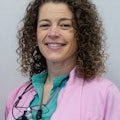 Jessica Atkinson, MEd, BSDH, RDH, FADHA
Jessica Atkinson, MEd, BSDH, RDH, FADHA
Jessica Atkinson, MEd, BSDH, RDH, FADHA, is a dental hygiene educator, clinician, and advocate dedicated to advancing the profession through innovation and education. She combines her clinical expertise and love for education to create engaging, practical learning experiences. Jessica is an Associate Professor and Senior Clinic Coordinator at Utah Tech University, co-host of A Tale of Two Hygienists, and CEO of HYGIENE edgeUCATORS, where she develops continuing education for educators and clinicians. She co-founded Hygiene Edge, a platform with over 100,000 YouTube subscribers. Recognized with the Element Award and Outstanding Service Award, she is a Fellow of the ADHA and past president of UDHA.
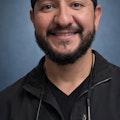 David Torres, CRDH
David Torres, CRDH
David Torres, CRDH, cohost of A Tale of Two Hygienists, is an experienced dental hygienist with over a decade of clinical expertise, specializing in patient education, preventive care, and the integration of modern dental technologies. Known for his passion for teaching, campus recruiting, and coaching, David is dedicated to elevating patient experiences while helping dental professionals improve efficiency, workflow, and long-term success.