Your body is your most valuable tool: A conversation about self-care for dental hygienists



Episode highlights
-
Treat your body like your most valuable piece of equipment. Your energy, health, and ability to care for patients deserve the same attention you give the tools in your operatory.
-
Don't let healthy habits become another full-time job. Nutrition and fitness tracking can be useful, but overthinking every choice can take the enjoyment out of everyday life.
-
Give yourself permission to move and take breaks. A quick stretch or bathroom break is a reasonable need—not something you should continually push aside for the schedule.
-
Make self-care a boundary, not an afterthought. Meeting your basic needs helps you show up for patients, coworkers, and the people in your life.
-
Look for opportunities to build connection and appreciation. Being present, remembering details, and recognizing the work of others can make a difference in the dental team.
It's a cliché, but self-care is not selfish. You have to take care of yourself first. It's about boundaries.
- Dr. Uche Odiatu
Episode description
Dental hygienists spend their days focused on patient care, but how often do they make their own well-being a priority? In this episode of A Tale of Two Hygienists, Dave Torres and Jessica Atkinson talk with Dr. Uche Odiatu about treating the body like the most valuable piece of equipment in the practice. The conversation covers everyday nutrition choices, movement throughout the workday, sleep and health tracking, and the importance of recognizing when we're overthinking our routines.
Dr. Odiatu also encourages dental professionals to pay attention to their own needs, set boundaries, and make space for simple habits that support their energy and focus. From taking a much-needed break between patients to finding ways to be more present, this conversation is a reminder that caring for yourself is part of showing up for others.
A Tale of Two Hygienists podcast: Episode 565 with Dr. Uche Odiatu
Introduction: movement, energy, and the effects of sitting — 01:00
Dave Torres: And welcome back, listeners, to another episode of the Two Hygienists podcast. I'm Dave, and I'm here with my very energized co-host.
Jessica Atkinson: I am energized now! I'm energized because we're here at RDH Under One Roof, and Dr. Uche Odiatu just ran us through a nice lymphatic awakening. Dave and I have been sitting here for a little while, which you could probably tell.
Dr. Uche Odiatu: I know. You can feel the energy around people. We're hardworking people, but you sit and you sit. In human history, cavemen and cavewomen only sat when they were sick or out of food. There were no chairs for two million years. Homo habilis, Homo erectus, Neanderthal, Homo sapiens. In terms of sitting, there was no such thing as a seat with a back on it. Sitting really affects the hips and the back of the neck, and it can make breathing more labored. Oftentimes, when you're in an office, you think, "Wow, I didn't do anything all day, but my neck is sore. I have a headache." All the small muscles in the back of the neck are working harder, trying to push oxygen to your brain. And even though the brain weighs only three pounds, it uses 25% of the incoming oxygen.
So, you know, you guys are into it. I could tell. You guys are!
Jessica Atkinson: Now I have more oxygen in my brain. We actually were like, "Hurry, push record!" We'd already started talking about 900 things. We had to push record because this is good stuff. I offered Dave some of my granola bar. I said, "Hey, this is the one I like a lot." So I left you a quarter of it, and this one I like a little less, so there's a half. Do you want some? And then Dr. Uche Odiatu went right into sharing about the microbiome. Okay, push record. Go, go!
The microbiome, bacteria, and sugar — 02:44
Dr. Uche Odiatu: Because we're too clean. Scientific American said a few years ago that one of the reasons our immune systems are weaker and we're seeing so many immune issues comes down to four things. One is antibiotics in the food, including antibiotics in meat used as a growth enhancer. Each of us has about 40 trillion bacterial cells inside us, so that's 120 trillion cells between the three of us.
Jessica Atkinson: And that's a party!
Dr. Uche Odiatu: It is a party. It's a bacterial baptism we're having right now. A revival!
We're too clean, we have too many antibiotics, and we're too sedentary. And what's the other one? Too much sugar. Twenty-two spoonfuls a day doesn't sound like much, but a muffin, a juice, and a pop can add up to 80 grams a day, or 64 pounds a year. When I think about human history, going back two million years to Homo habilis and Homo erectus, we'd average about three pounds of natural sugar—not even processed sugar—for 1.9 million years. And it's only in the last 50 years that we're doing 60 pounds a day. That alone can make us sick. It can age us. It's basically destroying our metabolism and affecting our teeth and gums through inflammation.
Jessica Atkinson: So bacteria like sugar just as much as we do.
Dr. Uche Odiatu: No, bacteria are interesting. Everyone in the media seems to hate bacteria, but ultimately, bacteria train us. They help train our immune systems to be stronger.
Jessica Atkinson: What we were learning earlier is that some bacteria are good when they're starving, and some bacteria are good when they're not starving. You've got to find a balance—a happy microbiome. When I think about sugar, if you're feeding the bacteria that are causing dysbiosis in an already unbalanced environment, then you're going to have a problem, right?
Dr. Uche Odiatu: Most bacteria are good for us. 91% of the bacteria in all three of us are beneficial. They're friends. One percent are bad, but the bad ones are kept at bay when you keep feeding the good ones. It's like having one bad kid in a classroom. If there are 40 good kids, one bad kid can't cause much trouble. But if you get down to 20 bad kids and 20 good kids, now the teacher has a hard time.
The idea is to keep feeding the good bacteria and starving the bad ones, but you can never get rid of the bad ones completely.
Jessica Atkinson: You can't, because it won't be good for you.
Dr. Uche Odiatu: Germ-free mice are skinny, they can't have babies, and they have no immune systems. Being germ-free isn't good for us, but we always think about sanitizing: antimicrobial, antibiotic, anti-everything.
Jessica Atkinson: That is true. It's anti-life.
Listen: Rethinking the oral microbiome on A Tale of Two Hygienists podast
Nutrition habits that support the workday — 05:12
Dave Torres: Let's talk a little more about nutrition for dental professionals. I'm thinking about going to work and struggling with food cravings. What are some things we can focus on as we take care of ourselves so that we can take care of our patients, especially when it comes to nutrition?
Dr. Uche Odiatu: I call eating healthy in the morning "front-loading your day." If you front-load the day with good nutrition at breakfast, you'll actually have an easier time saying yes to good things at lunch. When the rep comes in with 30 Krispy Kreme donuts, you know, you've already had so many good things.
Think about your honeymoon. You're so full of love for your spouse that Brad Pitt or Angelina Jolie could walk by in a wet towel, and you wouldn't even look—or maybe just a quick look! You're so focused on the love of your life.
It's the same idea when you front-load your day with good food. You're so full of love, and your body is so well taken care of, that you don't have time for dalliances. But if you miss breakfast and have almost like a dessert coffee on your break, that's different. Dark-roast coffee is really good for you, but then you put whipped cream, a maraschino cherry, and chocolate on it. Now you're at the whim of whatever comes your way—the rep with the donuts.
Jessica Atkinson: You've started down a slippery slope.
Dr. Uche Odiatu: A slippery slope of debauchery.
Jessica Atkinson: Debauchery!
From conscious effort to second nature — 06:29
Dave Torres: What are some practical things you suggest? Maybe more fiber, an apple, or avocado?
Dr. Uche Odiatu: I think those are good ideas. If you just follow me around, you'll see that I do so many things automatically. The whole idea is to get to a point where healthy choices become second nature.
Stephen Covey, in his landmark book The 7 Habits of Highly Effective People, talked about how most people are out of shape and don't know how out of shape they are. They just suffer and creep through life, taking medications, getting off medications, going through medications, and using over-the-counter medications. That's unconscious incompetence.
The second level is when you say, "Wow, I feel like crap. I just got my blood work done. I look like my driver's license picture." That's conscious incompetence.
A lot of dental professionals are at the conscious competence level. They're counting calories, using a fiber app, working with a trainer, memorizing things, tracking workouts, and looking everything up.
Jessica Atkinson: They've got another full-time job!
Dr. Uche Odiatu: That's conscious competence. You don't want to stay there unless you're a professional athlete.
Ideally, you want to get to unconscious competence, like Michael Jordan, where you're enjoying life and effortlessly choosing the right things at a buffet. You're saying no to the donuts and going home to celebrate with your friends or family without thinking about all the food. If we were going out to dinner with other media people and experts in Hollywood—industry leaders, trainers, athletes—and there was an amazing buffet, would you spend more time with the food or talking to the director, the producer, and the movers and shakers?
My advice is: crave the conversation, not the food. Crave the conversation, not the food.
If you're on a long, romantic date with your significant other, are you scarfing down food, or are you talking to your partner about life, liberty, freedom, and bliss? But we're trained to think of food as the focus. When people go away on their honeymoon to a five-star Sandals resort, the first thing people ask isn't, "How was the sex?" They ask, "How was the food?"
Jessica Atkinson: How about that guacamole?
Dr. Uche Odiatu: How about the guacamole? That marriage is already teetering! If you're talking about the food at your honeymoon, you are … another debaucherous—
Jessica Atkinson: Another slippery slope.
Dr. Uche Odiatu: Another slippery slope. Yes.
Treating your body like high-performance equipment — 08:49
Dave Torres: What I'm hearing is that there's a compound effect to making those choices. You're not starving yourself of conversation; you're just not making food the focus. That makes you a better clinician and helps you make better choices and decisions. You have the energy and mindset to say, "Hey, I can do this task, no problem." Instead of craving a Frappuccino, you're ready to get into the meat and potatoes of an SRP treatment.
Dr. Uche Odiatu: Exactly. With unconscious competence, you want to think, "What's best for my body and mind today, considering my patients?"
Maybe I have nine patients, three of them heavy perio patients, and a podcast at lunch. What do I need to eat to fuel my day, instead of asking what I feel like having?
A race car driver doesn't ask, "What kind of fuel do I feel like putting in my sports car?" You put in premium fuel. Premium body, premium fuel.
If you had to replace your lungs because of cystic fibrosis, it could cost $800,000. So many dental professionals think about the most expensive piece of equipment in the practice, but I've never had anyone say the most expensive piece of equipment is their body. Everyone mentions their digital pan, their $80,000 operatory, or their CT scan. No one ever says, "Me. I'm irreplaceable." A hip replacement can cost $50,000. A knee replacement can cost $40,000. Think of your body like a high-performance race car. If you just got a new car, you might detail it, Q-tip the wheel well, and make sure nobody eats in the back seat or vapes or smokes inside it.
Treating your body like a Formula One race car means taking better care of it. Treat it with reverence.
Finding a sustainable relationship with food and health tracking — 10:18
Jessica Atkinson: I like this idea of unconscious competence and treating your body with reverence. I think we've all been with someone who's like, "I'll just have the salad. I can't have this, I can't have that. I'll just have the fish. Please don't cook it with butter."
That feels very conscious, almost like you're constantly having to choose one thing instead of another. How do you shift that? It feels unsustainable and not authentic. How do you get to a place where you're unconsciously choosing what fuels your body? Maybe you're looking at a burger and a fish fillet, and you're not labeling one as good and the other as bad. You're choosing what is going to fuel your body better.
Dr. Uche Odiatu: Some people do that naturally, luckily. Other people have to learn it. If you're obsessing about food every day, it's called orthorexia. You get to the point where you can't even enjoy food because you're so busy looking at micronutrients and macronutrients.
Jessica Atkinson: I've met people like that.
Dr. Uche Odiatu: I would do that if I were an Olympic athlete. But if you're a mom of four, a dad of three, or you own four practices, you don't want to put two hours a day into obsessing about your calories and fiber intake. Orthorexia is similar to anorexia. There's also exercise bulimia, where people look at how much food they ate the night before and decide how long they're going to run that day. They punish themselves for overeating.
Jessica Atkinson: That sounds like a hard way to live.
Dr. Uche Odiatu: People with Oura rings and sleep rings might think, "Wow, I feel great," and then right away they have to check their ring. If you feel great, why check your ring? "Oh, 70%." Now they feel like crap.
Dave Torres: I noticed that I don't wear a smartwatch anymore, and I felt so relieved. I've had meetings where the thing is dinging because my heart rate is going up, whether I'm excited, stressed out, or whatever. I'm glad you brought that up, because I do think a lot of people focus too much on measuring everything.
Dr. Uche Odiatu: Matthew Walker, a neuroscientist out of Berkeley, said there are so many sleep monitors—rings, watches, pillows, and everything else—that people actually can't enjoy their sleep.
It's like going out on a date when everything is going well. Imagine asking yourself how it's going and then analyzing every detail. "I shook your hand. That's a two-second handshake. Eye contact: left eye for three seconds, right eye for four seconds. Then I look down at your mouth for two seconds, back up to your eyes, lean in twice, and lean back."
Jessica Atkinson: You're counting in your head!
Dr. Uche Odiatu: Oh my God. That would be a great dinner! People do that with their fitness. Imagine doing that during a romantic encounter. "Put my hand here, other hand here. I hugged her twice, one kiss, hold it for three. Tongue comes out. Left tongue, right tongue, nibble on the ear, two bites, other ear." Oh yeah, that's great!
I like to reduce things to the ridiculous.
Jessica Atkinson: You're reducing it to the ridiculous, but I'm laughing because I've seen the ridiculous in action. I've seen people get so prescriptive: do this, then this; don't eat that before you eat this. It gets to the point where how do you even make a decision about what to have for breakfast? If you're so worried that one micronutrient is going to be overridden by a macronutrient, you start thinking you're not going to get any nutrients at all.
Letting go of overthinking and finding your flow — 14:17
Dr. Uche Odiatu: I was asked, "Dr. Odiatu, when should I have my creatine—before or after coffee?"
I said, "It's not amoxicillin. Breathe!"
Then someone asks, "What's the best kind of green tea?"
"Green tea bagged or loose? Organic or not organic? Jasmine?"
Oh my God. Give me a hug.
Jessica Atkinson: Yeah.
Dr. Uche Odiatu: I'm going to count the hug. I'll hug you on the left side so my heart can make contact with yours for a heartbeat.
Jessica Atkinson: For 20 seconds, to close that stress cycle.
Dr. Uche Odiatu: And then the other side. A lot of human beings overthink things. As dental professionals, we do overthink things. It's good to think things through before surgery. It's good to think. But really good surgeons and really good hygienists get into that non-conscious state.
Jessica Atkinson: They get into that flow state.
Dr. Uche Odiatu: Flow state. Time passes by. But if you're eating and counting your calories, thinking, "I've got to chew because my mom said 32 times," then you're thinking about chewing on one side, and the dentist said to chew equally on both sides. So, 15, 16 on one side, then 16, 17 on the other. Then you swallow, focus, and close your eyes. You're swallowing with 50 muscles as the food goes down through your esophagus. Like—Oh my God. You're a fun guy to eat with!
Dave Torres: You did something beautiful, right? Before we got started, you were like, "Come on, guys, let's go stretch." And behind the scenes, you get to see that.
But how do we not overthink it? How does a dental hygienist not overthink? Do we need a buddy or a partner who encourages us? You did that with us. You said, "Hey, come on, let's go stretch."
Dr. Uche Odiatu: People ask right away, "How many should we do? Left side? Right side? I didn't do the right side!" You can't overthink it. Look at cavemen and cavewomen, two million years of history of Homo sapiens, Homo habilis, and Homo erectus. We can overthink a lot and not enjoy it. You can overthink anything. Overthinking doesn't help anything go well.
Jessica Atkinson: Right. We get into black-and-white thinking and all-or-nothing thinking. "Well, I didn't do it." Do one. I mean, just do one.
Dr. Uche Odiatu: How much? What's the best time? How long should I do this for? Do I have to do it between every interview? Most interviews, it's a good idea. But just moving is a good idea. I intuitively thought, "Let's move before we start." And actually, I was kind of selfish. It wasn't for you; it was for me.
Jessica Atkinson: Honestly, when you said, "Let's get up," the thought I had right before that was, "I should probably stand up." But I looked down at my clock and saw that it was 1:01. We were supposed to start at 1:00, and I overrode my intuitive sense that I should move. I think that's what happens during a day in the clinic. You think, "I need to go to the bathroom," but you look at the clock, and the office manager has just come up and said your patient is here. You override that feeling, and before you know it, you haven't gone to the bathroom all day.
Dr. Uche Odiatu: Which actually causes high blood pressure. Your heart rate variability goes down if you're not getting rid of waste.
"Do I continue scaling? I have to poop, but I could hold it in during the deep scaling. There might be some sounds of turbulence under the chair. Would you rather have me not poop or poop?"
You go, and then you come back. Just say, "I'm going to take a stretch break," or "I'm going to let you get settled." You had a busy time. You came all the way across town. Let the patient get settled, and then you leave and come back. You don't have to say, "I'm going to go pee." You can simply say, "I have to step out for a moment."
Jessica Atkinson: It's the shift of giving yourself permission.
Dave Torres: This is a friendly reminder: don't overthink it, and don't hold it in!
Dr. Uche Odiatu: Don't hold it in.
Jessica Atkinson: Give yourself permission to say, "I'm going to take that bio break. I'm going to go do those things."
I often let other things override my intuition or what I need to do in that moment. I think, "Oh, the doctor needs to come into the exam now," instead of saying, "Hey, I'll be right back."
Dr. Uche Odiatu: Without even saying what you're doing.
Jessica Atkinson: Yeah.
Self-care, boundaries, and meeting your own needs — 17:58
Dr. Uche Odiatu: Abraham Maslow, a leader in clinical psychology in the 20th century, described the first level as physiology: safety, being fed, and being rested. Connection, contribution, and altruism all come after that. A lot of people do volunteer work and run themselves ragged. They look like hell, but they're giving, giving, giving. I have four dental things I'm doing, and I'm giving back here, but they're not taking care of themselves.
Jessica Atkinson: Often I'm like, who wants that life?
Dr. Uche Odiatu: The spouse moved out a long time ago, the dog died, and they don't even know—but they're giving, giving, giving. They're selfless.
It's a cliché, but self-care is not selfish. You have to take care of yourself first. It's about boundaries.
Jessica Atkinson: But it's hard.
Dr. Uche Odiatu: My boundaries are non-negotiable. The managers are looking at you? Non-negotiable boundary. And then just let the patient get settled. They just came from out of town. Let them get settled, and then you leave and come back. Let the manager do what they need to do.
Jessica Atkinson: I think you have to unlearn some of the things you've learned that aren't serving you. Then give yourself permission to meet those needs at that first level. You don't have to announce that you're going to the bathroom. You can just say, "I'll be right back." I could have said, "It's 1:01. It takes 30 seconds for me to stand."
Recognizing that as we're talking, I'm seeing it in myself. Maybe I let other things override what I need. Think about your dental day: you let the fact that the clock is ticking override so many things that would only take two minutes.
Dave Torres: It's going back to taking care of the most expensive thing you have, which is your body. What are some nutritional values we can implement to help us do that?
Keep reading: 3 simple micro-habits to support hygienists’ well-being and resilience
Becoming more conscious of everyday habits — 19:48
Dr. Uche Odiatu: There's a thing called metacognition. Metacognition means catching yourself thinking and doing something differently.
Most of us live our lives 90% of the time unconsciously. You might think, "Uche, I'm totally conscious all day." But what side of the bed did you get out of today? Probably the same side you've gotten out of for the last 12 or 30 years. What seat did you sit in at the dinner table? Probably the same seat. What hand do you use to grab your coffee cup? How long do you let this for? How long do you brush for?
We do everything unconsciously. Without even looking, you take the same route to work all the time. Someone says something to you, and you'll automatically answer back. That's unconscious. Becoming conscious is called metacognition. Most people live unconsciously. That brings me to a cool concept about time. When you say, "Wow, the three days flew by," it means you weren't conscious the whole time. But if you can slow down—take a gentle inhale, look at someone's face, exhale, and enjoy the moment—you can become more present.
Jessica Atkinson: Three seconds inhaling.
Dr. Uche Odiatu: Three seconds. There you go. I just said to inhale and slow down the exhale. I've actually slowed down time by enjoying being present with this conversation. Now I've created more depth in the moment.
Albert Einstein said there's no such thing as time, actually. It's an illusion because it changes depending on what you're doing. People say, "My kids are growing up really quickly. Time flies by." You weren't a conscious mom. "My honeymoon flew by." You never spent a conscious moment looking into your lover's eyes.
Jessica Atkinson: That hurts.
Dr. Uche Odiatu: I don't want anyone saying time flew by. I guess you weren't conscious of your dinner. The vacation flew by, life flew by, my career flew by. You weren't conscious.
Jessica Atkinson: So this is going by so slowly!
Dr. Uche Odiatu: That's the biggest conflict. Slow can feel like being tortured in Guantanamo Bay. That's the opposite.
Jessica Atkinson: Not too slow. I just mean this is going by so slowly.
Dr. Uche Odiatu: When you add depth, you think of life as linear. People ask linear questions: "How old are you?" "How many years have you been a dentist?" We have to pay taxes on time, and we fill up the gas tank when it's on E. But how many of us have been on E and gone another 30 miles? There's a spiritual fuel in that time.
Jessica Atkinson: I actually have no idea. I'm like, how many more miles could I possibly go?
Dr. Uche Odiatu: Go on E! That's the miracle of perception. Eckhart Tolle talks about creating depth in the moment. I do that by being very present, looking at your face, and remembering you guys. If someone asked me who I interviewed on that Friday at 1 o'clock eight years ago, I would remember. I created depth in that moment. I love creating depth.
Creating meaningful memories and emotional connections — 23:09
Jessica Atkinson: I'm not very good with dates, but I can create depth in my memories of people. I'm grateful that I've been able to do that. I can remember what people say or something they told me they enjoyed. That's happened to me in my life, and people are like, "Nobody's ever remembered that."
Dr. Uche Odiatu: That's because you anchor emotion with it. When someone says, "I think I saw you," and I say, "Oh, yeah, I remember you. We were at that event," it's because you created emotion with that memory. Anything that's important, you remember.
Jessica Atkinson: Sometimes I remember things incorrectly, though. My friend Angie is from Taiwan, but I thought she was from Korea because she and I talk about Korean love dramas together. She went to Korea one summer and told me about the trip.
In my mind, I thought she was Korean, but she's not. It's interesting how I'm attaching emotion to the story I have with her. I had more emotional connection with Korea... same sameness, or a connecting point, and I misremembered something.
Dr. Uche Odiatu: And that's okay. Countries—we're humans. If aliens came down to attack us, there are eight billion humans. Really, we're the same person. If you look at metaphysics and quantum physics, we could all just be one great entity circling back within itself—as you, as me. I'm basically talking to myself right now. You're mirroring back everything that I am.
Jessica Atkinson: How do you sound?
Dr. Uche Odiatu: You look great.
What we see in others can reflect what we see in ourselves — 24:27
Dr. Uche Odiatu: Deepak Chopra says that whatever you see in others, you have in yourself. If you see me as annoying, it's because you're annoying. Some people love me. People who love themselves love me. People who hate themselves hate me.
"I can't stand that dude.” They hate that person. "Do you like yourself?" "I hate myself, too."
The thing is, if you love yourself, you see love in others. If you’re an a-hole, you see a-holes everywhere. People say, "I can pick a cheat anywhere." You have to watch your pocket when you're hanging out with them. There's a quote—I love the quote, but I don't know who said it: "In a crowd, all the pickpocket sees is pockets."
Jessica Atkinson: Interesting.
Dr. Uche Odiatu: So all the a-holes see is a-holes. If you're a giver, you see lots of opportunities to give. If you're a lover, you see lots of opportunities to love.
Giving to others while taking care of yourself — 25:16
Dave Torres: That's fascinating. I think that's what we do in the dental world, right? We just give, give, give. We want to incorporate those things, too.
I want to hear more about dentistry and how you work and serve. How do you do all of that while still having the depth you're talking about every single time? You're constantly sharing information, articles, and books. You give so much depth to everything. I don't see you slowing down in terms of the impact you're making. I see you at all these conferences. What are some of the things people come to you for help with, where you tell them, "It's easy"?
Dr. Uche Odiatu: It's an illusion, too. It's like makeup. It looks like I'm busy. I'm posting here, posting there. It's an illusion. I'm not always recording. This morning, I didn't do much. What I did was be very present. I was present talking to my friend at Sonicare. I was present talking to Amy Sanders, a hygienist. I was present talking to Trisha Osuna at GC America.
I was present having my latte, and I bought it intentionally. I thought about what I needed to have a good interview. I had walnuts and carrots. It's very intentional. It's self-care.
Nutrition, brain health, and choline — 26:29
Jessica Atkinson: All those are good for your brain, they say.
Dr. Uche Odiatu: Yeah. Walnuts are shaped like the brain. There's DHA. Only one in seven people—here we go with the statistics—only one in seven of us has enough omega-3s for brain health.
Brain fog, struggling, poor memory, feeling like you need to retire—it may just be a nutrient problem. It's not necessarily a lack of desire. Nutrients are a bottleneck for most people. 90%—and this is wild—everyone knows or has heard the term acetylcholine. Acetylcholine is a neurotransmitter. If you need to move, it sends a signal, and your muscle is able to move. It's made during deep sleep. If you're getting deep sleep, you have lots of acetylcholine. People with dementia have very little acetylcholine. People with full-blown Parkinson's, vascular issues, Lewy body issues, and frontal-lobe issues often have low acetylcholine.
You need acetylcholine to make decisions and carry out executive functioning. The precursor for acetylcholine is choline: C-H-O-L-I-N-E. It's a micronutrient.
If you looked on your phone right now, you could ask ChatGPT or Gemini, "What's the percentage of the population that's low in choline?" Ask ChatGPT, "What's the percentage of people in America who are low in choline?" and see what percentage you come up with.
Remember, choline is the precursor to acetylcholine, which you need for brain health, executive functioning, and memory consolidation. Choline. It's kind of mind-blowing how many of us are low in choline.
Dave Torres: And a lot of other things.
Dr. Uche Odiatu: But acetylcholine—you need to be intentional and make decisions.
Jessica Atkinson: It says there isn't a scientifically established percentage.
Dr. Uche Odiatu: It's 90% low.
Jessica Atkinson: It says 90%. It says here that acetylcholine isn't something we routinely measure in people. It's a neurotransmitter.
Dr. Uche Odiatu: It's not on blood work. But if you look up what percentage of people are low in choline—not acetylcholine, but choline—what percentage of people are low in choline? Ninety percent consume less.
Jessica Atkinson: Right here, it says only about 10 to 11 meet the recommended 10%.
Dr. Uche Odiatu: So if there are 5,000 people here, about 450 are getting enough choline to make good decisions.
Someone could be walking by in a daze, unable to make decisions. Choline—90% of people aren't getting enough. It's important for making decisions. So they're making poor decisions and mistakes while driving. How many times have people said, "I pulled into traffic. I never saw the car coming"? Low in choline.
You know, I should probably compliment my spouse right now, but I'm not going there. I want to make a point about bad decision-making. You're going to wreck the evening. Your spouse comes down and asks, "What do you think of my tuxedo?" You should probably tell him it looks great because you're leaving the house. Instead, you say it makes him look fat, and the rest of the night doesn't go well.
That's poor decision-making. The precursor to acetylcholine is choline. Ninety percent of us are low in choline. The number one natural food source of choline is eggs.
Jessica Atkinson: Oh, I love eggs!
Dr. Uche Odiatu: In the '80s and '90s, medical doctors and nutritionists said eggs were toxic and bad news. Maybe you could have one a week. For you, sir, maybe you should go and sniff the shell!
It was like that for years. So, if we weren't low in choline enough already, we spent 20 years being told to avoid one of the main sources. A sea of Alzheimer's is taking place. Seven million people in America have Alzheimer's, the highest amount ever. They say it's going to double in the next 20 years. They're only now saying you can eat more eggs. Eggs are the number one source. I'm kind of sad about that, so I talk about eggs a lot with my patients.
Jessica Atkinson: Eggs!
Dr. Uche Odiatu: And they love it. They say, "Doctor, we learn something new every time I come in. I can't wait to see you every three months."
Recognizing dental professionals as partners in health — 30:14
Dr. Uche Odiatu: My physician is a very good doctor in her 50s. Most physicians think of us as tooth mechanics. "Oh, you scrape teeth and make them pretty for weddings, right? You put those little press-on nails on like Kim Kardashian."
They don't think of us as doctors. But my doctor thinks of me as a physician.
I said, "I'm not a dentist. I'm an oral physician."
Jessica Atkinson: I like that. Is that a designation?
Dr. Uche Odiatu: I said, "No, because that's who I am."
She knows I read a lot. She'll ask, "What book should I read now?" Here's a medical doctor asking a dentist what book she should read next. She's honest and humble. She told me the last book I recommended was so good that her patients loved it.
We're equal instead of feeling, "Oh, I'm seeing a physician."
Jessica Atkinson: I think that's the same thing within our microcosm of a dental office: seeing dental hygienists and dentists on a playing field of peers.
Dr. Uche Odiatu: Yeah. Dental professionals.
Jessica Atkinson: Yes. Being able to have that respect and reciprocity is really helpful and healthy.
Dr. Uche Odiatu: It is a team. It's annoying that we think we can all be separate. There are some dentists who say most of their fillings and restorative work come from the hygiene exams.
And then the hygienist thinks they can work on their own. Get a loan for $2 million. It's not easy. We need to share that burden and pay each other what we deserve to get paid.
Jessica Atkinson: That sharing of the burden can look a lot of different ways. I think of my friends who are able to go into nursing homes and share that burden, even though they otherwise might not be able to under certain laws or restrictions.
Maybe we can allow ourselves to share that burden in more creative ways and help alleviate the collective burden of oral disease.
Appreciation and encouragement within the dental team — 32:04
Dr. Uche Odiatu: Each of us, I think—and the book The Four Agreements by Don Miguel Ruiz talks about this—should think of ourselves as covered in wounds and sores. We can't even touch each other.
The dentist wants some appreciation. The last time an assistant said, "I love your filling," I'm waiting for my assistant to say, "I love my filling." I'm not going to tell her she did a great job because she never says, "I love the way you did my filling." I'm not going to tell a hygienist he or she does a good job because the last time she told me she liked my work was a long time ago. So we're all holding back appreciation. We're all wounded, all full of sores. The Four Agreements came out in 1996 or 1997. Wounded, wounded dental professionals.
Sleep-deprived, lacking choline, looking for love in all the wrong places.
Jessica Atkinson: So what I'm hearing is: eat a walnut.
Dr. Uche Odiatu: Yes.
Jessica Atkinson: Hug your friends for at least 20 seconds.
Dr. Uche Odiatu: Yeah, count on both sides.
Jessica Atkinson: On both sides. Feel that heartbeat. But I'd like to say that whoever did your dental work did a great job.
Dr. Uche Odiatu: Wow, you tell me now? Are you raising my bucket?
Jessica Atkinson: Yes, I'm filling your bucket. And whoever did your dental work—if that assistant didn't say after she was done with your filling that it looked good, I'm telling you right now: your anterior teeth look really good.
Dr. Uche Odiatu: No, I feel it. I feel it. Yeah, that smile tells everyone you love. Bear... That whole thing about finding something to enjoy in someone.
Closing thoughts: Uplifting one another — 33:21
Jessica Atkinson: Yes, and I think that's a great place for us to end today: remember to uplift each other.
Thank you for coming and being a mirror. It was a lovely mirror today.
Dr. Uche Odiatu: When is this coming out? When is this?
Jessica Atkinson: You're all hearing it right now in November.
Dr. Uche Odiatu: Oh, November.
Jessica Atkinson: So it's a—wow. Yeah, right now it's January. Maybe this will bring a little bit of sunshine to a dreary November day.
Dr. Uche Odiatu: The amount of energy we put into it, the amount of hours.
Jessica Atkinson: Oh, you're definitely going to feel this in November. You're going to feel it right now. You feel it!
Dr. Uche Odiatu: Thank you so much for coming. What's his name?
Jessica Atkinson: Regis.
Dr. Uche Odiatu: Regis? No, the new guy from American Idol.
Jessica Atkinson: Ryan.
Dr. Uche Odiatu: Ryan.
Jessica Atkinson: Ryan. That's much better.
Dr. Uche Odiatu: Ryan and Kathy. Yeah, you guys are high-energy people.
Dave Torres: Awesome. Thank you, Doc.
Dr. Uche Odiatu: I appreciate it.
Jessica Atkinson: That's a wrap on today's episode of A Tale of Two Hygienists. If this conversation made you feel seen, inspired, or even just a little fired up, share it with a fellow hygienist or fellow dental professional. Share it with your neighbors, your friends—share it with everyone. That is how this community grows.
Dave Torres: Make sure you subscribe, leave us a review, and connect with us on social media so we can keep this conversation going. Remember, your career, your voice, and your story matter here. We're Dave and Jessica, and until next time—
Jessica Atkinson: Keep learning, keep laughing, and keep showing up for yourself and for each other.
Where to find our guest
Connect with Dr. Uche Odiatu and explore more of his work:
Take a fresh look at how nutrition can support better oral health, stronger clinical habits, and long-term wellness.
Contact the ATOTH hosts
Jessica Atkinson: [email protected]
Dave Torres: [email protected]
About the Author
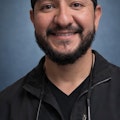 David Torres, CRDH
David Torres, CRDH, cohost of A Tale of Two Hygienists, is an experienced dental hygienist with over a decade of clinical expertise, specializing in patient education, preventive care, and the integration of modern dental technologies. Known for his passion for teaching, campus recruiting, and coaching, David is dedicated to elevating patient experiences while helping dental professionals improve efficiency, workflow, and long-term success.
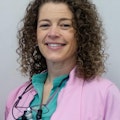 Jessica Atkinson, MEd, BSDH, RDH, FADHA
Jessica Atkinson, MEd, BSDH, RDH, FADHA, is a dental hygiene educator, clinician, and advocate dedicated to advancing the profession through innovation and education. She combines her clinical expertise and love for education to create engaging, practical learning experiences. Jessica is an Associate Professor and Senior Clinic Coordinator at Utah Tech University, co-host of A Tale of Two Hygienists, and CEO of HYGIENE edgeUCATORS, where she develops continuing education for educators and clinicians. She co-founded Hygiene Edge, a platform with over 100,000 YouTube subscribers. Recognized with the Element Award and Outstanding Service Award, she is a Fellow of the ADHA and past president of UDHA.
Related
 Wellness for dental hygienists
 2202 Rd Hdav P01