Don’t be afraid to be weird: Art, humor, and finding joy beyond the op




In this January side-gig series episode, David Torres and Jessica Atkinson are joined by dental hygienist and artist Ashley Kear, whose dental-themed art and humor have quietly built a loyal following across the profession.
Ashley shares how her love of art, once set aside in favor of a clinical career, re-emerged as a creative outlet during COVID and eventually evolved into a small Etsy business centered on stickers, designs, and playful dental culture references. Rather than chasing scale or replacement income, Ashley explains why keeping her work fun, flexible, and pressure-free has been key to sustaining it.
The conversation explores how creativity can recharge clinicians, strengthen patient connections, and challenge the stereotype of the “uptight hygienist.” Ashley also reflects on transferable skills from hygiene to entrepreneurship, the importance of boundaries, and why following your intuition matters more than having a perfect plan.
This episode is a reminder that hygienists are multifaceted professionals—and that sometimes the best career growth comes from honoring the parts of yourself that exist outside the operatory.
Topics discussed include:
- Turning creativity into a low-pressure side project
- Why not every passion needs to become a full-time business
- Using humor and art to build patient rapport
- Finding balance between clinical work, family, and creative energy
- Letting intuition—not trends—guide your next step
Whether you’re feeling stuck, burnt out, or simply curious about what else might be possible, this conversation offers reassurance that joy and professionalism don’t have to be at odds.
Episode Transcript
Jessica Atkinson
Welcome back to A Tale of Two Hygienists podcast, where your hosts are David Torres and Jessica Atkinson. And guys, for the month of January, we're hosting a special series featuring dental hygienists who started their side gigs—some may even call it projects, businesses—and create a path outside of clinical practice. And whether you've been here before since episode one or brand new, welcome.
Welcome to episode 521 where we are joined by one of my favorite side-giggers, Ashley Kear. And you can't see me, but I am reaping all of Ashley's goodness and I'm going to have her tell you a little bit about that.
And I'm going to tell you first a little bit about Ashley. Ashley grew up as what she calls an army brat. I'd love to hear more about that. She grew up in Alabama and Virginia, and she went to dental hygiene school at VCU and has been practicing clinical hygiene for 20 years. You can't see Ashley, but if you could see her, you'd be like, "That's a lie. She cannot be practicing for 20 years." But that's what she said. That's what she said.
And with this illustrious 20-year clinical career and your life, Ashley, this is a lovely bio, but what do you want to be known for in our industry?
Ashley Kear
Hello. Thank you for having me, by the way. Happy—I'm so happy. Happy New Year to everyone. I think I'd like to be known for my love of art as well too.
That was—that's always been a passion of mine ever since I was young and I wanted to go to art school. But you know how many artists can actually make a career off what they do? So I had some family who was in healthcare and just kind of pivoted toward dentistry. I’m working with my hands. So dentistry is an art in itself as well. So here I am.
Jessica Atkinson
Here she is. And let me tell you, you have made a business, a life, an impact with your art in the dental community. If you do not follow Ashley, I want you to pause this episode right now and go and follow her on all of the socials, because your life is going to be infused with dental art and humor.
And I have two of my tumblers in front of me and I would say is populated 90% with Ashley's handiwork, her art. So if you haven't seen this, she—and she's also made custom art for me. And they always go very well. And everybody asks me where I get them. And I am very happy to share. That is from Ashley Kear and I have, for example, I'm a little bit of a Potterhead and I have my Hogwarts School of Toothcraft and Dentistry.
I mean, how cute is that with the houses? So, Ashley, can you tell us a little bit about what your business is and how this kind of happened?
The origins of a creative side hustle
Ashley Kear
So for right now, I—on my Etsy shop, I sell mainly stickers. I kind of dabble in doing like suncatchers and car charms. I kind of got into that over COVID, and I also have my partner Julie Varney with the Dental Gear Shop. She runs Dental Assistants Rock.
She does my shirts because I—I'm wearing one right now, but obviously people can't see that. But she was the one who kind of approached me years ago about doing that. And I'm just like, "I'm not—I can draw, but I'm not like a crafty person." And she had already had her shop established and she's like, "Well, why don't I take your designs and put them on shirts so you don't have to deal with it?"
I'm like, "Perfect, that's—that's great." And she—she's kind of been there almost from the get-go for me as well. And she—we always bounce ideas off each other and she's kind of like my best online friend. You know, we do a lot with that together. But that's pretty much my little business in a nutshell.
And I never thought it would be where it's at now, I really didn't. I had been—I think it was right before COVID. I was in the group on Facebook called Crafty Dental Professionals, and we put out some of my drawings and stuff up there and people like, "Oh, that'd be a great sticker. That'd be a great shirt."
And I'm like, "Really?" You know, I'm like, "I don't know. I just do this for fun, for stress relief." Art has always been kind of my stress relief and Julie had kind of been hounding me to do this. She's like, "I really think you should try this." And I'm like, "All right, you're persistent enough. Fine."
So that's where we ended. I ended up, I guess I also kind of got into it too, because you'd see a lot of designs out there and everything was pretty much, I don't know, it was just kind of generic, you know? And I wanted something creative. My mind is—I guess it's got endless depths of ideas can keep rolling out of it. But I'm just glad people kind of get that humor.
David Torres
So that is fantastic. I love that very much. Is there any specific—I mean, you mentioned you started this since COVID. Was this like—obviously you were having fun with it, but what made you empowered? Was it like your friend telling you like, "Hey, I really do think you can make this into a side"? So let's start with one sticker or one...
Ashley Kear
Percent. It was my friends because I—I just, I didn't know if I wanted to really do anything with it. And I didn't want to have like a lot of inventory. Like stickers were pretty low cost for inventory. And I went through a lot of trying different printers and things to see what would work because, you know, I want to put out a good product that lasts.
And some things I got, I'm like, "Oof, I really don't like this." And so it was a lot of trial and error with that. And my husband, he—he's an accountant, by the way. So he's, you know, luckily I have—have that, but he's like, "Look, okay, we'll give this a trial run on Etsy for like a couple months and just see how it works. And if it doesn't work, you know, just let's drop it."
So I did and it, you know, it's not—I will say now, I mean I've been doing this for a couple of years now. It is definitely not enough to replace income by any means. I mean, starving artist, that is true. And it's fun. It's an outlet for me.
And I get to meet a lot of cool people along the way. So it helps, you know, pay for some vacations and things, which is nice, but it definitely is a side thing. I don't really ever see it, you know, replacing my income. And that honestly was not the goal for it. You know, that's not the goal of this.
I want to have fun. I want to make people laugh and people smile. And I think that's—that was my main goal heading into—and to have fun with it. I think the day that it becomes I'm like, "Oh, this is such a burden," I think that's when I'm just going to be like, "All right, I'm out."
David Torres
It's time to go. Yeah.
Finding balance and sparking joy
Jessica Atkinson
Yeah. I love that you brought up that you wanted to be fun. You wanted to bring humor. And those are things that when you're in the grind, the 9 to 5—but for most of us, it's the 7 to 2 or the 8 to 6. You know, our clinical hours can become a drain on that creativity. Have you found that this is kind of lit a spark or improved your clinical experience in any way?
Ashley Kear
Oh, yeah, I think—I think definitely. My work is really—they're really cool with me. Like I can wear my shirts to work, they don't care. And patients notice it and especially like during the holidays and stuff and it—and it's fun and people are like, "Oh, what are you wearing today? Let me see what you're wearing today."
And so yeah, it definitely has. And I do think it helps. I am working four days a week, but I work kind of half days because I have to drop off my son to school and pick him up. So I think not completely being all days really helps with that.
I have had to find a balance between—because I used to be, "Okay, I'm going to do orders every day." I used to—I had to stop that and be like, "Okay, that's getting a lot," you know, coming home and having to do all my mom stuff and house stuff and balance that on top of that.
So I have kind of got my little schedule worked out where I'm like, "Okay, this—these days or these times, this is when I'm working on it and not." And as far as coming up with designs like, you know, things at work will come up or something funny will happen or I'll talk with patients about something and I'm like, "Oh, you know, that's like—I can move that into a design," or something like that.
So, you know, your mind is always spinning. It doesn't—it doesn't stop. And I am one of those people, I have—I have so many lists on my phone with ideas of things that I'm like, "Okay, I gotta jot it down because I won't remember it," but then I'll come back to it. So it definitely kind of goes both ways with things.
And it gets, you know, it's fun at work. And then patients think it's kind of—they think it's cool too. They think it's cool too. They're like, "Oh my gosh, you drew that?" And I'm like, "Yeah, I drew that." So it is cool.
Jessica Atkinson
You wanted—so being a hygienist for this long, what would you say are some of the skills that transfer—that transferred surprisingly well to having some sort of entrepreneurship and having a side hustle like this?
Ashley Kear
I think your ability to adapt to situations and talk with people and get to know people. I know, you know, I graduated 20 years ago and 20-year-old me is different from 40-year-old me now. And you know, you gain confidence with talking with people and with your clinical skills, relaying information.
And I think that kind of segues into helping out your business and things as well, because you have to be able to communicate with people and talk with people and feel—you really have to feel people out, too. I think that that really helps out a lot with the business aspects.
David Torres
Yeah, I think it's great. I think we all, you know, they—when we're seeing patients, being able to connect with them and having that—that communication skills is important. Also even fun. You mentioned it twice or like, "Oh, being able to have fun with it regardless," and having that interaction with the patients and just them asking you questions as being a people person. I think that's quite impactful.
Ashley Kear
Oh, I absolutely. I think, you know, we can be serious, but you know, there's been a lot of things the past couple of years has changed life. I mean, COVID was stressful. Things were stressful. But you have to find the joy in things as well because you can't, you know, even though some stupid things may happen or some depressing things may happen, if you can make light of it, I think that helps things as well too, and it helps to joke around with patients.
Oh my gosh, it makes people way more relaxed, you know, and being uptight all the time. I could never practice like that.
Breaking the "uptight" hygienist stereotype
Jessica Atkinson
So I think there has been a generality about dental hygienists that we are uptight, that that is a personality trait that we have.
And I think finding ways like this to break that ice and not take ourselves—I mean, take what we're doing seriously, but not take ourselves so seriously and find that humor and find the joy and find the idiosyncrasies sometimes. I like, you know, and poke fun at that. I love watching your posts and having your stickers that kind of poke fun or reveal things in a way that brings a chuckle.
For example, I have a sticker here that says "Tooth-a-gotchi." And if you are also a 40-year-old like Ashley and I, you will know a Tamagotchi. And so things like that, like bringing humor has really been fun for me to watch and observe. And I know that if I come to you with a crazy idea and you're like, "Totally, I got that."
And like, I've had Ashley make some great stuff for me, and it brings a lot of humor and a lightness and a connectivity. So I just did a humanitarian trip, and I wanted a sticker to give to everybody who was on that humanitarian trip. And Ashley made one that we love. It's a little—it's a little love booboo.
I know, like a dental, a booboo-booboo. And so that is like a piece that now connects the people in my trip together. And if they've been on a trip like that, they have that sticker and that's—and you create connection and you have that connection with your patients. I was curious about what you said. Sometimes patient interactions spark an idea. Can you tell us maybe one of those examples?
Ashley Kear
Oh yeah. Well, sometimes especially because, you know, we see all age ranges and you know, there's things that go viral and stuff and sometimes like I'll have younger patients mention something to me and I'm like, "Oh, I haven't heard of that." And then I'll go look it up and I'm like, "Oh, I can go spin that."
And that's fun. Or at least make a meme or something because I—I've always loved making memes. Like that's going to stay like that. Like I'll see something, I'm like, "Oh yeah, I can make that into a meme." I mean, I'm not going to make any money off that, but it's just—it's funny. So I think we all have like those stories.
David Torres
This has brought up a good example. I was talking to a patient and a younger teenager and he's like, "Yeah, bro, that's cap." And I was like, "What? What do you mean, like cap?" And I was like—but he embarrassed me. He was like, "You don't know what cap is?" And I'm like, "Like Captain America?"
And he's like, "No, that means like—" And I'm like, "It's three letters, man. Why would you change the word all of a sudden?" But we have to keep up with that. And I think being able to have some sort of sticker that relates a little bit of that core memory and how—yeah, it's amazing.
Ashley Kear
It's funny, I'm lucky my—my almost ten-year-old, like, I'll ask him things and he—like the whole "skibidi" thing now and he's like, "Oh mom, 'skibidi' is like—that's annoying."
But he—he's funny because he, you know, like, I can at least ask him, like, he'll know, he'll know what it means or he'll come to me with this stuff. He said, "Mom, have you heard of this?" I'm like, "No, just tell me, because I probably will."
Jessica Atkinson
You're like, "I need to hear it, I need—" and yes, hear. Well, it's funny, when David said "cap," I was thinking about embryology and the cap stage of tooth development.
Ashley Kear
Yes, exactly! Or like when "six-seven" came around, I was thinking about an anterior sickle scaler.
Jessica Atkinson
Or like, "Oh, that's—" Yeah, that's what I thought too. And I just was like, "H6/H7." That's immediately what I thought. I'm like, "I'm such a geek. I don't know what it means."
David Torres
The way our minds work, it just shifts to teeth. Well, see, that's great. You have your husband who was an accountant, and then you have your son who's a research consultant for new slang. So there.
Ashley Kear
Yes, yes. Or he'll be like, "Mom, that's so dumb. No, don't do that." And then he corrects me.
Jessica Atkinson
"It's cringe. It's cringe, not dumb."
Ashley Kear
"It's cringe, it's cringe."
Jessica Atkinson
It's something that I love that you do though, is you are tapping into multiple parts of your personality and finding this thread that connects. So one of my favorite things is your—a lot of your posts or your stickers are also—you've got—you've got a literary base here.
You got some—you got some—oh yeah. Got some, you got some. I would like to discuss a little bit about your music and your book connections, how those get connected to dental. Like we're talking about things like "cap" and then how they automatically have the dental connection. Well, I'm sure there's a way to automatically connect dental to—take it away.
Literary and musical fun
Ashley Kear
Absolutely. Oh my gosh. So it's funny, I've always loved music. The shirt—you can't see the shirt I'm wearing—but it says "Smells Like Teeth and Spit" like "Smells Like Teen Spirit." Because, you know, I'm an alt-grunge girl, you know, 90s alt-grunge girl. So, you know, stuff comes up on your For You page and things.
And I kept seeing like, you know, a lot of book stuff because I was trying to get back into reading and I'm like, "What do I want to read?" And I kept seeing, you know, Fourth Wing and ACOTAR and all this stuff. And I'm like, "What is this?" So I started—so, you know, if you know those books, you know those books.
So it's like dragons and fairies and all that stuff. And my latest sticker that I've sold out of, which I'm getting back in, and it says "Born to be a Dragon Rider, but forced to work in dentistry." And it's got a dragon on it. And then I did one that's the tooth that's standing on a bunch of books that—hold on, I have to read what I have here.
Okay, like, so if it's like—if you know Throne of Glass, it's Throne of Gingivitis. Game of Teeth instead of Game of Thrones. Interview with the Dentist, the sound of Interview with the Vampire. A Court of Caries and Decay. And suddenly—yeah. And then I have like, Encyclopedia of Tooth Fairy. So this is fun finding things like that.
Jessica Atkinson
There is such a following in that. Like, I have found some dental friends. So I have a little book club with some past students and they got me reading some similar books. Yes, yes, yes we do. And we had like this group, this connected group of book readers that were also dental nerds.
And so when I see these things, it's like, "Oh my gosh, this is—this is combining all of our loves and our creativity." And that is something that I really appreciate that you do is you find these ways that I think we can silo ourselves as hygienists and maybe have a veneer of personality that's not necessarily true.
And so you're like breaking this veneer of the generality of being one dimension, Type A, and you're exposing our nerdiness in so many ways.
Ashley Kear
Yes, yes. And like, you know, and the music thing, because I've been leaning into a lot of like metal this year—like metal music and things. And I know people will see—my favorite band right now is Sleep Token.
So I don't know if you guys have ever heard of them, but they kind of blew up this year. They've been—or I just discovered them from my For You page. And it's not—they don't classify themselves as metal, but they're like all over the place. But they wear these like masks when they perform and stuff.
So I was like, "Oh my God, instead of Sleep Token, Teeth Token." So I drew that. And I mean, I know what a mask—and since—and oh my gosh. So it's just—it's funny. So I'll use like their music or something in a lot of like my reels and whatnot and things too because I'm like, "Okay, you know, maybe I can find more dental nerds who like that kind of stuff too."
So I just find ways to kind of intertwine what I like into what I'm doing. And I think the thing is, I'm not looking at it from a point of what's going to get the most views, what's going to be popular. I'm like, "This is what I like. Maybe you're into it too." And if—that's cool, it's fine, because not every post I get a bunch of likes on, but you know, I have some in my brain, I just have to get it out.
Encouraging others to follow their gut
David Torres
So I'm curious. Now think about like that hygienist that's working 9 to 5, that's pregnant and is gonna be busy, or the one that's been doing it for a really, really long time—I mean, just like a new girl that just graduated and maybe they're starting to feel stuck or they're just kind of listening to this episode and they're like, "Man, like I'm a nerd, too. Like, I can do certain things, but that's not necessarily my thing."
Do you recommend they start, or how do you think are some of the steps where they can find their thing?
Ashley Kear
Just, you know, I am a big believer in following your gut and your intuition. I feel like I ignored that for a long time.
And you know, I think you need to do something that you find joy in, you know? And things will come along because you—I mean, I've been there. I was pregnant when I was working full-time and I was getting burnt out and all this stuff. You need something where you can have like a release, too. And I think that's very important that you're not like—
Like Jessica said, you're not one dimensional. We have other dimensions. We have other things that we like. And I just so happened to pivot this into a business. I mean, this was not my intention from the get-go. It was just something that morphed into that. And if it morphs into that, great. But you have to find something.
I think if you have something that you like and that's been kind of just nagging at your gut, you know, just go down that path. Because you know what? If things don't work out or if you decide you don't like it, fine. But, you know, just—I think we should always keep evolving ourselves. You know, we're not the same person we were five, ten, 15 years ago.
You know, we have different seasons of our life. And I think you need to just kind of go along with that, too. And, you know, like now—like I've always had something in my room where I've always wanted to learn piano or learn an instrument or something, and it's been like—even when I was a kid, my grandma had a piano at her house and she's like, "You have piano fingers, you need to do that."
And I'm like, "I don't know if I have time." My doctor is actually a really great pianist, too. She's amazing. And she's like, "Yeah, get a keyboard and try some things out." So and I'm like—god, of all the stuff I have on my plate right now—but I keep feeling like that's just nagging at me to do that.
And it's not anything that's going to my dental career or something, but I think it's something that's going to bring me happiness and joy, and I might share some of my struggles along the way with that. You know, I think it's something that's fun to do. So I think if you have something that's kind of nagging at you that you've always wanted to do, you need to have a release valve for something.
You need to have something that you think that you want to do that finds you joy, not that like, "Okay, that's going to be my hustle," or "that's going to be this." Because ultimately, if you're just doing it to think you're going to make money from it or think you're going to do this and it doesn't work out, then you're going to just be like, "Well, I just wasted a bunch of time."
But if it's something you've always wanted to try to do, be like, "Well, okay, you know what? I tried it and it didn't work out. Or I tried it and it did work out." So I think the big thing is follow your intuition.
David Torres
I think it's one of those things that like, honestly, when you look back, right, is like, "Would I love myself more for having tried and failed, or would I like not love myself as much if I didn't try at all?" Right.
Yeah. I think for somebody like us who've been in dentistry for a while, yes, we are very passionate about patient care and our careers and stuff, but it seems to me that there's a common theme whenever we start a side hustle: it almost gives you even more energy when you actually go work in the clinical setting, right?
Because you have that itch already scratched. You've already done something for yourself. So when you go to work, it's for work, you have fun, you enjoy, and you talk to your patients about your experience. And one of the best things about being a dental hygienist nowadays is that you have different types of people, and you have a lot of different conversations where maybe one of those patients could be the ones telling you like, "Yeah, go ahead and do it. You'd be really good at that. You got some piano hands," you know, anything? Yeah. So I think you're fantastic.
Building rapport and community
Ashley Kear
Yeah. It's nice to be able to relate to patients. I think, you know, we talk so much about how we're not just there to talk about home care. Honestly, I feel like we're kind of like therapists in a way, too, because we see our patients regularly.
We get to know them. Like—I will say, the office I'm at now, I really love. Our patients are great. You know, I really build a rapport with a lot of them. I really enjoy seeing them. And, you know, learn about their families and whatnot too. So it's kind of like an extended family, but you do hear things from them.
And I live outside of D.C. and it's a very connected area here. There's a lot of things going on. And it's great to have—you're giving back to your community. You feel like you're giving back to your community. You really feel like they're kind of your family, too. And I love that aspect of clinical.
And I think that that helps out with your—it's giving me joy, too.
Jessica Atkinson
So there are very few professions where people let you into their personal space. Yes. And I think when we breach that personal space, it allows us into their world and it allows them into ours and to share with them more than just—which is important—but also that, "Hey, who—who do you think?"
And I live outside of D.C. and it's a very, you know, connected area here. There's a lot of things going on. And it's great to have, you know, you're giving back to your community. You feel like you're giving back to your community. You really feel like they're kind of your family, too. And I love that aspect of clinical.
And I think that that helps out with your, you know, it's giving me joy, too.
Jessica Atkinson
So there are very few professions where people let you into their personal space. Yes. And I think when we—when we breach that personal space, it allows us into their world and it allows them into ours and to share with them more than just, oh, I—which is important, but also that, "Hey, who—who do you think?"
"Who you think is better in—and is Manon your favorite character?" Because yes. Because that line—and I love Manon too—like—our—and then you, you connect with people on a level that improves and strengthens that trust and translates, I believe, into how they care for themselves.
Ashley Kear
Oh, hundred percent. I mean, I especially like, you know, with with the books especially, I've connected with so many patients with books. And so I'm—I'm really surprised too because like especially some—some of like the older women, they're like, "Oh yeah, I'm like reading this book called ACOTAR."
I was like, "Oh yeah, I know about that." And they're like, "Oh, okay." "You read a little spicy for me, I know, stick with Throne of Glass." Like I—I know. Well, it was funny because I read ACOTAR first and honestly, I like Throne of Glassbetter. I dare to say like I do. It is such a—it is such a good story.
It's a good story. And, you know, I—I kind of—after I finished Throne of Glass, I waited for that series last out of all of her books because there were so many books to it. I was just like, "Oh, that's going to be a bear." But I mean, I went through that like really fast, and now I just kind of have a "Throne of Glass hangover." And I don't know, you know, I'm reading a couple of different things right now, but nothing is like scratch—reading that—that itch.
But I got a couple of books for Christmas and I got—I finally got a Kindle and I have Kindle Unlimited, so like—and I haven't been unlocked. Oh, yes. Yes. And my—my dental book—because I have a little group of dental dental book girls too—and they're like, "I'm just—wait. Just, you know—" I love that. "Just wait." So we are great.
Wrapping up
Jessica Atkinson
Yeah. You were one of our very first of this year to help us unlock a new level of A Tale of Two Hygienists podcast and start this year off really strong, Ashley, in reminding us to listen to our gut. Yes, remember that we are multifaceted and that those things can feed each other instead of be siloed.
And thank you so much for sharing your story.
Ashley Kear
Yes, don't be afraid to be weird. I mean, I've been on this earth long enough where it's, you know, it's—it's okay. You know, do what you do, whatever you like, you know, keep at it that.
Jessica Atkinson
I hope that's the sticker. "Don't be afraid to be weird." Be weird. I embrace your—I don't even want to say dental nerd. I just want to say you're weird. You're weird.
Ashley Kear
So I think I'll have to do something with that.
Jessica Atkinson
There you go. Next idea? Yeah.
Ashley Kear
Yes. Yeah, we'll look forward to that next sticker. Oh, yeah. Yes. Thank you so much.
Jessica Atkinson
I thank you for having me. That's a wrap on today's episode of A Tale of Two Hygienists podcast.
If this conversation made you feel seen, inspired, or even just a little fired up, share it with a fellow hygienist or fellow dental professional. Share it with your neighbors, your friends. Share it with everyone. That is how this community grows. Make sure you subscribe. Leave us a review and connect with us on social media so that we can keep on going with this conversation.
Remember your career, your voice, and your story matter here. We're David and Jessica and until next time, keep learning, keep laughing, and keep showing up for yourself and for each other. This has been a production of Endeavor Business Media, a division of Endeavor B2B.
Editor's note: This transcript was generated from the original audio and proofread using AI technology to ensure word-for-word accuracy and professional formatting. While the text has been polished for readability, the spoken intent and conversational tone of the guests remain unchanged.
About the Author
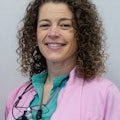 Jessica Atkinson, MEd, BSDH, RDH, FADHA
Jessica Atkinson, MEd, BSDH, RDH, FADHA
Jessica Atkinson, MEd, BSDH, RDH, FADHA, is a dental hygiene educator, clinician, and advocate dedicated to advancing the profession through innovation and education. She combines her clinical expertise and love for education to create engaging, practical learning experiences. Jessica is an Associate Professor and Senior Clinic Coordinator at Utah Tech University, co-host of A Tale of Two Hygienists, and CEO of HYGIENE edgeUCATORS, where she develops continuing education for educators and clinicians. She co-founded Hygiene Edge, a platform with over 100,000 YouTube subscribers. Recognized with the Element Award and Outstanding Service Award, she is a Fellow of the ADHA and past president of UDHA.
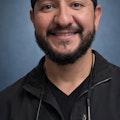 David Torres, CRDH
David Torres, CRDH
David Torres, CRDH, cohost of A Tale of Two Hygienists, is an experienced dental hygienist with over a decade of clinical expertise, specializing in patient education, preventive care, and the integration of modern dental technologies. Known for his passion for teaching, campus recruiting, and coaching, David is dedicated to elevating patient experiences while helping dental professionals improve efficiency, workflow, and long-term success.