Sharpening as a service: How one RDH turned instrument maintenance into a business
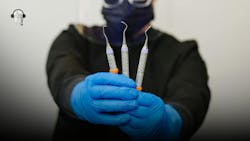



We’ve all been there: halfway through a difficult scaling appointment only to realize our favorite instrument is dull. In this episode of A Tale of Two Hygienists , hosts Jessica Atkinson and David Torres sit down with Christine Jeffs, RDH , co-owner of Acuity Sharpening , to discuss the clinical and professional impact of well-maintained tools.
Christine shares her journey from being the "class sharpening nerd" to partnering with Melia Lewis to provide a national mail-in sharpening service. Whether you want to improve your in-office system or are considering a side gig of your own, this episode provides a practical look at:
-
The monthly protocol: Why sharpening once a month (even for busy offices) is the sweet spot for preserving instrument life and reducing hand fatigue.
-
The "metal" reality: How frequent maintenance actually extends the life of your curettes by requiring less metal removal over time.
-
Organizing your inventory: Simple strategies for using spreadsheets and color-coding to ensure every kit in a multi-hygienist office stays sharp.
-
The entrepreneurial shift: Advice for "few and far between" hygienists who love sharpening and want to turn that skill into a professional service.
-
Acuity in Latin: The story behind the brand and the importance of finding a mentor to navigate the legal side of a dental side business.
Episode transcript
Jessica Atkinson:
Welcome back to A Tale of Two Hygienists podcast. This is episode 524, and I am Jessica Atkinson here with my illustrious curly-haired co-host David Torres, and we are joined today by someone really special. Dave is going to introduce us to our guest.
David Torres:
Listeners, we have Christine Jeffs . She is part owner of Acuity Dental Sharpening with her partner Melia Lewis.
Together, they're striving to make hygienists' jobs easier by keeping their dental hygiene instruments in excellent condition. We all know we struggle with our instruments from time to time. She has earned a bachelor's in business management from Brigham Young University and an associate's in dental hygiene from Utah Valley University. Christine is also a certificate holder in oral-systemic education through the National Network of Healthcare Hygienists. Welcome, Christine.
Jessica Atkinson:
Christine, you've got a pretty illustrious bio there.
Christine Jeffs:
Oh, thank you.
Jessica Atkinson:
I took your bio. What would you want to be known for? What do you want to do?
Christine Jeffs:
At my funeral, I would love for everyone to talk about the service that I did . I love to serve. I do a lot of non-profit serving—some in dentistry, some outside of dentistry. But that's really my passion is serving my community. So I hope that's what people say at the end of my life.
David Torres:
Well, let me tell you, owning a sharpening business is definitely a service to the dental hygiene community.
Jessica Atkinson:
Very true, very true.
David Torres:
Absolutely. Because I'm all about you. Sharpening is still not my favorite thing to do.
Christine Jeffs:
Yes, and most hygienists would probably agree with you.
David Torres:
Well, I have to say, like I was probably the only nerd just like you, Christine, that loved sharpening instruments. And in my class, I was known for the guy to get the instruments sharpened, and I was, like, thinking this could be a cool business one day, but here I am. I didn't do anything about it. You did something about it.
How the business began
Christine Jeffs:
Yeah.
David Torres:
How did this happen?
Christine Jeffs:
So Melia was at one of the offices I used to work at. She was doing a photo shoot, and I was there just to let them in so they could use the office after hours. And since I was waiting, I thought, okay, I'm going to sharpen the instruments while I'm here. And so that's kind of what kicked things off. She saw me sharpening and then reached out later and said, "Hey, are you interested in starting a company?" And I said, "Sure, why not? I'm doing it anyway. Let's serve more people."
Jessica Atkinson:
That's fantastic. See, I think we all have been in a situation where we're drenched in sweat because we're in the middle of an appointment. We're grabbing that instrument, and it's just like, "Why is my butter knife in this?" Like, what is going on? I should have, could have, sharpened the instruments.
The fact that you are able to provide services like this to bring that peace of mind to a hygienist that's probably in a really difficult situation with a patient and their nerves are high. And you bring out that instrument and you hear that, whereas like, beautiful, right? That beautiful sound effect of like, oh, I'm getting in there and I'm not burnishing calculus. That's amazing.
Christine Jeffs:
Yes. And at least personally, once you have consistently sharp instruments , it's really hard to not work that way. And so it's life changing.
David Torres:
When you were after hours in the office sharpening those instruments, did you ever think, "I want to do this for more than just myself?" Were you sharpening just your own or were you sharpening other hygienists' instruments?
Like I know Melia is a catalyst, if you don't know Melia Lewis, a catalyst for ingenuity and entrepreneurship. If you are friends with her, your life will change. It is true. And I want to know more about like—was this a thought before you had the catalyst to drop into your lap?
Christine Jeffs:
Not entirely. So an office I was at previously, we had three locations, so I would do all the sharpening for all of those instruments. And then as I had coworkers go to different jobs and whatnot, they would reach out to me and ask me, "Hey, do you mind coming and sharpening our instruments?"
So I had done a few other offices here and there, but I hadn't ever thought about, you know, a larger scale like Melia brought to the table.
Jessica Atkinson:
She is a large-scale human being, that's for sure.
David Torres:
So the idea was you were running your own little business. You were?
Christine Jeffs:
Yeah. Essentially. Yeah. And it's just grown with Melia. And the picture is we've, you know, advertised and had a website and all those things.
Marketing through social media
David Torres:
Can you tell us more about that? Like, okay, so boom, the idea happened. You're already doing it in the after hours. But how do you guys go about, you know, marketing and spreading the word? Like, how did that come about?
Christine Jeffs:
So what's been really interesting about marketing is I have found that reaching out in the bigger dental hygiene groups on Facebook brings us the most business. We have run some ads. We have gone to some conferences and that brought in a little bit of business.
But just watching those Facebook groups, because there's always questions about sharpening, right? And so I'll reach out and say, "Hey, this is what I recommend," or if you want to send them in, we have this company. And then that brings us business as well as word of mouth. Word of mouth has helped a lot too.
David Torres:
Yeah, I'll bet. You guys are really great. Oh my gosh, like you guys—I do, I have the person to sharpen your own stories and I will literally be the hygienist going all around the office and, like, talking about how amazing it is to just—just having a sharp instrument, it really does make the appointment and you're absolutely 100%.
Jessica Atkinson:
I think that having that sharp instrument is maybe why sharpening has kind of been not my favorite thing, is because I'm not only sharpening—I'll give an example. In an office that I worked at, I wanted to only sharpen—I wanted to be the only one sharpening my instruments.
I think that's why it was so hard for me, is because I never felt like I had the time that I wanted to invest in sharpening my instruments, and I would get instruments that had been sharpened by, I don't know, a troll that lived under a bridge. I sometimes do not know how—I would look at an instrument and go, "You were once a Gracey, I know that you were once a Gracey. I don't know what happened to you, but now you are a Nebraska sickle scaler. This has been a really rough life for you."
And this is one of the hardships about sharpening. And like, the pain point of sharpening is because there's so many inconsistencies with sharpening. Can you speak to a little bit of that?
Consistency in sharpening
Christine Jeffs:
Yes, because we get asked that a lot as well. It is hard when there's multiple sharpeners if there is no consistent guide. So when people ask us about that, I usually recommend one of two things:
-
Either to have the same hygienist do all the sharpening so that it stays consistent that way. Now that does put, you know, a burden on that hygienist to be doing all of it.
-
The second recommendation is to invest in some sort of guide that keeps the angle correct, whether that is a handheld guide or a machine that will help.
It's better than trying to do it just by sight.
David Torres:
Absolutely. I've been in offices where again, it's like more than one hygienist, right? And so it's almost as though you have to kind of gather the team and be like, "Okay, guys, what's the protocol here?"
Right? Because sometimes if I sharpen, for example, my own instruments—because I've been in offices where I only overlook those instruments—then it becomes more of, "Okay, this is—take care of what you have, your own instruments," is what happens. But if I ever lend, quote-unquote, "lend" an instrument to another hygienist, I'm kind of secretly giving them the side-eye like, "Take care of my babies, right? Take care of my babies."
But if there's communal instruments where everybody's using it and first come, first serve—just like I would imagine a Cavitron tip. You get that brand new one from the order that they just placed, and everybody knows it's the brand new one. And so that's the first one to get sterilized, and that's the first one to get used and dare I say, beat up.
Is there a frequency that you recommend that hygienists sharpen their instruments or send them out? How has that conversation happened as you notice business pick up?
Frequency of maintenance
Christine Jeffs:
That is another question that we get a lot. And it's difficult to answer because it's multifactorial. It depends on how many kits you have, how often they're being used, how often they're being sterilized.
I would say a rough estimate is at least once a month , at least for most offices. Busy offices where there's multiple hygienists and those kits are being used multiple times a day, you probably need more.
And actually sharpening more frequently helps to extend the life of an instrument , because when an instrument gets too dull, you have to remove a lot more metal to get a cutting edge back. So frequent sharpening—keep that edge better so your hands are happier and you're moving less metal. And then you'll have it longer. If you only do it every six months, the sharpener is going to be removing tons of metal and then the instrument won't be usable anymore.
Jessica Atkinson:
That is some really good information, Christine, because I am sure many of our listeners like me are going, "Once a month? Yes." Oh, I know, I just shocked everybody.
Christine Jeffs:
Yes. Well, and again, when you have sharp instruments, it's like a blessing and a curse. Can I tell you? So having consistently sharp instruments, I can tell right away when my instruments are starting to dull and it drives me nuts because I need those sharp instruments to do a good job. And so to keep them pristine, yes, at least once a month.
David Torres:
Hygienists, pay attention. If you're getting hand fatigue, if you're getting a little bit of like, "My hands are going numb," it's probably time.
But maybe write it on the calendar somewhere that it's time to do maintenance . Let's call it maintenance as opposed to sharpening, because why not? Let's use the verbiage of like—inspiration is real, guys. I mean, I've been in situations where I have forgotten, because I'm not perfect, to sharpen my instruments. And yeah, your hands at the end—you know at the end of the week, it hurts a little bit.
And we all like to think that we have that patient when we are recommending them to change their toothbrush and they don't. And then the last time that they changed is probably the last time that they saw you type of thing, right? So it's the same concept, guys. Let's do our maintenance on our instruments.
Christine Jeffs:
Well, and you mentioned earlier protocol, and that is actually a huge deal. I recently wrote an article about setting up a maintenance system for an office so that it does stay on track and doesn't get lost in everything else going on.
Setting up an office maintenance system
Jessica Atkinson:
Tell us a little bit more about this maintenance system. What would you recommend for an office to keep these instruments in good working order? That then, in turn, keeps your hygienists in good working order and at the end of the day, provides our patients with the best care.
Christine Jeffs:
The most important thing is getting organized . So at any office that I'm at:
-
The cassettes are numbered or the bagged kits have colored bands on them so that we know where they belong.
-
And then I use an Excel spreadsheet or a Google Doc or a Google Sheet, whichever you prefer, to track when I last sharpened.
That way, when I have time to sharpen, I pull up my spreadsheet and I see which ones were sharpened longest ago, which ones need it the most. You don't want to keep resharpening the same ones. You want to make sure that you're rotating through all of the kits evenly.
Jessica Atkinson:
That's great advice, because I think there are some kits that get used more than others as well. So how do you factor that into that plan of sharpening? For example, maybe I'm working in a perio-heavy office and I'm using my perio kits way more often than I'm using a kit for a D1110. How do you track that?
Christine Jeffs:
So same. I would organize them the same way, make sure that they have their own colors or own numbers. And then when you do have time to sharpen or you sit down to do that, make those ones your priority.
It's interesting you mention that because we get instruments from all over the country. They send in their kits and you can tell which instruments the hygienists like more, because those ones are more dull than the others in the kit. So it's a very valid concern, valid point that, yes, there are favorites and those need to be sharpened more often.
Another thing that I'll sometimes do in my office is, for example, the Montana Jack is a favorite and it goes dull faster. I was going to say, if I have time, sometimes I will pull out just the Montana Jack, sharpen it and put it back with its kit, and then do the rest of the instruments when a little bit more time has passed.
Jessica Atkinson:
That makes me so curious, because I often ask people what their favorite instrument is, and the Montana Jack is often in the top three for sure. But the—yeah, the Nevi for the month, yeah.
Christine Jeffs:
Yep.
David Torres:
Jack Bull—you know, so many different depending on the manufacturer.
Jessica Atkinson:
Yes. Where—has there been an instrument that you're surprised that has been a favorite?
Christine Jeffs:
I haven't had too many surprises as far as favorites. But it is really fun to see the different types of instruments that offices are using in their kits. I have come across instruments that I have never personally used in practice, but I go, "Oh, that's kind of a cool instrument. I want to try that one out."
Jessica Atkinson:
Have you added to your own cassette based on what you've been sharpening, and what have you added?
Christine Jeffs:
I haven't added a ton. One that I did try that I had never used before was a Younger-Good.
David Torres:
Oh, yeah.
Christine Jeffs:
Because it's kind of shaped like a Montana Jack, but it's a Gracey—at least the one that I had sharpened. And so that was one that I did add because I thought that was kind of cool.
Promoting professional maintenance in the office
David Torres:
So for the hygienists listening to this and they're feeling inspired to go back to their practice and maybe talk to those practice owners, what are some of the ways that they can kind of promote this healthy—let's just call it a healthy environment, right?
Christine Jeffs:
Absolutely.
David Torres:
You know, how—if I'm a hygienist and I want to go back to work on Monday and say, "Hey, Doc," or the practice manager, "You know, these instruments need to be maintained and taken care of, but I hate sharpening. And I found this cool solution where they can either pick them up or mail them in."
Or is there like a consult, is there like, you know, a fee? Like, how does that work and how can a hygienist go back to their office and promote that?
Christine Jeffs:
And so we're absolutely happy to talk with people about any sharpening needs that they have. At least with our business, most of our customers get on our website and they find our order form and they fill it out and then usually request, you know, a call or a text just as a heads-up that the instruments are coming our way so that we can schedule them appropriately.
But yeah, it's pretty simple as long as your doctor is on board with it.
David Torres:
How long is your turnover usually, like your return? If I send in instruments, what would be the amount of time if I am—because I've become organized and now I have a plan, and in that organization I say we send our instruments to Christine on this schedule.
You know, what is my turnaround to make sure that I'm not sending all of my instruments and ending up with nothing?
Christine Jeffs:
It depends on how many you send. Most of our orders, once we receive them, they're sent back out within two days .
David Torres:
Awesome.
Christine Jeffs:
Yeah. If you send us 150 instruments, it might take us a little longer than two days. But most orders are put back into the mail in two days. And then if you add mailing time on top of that—so if it's coming from back East, I'm on the West Coast, shipping is going to be a little longer both ways, but once we have them, one to two days they're sent back out.
David Torres:
So you do provide services countrywide. It doesn't matter. You do.
Christine Jeffs:
Oh, that's awesome.
David Torres:
That was awesome.
Christine Jeffs:
Yeah. We take mail-in orders and we do local, too. We do both.
David Torres:
That is—take note, everyone. Take note. And so say I'm in an office, I am in a situation where I only want one person sharpening those instruments, but I don't feel like it can be me because I already feel strapped for time. You know, that four-letter word in our appointments.
And I would like to pitch this to my office owner, that this is something that I would like to add into our rotation. What are some suggestions that you have for our listeners on how to really promote this healthy environment? Like, how can I approach this conversation?
Christine Jeffs:
A couple different ways. If you're choosing to do it in-office, then you would have to find that individual like David or myself that are willing to take the time to do it. I was in a fortunate situation where I just worked part-time, so I had time on my days and hours off to sharpen, and I was happy to take on that responsibility.
So you've got to find the person who's willing to do it and take the time. Of course, as a paid thing. Otherwise, in offices that I have worked at, either the lead hygienist does it or you rotate the responsibility. So the lead hygienist can either do the sharpening or can be in charge of sending it out when it's due, or that responsibility can rotate.
I worked in an office where the lead hygienist was a rotating position. We would take turns doing it. And so when you were the lead hygienist, it was your responsibility to make sure that the sharpening was done for your time period.
David Torres:
As lead hygienist, do you find it that there's a preference between like people getting that local pick-up or the mailing? And if there's consistency, meaning like, "Oh my gosh, you're getting in these instruments like literally every month no matter what."
Christine Jeffs:
So we have one customer who is awesome. We have their instruments every one to two months. And it really makes a big difference. Like I mentioned, it helps them keep their instruments longer because once we receive them, we don't have to remove as much metal to get them sharp again.
So that has been fantastic. And I'm—so what was the first part of your question? I forgot already.
David Torres:
Is there a preference between the local pick-up and or the mailing?
Christine Jeffs:
Oh, for us, no preference. They're going to get great service either way. It just takes longer when you mail in. It's a longer turnaround time because of the postage.
David Torres:
I would imagine going back to work, seeing my patients, having this conversation with my doctor, but believing so much that even if I don't, quote-unquote, get approval or get their okay, I'll probably do it myself and show them how necessary this is for my everyday life, where eventually they would jump on board. Do you have any hygienists that do that?
Christine Jeffs:
There's one. Her name is Christine Jeffs .
A call to entrepreneurial action
David Torres:
I had—so, in my personal circles of hygienists where I am locally, I occasionally run into hygienists like, "I just do all the sharpening for our office," but they're few and far between. I don't see it a lot. The bigger complaint I hear is, "Our instruments are dull all the time because we don't have time and we don't send them out."
So as a clarion call for all of you that's out there that are those few and far between dental hygienists that are sharpening everyone's instruments, there is an opportunity. There's an opportunity for advancing your skill and sharing that skill with those who may not be able to or for a number of reasons.
I mean, it's multifactorial here, the way instruments are not being sharpened. But maybe it's an opportunity for you to create a business and to meet someone to catalyze that idea. And I hope that today is that moment where you have met—I have dubbed her now Christine-Christine—and that this is a moment where your idea can now be catalyzed into creating a business that is a service to not only yourself, but also to your fellow colleagues and your patients.
At the end of the day, a sharp instrument is an instrument that is doing a better job for you, for your patient, and overall for your practice. So this is your—this is your clarion call to start something new. And Christine, thank you so much for being an example of going, "Hey, yeah, I am doing this after hours," and "Hey, yeah, this is a really great idea," and allowing that chance meeting of someone with a vision and saying, "Yeah, let's do this."
So what—what advice do you have for those hygienists that are thinking, "Oh my gosh, that's me. That is me. I am that sharpening person in the office"? What are those next steps?
Christine Jeffs:
Oh, such a great question. What's awesome about sharpening is especially if you love it, it is a skill that you already have, so you already know what you're going to be doing in your business.
For me, the trickier parts were like the legal side , making sure the business is set up properly for your state, whether or not you need to collect sales tax on your services. Some states require it, some don't.
So those sorts of things, just make sure you really look into. If you have a mentor, someone else that started a business that you can ask those questions, especially in your own state, that's really helpful because you want to make sure you're doing everything correctly in that regard.
David Torres:
Awesome. Well, if you would like a mentor named Christine-Christine, like how would our listeners contact you? What's the best way for them to contact you?
Christine Jeffs:
So for our company, we have a couple of different ways:
-
Acuity Sharpening on Facebook.
-
We're also on Instagram.
-
You can visit our website, https://www.google.com/search?q=acuitysharpening.com, or you can email us at [email protected].
The meaning behind "Acuity"
David Torres:
I love that. I do have one more question. Sorry.
Jessica Atkinson:
Go for it.
David Torres:
Just because you said it so many times, it just struck me. Acuity is such a cute name. How did you come up with the name Acuity?
Christine Jeffs:
You're going to laugh at this. So there are lots of other sharpening businesses out there, right? And they have these really great names that are taken. So I got on Google Translate and asked it, "How do you say 'sharp' in Latin?"
David Torres:
Oh, yeah.
Christine Jeffs:
So that it is— acuity means sharp in Latin .
David Torres:
I love that.
Christine Jeffs:
Yeah. And no one else had that name, so it worked perfect.
Jessica Atkinson:
That's actually fantastic. I mean, this whole month of January, we've been talking about getting going, getting our side gig—how's it going? And half of it is just naming the business, right?
Christine Jeffs:
Yes.
Jessica Atkinson:
And who you are. Googling in Latin. And so, if you're thinking about doing a sharpening business, Latin has been taken. But yeah.
David Torres:
I mean, you could look into Greek? Maybe somebody hasn't done Greek.
Jessica Atkinson:
Sure. Who knows, right? Christine, it's been a pleasure to talk with you and to learn from you and to be reminded that it is important for our lives, our professional lives, to be sharp, not only ourselves but our instruments. So thank you for keeping us on the edge.
Christine Jeffs:
And you're so welcome.
David Torres:
And from a sharpening nerd to another, I do want to thank you for doing everything that you're doing, because the most of the compliments that I have gotten from patients, especially as a male hygienist, is that I am gentle, and I'm only as good as the tools that I'm using.
And most of that is just me having a sharp instrument. Absolutely. I definitely want to encourage the—encourage the listeners to, you know, sharpen those skills, you know, promote that advocacy of having a gentle appointment because most hygienists, we get accused of being rough.
But if you can somehow be called—our patient tell me once you're like a butterfly in my mouth. I was like, "Okay, I'll take it, I'll take it." So there you go. My—my butterfly has sharpened, sharp little tools.
Christine Jeffs:
Yeah, exactly.
David Torres:
So thank you for everything that you do. I appreciate you all.
Christine Jeffs:
My pleasure. Thank you.
Jessica Atkinson:
Christine, Christine. Thank you.
That's a wrap on today's episode of A Tale of Two Hygienists podcast. If this conversation made you feel seen, inspired, or even just a little fired up, share it with a fellow hy—or fellow dental professional. Share it with your neighbors, your friends. Share it with everyone. That is how this community grows.
Make sure you subscribe, leave us a review, and connect with us on social media so that we can keep on going with this conversation. Remember your career, your voice, and your story matter here.
We're David and Jessica, and until next time, keep learning, keep laughing, and keep showing up for yourself and for each other. This has been a production of Endeavor Business Media, a division of Endeavor B2B.
This transcript has been generated and lightly edited by AI tools.
About the Author
 David Torres, CRDH
David Torres, CRDH
David Torres, CRDH, cohost of A Tale of Two Hygienists, is an experienced dental hygienist with over a decade of clinical expertise, specializing in patient education, preventive care, and the integration of modern dental technologies. Known for his passion for teaching, campus recruiting, and coaching, David is dedicated to elevating patient experiences while helping dental professionals improve efficiency, workflow, and long-term success.
 Jessica Atkinson, MEd, BSDH, RDH, FADHA
Jessica Atkinson, MEd, BSDH, RDH, FADHA
Jessica Atkinson, MEd, BSDH, RDH, FADHA, is a dental hygiene educator, clinician, and advocate dedicated to advancing the profession through innovation and education. She combines her clinical expertise and love for education to create engaging, practical learning experiences. Jessica is an Associate Professor and Senior Clinic Coordinator at Utah Tech University, co-host of A Tale of Two Hygienists, and CEO of HYGIENE edgeUCATORS, where she develops continuing education for educators and clinicians. She co-founded Hygiene Edge, a platform with over 100,000 YouTube subscribers. Recognized with the Element Award and Outstanding Service Award, she is a Fellow of the ADHA and past president of UDHA.