When OPAs enter the operatory: threat, workaround, or turning point for dental hygienists?




In this episode of A Tale of Two Hygienists, the hosts take on one of the most charged workforce conversations in dentistry right now: the rise of the oral preventive assistant (OPA). Rather than treating OPAs as a simple scope update, the discussion examines the deeper tension underneath the issue—professional identity, access to care, practice economics, and what happens when hygienists are asked to supervise care that overlaps with parts of their own role.
Guest Joffree Bunleang brings a field perspective from a state where OPA legislation has already passed. The conversation explores what OPAs are, why the model is drawing concern, and how hygienists may need to think differently about leadership, compensation, delegation, and career longevity if these roles continue to expand.
The episode does not resolve the controversy. Instead, it offers a candid look at the uncertainty: whether oral preventive assistants represent a threat to dental hygiene, a practical response to access challenges, or a turning point that could reshape how hygienists practice, advocate, and define their value in the operatory.
David Torres
Episode introduction
Hello, dental people, and welcome back to a Tale of Two Hygienists podcast. We are recording episode 531, and I am your co-host David Torres, and I am here with my amazing partner in crime, Tartar Terminator, an illustrious co-host.
Jessica.
Jessica Atkinson
Welcoming the guest
Hello, everyone. Thanks for listening in. And today we have as our guest, one of my favorite people, colleagues, and one of my prior students.
Let me just tell you a little bit about Joffree. So when I had the privilege of being her educator, Joffree had just previously had a baby. And imagine being a dental hygiene student, also managing being a brand new mom, managing, and all the other things that are happening in life.
And she taught me about resilience, ingenuity, and creativity on how to show up, put up, and come out triumphant. So we are really grateful that Joffree said yes to come and talk to us about a specific topic, a specific topic in dentistry right now. It's the topic of OPAs or OPAs.
And the reason why we chose Joffree to come on today is because she's in a unique situation where she is managing dental hygienists in a state that already have had this legislation passed. So Joffree, give us a little bit of background, your professional background, some personal background, whatever background that you want to talk about as we enter into this conversation.
Joffree Bunleang
Professional background
No, thank you guys. Thanks for having me. Just to share a little bit about myself, whenever I get this chance to talk about myself, I love to just keep it simple. I'm the dental hygienist who's obsessed with dental hygiene. And I put myself in all sorts of situations and I always find new opportunities to help this profession grow.
So to take it a little deeper, I've been practicing hygiene for 10 years now. I'm a Utah hygienist. I am serving as the vice president for the Utah Dental Hygienists Association. I am also serving as secretary for the American Academy of Dental Hygiene. In addition to that, this is my second year as the director of dental hygiene for Signature Dental Partners, which is a DSO located on the west side of the country.
And in addition to that, I co-founded my own company, Hygiene Elevated, a few years back, and we've done all sorts of cool things for hygiene. And I get to travel to students. I get to support hygienists that work in the dental practices. I truly love the opportunity that I have, all of them, to be quite honest. And I'm just thrilled to be here today.
Jessica Atkinson
We're so glad to have you. That's a lot of hats. I think you just got really good at doing all the things all the time in hygiene school. It just kind of still is happening. It's still happening.
David Torres
Introducing the topic
It's amazing. Yeah, it's amazing. You're like, in addition to that, I'm also doing this. In addition to, I'm like, oh my goodness, my hero, look at her. She has like 5 hats in one body.
So Joffree, for those of us who don't know, what are OPAs? What does that stand for? How did it come about?
Joffree Bunleang
What an OPA is
That is a great question. And I don't, I'll give you my opinion on it. And then I want to be just super transparent that anything I say in this episode is truly just my opinion only. It doesn't represent any group or company that I'm affiliated with. Today, you've got just the organic Joffree. And that's what we're going to do.
Jessica Atkinson
She's just wearing the Joffree hat today.
Joffree Bunleang
That's right. So what is an OPA? It's an oral preventative assistant.
And what is that? That's a dental assistant who now has scaler abilities. There are rules around it, right? They've got to come from, hopefully, depending on the state, a CODA-approved course. And then they also don't do periodontal work. It's targeted for healthy individuals. And they don't do subgingival from what I know, and change brings fear.
So we've got a lot of scared hygienists, and the role I play is support. Hey, this doesn't have to be scary. Let me...
Let me find a way where it's not. And so I'm skipping ahead, but that's the OPA.
Jessica Atkinson
Reading the formal definition
That's the OPA. I do actually have the Dental Access Model Act up on my computer. And this is the definition of an OPA. You did a great job, Joffree. And this is the definition that the ADA has used to describe what an OPA is. And as I read this, just like Joffree said, change can induce fear.
And as I read it, I think you might hear why this sounds scary. So certification of oral preventative assistants. The scope of practice for an oral preventative assistant shall be limited to taking and recording periodontal probe readings, documenting areas of periodontal concern, and supragingival scaling and polishing.
Oral preventative assistants shall be further limited to practicing on periodontal healthy patients or patients with reversible gingivitis. For the first five years after certification of the OPA position in the state, oral preventative assistants shall be limited to practicing in federally designated health provider shortage areas.
HPSAs or in counties with a population of less than 100,000. So that's just that one paragraph of many. But as I read that, did anybody have any red flags go up going, oh, that sounds scary.
David Torres
Initial reaction and concern
Yeah, absolutely. I can hear a listener thinking, my God, they're after my job or something like that. And I think it's important to notate that obviously we're navigating change and obviously Joffree's here to talk about her experience and her opinion and all that stuff.
But, you know, as a hygienist myself, somebody who's in Florida who used to be a dental assistant, I remember once upon a time being a dental assistant and thinking and wishing I could do a little bit more. Now, I do have a question for you. What's the major difference, or maybe you can enlighten me and the listener about why were OPAs such an important aspect in the state of Arizona to why not like assisted hygiene?
Why is there such a difference and why can we navigate both at the same time? Is there a biggest hurdle, right?
Joffree Bunleang
Economics behind the issue
Well, that's subjective. It really depends who you ask.
Some may say that there's a shortage of hygienists and some will counter that and say, no, there's not. So like, what I think is that the hygiene wages have gotten out of control and the insurance reimbursements have not budged. Therefore, the sustainability of dental practices is in limbo. Yeah, that's what I think. But again, I don't know what to practice.
I'm not a dentist. This is just my own assumption.
Jessica Atkinson
Production, wages, and practice sustainability
I'm just, I would just want to put a little memo here just for all of our listeners. This is a conversation that I have with a number of different clinicians that want a raise and they want to make more money. Whatever clinician it is, whether it be an assistant, a hygienist, a dentist, anybody.
We have one, a difficulty with insurance, right? And 2, you need to be practical about what your hourly wage is. And what that means by being practical is that you need to be making enough to be sustainable for the practice itself. And you're like, well, I'm not making enough to be sustainable for my own life. Then you might want to look at some other options. I mean, Joffree's a good resource. She's got how many side gigs.
you may be a different resource to supplement that, but in your office, it is the good rule is that you are going to make 30% of what you're producing. So if you want to be making more, you need to be looking at what you're contributing to the office. How is that translated?
fiscally, right? So when you're saying that these wages are getting out of control, I can see that. I can see that being a problem. I can see that somebody that maybe is not, somebody who only temps, right? You have people coming in as a temp hygienist every day and the temp hygiene wage is really high, but they don't have an investment in the longevity of that business itself.
So I can see how that would be a problem and a concern for your boss, whether that boss be a dentist, whether that boss be a DSO, whether that boss be just a business person. Their goal is to be a profitable place of employment. And I think that this might be a good idea to look at yourself. How are you practicing? Are you practicing at the scope of your practice? Are you offering things that are actually going to be fruitful for not only your patient, but also for the longevity of where you work.
Good point, Joffree.
David Torres
Advocating for your value
I like that as well. Like when you really slow down and think about it, when you take a deep breath and you're open-minded about this, we're adding a little bit of hot sauce to the conversation, right? But when you slow down and think about what you do on the day-to-day and whether you've been practicing a year, 10 years, or 20, right? The value that you bring to the practice, are you advocating for yourself and doing that on the day-to-day?
Does your dentist even know this? If you're working for a DSO, do they know this? I was scrolling on social media the other day and I saw a dentist post. It took me for me to hire my second hygienist to understand how much hygienists are making nowadays because they've only had one, one very loyal hygienist, and they were trying to add another provider to the practice and they realized that the market had gone up.
But are we the type of hygienist that we're only doing preventive care? We're doing like 8 prophys a day? Or are we treating perio? Are we doing adjunctive services? Are we advocating for doctor treatment as well?
If you're that you're if you're the type of hygienist that does that, then yes, like the wage should match and should equal to what you're bringing to the office. But if you're the type of hygienist that is not receptive to change and you're been doing this, like you've been doing the prophys and the preventive services because I hate to use the terminology racehorse, right? You only focus on that tunnel vision thing. And obviously there's a lot of things that are being left out there.
And when the career gets desperate when access to care gets desperate. These are some of the things that we have to, dare I say, get creative in the real world to have more of a two cents on how we can contribute to patient care. So I think that happened too.
Jessica Atkinson
Access to care and professional fear
So we find ourselves in a situation that how do we fix this access to care issue? And what's been proposed is somebody that will make less and do similar and remember the fear feeling or the job that took us collectively thousands of hours, thousands of dollars, and thousands of passionate, prevention-filled hopes and dreams to be the hygienists that work at the top of our scope and assessing, observing that people do have a disease process, treating that disease process.
I mean, the percentage of how many Americans have a gingival disease, whether that be gingivitis or periodontitis, versus how much your office is providing those compensatory CDT codes might be a place to start. That might be a place to start there.
So, Joffree, now you're in a situation that you are helping hygienists navigate that they're feeling concerned that these dental assistants are going to be doing probing, scaling. That sounds a lot like what I'm doing every day. How are you managing that?
Joffree Bunleang
How her organization is responding
Well, it's going to be different in all sorts of the market. Like I can only speak to like what I have in front of me here. So what I'm about to tell you is not happening everywhere.
So the DSO that I am with, Signature Dental Partners, is co-founded by a hygienist.
Kim McCravy. Having that hygiene support at such a high level is amazing. I mean, this is a very hygiene-forward company that I am with. And so when this OPA conversation came out last year in Arizona, we immediately put out a video to all of our hygienists, letting them know that they would not be replaced. Like we are not going to replace hygienists with the OPAs.
Jessica Atkinson
Love that.
Joffree Bunleang
Now, but can we integrate them? Can there be a cohesive place? And so that's kind of what I've been thinking about a lot lately is how do we preserve the hygiene profession and welcome the OPAs at the same time?
And I haven't done it yet, but I think about it a lot.
Jessica Atkinson
What this means for students and job seekers
I was like, who do I know that is working in a state that would have some feedback about this? And I'm like, oh, Joffree, she works in a state that has already been passed. And I've been thinking a lot about it too. I've been thinking, how do I share this with students who are in some of the most stressful moments of their lives?
up until now, right? And getting ready for boards and have put blood, sweat, and tears into becoming a dental hygienist and feeling proud of their education and going out into a world where they are seeing these things come about. And so I was thinking about how our education is set up. So I imagine one of my students getting a job in Arizona where there's already an OPA that is hired.
What does that look like? Well, when you start off with an interview, I would recommend my student ask what their periodontal philosophy is, what roles that they would play in the office, and what roles that the OPA would play in the office, and what kinds of protocols and procedures do they have around those roles.
And currently, a hygienist can oversee one OPA in Arizona, and a dentist can oversee 3 OPAs in a dental practice. So what would that look like? Would I, as a dental hygienist, be over the OPA? And I imagine myself in that kind of a situation. And what would I do? What would I want for this? I would want there to be competency. I would not want there to be responsibility. I would want there to be all of those things.
And so I was thinking, I'm like, okay, if I was in a position where I could not leave this office and find a different place, what would I do? And I was like, well, maybe within the office structure, there could be competencies that they have to pass on a typodont that we purchased from eBay.
that they had to do a competency for these things before they were on our patient population, or they would work on the other people in the office. What do you think about things like that, Joffree? What are your thoughts about what that looks like?
Joffree Bunleang
Advice for hygienists entering OPA states
You know, for new grads entering a state where this is happening, I highly recommend joining a company that has hygiene leadership.
If you have hygiene leadership, you have someone advocating for you, someone making sure that your voice is heard. And that's really important. Like when you're thinking about your wish list or must-haves, like that should be on there somewhere. And so I would start with that.
Then I would also like, if I work as a hygienist and I have an OPA working alongside me, I'm responsible for what's happening in that other room.
So I would definitely want to make sure that I am on a compensation model where I am compensated for what's happening in both rooms.
Let that marinate.
Do you have, what are you thinking?
Jessica Atkinson
Responsibility and compensation
I haven't thought about that.
I haven't thought about that.
I don't.
Personally, I feel very evidence-based driven, and I would love that we would work more creatively within the structure that we have with licensed professionals providing care.
that have graduated from a CODA-accredited, but we could go down all of my feelings about that.
And this conversation is the reality that it has been passed in Arizona.
So what would that look like, right?
And so what I'm hearing you say, Joffree, is that there could be, when you take responsibility for someone else, there should be also a financial benefit from that responsibility.
And so that is something that I did not think about.
And I'm wondering how that lands on the ears of our listeners.
David Torres
Mindset and working together
Yeah, and also like considering the fact that if you're supervising or you're, you know, you're responsible for that OPA as well, I would imagine just like a dentist is with having the synergy with their hygienist, being able to have or work towards that quality of care, what we want, our patients to have, right?
I mean, at the end of the day, it kind of goes back to mindset, right?
Like your mind is like a garden.
Your thoughts are the seeds.
You can either grow flowers or you can grow weeds, right?
And so being able to kind of like work together, if the fact is you have OPAs in your state and you're finding yourself that you're working in an office with one of them, well, make the best out of it and grow together.
And how can we have that synergy, the leaders in the office, to be able to have that patient care that we have in our minds that should be worth having, right?
Is that something that you're advocating for as well, Joffree, like as you're noticing, I guess, this transition, which is not really a transition because it's already happening.
Joffree Bunleang
A possible glow up for hygienists
Yeah, I love the way you said grow because I'm thinking of this like this could potentially be a glow up for the hygienist rather than shrinking the profession.
This could be something where hygienists are seen as more of a provider in the dental practice.
And this could potentially lead to more income for the hygienist if done strategically.
David Torres
Unexpected strength and burnout
And I guess that's something that, because you mentioned in your article, that it could be an unexpected strength in dentistry.
Is that what you're alluding to, like being able to say it also benefits the hygienist as an end outcome, right?
I mean, we keep having these conversations about like burnout, like I'm exhausted, I'm tired.
Rather than like all of a sudden saying like, well, I'm going to quit my job because there's an OPA in there.
Maybe use that as a catalyst to have that glow up.
Like, girl, it's 2026.
Get that glow up.
You know, let's make this happen.
Let's have that patient care.
Joffree Bunleang
Assisted hygiene and career longevity
Absolutely, because when you think about assisted hygiene, this is kind of...
close to it, right?
Like they're in the hygiene op with us.
Hygienists still control what's happening when they're in that assisted model.
And think about the longevity of the hygienist's career.
Like if I could go in and assess a patient, you're extremely healthy.
I have an OPA who I trust dearly.
They're going to come in and finish up this appointment.
could I extend the lifetime of my career with an assistant?
Now think about when you go to like, and this part of I think the hesitation and the pushback and the fear that we're seeing comes from a component of our education that is lacking.
Like, right, we don't get a lot of education on dental economics.
And because of that, we don't see some opportunities that might be available to us, right?
And so when you go get your hair done, oftentimes, like David, I don't know the last time you got highlights, but some of our hairstylists have an assistant handing them the foils and doing a lot of the work for them.
Now, the hairstylists are actually very business savvy.
They understand a little bit more of the business economics than dental hygienists might, right?
Not saying that hygienists couldn't have that, but sometimes in a lot of the education base of the hygiene programs, they don't spend a lot of time on that subject matter is what I want to say.
David Torres
Are seasoned hygienists more open or more resistant?
Do you find it that hygienists are more receptive or that there's more pushback the longer they've been in their career?
Like I've been doing this for like over a decade.
I could think about it two ways.
Like, I rather focus on the interesting cases, right?
Like that perio case that I am wearing my cape with my scaler because I am this person's best chance to keeping their teeth as opposed to like, that's another prophy.
They're 18, 19, they have good hygiene.
I'm just going to go in there and just have a conversation, but I'm doing more conversation than less actual hygiene, right?
I can see how like some hygienists in their seasons, like in their season of their, the stage of their career, they could be more, I'm open to or no, but because of that, of that fatigue.
My hands are going a little numb. I'm more open to that. Or the ones that I'm like, no, it's been like this. I don't like change. They're going to discredit what we do for a living. And they might put me out of a job. Is there like both mindsets? Have you noticed?
Joffree Bunleang
Emotional neutrality
You know what?
Actually, no.
I don't think if you're if you're a very green hygienist or very seasoned, doesn't change a lot of the word on the street that I hear.
You know, they're pretty much opposed to the idea from top to bottom, left to right, whichever you want to look at it.
Now, when you hear me talking about it, and I do say I come off like optimistic about this topic.
And that's because I have spent like the last two years practicing emotional neutrality.
I come at things very neutral now.
If you had this conversation with me three years ago, I would be very emotional about it.
And I would be very opinionated on my stance on it.
But I...
I've grown to this place where I'm just very neutral.
And I also have like this responsibility to support and guide hygienists around me.
And so I feel like they need some positivity if this is what that they are now facing.
So I just want to say like, I sound positive, but I'm actually just being very neutral.
David Torres
Responding without escalating
I love that emotional neutral.
I think we all need to practice a little bit more of that, especially with that patient that perhaps thinking that if we do fluoride, we're giving them cancer or whatever, right?
Like being able to say like, okay, what do you want to, like being able to kind of put it back to a neutral state of saying, okay, well, we don't have to agree, we don't have to disagree, but at least we can acknowledge each other's point of views, right?
I love that.
That should be a T-shirt, emotional neutrality.
Jessica Atkinson
Why this still feels hard
And I maybe have some emotional neutrality about some things, but this is one I don't.
And I mean, I've been thinking about it.
This was a conversation that there was some apprehension for me because of my own personal feelings about the reality of OPAs.
And then this other part of me that recognizes that there are hygienists that will be facing this in their offices and how do they find ways that they preserve their own ethics and what that could look like.
And there are a lot of struggles with that.
And so if I just had a magic wand, I think this would have just started with dental hygiene autonomy, and this wouldn't even be a conversation that we'd be having, but here we are.
So as far as emotional neutrality, that switch has not been flipped for me.
And the reason being is the evidence does not show that giving an OPA these opportunities...
they did a study in Missouri, I believe.
I need, because it's being recorded, I'm going to make sure I am.
Yes, it was in Missouri.
It was a Missouri pilot program where they started using OPAs to see if it really relieved the burden of this lack of practitioners and if it increased access to care.
And the results weren't what they were hoping they were to be to say this was revolutionary, right?
And I'd also like to say, Joffree, that we are in the beginnings of this and who knows what this is going to look like in 10 years.
And my hope and prayer that what this looks like is that we as a dental body together find ways to be more collaborative and less divisive while maintaining the responsibility that we have to provide good care.
And so I recognize the space in which you are in, and I hope that our listeners leave this conversation with some curiosity.
Maybe that's curiosity about how they are showing up every day in their office and how they are contributing to be more, to give more than we were expecting to receive, to be that positive force and make a difference in the daily.
So thanks for coming and tackling this spicy thing with us.
Joffree Bunleang
Closing thoughts
Thank you for having me.
I just want to close out and sign off here saying like, I love hygienists.
I love our profession.
I don't want anyone thinking I am like anti-hygiene.
I am, I'm just neutral trying to navigate this space with positivity.
And I just appreciate everything that the hygienists do for their communities and keep doing it, keep doing the good things.
Jessica Atkinson
And I hope you all get the opportunity to meet Joffree because she is a hygiene advocate.
And she also asks curious questions, and that is good.
David Torres
Final wrap-up
Yeah, I think that's a great way to kind of like end the segment saying, rather than just assume, just ask, be curious, stay proactive.
And with that said, if you have made it through all the way to the end of this episode, we really appreciate you guys listening.
And I think one of the biggest things that Jess and I have done is in this platform is to have that conversation.
And Joffree, thank you so much for joining us.
You honestly are so much fun to talk to, even on a spicy topic.
You are great to talk to.
So we really appreciate that.
I'll.
Joffree Bunleang
Come back anytime, guys.
Jessica Atkinson
Thanks, Joffree.
David Torres
Thank you, Joffree.
Jessica Atkinson
That's a wrap on today's episode of a Tale of Two Hygienists podcast.
If this conversation made you feel seen, inspired, or even just a little fired up, share it with a fellow hygienist or fellow dental professional.
Share it with your neighbors, your friends, share it with everyone.
That is how this community grows.
David Torres
Make sure you subscribe, leave us a review, and connect with us on social media so that we can keep on going with this conversation.
Remember, your career, your voice, and your story matter here.
We're David.
Jessica Atkinson
And Jessica?
David Torres
And until next time.
Jessica Atkinson
Keep learning, keep laughing, and keep showing up for yourself and for each other.
David Torres
This has been a production of Endeavor Business Media, a division of Endeavor B2B.
About the Author
 Jessica Atkinson, MEd, BSDH, RDH, FADHA
Jessica Atkinson, MEd, BSDH, RDH, FADHA
Jessica Atkinson, MEd, BSDH, RDH, FADHA, is a dental hygiene educator, clinician, and advocate dedicated to advancing the profession through innovation and education. She combines her clinical expertise and love for education to create engaging, practical learning experiences. Jessica is an Associate Professor and Senior Clinic Coordinator at Utah Tech University, co-host of A Tale of Two Hygienists, and CEO of HYGIENE edgeUCATORS, where she develops continuing education for educators and clinicians. She co-founded Hygiene Edge, a platform with over 100,000 YouTube subscribers. Recognized with the Element Award and Outstanding Service Award, she is a Fellow of the ADHA and past president of UDHA.
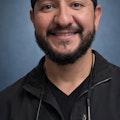 David Torres, CRDH
David Torres, CRDH
David Torres, CRDH, cohost of A Tale of Two Hygienists, is an experienced dental hygienist with over a decade of clinical expertise, specializing in patient education, preventive care, and the integration of modern dental technologies. Known for his passion for teaching, campus recruiting, and coaching, David is dedicated to elevating patient experiences while helping dental professionals improve efficiency, workflow, and long-term success.
 Joffree Bunleang, BSDH, RDH
Joffree Bunleang, BSDH, RDH
Joffree Bunleang, BSDH, RDH. plays many roles: a wife, mom, and white belt jiu jitsu enthusiast at Combat Arts, a Utah College of Dental Hygiene graduate and seasoned dental hygienist. Joffree is also the cofounder of Hygiene Elevated, a dental consulting firm, a podcast cohost on Hygiene Elevated Conversations and Innovations, and a writer, speaker, and a dedicated clinical mentor. She serves as the director of dental hygiene with Signature Dental Partners. Passionate about elevating the dental hygiene profession, she continually strives for excellence. Joffree presents inspiring sessions to dental hygiene students, and with recent sponsorship support, she's now empowered to speak nationwide and share her insights with hygiene programs across the country.