Clinic isn't the real world—but it wasn't useless either
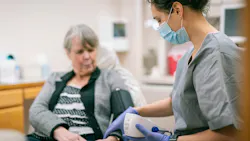



The discussion repeatedly returns to one question: what changes after graduation that causes clinicians to stop doing what they were trained to do? Lopez argues the issue is often less about time than about culture, expectations, and confidence in maintaining standards once production pressure takes over.
Overview
Dental hygienist, educator, and speaker Kevin Lopez joins A Tale of Two Hygienists to talk about the transition from hygiene school into private practice—and why so many clinicians abandon key standards of care once they graduate.
Lopez shares how he navigated entering practice after graduating in 2019, eventually returning to teach at the same school where he trained. The conversation explores the disconnect between what students learn in clinic and what they encounter in private practice, including pressure to skip procedures like disclosing, vitals, and extraoral exams.
Throughout the episode, Lopez explains why he considers disclosing a non-negotiable part of patient care, how motivational interviewing shapes patient communication, and why ethical practice requires hygienists to advocate for both patients and themselves.
The discussion also examines patient trust, medical screening responsibilities, preventive care, and the importance of maintaining humanity in clinical practice.
Key takeaways
- Why new graduates should not abandon standards of care learned in school
- How Kevin Lopez reintroduced disclosing into everyday private practice
- The role motivational interviewing plays with both patients and doctors
- Why vitals and extraoral exams remain essential parts of hygiene care
- How hygienists can navigate resistance from patients and practices
- The connection between ethical practice and professional fulfillment
- Why patient communication matters more than “getting through the schedule”
- How hygienists can position themselves as assets within the practice
Episode transcript
David Torres:
And welcome back, listeners, to A Tale of Two Hygienists podcast, episode 538. I am your co-host, Dave, and I am here with Jess. And Jess, did you know that around this season in May, I graduated in 2012? And did you know that I had no idea that around this time I was going to propose to my wife, or rather find my life partner and love of my life?
Yeah. And it's so weird to kind of reminisce a little bit about this time and this season. And I always have a heart for dental hygiene schools and students and faculty because it's just kind of like a full circle. And can you tell us a little bit about who we're going to be having today as our guest?
Jessica Atkinson:
Entering the profession and embracing change
Oh, I'm going to tell you a little bit about the one, the only, Kevin Lopez.
Now let me tell you, Dave, how you set the scene was perfect because this time of year is a time of change, a time of endings, a time of new beginnings, and a time that is going to change your life. And when I met Kevin Lopez, my life changed.
Now, if you could be a fly on the wall and watch how we met, you would agree. There was an implosion, explosion, all the closures of everything when we met because he's so wonderful.
And at this time of May, when graduates are coming to the end of their school career and starting a new profession and holding all of these changes in this space for change, I said, who would be the best person to have come and talk about how to hold space for change? And that'd be Kevin because he, A, graduated in October of 2019, and we all know what happened after October 2019.
But he has also held a number of hats in the profession in education, in industry, and in clinic. And that's why I wanted him to come on because school is an environment that often gets compared to “real life,” that they're not the same. Well, they might not be the same, but clinic wasn't useless.
And Kevin has done a really great job implementing standards of care and practicing in a way that brings the best of clinic into real life.
Kevin, thanks for being here with us.
Kevin Lopez:
Oh, thank you for having me. This is so cool. When I was a student at A Tale of Two Hygienists, this podcast was everything. And so to know that I got the email that said, “Can you be here?” It's like, how do I say no? This is an automatic yes.
Especially when you texted me first, I was like, there's no way I'm going to say no to Jessica. And then I realized where I'm going. I was like, oh, this is an absolute yes. I feel like I'm on the Oprah of dental hygiene podcasts right now.
Jessica Atkinson:
That is high praise, and I feel like we're getting to that status with having you on the podcast. So thank you for being here, Kevin.
Tell us a little bit about your transition from school into the space in which you're at and the advice that you have for students in this space.
Kevin Lopez:
Translating school standards into private practice
Oh, so like you mentioned, I graduated towards the end of 2019, so we know that.
At least for me, as a high school student, I was not academically inclined. I'll be very honest. I think I was like, I mean—
Jessica Atkinson:
And I do want to take a beat here because a number of dental hygiene students out there are feeling like, “Well, I wasn't an A student. I wasn't the 4.0 student.” And I want to say this loud and proud: you do not have to be a 4.0 student to be a stellar clinician. You do not.
Kevin Lopez:
And that's why I share that because I was not the valedictorian. I was not magna cum laude or summa cum laude or whatnot. But I've recognized I've gone really far in my career.
A GPA doesn't necessarily mean that you have to have the 4.0 to excel. It's a mindset. It's opportunities and having manifestation come in, all these good energies come your way.
I think with students, for me at least when I was a student, I understood that I had to work really hard to memorize everything, to learn the processes of school, clinic protocols, sequencing, all of that combined. And then I had to translate that to my national boards before graduation, and then I had to translate that to my law and ethics.
I had to translate it all multiple times. So eventually I was like, well, I guess I do know this. So why do I keep hearing “real world” or “in private practice you can’t experience this”? I was like, well then why am I not doing it here?
All the while I realized I actually was in private practice.
“You’re not going to take blood pressure.”
I was like, yes I am.
Jessica Atkinson:
Yes, you are.
Kevin Lopez:
Right there. Yes, I am.
And so I think for students, remembering that what you're learning in school will translate into the real world if you allow it to, if you're the one that implements it. Because there is going to be a culture in private practice that depends on where you are, right, and what practice you end up in, where they may not have what you learned.
But you are the latest and greatest of dental hygiene coming out, so you have the latest information to know what the latest standards of care are.
That's my biggest advice. You guys are probably going to be better than me now. I see my students now and our curriculum has changed. I teach at the school that I graduated at. Certain things in the curriculum have changed, and I've been part of that team that gets to help implement new things.
And that's rolling out into private practice if the student, or now graduate, allows it to. They're the influence of change, the power.
David Torres:
And it's so important to note, I mean, like I mentioned, I graduated in 2012, which, you know, I've been in the game, right? And before that I was also an assistant. So I've been in the real world, back to school, all that fun stuff.
But I don't think you ever stop being a student. You know what I mean? I still think that to this day we all learn new stuff.
And Jess and I reminisce a lot about every single guest that we have on this podcast and how we are always learning something new each and every single time.
But I do love what you said, Kevin, which is the mindset, right? You have to be the one to be like, “Well, I am in the real world,” even when you're in clinic or in school. And oftentimes say to yourself, “I'm going to be the change. I'm going to be the person that's going to evolve the whole philosophy of just learning to implementing.”
Kevin Lopez:
Returning to teach at the school where he trained
Right. And I used to be a mentor for hygienists, and I would mentor hygienists that had been at it a lot longer than I have. And it was a little weird because obviously I had “less experience” than them, but I knew something that they didn't.
So even them, or students now, I have to ask you: when it came to you going back to school to teach, was it like a full circle moment where you were like, “Oh, I remember these days. I remember being in the corner of this room and stressing over this, and now I am the instructor. I am talking to the next generation”?
Or did it feel more like Scrubs Remastered or 20 years later revamped season of dental hygiene?
David Torres:
Okay, not 20 years. I ain't that old. I'm still cute.
Kevin Lopez:
Okay. But definitely I felt like it was full circle. It was surreal. Not full circle—I think I'm just now starting to feel this full circle-ness—but it was surreal to be back in a different space.
And I came back multiple times before I got hired on as faculty to do their board reviews through a board preparatory course. And even then I was like, wow, wait, I really know what I'm doing.
Mind you, again, I wasn't valedictorian or anything, so I wasn't sure if I knew what I knew.
And Jessica can attest to this because you've seen me do board reviews at her school. It's a lot of information. A lot of information. And I was like, okay, that's partial circle.
I tell my students, “At this moment right now, you are smarter than me, but you will never be more experienced. Remember that.”
But when you are studying for boards, you have so much information in your brain, and you have the latest and greatest information at quick recall. And I wish it would stay that way.
Luckily for me, because I'm constantly doing it, it does.
Jessica Atkinson:
There you go.
Kevin Lopez:
I think there's a lesson.
Even this morning I came into lab with my students, and the other faculty with me were the same faculty who were there on my very first day of hygiene school. And now I'm on the other side with them, wearing the instructor scrubs, the instructor lab coat, and it felt so weird being—I was like, wait, am I really supposed to be here?
And then I had to sit with it. Then they would ask me questions, and I'm giving my feedback on my experience in private practice and how I was able to translate everything I learned into private practice, where the pieces fit, right?
That's where I was like, oh, I think this is my full circle. I'm hearing now.
It's a little early on in my career, I feel. I really feel that because I was looking like, “Are you sure? Are you sure? Like really, are you sure?” Because there was once upon a time I remember being in the back corner with a blanket just trying to stay awake with my coffee, and now I'm the wide awake, like, “Let's do this. Let's get our grasp right. Let's do instrumentation. Let's understand things. Let's understand biofilm.”
It was like, okay, I think I understand. I've gone full circle now being here at the school.
It's weird. It's so weird. But I love it.
Jessica Atkinson:
What I love about your full circle moment is recognizing that you are an example of how to implement the things that at one time you're like, “Am I ever going to remember this?”
And you are keeping it fresh and you're keeping it in front of you in order to translate that into patient care.
What are a few things that you hear aren't practical or implementable in “the real world” that you have found vital parts of your clinical practice? Lay it on us.
Kevin Lopez:
Why disclosing remained part of his clinical workflow
I am spicy, and whoever hears me, if you want to fight me, go ahead. I'm gonna stand on this soapbox until I die.
Disclosing.
Jessica Atkinson:
A good one, Kevin. That is so good.
Kevin Lopez:
Disclosing. I will die on a hill to say that disclosing is integral, it is vital, and it is a non-negotiable in my practice as a clinical registered dental hygienist.
Jessica Atkinson:
Tell us more. Why did that not fall off your cart when you went into practice?
Kevin Lopez:
Okay, I'll be honest, it did for a second. I was gonna take a second because it did. Because when you're coming in with zeal and then you're coming in like, okay, I have the power to save the world one smile at a time because I'm a new graduate. Let's get this and let's get this money.
And then you're here and, “Well, that's just how we do it here,” right?
And you're like, well, I want to keep a job, so I'm not going to try to push back too much. You're going to have to learn how to read the room a little bit.
But then I got really intimidated because everybody was like, “Oh, because there's not enough time to get everything off.”
I was like, okay, that's fair.
And then I sat with it. I was like, wait, hold on. If I'm not getting everything off, does that mean I'm doing an actual full-service hygiene for my patient? Am I actually providing full therapy to remove all the disease-causing pathogens in that moment that they trust me to do, that they're paying me for?
They have the expectation, right?
So for me, I made it on the go. Because they’re like, “Oh, patients don't want to see the purple lips.”
Then learn how to disclose properly. There's retraction systems. There are techniques.
“Oh, they don't want to see the stuff left on their teeth.”
Then get it off. That's our job. That's debris. That is disease-causing pathogens. That is disease-causing bacteria. We need to take that off.
It's got to go because they're nasty. So they gotta go. The nasty, get ‘em off.
Jessica Atkinson:
I've been thinking of this because I would dare say that most patients are not familiar with disclosing. We have created an expectation that is far below our standard of care.
And I am curious on what the patient perception or experience has been as you have described why you are turning their teeth purple.
Kevin Lopez:
Explaining disclosing and patient communication
Initially they didn't understand it, and I had to relay or replicate it to going to the doctor.
If the doctor is requiring a diagnostic like an MRI, there's a difference between a contrast MRI and a non-contrast MRI, but both are necessary. Contrast means something's going in the body to contrast when it goes under the imaging system, right?
That is my disclosing agent because there's something I'm supposed to see. If I do a regular MRI, which is like just a clinical, “I think it's there,” sometimes I can think I see everything, I can't see everything.
So I think that's where they understood.
And then because I was intentional with the sequencing, intentional about what kind of equipment or armamentarium I needed to provide said service—and I was lucky enough to have a doctor who listened to me—but I also had to learn how to speak a certain way.
This is where motivational interviewing comes in, right?
Jessica Atkinson:
Oh, you mean something that you learned in clinic?
Kevin Lopez:
You know, interviewing. Okay.
And you motivational interview your doctor and meet them where they're at to invest into you, the hygienist, and that way everything comes off.
So a picture is worth a thousand words. And there's also power in language. That's something else that we learned here in school that I was able to translate into my private practice career.
I think that's one thing.
And patients—they didn't like—I knew not to use the words “dyes” or “stains” because I'm in California, so dyes is a huge thing here.
So I always said, “We're trying to get a bacterial sample. We're doing a bacterial analysis. So what that means is it's going to change color so I can see exactly where the bacteria is. And I want you to see this so that way I'm not telling you to brush everywhere, which you're supposed to, but I'm going to tell you to focus on key spots.”
And we're not always in high contrast, right?
And then it's not just brushing. What if you're doing great brushing and I just need you to work on interdental cleaning?
Jessica Atkinson:
Yeah.
Kevin Lopez:
Or vice versa. Sometimes there's biofilm actually on the brushing surfaces and they didn't even realize it, right on the surfaces.
So this is why my patients love it now.
I hate when office consultants bring in the report card paper that you're supposed to do. I've gone through so many of those, and it's like, it doesn't work. The pictures do. Take a photo. That is your baseline.
You can't just take photos and then there's nothing there. Patients don't know what mature biofilm necessarily looks like. We do.
David Torres:
Right. And when disclosed.
Kevin, that's such a good point. How do you disclose? With tablet? With the drops? Like we're not supposed to say dyes, but with the droplets, how do you do it?
Kevin Lopez:
So I personally use the gel. When I was in private practice, I also used the cotton tip applicator that has the self-contained disclosing agent in it already, like the two-tone or the HurriView.
I found the liquids just way better, like a gel or a liquid versus a tablet.
The tablets—I mean, but here's my thing. I will again meet the practice or the doctor where they're at. If all they have at the moment is tablets, I will use all of that just so we're not buying things until we need to.
Because then I can help them understand, like, “I'm here to help you invest when it's time to invest, but let's utilize what we can.”
Jessica Atkinson:
Meet them where they're at. Find the value.
Kevin Lopez:
Yeah.
David Torres:
Such a good point.
Joe, what? Just with the drops—I mean, this goes back to school. I'm going to bring out my trauma here. And I doubt your students could because of this.
No. So, you know, the air-water syringe has two buttons, right? Water and air?
And so I was a student, and if you can believe this, a little anxious student in clinic, and I think I was running behind for some reason. It's time for me to disclose. And instead of putting water to dilute the liquid that I had, I put air.
And my patient had a very brand-new white T-shirt. This was my first patient. This is how my hygiene clinic career started. My very first patient had basically tie-dye on her shirt.
I feel so bad.
So I think since then, students and clinicians who are like, “Okay, I'm convinced. I'm going to disclose now for sure because Kevin brings up a lot of good points,” slow down a little bit, right?
Because I think I'm going to start doing that moving forward because I am the hygienist that takes the before and after photos. And you're right, it just shows so much more.
And one of the things that I do that I never stopped doing since hygiene school is OHI. How can I expect my patients to do well? They could be doing it, but it doesn't mean that they're doing it properly.
And you can't really effectively show them that technique without disclosing or photos.
And so I always tell the patients, “I don't want you to stress about being perfect because my job is to pick up what you weren't able to get at home. But what I will do is give you feedback, like a personal trainer, on how to do it better and how to maximize your time and how to be more efficient.”
Think of me as your little dental trainer. We can kind of give you feedback.
Jessica Atkinson:
That's awesome. And go to the appointments.
David Torres:
Yeah.
But I gotta be honest with you. You said disclose, and immediately I was taken aback with that white shirt that looked like tie-dye and the patient's very petrified face of like, “My white shirt.”
Kevin Lopez:
I think one thing that we, I will say, as educators, though, of course we need to teach you how to do it right.
Sometimes it's just like we assume that students know how to do something.
What I love about being a faculty member is, at least who I work with, I love being able to see all of us calibrated. And when I go to different schools, when I was jumping for board reviews, I see the intention, right?
And I always remind students—I think one thing you'll always hear about me is I tell them to be intentional with instrumentation, but be intentional about oral hygiene education.
It's not describing a goodie bag.
It's being intentional with disclosing. How are you going to isolate that if patients are worried, if they're wearing white? Because you're doing an overall appraisal.
These are all things that you're learning in school clinic that you're going to have to do for the doctor in private practice anyway.
You are the bird’s-eye view as much as you are that tunnel-vision hygienist.
And yeah, you got to get the big picture, and you also got to look at the minutia.
And meeting Dave where he's at, I think a gel would be really good for you, Dave.
David Torres:
Very.
Kevin Lopez:
But the gel on the toothbrush, like the toothbrush that they're going home with, put it on there and then brush it on them so you can gently rinse it out. Or leave the water in there, have them swish and then spit into a cup, and then just use that toothbrush after you've rinsed it because they're going to use it.
David Torres:
Yeah.
Jessica Atkinson:
Oh, that's such a good idea.
David Torres:
And then the white shirts stay white.
Jessica Atkinson:
Keeping vitals and extraoral exams in routine care
Tara, what is the second thing, Kevin, that people have told you they do not do in private practice because it's a time suck, “I don't have this,” or “that,” or the other thing, and you're like, “Proved you wrong”?
Kevin Lopez:
It's like a mix of both. It's like vitals and EO/IO.
Actually, let me flip that. It's vitals and extraoral, not the entire oral. I think we do a really good job with intraoral.
Jessica Atkinson:
Yeah.
Kevin Lopez:
I think intraoral, for the most part, we're skilled clinicians. So we know we can multitask as we're scaling. We're looking around, right?
But I feel like we miss the extraoral evaluation, the head and neck exam.
And I made sure that stayed with me all the way through.
And that really did jumpstart my career outside of private practice as an advocate and speaker because I had a patient complain that I did the head and neck exam after receiving consent because it had never been done to them before.
And you're like, “Oh, this is standard of care.”
And they're like, “You are a beep, beep, beep.”
Went to the office manager and to the doctor, and then they're like, “It was brought to our attention that they felt like blah blah blah.”
And I was like, okay, well they've been here forever, so why hasn't anyone else done it?
Jessica Atkinson:
How did you navigate that? Because I'm sure—I mean, I know I've been in that situation.
They're like, “Oh, you're the only dental hygienist that does this for me. You're the only one.”
Kevin Lopez:
I always will never want to throw anyone under the bus. The profession only.
For me and my check, you know, the great thing about being a dental hygienist is that what we know now is that we have the ability to screen for so many different things. So I'm glad that I have the opportunity to do this for you.
Jessica Atkinson:
Whatever. You just nailed something for me.
For all you recent grads or students that are listening, you have the best explanation if you're in a tricky situation like this.
Say, “As a recent grad, I have new information.”
Nobody needs to be bus checked. That's perfect. I love that.
Kevin Lopez:
Just like, “Hey, I'm a recent graduate, and this updated data...” because we're going to like it.
Jessica Atkinson:
Yeah, I like it because it's not—
Kevin Lopez:
My favorite is people are like, “That water spray nozzle thing, is that new?”
And I'm like, “Since 1970-something new.”
So that's interesting.
David Torres:
Yeah. About vitals, Kevin, I think vitals is so crucial and yet so undervalued.
And I didn't take vitals on every patient. I would only take it on someone I was going to give anesthetic to when I got out of school.
And so I wish I did that.
Kevin Lopez:
Which I totally get. I get the concept of it.
But I guess what I loved as a recent graduate—or now starting to age-out graduate—but the information that was provided was it's not just for that.
You definitely want to so you understand whether or not there's things that you have to modify, and you need a starting point. If you need a starting point, that's a good starting point.
And for me, it was a lot about: I am a prevention specialist, so I want to prevent a medical emergency happening in my chair.
In the event something does happen, the dental office doesn't have all the equipment to save a patient's life. I'm not Grey's Anatomy, okay? So like, you're cute, but I'm not Grey's Anatomy.
David Torres:
But if you want ABC, if you love me, then just hire me.
Kevin Lopez:
Okay. But anyway, I'm in LA, so after ABC, right down the street.
David Torres:
I would watch that. I would watch.
Kevin Lopez:
I kid you not, Disneyland is right behind me right now.
David Torres:
Oh.
Kevin Lopez:
But suffice it to say that I think the vitals—there's more to why we take vitals than just that.
It's a good starting point. But in my curriculum as a student when I was in medical emergencies, we understood there are a lot of risks that can happen at any moment, right?
A heart attack because you're a ticking time bomb if you have hypertension and we didn't check. And out of nowhere, that day happened to be the day that you have an episode or an MI or a stroke.
How are we going to navigate that? How can I anticipate this until it—I want to anticipate it so I can prepare in the event that it happens, or have you go straight to your primary care physician or urgent care.
Jessica Atkinson:
You have Disneyland behind you, but I have the hospital behind me. We share a parking lot with the hospital.
And so often we're screening patients and we have blood pressures that are in the high stage twos, right? And these patients have had no idea that they were at a stroke risk or a heart attack risk.
And having that conversation, you're going to be avoiding a medical emergency in your chair, and you may be saving that patient's life.
Kevin Lopez:
Oh yeah, it's happened in private practice for me, where I had a patient who didn't want me to take the blood pressure, and I was able to do my go-around and motivational interviewing.
“Let's just try it, make sure it's a baseline, and maybe at the next visit, as long as everything's okay.” Well, you know, meeting them where they're at.
And it was high. I checked it three times. I was like, “You probably should go to your doctor.”
And the next time they came back, because I didn't do treatment that day obviously, they were upset. And that's okay with me. Not everyone's going to like you. You have to remember that.
You're not here to please everybody. You're here to just do what you know is right.
And they came back and like, “Oh yeah, I'm on losartan now. Thank you, actually.”
I was like, “You're welcome. So stop giving me the side-eye because I just saved your life.”
David Torres:
Yeah. Pushing through that discomfort is so important.
I mean, if you're listening to this right now and they're like, “Okay, why should I care? Why should I take vitals? I only do it when I'm numbing,” right? Because I've been on that philosophy too.
I want to be able to flip it on its head a little bit and say, well, imagine yourself having a medical emergency in your chair and not having the confidence on how to handle that medical emergency because you didn't take the blood pressure.
So oftentimes you think about it for the patient and to help them out because yes, we are preventive specialists.
But what about yourself? What about you as a provider? What about your license?
You are at higher risk because you didn't do the things that we teach you in school—to take those vitals, to learn how to do that, right?
So if I was an expert witness in trial and something like this came up, my first thing I would say is it is in the scope of practice of the registered dental hygienist to screen and take vitals on a patient.
So if anything were to happen, heaven forbid it does, there are signs of negligence. I would have to say, well, it is in our scope of practice.
So you're on the hook. We are required as licensed professionals, especially with everything going on in the world right now.
We need to recognize that yes, everything scaling and whatnot, hashtag everything.
But just hang on with your practice act right now. Listen up. This is all in your scope of practice, and this is what separates you and makes you stand apart from any other discipline within dentistry.
This is your scope of practice. Everyone else can try to do it, but it is required for you. It is truly required for us in our licensure to do these things.
And the moment that we say, “Oh well, the doctor said it was okay.” The doctor didn't pay for your license, nor is he responsible or is she responsible or are they responsible.
You are.
And that's something that stuck with me because I was like, I'm not trying to—I grew up in a very lower SES town, socioeconomic status town, so I knew that the police were everywhere.
I was like, I am not trying to get hit by the popo at any moment.
Jessica Atkinson:
I guess that's why you're translated—we're cautious. You're very, very cautious.
Kevin Lopez:
But no, you know what I'd rather say? Ethical. I'm very ethical.
Jessica Atkinson:
Oh my gosh, I really like that, Kevin. I really like that.
If we could rewind 30 seconds—but don't edit that out.
David Torres:
No, we don't need to edit that out.
Jessica Atkinson:
Ethics, patient relationships, and human connection
But yes, you are ethical. And I think that's so—don't do something because you're scared of the repercussions. Do something because you care about your patient.
I think I've had so many instances where family are in the hospital, and I watch the providers in the hospital look at the patient just like another room number because it's going to turn over anyway for another patient to come in.
And we lose the humanity aspect.
And we are very privileged that we're in a job of service that actually—we get the most interaction, actual interaction with our patients.
There's not that many out there where they're usually trying to treat disease, so they have to go under anesthesia, or they're too focused on one thing, so they only focus on this.
But we actually get the chance in dental hygiene to talk to them and actually bring humanity to who they are.
Kevin Lopez:
I think we forget that.
So that's what I learned as a student in the school, and I made sure that when I got out, that was the same thing all the way through.
Because the moment that I gave up on that and just became complacent, I was not happy. I didn't feel fulfillment other than, yeah, I got a check.
And then COVID hit, so I was like, well, now I have no check and I still feel like I suck.
When I went back into private practice and went into leadership, it was very much like, well, we have such an opportunity. Why can't we just do it?
You paid all this money and invested in yourself to do all the things. Why take it out now? Why take it out now?
Jessica Atkinson:
It's such a good point.
I mean, other than physical therapy, I can't think of any other professional that spends as much time as we do with our patients.
Kevin Lopez:
That is the possibility and the proximity. It's so close.
We are in a very intimate space. So they have to respect their space, obviously.
But there's also a way for us to educate our patients on what's needed.
So if someone tells me, “No, I don't want that,” I want to know why first. And I'm not going to say, “Oh, well why?” while throwing my arms up in the air.
But it's more like, okay, did something hurt last time? Was it a financial cost?
Let me know what it is because I want to know in my head where's the value? Is there value? How can I bring value to it?
Is it based on cost? Is it based on feel and perception, right?
Those things. Like varnish—“It's sticky.”
Okay, it wasn't the cost, so I'll give you a non-sticky one. Luckily we have those available now, right?
Or if it is cost, well, let’s figure out a way to talk to practice management and be the asset, not the expense to your practice.
Jessica Atkinson:
Correct. That's a good tagline. “Be the asset, not the expense.” That is a T-shirt waiting to happen, by the way, guys. We can have a whole line.
David Torres:
Yeah.
But here's the reality of it. You just mentioned something so important, which is the patients, right? The relationship and understanding and getting to know your patient and asking the why—not to ride around the no and move on with your day—but the why because you care, right?
And obviously there's some patients that we shouldn't care more than they care themselves, with that said.
But at the end of the day, just like, “Hey, tell me more. What's going on?”
Because I still to this day have patients who tell me that fluoride is poison and is radioactive and stuff.
And very quickly, if I don't know how to navigate that, it turns very political because they probably saw too many Facebook ads or posts or whatever where it just takes one person to kind of build that whole negativity.
To me, saying, “We don't have to do anything you want to do, but tell me more because as your dental professional, my job is to know everything there is to know about fluoride. So where are you getting this information? Where are you getting this philosophy? Because I want to know as well.”
But it's not so much like, “Well, let me tell you why you should do it because I know more than you do.” It's just getting to understand the perspective.
Kevin Lopez:
Correct. Getting to work with them, not against them.
And this is something that is in first-year dental hygiene school.
I don't know if you agree with me or not. We talk about motivational interviewing, understanding the patient where they're at, ADPIE. These are all foundational things that we teach in our junior year of dental hygiene school that I feel like kind of get thrown out the door because we're so busy just focusing on scaling by the time we get there because you have to take the boards.
And here's the thing: you're going to be busy anyway. Might as well be using some evidence-based resources and practices to make that busy beneficial.
Jessica Atkinson:
I mean, you're getting work smarter, not harder.
And Kevin, we are so grateful that you came today and showed us with your experience that while clinic isn't “the real world,” the things that you learned and the standard of care can be taken into your professional practice.
And thank you for your example. Thank you for your leadership. And we're so grateful that you were here for this conversation.
Kevin Lopez:
This is awesome. Thank you for having me.
Jessica Atkinson:
That's a wrap on today's episode of A Tale of Two Hygienists podcast.
If this conversation made you feel seen, inspired, or even just a little fired up, share it with a fellow hygienist or fellow dental professional. Share it with your neighbors, your friends. Share it with everyone. That is how this community grows.
Make sure you subscribe, leave us a review, and connect with us on social media so that we can keep on going with this conversation.
Remember, your career, your voice, and your story matter here.
David Torres:
We're David and Jessica, and until next time, keep learning, keep laughing, and keep showing up for yourself and for each other.
About the Author
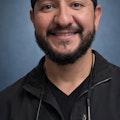 David Torres, CRDH
David Torres, CRDH
David Torres, CRDH, cohost of A Tale of Two Hygienists, is an experienced dental hygienist with over a decade of clinical expertise, specializing in patient education, preventive care, and the integration of modern dental technologies. Known for his passion for teaching, campus recruiting, and coaching, David is dedicated to elevating patient experiences while helping dental professionals improve efficiency, workflow, and long-term success.
 Kevin Ohashi Lopez, MHA, BSDH, RDH
Kevin Ohashi Lopez, MHA, BSDH, RDH
Kevin Ohashi Lopez, MHA, BSDH, RDH, is a dental hygienist, educator, speaker, and content creator based in Southern California. He earned his Bachelor of Science in Dental Hygiene from West Coast University and later completed a Master of Health Administration. Kevin currently serves at West Coast University as adjunct dental hygiene faculty and works across clinical education, professional events, and social media strategy within the dental industry. His work focuses on advancing evidence-based preventive care, modernizing the dental hygiene experience, and creating meaningful connections between clinicians, education, and innovation. Connect with him on Instagram at @kevstalksteeth or via email at [email protected].