Why dental hygiene licensure is about patient protection—not professional status




In this episode of A Tale of Two Hygienists, Jessica Atkinson and David Torres welcome Amanda Hill, RDH, speaker, consultant, author, and longtime dental hygiene advocate, for a conversation about licensure, accountability, and the future of the profession.
The discussion centers on recent legislation in Virginia, including a pathway for scaling assistants to provide supragingival scaling after limited on-the-job training and a developing pathway for foreign-trained dentists to become dental hygienists. Amanda explains why these changes have raised concerns among hygienists and why the issue is not about individual ability or potential, but about accountability, education, competency, and patient protection.
Together, the group explores the difference between being trained to perform a task and being licensed to provide care. They also discuss the parts of dental hygiene that patients may not see: medical history review, blood pressure screening, pathology recognition, infection control, documentation, referral judgment, continuing education, and adherence to the standard of care.
Amanda challenges hygienists to own their role as preventive specialists and to communicate more clearly with patients about what licensed dental hygiene care includes. Rather than rushing straight to implementation, she encourages hygienists to prioritize assessment, individualized care, patient education, and the broader links between oral health and whole-body health.
The episode closes with a call for licensed dental hygienists to “level up,” practice to the full value of their licensure, and continue advocating for care that moves patients toward health rather than simply providing access to continued disease.
Key highlights
- Licensure is about patient protection, accountability, competency, and standard of care—not simply professional status.
- Amanda Hill explains why supragingival scaling without full assessment may fail to address disease.
- The hosts discuss how patients often do not understand the difference between a dental hygienist, dental assistant, and other dental team members.
- Licensed hygienists provide many “invisible” forms of care, including pathology recognition, medical history review, infection control, documentation, and referral judgment.
- Amanda encourages hygienists to own their preventive expertise and communicate the value of licensed dental hygiene care to patients.
Episode transcript
David Torres: And welcome back, listeners, to another episode of A Tale of Two Hygienists podcast, episode 540. I am your co-host, David Torres, and I'm here with my amazing, I'm just going to call you cold star at this point. Cold star. Co-host, everything.
Just in this amazing season of graduation in May, it reminds me, I'm very reminiscent about the days when I graduated, which was back in 2012.
Jessica Atkinson: Are you old, man?
David Torres: Yeah, it seems like a long time ago, but in my mind, I still wake up in nightmares about meeting my requirements. And I'm like, “Did I do my FMXs? Did I do this?”
But you know what? I just want to congratulate our listeners who have made it thus far and are in the season of graduation. Give yourselves an amazing applause.
But we are all embarking into the licensing stage of our journey. Can you believe that back in my day, I graduated on April 26th, which is the day of my birth.
Jessica Atkinson: Happy birthday.
David Torres: Thank you. I got licensed all the way in October. So if anybody's listening to this and it took them a while to get licensed because they had to pass one board, or maybe you're in Florida and you had to wait way too long to get your results, you'll get there. You are going to do fantastic, and we wish you the best of luck as you start your career.
And in this episode, we're going to talk a little bit about licensures, a little bit about our purpose, our identity. And Jess, let's talk about our guest. Tell us about our amazing guest today.
Introducing Amanda Hill
Jessica Atkinson: Well, listen, this is Miss Amanda Hill. She is a dental hygienist, speaker, consultant, award-winning author, and podcast host in and of herself. She is also a friend.
And I am so grateful that she is on the podcast today with us to talk about licensure because she is in a position to give us a unique perspective on the importance of licensure, not only because she's been a registered dental hygienist for how many years now?
Amanda Hill: Thirty. Thirty years. I graduated last century. You called Dave old. I'm just saying.
Jessica Atkinson: I can only say Dave was old. What does that mean?
Amanda Hill: I graduated before we had the internet.
Jessica Atkinson: I only say Dave was old because I graduated before Dave. So I'm even older. I'm even older than Dave. So that was more of a play against myself instead of Dave.
But Amanda comes to us with a few years of clinical background, but also she has authored more than 100 articles for publications, including Today’s RDH, RDH magazine, DentistryIQ, Infection Control Today, and dentalcare.com.
I mean, your influence is deep and wide, Amanda, and I feel grateful that I got to be caught up in the glow of Amanda Hill.
And something about Amanda is when she moves to the next life, she has requested that we all celebrate on the day of her graduation by gonging a gong. And she's got a cute little one right here.
Amanda Hill: Big shout out to Emily Bogie. She got me my gong.
Jessica Atkinson: And because I think we shouldn't wait until we graduate to recognize our good deeds or recognize all of the requirements that you did, in fact, Dave, complete on our way to competence, right?
So on that day of ringing that gong, I am grateful that I have known you and so happy to have you on the podcast today to talk about licensure.
So I want to ask Amanda, why does living in Virginia mean that you have a unique perspective on licensure for the profession of dental hygiene?
Virginia legislation and why it matters
Amanda Hill: First off, thank you for that lovely intro. And Jess, I feel strongly about you too. I'll never forget the time we first met in person and I was fangirling you and you were fangirling me, and it was really weird, but it was so great all at the same time. And Dave, wonderful to meet you and get to know you.
But okay, so yeah, I've been doing this for a hot minute, graduated an entire century ago. But most recently in the lovely state of Virginia, where I reside and went to hygiene school, by the way, so any ODU grads—
Jessica Atkinson: Which is like a highlighted program. ODU across. I like when you hear ODU, first of all, you think of an explorer. And second of all, you think of the quality of education.
Amanda Hill: Yeah, absolutely. And the amount of research that comes in, research that comes out of ODU. And then of course, we all know the ODU 11, 12. I mean, who doesn't know that, right? That's what you think of.
But most recently in my lovely state, they have done something that gives me pause, Jessica. Gives me pause.
They have passed two pieces of legislation most recently. One is for an oral preventive assistant. That's not exactly what they're calling it, but the OPA, that supragingival scaling after 120 hours of on-the-job training.
Please note also in the state of Virginia, dental assistants need no training to be a dental assistant. So Burger King Monday, dental assistant Tuesday, bloodborne pathogens, no big deal. I mean, my daughter needed more training to become a barista and pour coffee than a dental assistant in my state, right?
So we have an on-the-job trained dental assistant. And no shade to them. I've known many across my career who are phenomenal. Phenomenal.
Jessica Atkinson: I don't think the conversation here is about ability or potential. I think the conversation here is about accountability.
Amanda Hill: Yes. So you have this 120 hours of training, and then now they can provide supragingival scaling on technically healthy patients.
If you add up 120 hours, that would be three weeks. It sounds long. It's not long. It's not 120 credit hours, it's just 120 hours.
And that's self-reported. It's kind of like if any of you guys, well, you guys probably haven't taught anybody to drive, but like all three of my kids, as I've taught them to drive, you have to fill out this form that you've done so much time behind the wheel with them. And really, you just fill out the form and you fake it, right?
I can only imagine what this form will be like.
And then the second piece of legislation that Virginia has passed is for foreign-trained dentists to then be able to become dental hygienists. The pathway to that has not quite been defined. It needs to be defined by our board of dentistry.
And so I'm hopeful that will remain, that they must then pass a board like hygienists pass prior to gaining that licensure, I hope. But I think we all know that education across the world within dentistry isn't the same.
CODA, accountability, and professional standards
Jessica Atkinson: CODA goes to great lengths here in the states to make our programs at least semi-consistent. And when I say at least semi-consistent, that's facetious here because CODA is very, very deep and long.
And if you say you're up for accreditation, educators start to shake in their, because there is so much documentation.
Amanda Hill: Yes, exactly.
Jessica Atkinson: So much documentation, so many requirements, so much to show accountability and competency.
Amanda Hill: Yes. So those are the two pieces that have come out in our state, and they have indeed passed and will go into effect July 1.
Now again, they haven't worked out the path to licensure for the foreign-trained dentist yet. So I don't think that will begin on July 1. The board needs to figure out what that looks like.
But I'm under the impression that the scaling assistant is what they're calling it, will indeed, July 1, we can have that in. And I gotta tell you, I have a lot of feelings about it.
I understand that people are having trouble hiring hygienists. And so they have passed this under the guise of access to care.
However, to me, it's called babysitting disease. I think we all know this, right?
I sent a picture of a boat to my governor to try to explain this to her. And I said, if you had a boat and you kept it in the water and you just washed above the waterline, and your boat looked beautiful and pristine, at the end of the season, when you lift your boat out of the water, it's covered in barnacles.
The same is true in your mouth. So this supragingival scaling actually isn't benefiting anybody.
Jessica Atkinson: And what I'm hearing is that this assistant will not be a licensed individual.
Amanda Hill: This assistant will not have their own licensure.
Jessica Atkinson: So I would like to really sink our teeth into this facade of access to care because we are providing access to what kind of care?
We are providing access to a group of unlicensed individuals where licensure is fundamentally about patient protection rather than professional status.
Amanda Hill: Yes, I love that. Yes. And there's a lot that comes with being licensed, right, Jess?
We have to take CE courses. Because we know that the standard of care changes, right? And so you don't know changes in standard of care if you're not continually educating yourself.
Jessica Atkinson: And sometimes we get into habits that aren't evidence-based. Just this last month, I got corrected on AAP classifications, which I've been teaching for years. And I was like, “Oh, I need to make a change. I need to update my information.” Yeah.
What patients see — and what they may not understand
David Torres: Well, I like to propose this. I mean, we're talking about access to care and how this got passed. And obviously, different states, different things.
By the way, I love that boat analogy. I'm in Florida, and I will be using it with my patients. It's fantastic.
Jessica Atkinson: It's so true, right?
David Torres: Absolutely. From a patient's point of view, you're sitting in the chair and I wear scrubs. Most of us do. And on my scrubs is my name and my CRDH, right, certified registered dental hygienist.
When they read that, when they see that, I have to believe that a patient looks at that title and automatically assumes that I've gone to school, that I'm licensed, that I'm educated, that I have experience, that I know best, that I am the dental professional.
Jessica Atkinson: They trust you.
David Torres: Right. It's hard for me to believe in a world where a patient looks at an assistant or anybody else and not have those letters to their name, and it's going to be like, how do I access? What do I do?
Am I assuming that I'm not getting quality of care? Am I assuming that I'm just getting bare minimum?
Because I think we all know this. We all go through this as hygienists every single day, why we have to do quote unquote deep cleanings or non-surgical periodontal treatments or SRPs. By the way, in dentistry, we have like 20 names for the same thing. I don't know why we're doing this, but—
Jessica Atkinson: We do this, right?
David Torres: Yeah. And so why is it that I have to explain to a patient the boat analogy, right?
I can do a cleaning, but it's not the one that you need because obviously you have an infection, you have a disease, and I am treating the disease.
And for us to have quote unquote access to care and then us having assistants quite effectively not treating the disease, right? Because the patient is getting a cleaning.
And in Florida, I can only speak for Florida, guys, so I'm obviously stating the fact that I'm in Florida. But we have dentists in every corner, so we do have access to care.
But even then, we have a lot of incentives where they're like, “99 special, come get your extras and a cleaning,” “79 special.” I've seen it as low as $49, right?
So then how do we compete with that when a patient goes to the dentist and they say, “I don't want to be taken care of, I want to go for my cleaning and I just so happen to have an exam and extras”?
So what is the patient's perception? Or how do we acknowledge the fact that, yes, we have a problem, we have a solution, dare I say it's not the best solution, but then how do we use that to understand what our responsibility is as licensed and registered and certified dental hygienists that we are, and why we're different?
And how do we explain that to people that don't know?
Explaining the role of the dental hygienist
Amanda Hill: I think you said a lot of things in there, Dave. And I think start with the first thing. I don't know that patients even understand the difference between the dental hygienist and the dental assistant and the person that answers the phone.
And so I think that it is our job to educate our patients about who we are and what our role is and what our expertise is.
And I gotta tell you, I am spreading the word in my state. I was at a cocktail party last night for just my neighborhood. And I'm telling everyone in my neighborhood about what has passed and said, “Listen, you need to ask that person that you're seeing and say that no, you indeed want to see an educated, CODA-accredited, educated dental hygienist.”
Jessica Atkinson: And may I see your license and registration, please?
Amanda Hill: Exactly. Yes. Excuse me. I'm going to pull you over and ask for that.
And so I think that, A, that's the first key. I think some of this is on us as a profession, to help people understand how freaking smart we are.
Because I gotta tell you, Hollywood has done us no favors. If somebody is going to pick a career for the person that the star of the movie or the TV show is having an affair with, it's always a dental hygienist. What is that? Why is that?
Jessica Atkinson: I'd like to write a letter to someone.
Amanda Hill: Right? I'd like to. I get a little frustrated.
And so I think that, A, we need to, as a profession, really work hard in owning our space in the preventive expertise, which comes with responsibility with that licensure.
And so it comes with doing all the stuff we learned in school. If there's new grads listening to this, don't stop doing all the things that you learned how to do.
And I think we are often pressured for that $49 cleaning. How on earth, in that 49, I bet that appointment's 30 minutes long, and did an assessment occur in that cleaning?
And I think too often, that assessment gets pushed out of the way and we jump, the ADPI, right? Assess, diagnose, implement. We jump just straight to implementation.
Patients in the chair, bums in the chair. I got to implement because I only have so much time and I'm rushing. And that's when we're doing bloody prophies. And that's when the public, and maybe certainly the people that pushed this bill through in Virginia, doesn't understand.
Jessica Atkinson: Even our professional counterparts.
Amanda Hill: Yeah, right. And it was interesting because I literally had a conversation with a dentist. I mentioned about this, what was going on in Virginia. He was a speaker on a webinar I was moderating.
I mentioned this about Virginia. He's like, “Well, you know, there's a shortage and we got to do what we got to do.”
And I was like, “Okay, riddle me this, Batman. How does this actually benefit patients?”
And he's like, “Yeah, I didn't really think about it.”
And I was like, “See?”
So it's our job. It's our job as hygienists to make sure that we are doing all of the things that we're supposed to be doing and not simply managing to get our patient done in 20 minutes and then reading a magazine or scrolling on our phone.
And so I mean, I'm not trying to point fingers, but just like in anything in the world, there are some people that I would prefer to be in their chair and some people that perhaps I would not want to be in their chair. The same as with mechanics or the same with hairdressers. People be people in everywhere.
So yeah, I'm not there to throw shade, but darn it all, we are licensed and we need to fulfill that license by actually properly doing our job.
Training versus licensure
David Torres: So for those who are going through this, because there's stages of change, right? So what I'm hearing is that there's a big difference between being trained to do something and being licensed to do it.
How do you advise us to explain this to people outside of dentistry?
Jessica Atkinson: I think we could go back to the driving analogy.
For example, what if you are not a licensed individual and you get in a wreck and you maybe don't have registration or insurance? Whose responsibility is it now all of a sudden to pay for or provide restitution for that?
It would be the person who does have the license or the insurance. I'm trying to find a good parallel. That might not be the best parallel, but it's a parallel that I'm drawing because Dave had a situation earlier today.
But I think we think about the responsibility that comes with licensure as that accountability piece. And when people are doing something without accountability or showing that what they're doing is up to a level of competency, maybe that's where I want to go here.
Maybe you did learn how to drive on a farm, which is going to be different than driving on a freeway in a big city. And the license shows that you have been passed to competency to manage a situation that will preserve the safety of yourself and others.
And that license and registration, help me make some more parallels here, guys. This is kind of the direction my brain's going in, but—
David Torres: Yeah, and that you're responsible for, you're held accountable to the board for that, right?
We do practice, and we practice dentistry each and every single day. And we do our very best. And there's always in the back of our mind, we got to protect our license, right?
So not only do we do no harm, but we also do things according to our scope to be able to quote unquote protect our license and do things by the standard of care.
It is what holds us accountable for our own actions, right? It is why we take BPs. It is why we go over the medical history. It is because we are licensed and we are held accountable if something were to go wrong.
What do you guys think about that? Because I feel like every time I administer anesthetic, every time I see a case, every time I go beyond what is essentially the basic, right, or the typical everyday stuff, I always have in my mind: I was trained. I was licensed. I had to pass four boards. I had to wait 900 months for me to be able to get my license.
And there it is. This is why you come to me, on top of my experience, right? Of my decades of experience.
Jessica Atkinson: Because I will treat you in a way that is respectful of my education and the responsibility that the public has given me as evidenced by my license.
Amanda Hill: And I also think that because we're licensed, that means we're given parameters in which we're supposed to, things we're supposed to do, ways we're supposed to practice, again, CE we're supposed to take and things like that.
I think there's something to be said for that. There's a governing body that sort of dictates what is that standard of care.
The invisible parts of clinical care
Jessica Atkinson: Because I think there are things that our license protects, these invisible parts of clinical practice that our license is demonstrating or protecting.
And I think that is our ethics, our ability to catch pathology, our referral judgment, our infection control, documentation, legal accountability, all of these things that our license is protecting or personifying.
David Torres: And that's precisely what the patients don't see. They don't know all these invisible things that we have to do, our pathology recognition, our oral cancer screening, all of these things that we do that patients have no idea.
I mean, I've been called dental technician in the past, right? Or the guy that does my cleaning, right? But it's beyond that.
It's not until I actually provide the services and do those things that the patient actually changes. They're like, “Oh, so you know what you're doing.”
I'm like, “Absolutely.”
Amanda Hill: What do you know?
Jessica Atkinson: What I'm hearing you say, Dave, is maybe putting words to what we're doing instead of, as Amanda, you said, the bums in the chair go straight to implementation.
Instead, come back. “I'm going to review your medical history. I'm going to be looking for things that could potentially cause contraindications to what we're doing today and give me a better idea of how to curtail my education to best meet your health goals and needs.”
And bringing the patient into that conversation, saying, “What is your goal for today? I'm here to provide my expertise. These are the things we're going to be doing in order for me to give you the best care.”
David Torres: Absolutely. As a dental hygienist, practicing has become very interesting because it has been my experience where automatically you get compared to just going to different doctors, right? For second, thirds, and fourth opinions, right? You automatically get compared about what equipment do you have, the technology that you use, all of those things.
And I think it is our responsibility as licensed dental hygienists to 100% give ourselves the importance to educate the patient both on their condition, their assessments, but also on who we are as professionals.
And quite frankly, motivate each other to do the same, right? We're all in the same circle in dentistry and dental hygiene, where we all advocate for each other.
Every time I see somebody outside of practicing, I ask them and pick their brain to see if I'm missing anything, or what tricks are they doing, or which instruments they're using, to see if it helps me level up my skills.
But sometimes it feels like a patient doesn't do that. It feels like a patient who says, “I want to go get a second, third opinion,” or oftentimes whatever is cheaper doesn't necessarily mean what's better.
So you can get your quote unquote free cleaning or your cleaning that the insurance covers and all stuff, but it doesn't mean that you're actually getting that care that, dare I say, you have access to.
From routine care to therapeutic care
Amanda Hill: Right. And it's one of the things, in fact, I just wrote an article. It's not published yet, so just wait a minute. It'll come out to probably an RDH magazine or a DentistryIQ or one of those Endeavor sources.
Jessica Atkinson: To your dental information near you, your email inbox.
Amanda Hill: But what I was drawing a parallel to was I get a massage every month. Okay.
I get a massage every month because dental hygiene, right? And for years I went to the same massage therapist. She was great. I really liked her. I mean, I like her. She's wonderful. I know about her kids. In fact, her son has graduated from college this weekend. I texted her, happy graduation, that kind of thing.
But every massage that I got from her was pretty much the same. She had a routine, right? She started on my shoulder. She went around, kind of like, I start on #2 and finish.
Then the spa hired a new hygienist—sorry, new massage therapist.
Jessica Atkinson: But here's the parallel.
Amanda Hill: Yeah, here's the—and she first asked kind of similar questions that the first massage therapist asked. You have any spots, whatever.
But my experience as her client was completely different than how it was with the first massage therapist. She paused in spaces. She spent more time in certain areas. She talked to me about what she was feeling.
And then she was like, “Okay, at home, I want you to roll around on a tennis ball because you get this knot under your left scapula, hello, mirror hand,” and all of that.
And so I felt like it wasn't just this massage that I always get, where she felt good. The first one felt good, great. But this was a therapeutic appointment, right? It was different. She listened to my body and responded to my body.
Jessica Atkinson: And verbalized what was happening.
Amanda Hill: Yes, and I left with specific home instructions, home exercises.
We can draw this parallel so closely to dental hygiene. You could hop in somebody's chair, they could lickety split, clean your teeth, hand you the brush and the floss and be like, “Don't forget the floss,” and send you out the door.
Or they can come into your chair, have a proper assessment. Your care is dictated by what you see happening. You communicate that to the patient throughout, making the links to their whole body, making those links to your health.
And that's truly when I believe that we are stepping into our place as a dental hygienist, as a licensed dental hygienist. This is what we know how to do. This is what we've been trained how to do.
And not to say that the first gal, the first massage therapist was bad, but I gotta tell you, I want to see the second massage therapist more because I get more out of it.
And so I think I want to encourage all the listeners, all the hygienists out there, as we provide care, and there's so many things that come into affecting, I only get so much time or I only have these instruments. And I understand this, right? This is not a perfect happy world. There's so much that goes into it.
But I want us to always question, is this the care I would want? Or is this the care that I want my mom to get or my nana to get or my kid to get?
And I think the more we do that, and the more that we explain to patients, and we build the value, and we help them understand why all this matters, that's when we're really going to be able to not only remain licensed, fight this kind of legislation that is coming in—
Jessica Atkinson: Some optimal care.
Amanda Hill: Yeah, but then really be able to own what we do. But I need everybody to do it.
A call to level up
Jessica Atkinson: I think this is a good place to wrap up. It is a clarion call to all dental hygienists, all licensed, registered, certified dental hygienists, to level up, to practice what is on your plaque.
It says you are licensed, and that can look to your patients in a way that is helping them get optimal care and moving towards health instead of getting access to continued disease.
So amen, Amanda.
David Torres: Amanda, thank you so much. I mean, honestly, what you do each and every single day, and I'm so thankful for this platform because the listeners are not only enjoying our topics of conversations, of course, but also seeing it from a different light.
Because I gotta tell you, the fact that all hygienists, even though across state lines, are all going through something similar in their own way. And one of the most important things is just motivating each other.
And thank you for being such an amazing advocate. The hygienists that have been doing this for a long time, the ones that are recently graduating, it affects all of us.
And I've never met a hygienist who doesn't want to do the best thing for the patient. And our patients deserve that and need that. So thank you for what you do.
Closing
Jessica Atkinson: That sounds like a gong. That sounds like time for. That's a wrap on today's episode of A Tale of Two Hygienists podcast.
If this conversation made you feel seen, inspired, or even just a little fired up, share it with a fellow hygienist or fellow dental professional. Share it with your neighbors, your friends, share it with everyone. That is how this community grows.
David Torres: Make sure you subscribe, leave us a review, and connect with us on social media so that we can keep on going with this conversation.
Remember, your career, your voice, and your story matter here. We're David and Jessica. And until next time—
Jessica Atkinson: Keep learning, keep laughing, and keep showing up for yourself and for each other.
David Torres: This has been a production of Endeavor Business Media, a division of EndeavorB2B.
About the Author
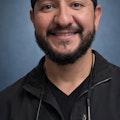 David Torres, CRDH
David Torres, CRDH
David Torres, CRDH, cohost of A Tale of Two Hygienists, is an experienced dental hygienist with over a decade of clinical expertise, specializing in patient education, preventive care, and the integration of modern dental technologies. Known for his passion for teaching, campus recruiting, and coaching, David is dedicated to elevating patient experiences while helping dental professionals improve efficiency, workflow, and long-term success.
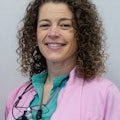 Jessica Atkinson, MEd, BSDH, RDH, FADHA
Jessica Atkinson, MEd, BSDH, RDH, FADHA
Jessica Atkinson, MEd, BSDH, RDH, FADHA, is a dental hygiene educator, clinician, and advocate dedicated to advancing the profession through innovation and education. She combines her clinical expertise and love for education to create engaging, practical learning experiences. Jessica is an Associate Professor and Senior Clinic Coordinator at Utah Tech University, co-host of A Tale of Two Hygienists, and CEO of HYGIENE edgeUCATORS, where she develops continuing education for educators and clinicians. She co-founded Hygiene Edge, a platform with over 100,000 YouTube subscribers. Recognized with the Element Award and Outstanding Service Award, she is a Fellow of the ADHA and past president of UDHA.
 Amanda Hill, BSDH, RDH, CDIPC
Amanda Hill, BSDH, RDH, CDIPC
Amanda Hill, BSDH, RDH, CDIPC, is an award-winning author, speaker, and consultant with more than 30 years in dentistry. She is passionate about helping dental professionals stay curious, think differently, and provide exceptional patient care through practical, evidence-based education. She can be reached at [email protected].