Finding your why: A hygienist’s journey from nontraditional student to community advocate




Key Highlights
- Richard Robinson shares how discovering dental hygiene at age 40 changed the direction of his life and career.
- Learn why representation matters and how “you have to see one to be one” can inspire future healthcare professionals.
- Explore how My Why University introduces high school students to dental hygiene through hands-on experiences.
- Hear why prevention, education, and community partnerships are essential to improving oral health outcomes.
- Discover how one patient interaction can create a ripple effect that changes someone’s future.
Episode description
What happens when one dental hygienist decides their impact can extend far beyond the operatory?
In this episode of A Tale of Two Hygienists, Richard Robinson shares his journey from a nontraditional student discovering dental hygiene later in life to becoming a community advocate focused on education, representation, and access to care.
Richard talks about finding his purpose in hygiene, why mentorship matters, and how his nonprofit work through My Why is helping students see themselves in healthcare careers. Through school outreach, hands-on workshops, and conversations with future healthcare professionals, Richard is building pathways for students who may never have imagined themselves in dentistry.
Dave and Jessica also explore the bigger picture of prevention, including why oral health education needs to start early, why collaboration matters, and how every hygienist has the opportunity to create meaningful change through everyday interactions.
This conversation is a reminder that access is not something we simply wait for, it’s something communities build together.
A Tale of Two Hygienists Podcast – Episode 545
Finding dental hygiene later in life and discovering a purpose [00:00]
Richard Robinson:
I’m a firm believer that to be one, you have to see one.
When I go into these schools and these young African-American men and women see that my hair looks just like theirs, my skin complexion looks just like theirs, they see possibility.
I’m not going to the prep schools. I’m going to those schools where they’re forgotten about. I’m going to those schools and saying, “Hey, you can do this because I was you.” I see myself in those students.
Don’t do something because of the financial aspect. They print money every day. Find your purpose.
I believe a lot of people are doing things because, “Oh, it pays me,” or “This is what they said I should do.” Do what makes you happy, and the money will come.
I don’t want oral health to be a luxury. I want it to be something that is done because it needs to be done. And us as a society, as hygienists, and as dentists, we can do that.
Meet Richard Robinson: Hygienist, advocate, and community builder
[02:00]
Jessica Atkinson:
Dental hygienists and dental people, welcome back to another episode of A Tale of Two Hygienists podcast. I’m your co-host Dave, and I’m here with Jess, my amazing co-partner.
Dave Torres:
Jess, something interesting happened to me today. I was looking at a patient, and because it’s summer, we’re seeing younger patients coming in.
These kids are coming into the dentist and they’re like, “Hey, what is your name?”
I found that really interesting because I wear my name on my scrubs. But I learned they don’t teach cursive anymore, so my patient wasn’t able to read my name. It was borderline Daniel. They called me Daniel.
I was like, “Buddy, this means David Torres.”
So for listeners, if you’re thinking about buying a new pair of scrubs, maybe consider getting your name printed instead if you’re trying to embroider your scrubs.
A little public service announcement because that’s exactly what happened to me today.
Jessica Atkinson:
Maybe next to your CRDH say “no cap.”
Dave Torres:
No cap or like “rizz.” I like that.
Jessica Atkinson:
I like that. Then they’ll be like, “Yeah, now I really get you.”
Introducing Richard Robinson and the mission behind my why
[03:30]
Jessica Atkinson:
You guys are probably hearing our guest, so before we move any further, tell us a little bit about this amazing person that we have with us today.
We have a guest that’s dripping with rizz.
Dripping, dripping.
We have with us today the one, the only, Richard Robinson. He is a dental hygienist, nonprofit founder, and community advocate dedicated to improving oral health outcomes, expanding educational opportunities, and creating greater diversity within the dental profession.
Richard is the founder and executive director of My Why, a nonprofit organization committed to serving underserved communities through oral health education, outreach, and community engagement initiatives.
He’s a graduate of the University of Arkansas for Medical Sciences College of Health Professions.
Richard is passionate about inspiring and mentoring future healthcare professionals. Through My Why University, he leads workshops for students who aspire to become dental hygienists, providing guidance on educational pathways, professional development, and career opportunities within the field.
The program focuses on increasing awareness of the profession, breaking down barriers to entry, and creating a more diverse and representative dental hygiene workforce.
Richard also established the Richard Robinson Scholarship at UAMS to help dental hygiene students overcome financial obstacles and achieve their educational goals.
Through his leadership, advocacy, and commitment to service, he continues to empower future dental hygienists, promote health equity, and strengthen communities through education and access to care.
Welcome, Richard.
Richard Robinson:
Thank you so much. Thank you. That introduction, man, it’s such an honor. Thank you again.
A nontraditional path into dental hygiene
[06:00]
Jessica Atkinson:
Richard, I’d like you to start with something from the introduction. You talked about breaking down barriers and financial obstacles to entering dental hygiene.
Tell me a little bit about your own story there. I feel like there’s something to tap into.
Richard Robinson:
I grew up in a nontraditional household, a single-parent household, on the other side of the tracks, you might say.
I didn’t find dental hygiene until I was 40. I went back to school as a nontraditional student, but not only that, I was a student who suffered from severe dyslexia and ADHD.
A little tidbit here: I didn’t learn how to read fluently and comprehend until I was 36 years old.
Dave Torres:
I’m looking at you and thinking, how old are you, bro? Because you are reverse aging, man.
Richard Robinson:
You know, blood don’t crack, right? Come on now.
Jessica Atkinson:
I’m feeling my age.
Dave Torres:
Yeah, I always think Jess is reapplying sunscreen.
Richard Robinson:
Growing up, we didn’t have opportunities to go into hospitals, attend workshops, or go to those different events hospitals hold for high school students to get that exposure.
When I found dental hygiene, I was actually getting my teeth cleaned one day. I didn’t even know they were called hygienists, to be honest.
The hygienist was telling me about her experience, her work-life balance, and making it seem like something I needed to do. At the time, I was in between jobs.
After I finished getting my teeth cleaned, I called my wife and said, “Babe, I want to clean some teeth.”
She said, “Do you want to be a hygienist?”
I said, “Look, whatever that lady does, that’s what I want to do.”
So we made it make sense financially. We found a school here in Little Rock, and the rest is history. I became a hygienist.
Turning a personal experience into community impact [8:00]
Richard Robinson:
After I graduated, I became passionate about the profession and giving back to the community.
The things I saw as a student going into school-based programs really stayed with me. Kids weren’t educated on the importance of oral health. They didn’t have oral health kits like toothbrushes. Their siblings didn’t have toothbrushes.
The adults weren’t educated about the “why” behind why we need to brush twice a day, floss, and focus on preventative care.
That really sparked everything for me to create My Why after I graduated, along with a scholarship.
After I graduated, I found out I was the second African-American man to graduate from UAMS since the program began, I believe, in 1974.
So we could clap. That’s Black History right there. We could clap for that one.
Jessica Atkinson:
Yeah, that’s a long time not to have that representation.
Dave Torres:
Exactly.
Richard, I love guests like you because, honestly, we as hygienists make a difference every single day. Sometimes we don’t know how we’re doing it.
The fact that you got so inspired by the hygienist cleaning your teeth and were able to walk out and say, “Babe, we’re going to change our lives. I don’t know how we’re going to make this happen, but we’re going to make it happen,” is incredible.
You were able to make that career shift because you had that belief system and that purpose.
And now, not only did you graduate and create history, but you continue to do so beyond the dental chair.
I want to talk more about that. Most of us go to work, see our patients, stay in the chair, and do all the things that come with dentistry. But you went beyond that.
Tell me more about that. Tell me your why.
Richard Robinson:
I don’t know why. I mean, after graduating, I always wanted to give 120%.
One of my professors said, “You can graduate and just be a gum gardener. You can go to work, clean teeth, and leave. Or you can be an indispensable hygienist.”
That’s what I wanted to be. I wanted to do more. I wanted to give more.
I was lucky to find an office that only required me to work three days a week.
I thought, “Wow, you’re going to give me four days off? That’s more than enough time for me to make a difference in my community.”
That’s when I started the nonprofit and started going into schools, educating the next generation of dental hygienists.
I want these students and these classes to see themselves in me because I’m a firm believer: to be one, you have to see one.
Representation creates possibility [10:30]
Richard Robinson:
When I go into these schools and these young African-American men and women see that my hair looks just like theirs and my skin complexion looks just like theirs, they see that this is possible.
I’m not going to the prep schools. I’m going to those schools where they’re forgotten about.
I’m going to those schools and saying, “Hey, you can do this because I was you.” I see myself in those students.
That opportunity is not always given to people who look like me, so how can I get those people in the room? How can I get them in front of the right people, in the right professions?
Growing up, I thought everybody in the hospital was a nurse or a doctor. I didn’t know there were respiratory therapists, physical therapists, dental hygienists, and so many other careers.
It was eye-opening as an adult to realize there were so many opportunities besides nursing and becoming a doctor.
I’m thinking these students probably don’t know that either.
So it’s not just dental hygiene. It’s getting them involved in other health professions and opening the door.
A small moment can change a future [14:30]
Richard Robinson:
Just a quick tidbit: one of the students I spoke with was a senior last year. I went and spoke to her class, and later I saw her at our local college while I was doing a health fair.
I said, “Hey, I think I know you.”
She said, “Yeah, you came to my school with a big red toothbrush.”
I carry a big red toothbrush when I do presentations.
She told me, “You inspired me to become a nurse.”
She’s currently a nursing student.
Before that, she was never thinking about going into anything in the College of Health Professions. She told me, “I’m in my first semester here at the university. I’m staying on campus.”
She said I inspired her because no one came and talked to her and told her that she could.
It was always, “You can’t,” “You’re not good enough,” “You don’t belong,” or “You’re not going to make it.”
I’m everybody’s biggest cheerleader.
If you tell me you’re going to do something, I’m like, “Let’s do it. When are we starting? Let’s write it down.”
That’s just me all day, every day.
Jessica Atkinson:
Richard, have you always been like that? Or is this something that grew because you had one little win, then another one, then another one?
Or is it something that you’ve carried with you since you were a kid? A mindset or a way of looking at the world?
Richard Robinson:
You said it. It’s the mindset.
It could rain outside for 10 minutes, and 90% of people would say it rained all day and they couldn’t get anything done.
It’s just 10 minutes.
You can still do the rest of your day, but people will sit there and say, “It rained all day. I have to sit on the couch all day and do nothing.”
You threw away a whole day because it rained for 10 minutes.
Finding joy in the dental hygiene profession [16:00]
Jessica Atkinson:
How long did that girl see you with the red toothbrush?
Richard Robinson:
Thirty, 45 minutes.
Jessica Atkinson:
Thirty, 45 minutes.
And what you can do with that mindset — seeing something that takes a short amount of time and turning it into something beneficial — is incredible.
I keep going back to your experience with your dental hygienist appointment and how that was such a small amount of time. In that moment, you took that opportunity and thought, “Hey, this is something I can do.”
Then you expanded on it.
Was there something she said or did? What was happening in your mind that made you think, “This is what I want”?
Richard Robinson:
The thing that stood out to me was her space and the work-life balance.
I have an 18-year-old daughter now, but back then she was much younger, so I wanted to spend more time with her.
I wanted to spend more time with my wife because she was a bedside nurse at the time, and she worked a schedule like three on, two off. It was just really crazy.
I was also everywhere with my previous employer, so we never got to spend that quality family time together.
Her excitement about the profession — saying, “Hey, I get to educate, I get to do this and do that, and we have conferences” — made me think, “This sounds exciting.”
I wasn’t even looking at the financial aspect. I just wanted to go to work and be happy.
I see so many people going to work every day and leaving work looking miserable. I didn’t want to be that person.
I wanted to enjoy what I do.
I don’t even look at it as a job or a career anymore. Right now, to me, this is a hobby.
They just pay me for it.
When people ask me, “When you go to work, what’s it like?” I say, “I never work. This is my hobby. They’re just sending me a check every week or every two weeks.”
They’re like, “Wow, that’s a different way to look at it.”
When I go to work, I’m that guy on the highway bumping Taylor Swift on my way to work, having a great time. And I leave work feeling the same exact way.
I’m not exhausted. I’m not hurt. I’m not broken down.
Being at my place of employment energizes me.
Again, it all goes back to mindset and how you view things.
If you want to change something, you can change it. But nothing changes if nothing changes.
That all starts with you.
Helping hygienists shift their mindset [18:30]
Dave Torres:
Don’t be sorry, Richard. This is a conversation.
What advice do you have for getting out of that rut? How do we encourage each other?
Because you have such a bubbly personality. If I was working with you, we’d probably be partying it up. It might be too much.
But our listeners might be driving, working out, or folding laundry right now. What can they take away from this conversation and say, “Here’s how I’m going to shift my mindset”?
Is there specific advice you have to help them get over that hump when they feel like they’re stuck?
Richard Robinson:
I would say find your passion. Find your why.
Don’t do something because of the financial aspect. They print money every day.
Find your purpose.
I believe a lot of people are doing things because, “Oh, it pays me,” or “This is what they said I should do.”
Do what makes you happy, and the money will come.
Why prevention starts with connection [20:30]
Jessica Atkinson:
What is it about dental hygiene that makes you happy, Richard?
Richard Robinson:
Educating, meeting new people, and hearing backstories.
I’m extremely empathetic.
When patients come in, I let them know that their feelings are valid and that this is a safe space.
I don’t want them to feel intimidated.
I know the dental office can be an intimidating place to go.
But I love hearing wins from my patients, hearing their challenges, and following families over time.
They’ll come in with a newborn, and four years later that child is walking, talking, and starting first grade.
Every hour on the hour, it’s a different story.
And I want to hear that.
Jessica Atkinson:
It’s one of the very few professions where people allow you into their personal space.
We’re able to physically touch their face and be in their bubble.
I think that creates a connection we can leverage for good — a space where people feel heard and inspired.
The secret sauce of prevention is that it’s a partnership with your patient.
When you can support the habits they have that are improving their health, we really can make a difference far beyond what we can see.
Imagining a better oral health system [22:00]
Dave Torres:
Can you paint me a picture of what really matters for oral health care, maybe within the system, and what it could look like? And be honest about how far we actually are from it.
You’re doing outreach in schools, you’re representing out there, and I would argue you’re doing a lot more than most.
What are some things we’re still struggling with? What would you love to see if there was a Richard-verse?
Richard Robinson:
Oh man.
First things first is more autonomy for dental hygienists.
Jessica Atkinson:
Oh, ding, ding, ding, ding, ding.
Richard Robinson:
We need more autonomy.
I’ll use Arkansas as an example. We rank at the bottom of the funnel when it comes to oral health.
And it’s not because we don’t have people who need care. We have a lot of rural areas where they don’t have hygienists and dentists.
If you allow hygienists to get into those communities and actually provide services to those patients, but also educate them and connect them with a dental home, that changes things.
I can say, “Hey, you can go here to get service. I’m going to get you clean today.”
We can go from being at the bottom of the funnel to being at the top.
Expanding access through collaboration and education [23:30]
Richard Robinson:
A lot of this comes down to collaboration — working not only with dentists but hospitals as well.
It’s about partnerships in the community, partnerships with churches, partnerships with schools, and creating more school-based clinics, especially for underserved communities.
We need more hygienists who want to volunteer their time in those underserved communities as part of school programs.
Whether that’s dental, dental hygiene, or dental assisting.
We have one event that we hold here every year in Arkansas, but it’s one event for the entire state. People come from all over once a year to get a tooth pulled.
There’s no telling how long that tooth has been hurting.
Jessica Atkinson:
And we don’t want to pull teeth.
We want them to stay in the head and we want them to be healthy and happy.
That’s why prevention matters.
Richard Robinson:
Exactly. It’s all about prevention, educating, and starting young.
A lot of those kids, when they come to my workshops, they’re like, “I’m going to tell my mom and dad. I’m going to tell my sister and brother.”
And that’s what we need.
Let’s make it a nationwide thing.
We had the DARE program — I’m giving my age away right now — and that was in every elementary school. You had DARE for two or three years in elementary school.
Why can’t we have an oral health program like that?
What if we could catch these kids at a younger age and say, “Hey, brushing your teeth is cool. Flossing is cool.”
Have a nationwide program that starts young, continues as they get older, and opens the door to this profession.
Creating the next generation of hygienists through my why university [25:30]
Jessica Atkinson:
I like your dreams.
I like this Richard-verse of prevention.
But you’re already doing that. You’re already creating spaces where this is happening.
Tell us a little bit about that.
Richard Robinson:
Our newest initiative is My Why University.
It’s a hands-on workshop where we take 10 high school students and have a four-to-five-hour workshop.
It’s like a crash course of the dental hygiene program.
We start off with our mission, our oath, and then we have a white coat ceremony.
Jessica Atkinson:
How fun.
Richard Robinson:
Yes. After the white coat ceremony, we go into the curriculum: radiography, case studies, and tooth morphology.
We cover four different aspects of the dental hygiene coursework.
In between that, we have a lunch and learn. I’ll bring in a financial advisor or someone to talk to them about something related to what’s going on in their lives or their next steps.
Then after that, we have a graduation.
They walk across the stage, their parents are there, and they receive a graduation bag along with a certificate.
Richard Robinson:
We’re also opening their eyes because we know we have instruments.
We’re doing instrumentation. We’re looking at radiographs. We’re looking at case studies.
I’m getting them involved so they actually feel like they’re the hygienist going over a case study.
I have some amazing My Why volunteers — shout out to Team My Why — who always come help out.
We’re not only here in Arkansas. I have a location in Beaufort, South Carolina, that I started last year.
So we’re actually in two states right now, and we’re doing amazing things.
Jessica Atkinson:
And this is to inspire this group to pursue a degree or a path in medicine, dentistry, or something in health care?
Richard Robinson:
Yes. How cool is that?
One mentor can change a career path [27:30]
Dave Torres:
We talk a lot on this podcast about access to care, legislation, and all the changes happening in dentistry.
But sometimes we need someone like Richard to go back to basics and say: it starts with community outreach.
It starts with getting local students and high school students to experience what it’s like to be in this profession.
I can’t think of a better example of a day-in-the-life experience than what you’re doing right now and how you’re inspiring students.
I graduated pretty early, but the high school I attended allowed me to be a dental assistant at the same time. That’s why I fell in love with the smell of a dental office.
As weird as that sounds, it worked for me. And here I am.
Jessica Atkinson:
You like that clove?
You like that formaldehyde?
You like that [FLAGGED: unclear term from transcript]?
Dave Torres:
Yeah.
I was a weird kid, and I was so excited.
But I can only imagine all these kids going through this amazing journey with you.
Do you have a story of a student who received their certificate or had a parent say, “You changed my life”?
Do you have one in your back pocket?
Richard Robinson:
Yeah, there’s actually a mentee I have who is currently in the program.
Before she got into the program, she reached out to me.
She wasn’t even my mentee yet. She was just like, “Hey, can I come in and shadow you? I’ve seen your work on social media.”
She told me she had been applying to the program for three years and hadn’t gotten in.
She asked, “Can you help me?”
And I said, “Absolutely.”
We met, had coffee, looked at her grades, looked at what she had done from a volunteer perspective, and worked through everything.
I asked her, “Have you been to any of the open houses?”
She said no.
I asked, “Have you gone to the clinic to get your teeth cleaned, introduce yourself to the instructors, and let them know how passionate you are?”
She said no.
So I started writing everything down.
I said, “Okay, I have a plan for you.”
We’re going to this open house. Actually, you’re going to every open house until the program starts.
I don’t care if it’s the same thing or the same professor. You’re going to do the virtual and the in-person.
You’re going to get your teeth cleaned there. You’re going to network with the students and instructors.
You’re going to resubmit your application, complete your observation hours with me, and I’m going to write you a stellar letter of recommendation.
The power of mentorship and persistence [30:00]
Richard Robinson:
She did all of that, and she was waitlisted.
Jessica Atkinson:
Ouch.
Richard Robinson:
She caught me bawling, crying.
I was like, “No, it’s just—it’s going to be okay.”
She said, “What do you mean? I didn’t get in.”
And I said, “Just give it some time.”
After a month and a half of waiting, she got the phone call and called me crying again.
But these were tears of excitement.
Jessica Atkinson:
Man, some of my favorite students were the ones on the waitlist.
Richard Robinson:
Yeah.
Jessica Atkinson:
They come in with such a different perspective, a drive, and a—
Richard Robinson:
That grit.
Jessica Atkinson:
Grit, yeah.
Richard Robinson:
That chip on your shoulder like, “Hey, you didn’t want me for three years, but I’m here now. It’s time for me to dominate.”
And she is doing amazing.
She’ll be graduating next year.
Building a future where oral health Is part of overall health [31:00]
Dave Torres:
I get goosebumps every episode.
Richard brings the goosebumps and the inspiration.
From a dental cleaning appointment later in your life to inspiring the next generations of hygienists, it’s incredible.
Tell me what’s next for the next 10 years.
If you close your eyes — because I don’t think you ever woke up one day and said, “I’m going to create this amazing Richard-verse” — but if you had the opportunity, the resources, and the support, what would that look like 10 years from now?
Richard Robinson:
Oh man.
Oral health wouldn’t be separated from medical health.
It’s the full body.
I don’t know who wrote the rules, but we can change that.
We really can change that and say, “Okay, head to toe, it’s one. It’s medical.”
I would like access to care for everyone, not just those who are financially able.
I would like more resources for those underrepresented communities, more dental offices, and more education in our schools when it comes to oral health.
And that’s across the board.
Richard Robinson:
I don’t want oral health to be a luxury.
I want it to be something that is done because it needs to be done.
Us as a society, as hygienists, and as dentists, we can do that.
We can take care of that.
We shouldn’t have someone saying, “Hey, I need $1,500,” knowing they’re a struggling single parent who is going to work in pain and then has to go home and take care of their kids.
Why are we living like that?
I want to change all of that.
Every interaction has the potential to inspire [33:00]
Jessica Atkinson:
I want more Richards.
I want more Richard Robinsons.
That’s what I want.
And I hope listeners, as you hear his words and think about yourself in your office or wherever you’re practicing hygiene, know that one interaction can create another Richard Robinson.
So remember that.
Thank you, Richard, for being with us, and thank you for the impact you’re having on the future.
Richard Robinson:
Thank you all for having me. It’s such a pleasure.
Dave Torres:
You are the definition of purpose and drive.
Thank you for what you do.
We’re going to leave your information in the show notes and description. If people want to support, reach out, or ask questions, please connect with Richard.
He’s not only making a change in our dental hygiene world, but he’s literally driving change in people’s lives.
Thank you, Richard, for what you do.
Richard Robinson:
Thank you.
Or as the kids say, “Clock it, clock it.”
Dave Torres:
Clock it.
Jessica Atkinson:
That’s a wrap on today’s episode of A Tale of Two Hygienists podcast.
If this conversation made you feel seen, inspired, or even just a little fired up, share it with a fellow hygienist or dental professional.
Share it with your neighbors, your friends, share it with everyone.
That’s how this community grows.
Dave Torres:
Make sure you subscribe, leave us a review, and connect with us on social media so we can keep this conversation going.
Remember, your career, your voice, and your story matter here.
We’re David.
Jessica Atkinson:
And Jessica.
Until next time, keep learning, keep laughing, and keep showing up for yourself and for each other.
About the Author
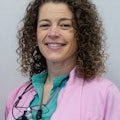 Jessica Atkinson, MEd, BSDH, RDH, FADHA
Jessica Atkinson, MEd, BSDH, RDH, FADHA
Jessica Atkinson, MEd, BSDH, RDH, FADHA, is a dental hygiene educator, clinician, and advocate dedicated to advancing the profession through innovation and education. She combines her clinical expertise and love for education to create engaging, practical learning experiences. Jessica is an Associate Professor and Senior Clinic Coordinator at Utah Tech University, co-host of A Tale of Two Hygienists, and CEO of HYGIENE edgeUCATORS, where she develops continuing education for educators and clinicians. She co-founded Hygiene Edge, a platform with over 100,000 YouTube subscribers. Recognized with the Element Award and Outstanding Service Award, she is a Fellow of the ADHA and past president of UDHA.
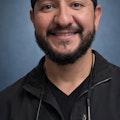 David Torres, CRDH
David Torres, CRDH
David Torres, CRDH, cohost of A Tale of Two Hygienists, is an experienced dental hygienist with over a decade of clinical expertise, specializing in patient education, preventive care, and the integration of modern dental technologies. Known for his passion for teaching, campus recruiting, and coaching, David is dedicated to elevating patient experiences while helping dental professionals improve efficiency, workflow, and long-term success.