What happens when a dental hygienist joins the hospital team?




Key highlights
- Why hospitalized pediatric oncology patients need dental hygienists as part of the care team.
- How education alone helped reduce infection rates and improve patient outcomes.
- The story behind implementing red light therapy for oral mucositis.
- What dental hygienists can learn from nursing's many career pathways.
- Why curiosity, networking, and saying "yes" opened an entirely new career path.
Episode description
Most dental hygienists imagine their careers taking place in private practice, public health, or education. Jenell Robins followed a different path—one that led her into the pediatric cancer center at Texas Children's Hospital, where she now works alongside physicians, nurses, and multidisciplinary teams to improve outcomes for medically complex children.
In this conversation, Jenell shares how a simple Indeed job posting became an opportunity to build a hospital-based oral health program focused on prevention, education, and collaboration. She discusses reducing bloodstream infections, implementing red light therapy for oral mucositis, training nursing teams to perform better oral assessments, and why dental hygienists deserve a permanent place on interdisciplinary health care teams. The episode is both an inspiring career story and a practical look at what medical-dental integration can achieve
When curiosity leads to a new career path [02:00]
Dave Torres:
Welcome back, dental people—dental hygienists, dental assistants, dentists, front office teams, and patients.
Welcome back to another episode of the A Tale of Two Hygienists podcast. I'm your co-host, Dave, and I'm here with my amazing co-host, Jess.
Last week I was seriously thinking about cutting all my hair off. It's July, it's hot, it's humid, and the second I walk outside my curls completely lose it.
But then today happened, because Jess has amazing curls...
Jessica Atkinson:
Aw, thanks.
Our guest today has amazing curls too. As soon as she logged on I thought, you came to the right place—you are among friends.
Today we're joined by Jenell Robins, a dental hygienist with more than 20 years of clinical experience and a passion for helping people understand the connection between oral and overall health.
As an oral health educator at Texas Children's Hospital, she works alongside pediatric oncology and hematology teams to bring preventive oral health into hospital settings and improve outcomes for medically complex patients.
Through her work, Jenell challenges traditional ideas about where dental hygienists belong in health care. She's focused on breaking down silos between medicine and dentistry, advancing infection prevention efforts, and demonstrating how oral health plays a meaningful role in whole-person care.
She's also passionate about expanding opportunities for dental hygienists to become valued members of interdisciplinary health care teams.
I'm so excited to have a fellow curly head, fellow advocate, and fellow professional with us today.
Jenell, thank you so much for joining us.
Jenell Robins:
Thank you for inviting me. I'm super excited to have this conversation.
Jessica Atkinson:
I'm excited too, especially because Utah recently passed legislation allowing dental hygienists to work in hospital settings.
I want to know how you found yourself working in a hospital and how we can create more opportunities like this—because we belong there.
Breaking down the walls between medicine and dentistry [04:40]
Jenell Robins:
First of all, kudos to Utah. This is an incredibly difficult niche to break into.
I've been doing this for about four and a half years now. At first I thought dentistry was what was holding us back. Then I realized medicine was holding us back. Eventually I understood it's really a combination of both.
The longer I've been in this role, the more I've realized we simply need a pathway in both directions. Dentistry needs to understand what we're doing, and medicine needs to understand what we're doing.
This role is very different from clinical dental hygiene. I don't provide direct patient care the way I did in private practice, so it requires a completely different mindset.
As for how I got here—it was honestly right place, right time.
I was scrolling through Indeed and found a posting for an oral health educator in a pediatric center. The position was hired through Baylor but based at Texas Children's Hospital.
The job description almost sounded like a traditional dental hygiene position. It mentioned radiographs and other clinical responsibilities, and I remember thinking, How is that going to work in a hospital?
But curiosity got the best of me, so I applied.
When I interviewed, I spoke with a quality specialist responsible for quality and safety in the hospital. We started talking about my vision for integrating medicine and dentistry and how I believed oral health could improve patient outcomes.
She happened to have a close friend who was a dental hygienist, and because she's a nurse herself she already understood some of those connections.
As we talked, we both became excited about what the role could become—even though neither of us knew exactly where it was headed.
She gave me a chance, and here I am four and a half years later.
Dave Torres:
Medicine and dentistry have operated in completely separate worlds for decades.
You're literally walking into those spaces and trying to tear down those walls.
What's been the biggest resistance you've encountered? And what's the strongest argument you've found for why oral health deserves a permanent seat at the table?
Why oral health matters during cancer treatment [07:15]
Jenell Robins:
That's a question we could probably spend hours talking about.
A lot of it comes down to education and introducing a different way of thinking.
My role focuses on hospitalized pediatric oncology and hematology patients. These children are often admitted for weeks at a time while they're receiving cancer treatment.
Because they're immunosuppressed, they're at much higher risk for bloodstream infections, which are one type of hospital-acquired infection.
Those infections affect everything. They increase hospital costs, extend a patient's stay, decrease quality of life, and create additional complications during treatment.
Our goal is to prevent another serious problem while they're already fighting something so significant.
One challenge is helping medical teams understand that the mouth is never sterile.
Everyone has bacteria in their mouths—good and bad. In healthy people those bacteria exist in balance, but for immunocompromised patients, even bacteria we'd normally consider beneficial can become dangerous if they enter the bloodstream.
Early on, some approaches focused on trying to eliminate all of the bacteria with different rinses.
But that isn't possible—or even desirable.
We need balance.
From the dental perspective, it's easy to focus on cavity prevention because we know these patients are at high risk.
But during chemotherapy, our first priority is keeping the mouth healthy enough to reduce the risk of bloodstream infections.
Preventing cavities still matters, but preventing life-threatening infections has to come first.
Jessica Atkinson:
What I'm hearing is that the barriers aren't just legislation.
They're also education, understanding, and application.
Medicine recognizes that oral health is important, but without someone who truly understands oral microbiology and prevention, it's difficult to put that knowledge into practice.
There's also the question of where dental hygienists fit into the system.
Before this year in Utah, depending on supervision requirements, I couldn't simply work in a hospital independently.
It's frustrating that hygienists are sometimes prevented from practicing within the education and scope they already have.
Yet you've found a way into the hospital, and now you're helping prevent bloodstream infections using the expertise we already possess.
What does your day actually look like?
Are you providing oral care, or does your role look completely different?
Jenell Robins:
It's definitely a double-edged sword.
If I were allowed to provide hands-on care, I know there are so many more ways I could help patients.
At the same time, it's amazing to see what we've accomplished strictly through education.
We've educated nurses, physicians, interdisciplinary teams, patients, and families.
We've published data showing reduced infection rates, and all of that happened without me ever directly treating patients.
If I could actually provide clinical care, I think the impact would be even greater.
Every day is different.
Some days I round with our multidisciplinary teams on the hematology, oncology, and bone marrow transplant units. We visit high-risk patients, evaluate their environment, assess oral hygiene, and look at what's happening in their mouths.
Sometimes the biggest need is simply education.
Parents don't always have the same level of oral health knowledge, and these children are already living in an environment where almost every part of their day is controlled.
They're told when to take medication, when to wake up, when to sleep, and when to go to therapy.
Then someone says, "Now it's time to brush your teeth."
Sometimes they simply clamp their mouths shut.
"Nope. I'm not doing it."
Because it's one of the few things they still have control over.
Jessica Atkinson:
They're choosing where to express their independence.
Jenell Robins:
Exactly.
Sometimes they do the same thing with showers.
It's one small decision they still get to make.
Education can change patient outcomes [13:10]
Jenell Robins:
In addition to rounding with the multidisciplinary team, I also make independent rounds.
If a nurse tells me a child is experiencing mouth pain, struggling with oral hygiene, or doesn't have a parent or caregiver present for support, I'll go visit that patient.
I also meet with newly admitted families. We talk about why oral health is so important during cancer treatment, how good oral care helps reduce the risk of bloodstream infections, what our expectations are during their stay, and whether they have the right products for their child's age and needs.
We care for everyone from infants to patients in their early 20s, so oral care recommendations look very different depending on the patient.
Beyond patient education, I serve on infection prevention committees and our high-level disinfection committee. Dental hygienists already have expertise in infection control, so I help identify ways those principles can be applied throughout the hospital.
I also help write policies and procedures.
One project I'm especially proud of was helping introduce red light therapy to reduce the occurrence and severity of oral mucositis. We piloted it, evaluated the outcomes, and now it's become part of our standard of care.
Jessica Atkinson:
You say that so casually.
When prevention becomes personal [14:45]
Dave Torres:
Listening to you reminds me of something personal.
About two years ago, my little cousin—who I really think of as my niece because she's basically my son's age—was diagnosed with cancer.
She's 10 now.
Her cancer was behind her eye, and she went through chemotherapy and everything that came with it.
At that age, kids are already experiencing so many changes in the mouth. They're losing baby teeth, permanent teeth are erupting, they're learning oral hygiene, and plaque control is still a work in progress.
There were plenty of nights when one or both parents couldn't be there.
Hearing you talk about educating nurses, physicians, parents, and patients really hits home because sometimes the basics become the most important part of treatment.
When a child's white blood cell count is critically low, something as simple as gingivitis or a dental infection can suddenly become a major medical concern.
Helping families understand that prevention isn't just about avoiding cavities—it's about avoiding additional complications during cancer treatment—is incredibly powerful.
I remember my cousin calling me one day because Camila's gums were bleeding.
He didn't call the physician.
He didn't call the nurse.
He called me.
As a dental hygienist, my advice was centered on prevention—keeping her mouth as healthy as possible, managing dry mouth, using rinses appropriately, and reducing the chance that oral problems would become medical complications.
Those conversations matter.
Imagine being six or seven years old, losing your first tooth while you're hospitalized, immunocompromised, and maybe separated from your parents.
That changes what should be a childhood milestone into something frightening.
Helping families navigate that with confidence makes a tremendous difference.
So thank you for everything you're doing.
Jenell Robins:
Thank you for sharing that.
That's exactly what we experience every day.
These families are living with constant uncertainty, and the patients are too.
It's an incredibly difficult environment.
Sometimes the most valuable thing we can do is return to the basics.
Another lesson I've learned is that you can do everything right and still have complications.
These are children.
They naturally lose teeth.
When they do, there's suddenly a direct pathway into the bloodstream.
We can't prevent every infection.
It's like wearing a seatbelt.
A seatbelt doesn't prevent every accident, but it gives you the best possible chance.
That's what we're trying to do.
Oral mucositis is one of the most devastating complications of cancer treatment.
Children are about three times more likely than adults to develop it because many pediatric treatment protocols are especially aggressive.
Excellent oral hygiene creates the best possible foundation.
But when severe ulcerations develop throughout the mouth and throat, it becomes incredibly difficult to keep normal oral bacteria from entering the bloodstream.
A simple question that led to red light therapy [20:00]
Jessica Atkinson:
You casually mentioned bringing red light therapy into the hospital.
Tell us how that happened.
Jenell Robins:
This is one of my favorite stories because it really illustrates why prevention matters.
There is another oral health educator doing work very similar to mine—Catherine Martinez at Phoenix Children's.
As far as we know, we're the only two people doing this exact job.
If there's someone else out there, we'd love to meet you.
Jessica Atkinson:
We'll start a club.
Curly hair optional.
Jenell Robins:
Exactly.
One of the greatest advantages of having a preventive oral health specialist embedded within a multidisciplinary team is that we're constantly thinking about prevention.
Shortly after I started at Texas Children's, one of our clinical nurse specialists asked me to evaluate a patient with grade 4 oral mucositis.
It was the worst case I've ever seen.
The child's lips were swollen.
Every tissue inside the mouth was open and bleeding.
The nurse asked me, "How do we prevent infection now?"
Honestly, I didn't know.
I had never seen anything that severe before.
From a human perspective, it was heartbreaking.
The child was suffering so much that I had to step outside for a moment and gather myself.
That experience completely changed my perspective.
Instead of asking how we treat severe mucositis, I started asking how we prevent patients from ever reaching that point.
Because once mucositis becomes that severe, almost everything hurts.
Patients don't want to eat.
They don't even want to swallow their own saliva.
So prevention became the focus.
Jessica Atkinson:
And your dental hygiene brain immediately went to lasers.
Jenell Robins:
I had already completed laser safety training, but I knew there was no chance I would be allowed to use a laser in the hospital.
If I wasn't even allowed to touch patients, they certainly weren't going to let me walk through the halls with one.
Instead, I discovered that St. Jude Children's Research Hospital had been using LED red light therapy to reduce the severity of oral mucositis.
I contacted them.
They connected me with the company they were working with, and my contact happened to be a dental hygienist.
She was incredibly passionate about what red light therapy could do for these patients.
Outside the United States, many countries had already been studying and publishing on this approach.
It just hadn't gained widespread adoption here yet.
So we decided to run a pilot project.
Because I couldn't perform the therapy myself, I trained the nurses.
I taught them where to position the light, how to perform oral assessments, how to recognize normal and abnormal findings, and how to document everything consistently so we could collect meaningful data.
Jessica Atkinson:
Once again, this comes back to the question of who has the expertise.
You were already qualified to teach all of this.
Until policy catches up, you're empowering nurses to provide the care instead.
Building a new standard of care [24:00]
Jenell Robins:
Exactly.
Nurses aren't taught to perform detailed oral assessments the way dental hygienists are.
My daughter is in nursing school, and she'll tell you the same thing. Their education covers oral care, but it doesn't focus on evaluating the mouth in the level of detail that we do.
They're looking for obvious concerns.
Does everything look pink?
Does everything look moist?
Are there any obvious wounds?
That's very different from how dental hygienists assess the oral cavity.
So I taught the nurses how to position patients, how to look inside the mouth—even if they only had a few seconds with a squirming four-year-old—and what they were actually looking for.
We collected our data, and the results were incredible.
I hadn't been there long enough to appreciate just how dramatic the change was, but nurses who had worked on those units for 10 or 20 years told me the entire atmosphere changed.
Children weren't experiencing the same level of severe mucositis.
They were eating again.
Parents weren't watching their children stop eating or wondering what else they could possibly do.
Patients weren't relying as heavily on pain medication.
Quality of life improved.
Infection risk decreased.
It brought hope back into the unit.
There used to be times when families would close the blinds, turn off the lights, and simply wait for the worst to pass.
We don't see that nearly as often anymore.
Things are dramatically better.
We published our findings, and now other children's hospitals have started reaching out.
Some have spoken with us. Others have connected with St. Jude.
It's encouraging to see how many hospitals want to improve—they simply haven't had someone with oral health expertise embedded within their teams.
Think outside the operatory [26:30]
Dave Torres:
You're literally changing what it means to be a dental hygienist in America, one hospital hallway at a time.
When you think about the next 20 years, what do you hope this profession becomes?
And what advice would you give someone listening today who wants to follow a path like yours?
Jenell Robins:
Think outside the box.
If you notice patients asking the same question over and over—or one patient whose situation really stays with you—follow that curiosity.
Maybe it's burning mouth syndrome.
Maybe it's something completely different.
Start researching.
If you don't immediately find the answer, keep looking.
I went down countless rabbit holes while researching red light therapy.
Rabbit holes are kind of where I live.
Not every hygienist wants to build a career like mine, and that's perfectly okay.
But if you do, don't automatically tell yourself, I'm not allowed, or I can't.
Network.
Talk to people.
Be willing to feel uncomfortable.
When I applied for that Indeed job posting, I had absolutely no idea where it would lead.
I honestly thought it might just be good interview practice.
Jessica Atkinson:
You could have decided the role wasn't worth pursuing because you couldn't provide direct clinical care.
Instead, you became the eyes, ears, and voice supporting the nurses who could.
That's far more impactful than walking away.
Jenell Robins:
One thing I've learned from teaching nurses is that they appreciate having someone they can call.
Just like they consult a gastroenterologist or occupational therapist when they need additional expertise, they appreciate knowing there's someone available for oral health.
Before this role existed, there wasn't anyone.
Every other body system has a specialist.
The mouth deserves one too.
Expanding what's possible for dental hygienists [29:30]
Jenell Robins:
Working in a hospital has also shown me how many different career paths exist for nurses.
If they want to work bedside, they can.
If they want to become educators, they can.
If they want to move into administration, leadership, quality improvement, informatics, or research, there are established pathways.
I'd love to see dental hygiene evolve in the same way.
If you love clinical practice, that's wonderful.
We absolutely need passionate clinicians.
I practiced clinically for 20 years before I reached the point where my body needed something different.
The more I learned about the oral-systemic connection, the more I wanted to educate others.
In my role, a bachelor's degree was required.
Leadership positions often require graduate education.
Sometimes hygienists become frustrated because everyone learns the same clinical skills.
Clinically, that's true.
But advanced education teaches you much more than clinical techniques.
When I first started at Texas Children's, I already had my bachelor's degree.
As I became involved in leadership meetings and hospital initiatives, I realized there were skills I didn't yet have.
So I went back to school and earned a master's degree in health education and behavior.
I graduated this past May.
Jessica Atkinson:
Congratulations!
There may be hygienists listening who already learned about needs assessments, policy development, and community health in their bachelor's programs.
If that's you, this could absolutely be an opportunity worth exploring.
Jenell, thank you for recognizing potential in an Indeed job posting and saying, I can do this.
You've created measurable change.
You've helped establish a new standard of care.
You've published research.
You're influencing hospitals beyond your own.
Thank you for showing us what's possible.
Passion creates opportunity [33:00]
Jenell Robins:
Thank you.
I really hope hygienists walk away feeling more confident.
You know more than you think you do.
You also don't know everything—and that's okay.
You can learn.
If you're passionate about something, don't stop.
Keep networking.
Keep learning.
Keep talking to people.
I'm a huge introvert.
I've become what I like to call an uncomfortable baby extrovert.
But at the end of the day, it comes down to finding what makes you excited to go to work.
There's room in this profession for your passion.
Jessica Atkinson:
I love that.
There's room in this profession for your passion.
Dave Torres:
That reminds me of a quote:
"Work harder on yourself than you do on your job."
For a long time, I thought dental hygiene only meant clinical practice.
You're proof that it doesn't.
Thank you for sharing your journey and showing us the impact one hygienist can have—not just on patients, but on providers, hospitals, and the future of our profession.
If today's conversation encouraged you, I hope it inspires you to keep asking questions.
Imagine what could happen if every hygienist listening decided to push our profession just a little further.
That's how change happens.
One conversation at a time.
Jenell Robins:
Exactly.
That's where it starts.
Thank you both so much for having me.
Jessica Atkinson:
Thank you for joining us.
And thank you to everyone listening.
If today's conversation made you feel seen, inspired, or challenged to think differently about what's possible for dental hygienists, share it with a colleague.
The more we have these conversations, the more opportunities we create for our profession.
Until next time—
Keep learning, keep laughing, and keep showing up for yourself and for each other.
About the Author
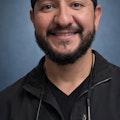 David Torres, CRDH
David Torres, CRDH
David Torres, CRDH, cohost of A Tale of Two Hygienists, is an experienced dental hygienist with over a decade of clinical expertise, specializing in patient education, preventive care, and the integration of modern dental technologies. Known for his passion for teaching, campus recruiting, and coaching, David is dedicated to elevating patient experiences while helping dental professionals improve efficiency, workflow, and long-term success.
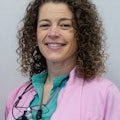 Jessica Atkinson, MEd, BSDH, RDH, FADHA
Jessica Atkinson, MEd, BSDH, RDH, FADHA
Jessica Atkinson, MEd, BSDH, RDH, FADHA, is a dental hygiene educator, clinician, and advocate dedicated to advancing the profession through innovation and education. She combines her clinical expertise and love for education to create engaging, practical learning experiences. Jessica is an Associate Professor and Senior Clinic Coordinator at Utah Tech University, co-host of A Tale of Two Hygienists, and CEO of HYGIENE edgeUCATORS, where she develops continuing education for educators and clinicians. She co-founded Hygiene Edge, a platform with over 100,000 YouTube subscribers. Recognized with the Element Award and Outstanding Service Award, she is a Fellow of the ADHA and past president of UDHA.