Changing the conversation around dental volunteerism




Key highlights
- Why Dr. John Cutter believes it's time to rethink the word "mission."
- Questions every dental professional should ask before joining an outreach program.
- The importance of informed consent, patient privacy and cultural humility.
- How education and community partnerships can create more lasting impact than short-term treatment alone.
- Lessons from 50 years in dentistry about saying "yes" to unexpected opportunities.
Episode description
Most dental professionals who volunteer their time do so with the best of intentions—but good intentions alone don't guarantee meaningful impact.
In this episode of A Tale of Two Hygienists, Jessica Atkinson and Dave Torres sit down with Dr. John Cutter, a dentist with more than 50 years of experience spanning private practice, public health, research and global oral health initiatives. Together, they examine what ethical outreach dentistry really looks like, from informed consent and patient privacy to sustainability, education and long-term community partnerships.
Rather than focusing on the number of procedures completed during a volunteer trip, Dr. Cutter challenges clinicians to ask more important questions: Are communities receiving ongoing care? Are local providers being supported? Is data being collected to measure outcomes? And perhaps most importantly, are outreach programs leaving communities stronger than they found them? This thoughtful conversation encourages dental professionals to rethink what meaningful service looks like—both abroad and within underserved communities at home.
Rethinking outreach dentistry [02:00]
Dave Torres:
Welcome back, listeners, to another episode of the A Tale of Two Hygienists podcast. I'm your co-host, Dave Torres, and I'm here with my illustrious co-host, Jessica.
Jessica Atkinson:
Hello, everyone.
Dave Torres:
This month we're diving into a topic that's bigger than what happens inside our own operatories. We have an incredible guest joining us to talk about what it really means to serve others through dentistry.
Jess, tell us a little about our guest and why everyone should stick around for this conversation.
Jessica Atkinson:
We're really fortunate to welcome Dr. John M. Cutter, joining us all the way from the Philippines. It's amazing that technology allows us to have conversations like this from opposite sides of the world.
Dr. Cutter joins us to explore some important—and sometimes uncomfortable—questions. When we participate in outreach dentistry because we genuinely want to help, how do we know our efforts are creating ethical, sustainable impact?
Dr. Cutter has spent decades involved in outreach programs, service work and virtually every aspect of dentistry. He just celebrated 50 years in the profession, so congratulations on an incredible milestone.
Today's conversation looks at the complexity behind volunteer care and outreach programs, where compassion meets accountability. We'll discuss how clinicians can think more deeply about what it means to serve while creating greater awareness, humility and responsibility in those efforts.
Dr. Cutter, welcome.
Dr. John Cutter:
Thank you so much, Jessica and Dave. I really appreciate the opportunity.
I think this is a tremendously important conversation for our profession.
From private practice to global oral health [04:00]
Jessica Atkinson:
Tell us a little about your background and what makes you uniquely positioned to have this conversation.
Dr. John Cutter:
Fifty years. It's been quite a journey.
I graduated from The Ohio State University College of Dentistry in 1976. Back then, we were simply Ohio State University—we hadn't yet become The Ohio State University.
After graduation, I worked as a school dentist with the Cincinnati Board of Education while also operating a flagship practice and a satellite office in the Cincinnati area. During that time, I also served as an instructor at the University of Cincinnati College of Dentistry.
Around 2008, I sold my practices because I thought I was ready to retire. My wife and I moved to California, but I quickly realized retirement wasn't for me.
I spent about two years working for a DSO and discovered that corporate dentistry wasn't the right fit. After that, I was recruited by the NHANES program with the Centers for Disease Control and Prevention, where I became one of two principal scientists. For four years I traveled throughout the United States establishing oral health research sites.
When those contracts ended in 2014, my wife and I moved back to the Philippines, where she has family and businesses. Once again I thought retirement was finally here.
Three months later, I realized I still wasn't ready.
I taught at the National University College of Dentistry in Manila until 2019. Since then, I've served as president for human resources and development for TeethCloud.org.
TeethCloud is a collaborative spanning 39 nations that focuses on reducing global oral health inequalities through dental informatics.
Whenever I mention informatics, people immediately think of epidemiologists and data scientists. In reality, we're largely clinicians—dentists, dental hygienists, students and other oral health stakeholders.
Our work centers around four pillars: data science, public oral health, artificial intelligence and teledentistry.
That's been our focus for the past several years.
Why Dr. Cutter wants to retire the word "mission" [06:30]
Jessica Atkinson:
How has TeethCloud changed the conversation around what many people call volunteer tourism?
Dr. John Cutter:
Much of our experience has come directly from working here in the Philippines. In many ways, TeethCloud grew out of those outreach experiences.
The Philippines has become the destination for nearly every medical and dental mission imaginable. Organizations come here from all over the world, often without much coordination.
Whenever I ask those organizations whether they accomplished their goals, I usually hear the same response.
"We did a great job."
Then I ask how they know.
The answer is often something like, "We extracted a thousand teeth, completed hundreds of prophylaxes, placed hundreds of restorations."
Then I ask another question.
"Did you collect any data?"
Usually the answer is no.
"Are you returning to the same community?"
Again, no.
Instead, I hear about the wonderful few days they spent on the beach afterward.
That's where I become the ugly American.
If we're intellectually honest, many of these programs may have done more harm than good.
People don't always like hearing that, especially because many outreach efforts are faith-based. But this isn't really about religion.
It's about health care.
One of the first changes I'd like to see is retiring the word mission altogether.
It's an outreach.
It's an initiative.
It's a program.
The word mission often blurs the distinction between evangelism and health care.
One of the first places I presented this idea was to the BYU Management Society of the Philippines. I assumed it would be a difficult conversation.
Instead, members of The Church of Jesus Christ of Latter-day Saints immediately agreed.
They told me they'd already recognized the same issue and had begun changing their own terminology from mission to program and initiative.
That reinforced something important for me.
If perhaps the most recognizable missionary organization in the world can distinguish between religious outreach and health care outreach, then the rest of us can too.
Ultimately, it comes back to informatics.
How do you know you're helping?
Did you collect meaningful data?
Will you return to evaluate long-term outcomes?
Without those answers, we simply don't know whether we've created lasting improvement.
Too often, outreach becomes a feel-good experience for the volunteers while communities are left without sustainable care.
Asking better questions before you volunteer [12:00]
Dave Torres:
What I'm hearing is a real tension between wanting to help and unintentionally causing harm.
As dental professionals, how do we know when we're crossing that line? What questions should we ask ourselves—and the organizations we're joining—before we ever get on a plane?
Dr. John Cutter:
The first question is history.
How long has the organization been doing this work?
Second, how do they vet their providers?
Are all of the providers licensed? Are they properly vaccinated—not only according to the requirements where they live, but also for the region they're traveling into?
You're walking into a completely different environment. A few years ago, we had eight cases of cholera in the field. We still have wild polio cases in the Philippines, and tuberculosis remains endemic, along with several other public health concerns.
The next question is sustainability.
Does the organization return to the same communities over and over again?
If they don't, are they training local providers who will remain after they leave?
Are they developing local leaders?
One of our thought leaders, a dental hygienist from Canada, has done remarkable work near the Kenya-Tanzania border. Another colleague in Tanzania has made tremendous progress addressing infant oral mutilation.
The common thread is education.
One person becomes ten.
Ten become one hundred.
That's how sustainable impact is created.
Then we come back to data.
Are medical histories collected?
Dental histories?
Clinical charts?
Are appropriate privacy regulations followed?
Are informed consents obtained?
If you're placing silver diamine fluoride, are patients told their teeth will darken afterward?
Where does all of that information go when the event is over?
Data sitting in someone's desk doesn't help anyone.
We need a way to compare results across communities, across countries and across time.
Do the needs in the Philippines resemble those in Turkey?
Are they similar to Argentina?
Or Mississippi?
You don't have to leave the United States to find tremendous need.
I can take you to communities in Arizona where there isn't a dentist or physician for miles.
I can introduce you to thousands of schoolchildren in Mississippi whose needs remain largely unmet.
The work is there.
If you ask me what I'd most like to see, it's outreach programs investing in permanent points of care.
Did they help establish a clinic?
Did they train local health workers?
Did they establish infection-control standards that will continue long after they're gone?
If the trip is primarily about giving volunteers an experience that feels meaningful, then we've missed the point.
Ethics don't change when you cross a border [17:30]
Jessica Atkinson:
One thing that really stood out to me is the ethical responsibility we have as clinicians.
Patients deserve informed consent in a language they understand.
They deserve continuity of communication.
They deserve continuity of care.
If someone develops a complication after treatment, who do they call?
Where do they go after the outreach team has left?
Dr. John Cutter:
Exactly.
It isn't really rocket science.
Too often people arrive with educational materials that are entirely in English.
Today there's no reason educational materials can't be translated into local languages.
We've translated oral health education resources into Tagalog here in the Philippines.
More recently we translated those same materials into Chichewa for use in Malawi.
Technology has made that process dramatically easier.
Artificial intelligence allows us to produce high-quality translations in minutes, complete with side-by-side English versions for review.
But the bigger issue is ethics.
I believe we're ethically obligated to practice the same way abroad that we practice at home.
Too often someone says, "Don't worry. It's different here."
No.
It isn't.
The biology hasn't changed.
Patients deserve the same standards of care.
Yes, there are cultural differences.
But cultural differences should never become an excuse for lowering professional standards.
We shouldn't cut corners because something seems easier or less expensive.
Instead, our responsibility is to reduce barriers and help communities establish sustainable systems that continue functioning after we leave.
When outreach becomes about the volunteers instead of the patients [21:00]
Dave Torres:
Can you think of a particular experience where someone's expectations about outreach dentistry were completely different from the reality they encountered?
Dr. John Cutter:
Honestly, almost every trip.
I'm trying to be diplomatic because I live here.
I've removed dentists from programs because they weren't following infection-control standards.
I've also had to address privacy issues.
Patients have rights.
Everyone wants photographs of children because those images tug at people's heartstrings and help promote future fundraising.
But children aren't props.
I've worked with Philippine General Hospital's hematology and oncology teams, and they simply don't allow photographs of their pediatric patients.
They're protecting those children's dignity.
If you're going to tell someone's story, you have an ethical responsibility to anonymize them.
People don't need photographs to understand the level of disease.
The reality is overwhelming enough.
Roughly 90% of people in the Philippines never see a dentist during their lifetime.
That's an astonishing statistic.
When I go into communities, I regularly see disease prevalence between 82% and 92%.
I don't see restorative dentistry.
I see untreated disease.
That's why data matters.
Without it, we can't measure whether we're changing anything at all.
Why Dr. Cutter believes education comes first [26:00]
Jessica Atkinson:
I appreciate this conversation because I'm coming into it having participated in multiple outreach trips to the Philippines, all to the same location, so I did check one of the boxes you mentioned.
At the same time, this discussion is making me think about how those programs could become more impactful. Most people who volunteer genuinely want to help. They want to leave a community better than they found it.
But if we aren't culturally aware and truly listening, we may not actually understand what the community needs.
Dr. John Cutter:
Exactly.
It also reflects the enormous shortage of oral health professionals in many parts of the world.
In the United States, the ratio might be one provider for every 1,500 to 2,000 people.
In the Philippines, it's roughly one dentist for every 53,000 people.
There are only about 18 government dentists per million residents.
As TeethCloud has grown, our dream has become creating a network of dedicated points of care around the world—all using the same platform, all collecting comparable data, and all allowing us to analyze what is actually happening in real communities.
I used to debate this issue with colleagues at NHANES.
Many people described the biggest problem in the United States as access to care.
After traveling around the country, I came to a different conclusion.
Most people knew where the dentist was.
The challenge was understanding why they needed oral health care.
Why oral health matters.
That idea was reinforced at a public oral health meeting at Harvard, where attendees were asked what communities need most.
The two largest words that emerged were awareness and education.
That's why those are always our first modules.
If you really want to make an impact, begin with awareness and education.
Don't begin with procedures.
I know that's frustrating for clinicians.
Everyone says, "I'm a dentist," or "I'm a dental hygienist. I want to do something with my hands."
I understand that impulse.
But we consistently see greater long-term change when we start with education.
The Smoky Mountain example [30:20]
Dr. John Cutter:
We have data from a community in Manila called Smoky Mountain.
The name comes from the fact that the community was built on top of a massive garbage dump, where methane fires have historically caused the area to smolder.
For four years, we've returned to the same schools.
Our intervention was incredibly simple: oral health education, distribution of toothbrushes, a small tube of toothpaste, and an educational booklet.
We also made sure that someone in the school reminded children every day to brush their teeth.
Not a detailed lecture.
Not perfect technique instruction.
Just a consistent reminder: Brush your teeth.
After four years, disease prevalence dropped by about 20%.
That's enormous.
You don't get that kind of outcome from a five-day outreach trip.
So if someone asks me where to start, I say start there.
I know it can feel like you didn't "do" anything.
But you did.
You changed behavior.
That's where lasting change begins.
Our second module involves collecting baseline data and providing preventive care such as silver diamine fluoride.
The third module is the hardest: getting people to a dedicated point of care where they can receive comprehensive treatment.
That's the expensive part.
That's also the part where many organizations lose interest.
But if we're serious about helping, we can't stop before the hardest step.
What 50 years in dentistry taught him [32:30]
Jessica Atkinson:
I've really appreciated this conversation, Dr. Cutter.
It makes me think about how we can make what our hearts want to do become what our hands actually do.
Thank you for spending this time with us.
Dr. John Cutter:
I appreciate both of you being willing to ask difficult questions.
Jessica Atkinson:
Here's to asking hard questions.
Dave Torres:
Before we wrap up, I have one final question.
You've spent five decades in dentistry, worked in private practice, public health, research and global outreach.
If the younger version of you—the one who first picked up a handpiece—could see where this journey led, what would you hope he'd be proud of?
And what would you want him never to forget?
Dr. John Cutter:
That's a big question.
I'm old enough to remember belt-driven slow-speed handpieces, so I'm certainly grateful air-driven turbines came along.
But the real answer is probably this:
Don't say no.
Don't close yourself off to opportunities because you think you don't have enough experience, enough credentials or enough standing.
When I look back, I'm grateful people kept putting me into roles where I thought, I have absolutely no business being here.
Usually they would say, "Just listen and don't say anything."
That wasn't really how I was built.
Eventually I'd speak up, someone would find the perspective useful, and another opportunity would appear.
Those experiences ended up connecting in ways I couldn't have imagined.
That's essentially what I do now with TeethCloud.
I connect dots.
I hear someone's story and think, "You should talk to our colleague in the UK."
Or, "You need to meet the person working on this issue in Nigeria."
The value of a long career isn't just what you've done.
It's the connections and perspectives you can bring together for other people.
I'll probably stop when someone finally tells me to stop.
Final thoughts [35:00]
Jessica Atkinson:
We're not really ending this conversation so much as putting a pin in it.
Thank you again for sharing your time and perspective with us.
Dr. John Cutter:
You're very welcome.
I'm always happy to continue these discussions and connect people with others doing meaningful work around the world.
Thanks so much for having me.
About the Author
 David Torres, CRDH
David Torres, CRDH
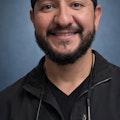
David Torres, CRDH, cohost of A Tale of Two Hygienists, is an experienced dental hygienist with over a decade of clinical expertise, specializing in patient education, preventive care, and the integration of modern dental technologies. Known for his passion for teaching, campus recruiting, and coaching, David is dedicated to elevating patient experiences while helping dental professionals improve efficiency, workflow, and long-term success.
 Jessica Atkinson, MEd, BSDH, RDH, FADHA
Jessica Atkinson, MEd, BSDH, RDH, FADHA
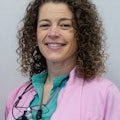
Jessica Atkinson, MEd, BSDH, RDH, FADHA, is a dental hygiene educator, clinician, and advocate dedicated to advancing the profession through innovation and education. She combines her clinical expertise and love for education to create engaging, practical learning experiences. Jessica is an Associate Professor and Senior Clinic Coordinator at Utah Tech University, co-host of A Tale of Two Hygienists, and CEO of HYGIENE edgeUCATORS, where she develops continuing education for educators and clinicians. She co-founded Hygiene Edge, a platform with over 100,000 YouTube subscribers. Recognized with the Element Award and Outstanding Service Award, she is a Fellow of the ADHA and past president of UDHA.