What new grads are actually worried about




What does it really feel like to step out of dental hygiene school and into professional practice?
In this episode of A Tale of Two Hygienists, hosts Jessica Atkinson and David Torres sit down with four graduating hygiene students—known as the Hygiene Hustlers—to talk candidly about the transition from student to clinician. With only days until graduation, these soon‑to‑be professionals open up about excitement, fear, friendships, finances, confidence, and the responsibility of entering a profession undergoing rapid change.
From worries about appointment pacing and insurance codes to passion for patient education, professional advocacy, and lifelong learning, this episode offers a rare and honest look at hygiene through the eyes of those just about to begin their careers.
Whether you’re a new graduate, an experienced clinician, or an educator, this conversation is a powerful reminder of why mentorship, connection, and compassion across generations matter—now more than ever.
Key highlights
- Life days before graduation: excitement, grief, and big transitions
- The power of friendships formed in hygiene school—and how to keep them alive
- What new grads feel most prepared for (and least prepared for)
- Starting the first job: pace, pressure, and self‑doubt
- Insurance, coding, and real‑world realities no one feels ready for
- Why new graduates bring critical, up‑to‑date value to dental practices
- Mentorship as a two‑way street between new and experienced clinicians
- Why caring, confidence, and advocacy are the future of dental hygiene
Episode transcript
David Torres
Welcome back
And welcome back, listeners, to another episode of A Tale of Two Hygienists podcast, episode 537. And I am your co-host, Dave Torres, and I'm here with the preventive educator, the one, the only, Jessica.
Jessica Atkinson
Hello, listeners. And I have some very special guests with me. And now they're special to Dave too, but they're specifically special to me. That was an alliteration that was very difficult for me to say. But I am truly excited to have some of my students on the podcast with us today who are going to be graduating in how many days? How many days?
Yeah. You got a countdown? How many days?
Kalea Woodyatt
I'm young, but it's on my phone.
Jessica Atkinson
Yep, there's a countdown on the phone. I knew there was going to be a countdown on the phone, but it is going to be, it's like not very many days.
Kalea Woodyatt
34 days until graduation.
Jessica Atkinson
Introducing the Hygiene Hustlers
34 days until graduation. Can you believe it? So to celebrate—yeah, who's counting?—to celebrate them graduating, I've invited the Hygiene Hustlers, is how they're known. So if you're looking to find them,
Google the Hygiene Hustlers, and you will meet four of the cutest, wonderful, most bestest. We've got to find some better alliterations. I started off with one that was a little rough, but anyway, they're wonderful. I'm very excited for them to be my colleagues. And we have with us today Haydn, Abby, Kalea, and Claire. And I have asked them to introduce each other, and I'm really excited to see what they have to say about each other.
So we're going to start with Haydn. She's going to introduce Claire.
Haydn Bush
Okay, so I think everybody can see you the same as us, but on the bottom left, we have Claire. Claire is from California, came to Utah, and she's getting married in the summer. She's our Type A personality of our friend group, and she's always going to say what's on her mind.
And we love her, fools. That's Claire.
Jessica Atkinson
That's a good intro, Haydn. That's a good intro. Claire, lovely to meet you.
Claire Zufelt
Thank you. So nice to meet you. Okay, this is Kalea to my right—I guess how it shows for—oh, well, maybe to my right. And she's from Layton, and she played soccer at Dixie State, Utah Tech. And she is—
We call her the little one in our friend group. She's also just like me. We speak what's on our mind. We keep the friend group lively.
Kalea Woodyatt
Thanks for having us. We're so excited to be here. I'm going to introduce my good friend Abby. And Abby is from a small town in Minnesota, came out to Utah, met us lovely Hygiene Hustlers. And Abby is someone that
is always doing a clinical note, and that just thumbs her up as a person.
Abigail Vogel
I love that. All right. That is interesting, but all right. All right. So above me is Haydn. Haydn is from Spanish Fork, Utah, the good old Spanish Fork. And Haydn is just a bright light in everyone's lives. Like everyone knows Haydn as just the sweetest little thing ever.
She won't speak her mind like the rest of the crew over here, but she will be sweet and she'll be kind. So she backs up everybody that we speak our mind about.
Jessica Atkinson
Change, endings, and beginnings
She is a good support. That's true. She is a good support. We are so happy to have you guys with us. And I just want to share a little bit about Dave that you may not know, but I heard popping in about marriage and all those kinds of things. Dave met his wife in hygiene school and asked her to marry him around the time they graduated.
Oh, I know. Isn't that adorable? And you guys are in a time of a lot of change, a lot of exciting change, some endings and some beginnings. And we just want to talk about what is on your mind.
So what is on your mind? What are you excited for or worried about?
Haydn Bush
Well, excited for graduation. I mean, you're done with school. It's felt like so much work. It's a long time coming to be done with school. So that's number one.
Kalea Woodyatt
Yeah. With kind of what Haydn's saying, as much as I feel like we're so excited to graduate, it's kind of surreal to feel like everything's coming to an end and all of our hard work is going to be accomplished. And so it's hard to think about what is next and what we can continue to keep working toward in our lives.
Abigail Vogel
Yeah, I think that it's, as much as it is exciting for all of us, I think it's kind of—we've talked about this—but kind of sad too.
We're all going to be moving on with our lives. And who knows when we'll see—like Claire and Kalea are planning to move up north, and Haydn's staying in St. George, and I don't know where I'm going. So we'll see. But yeah, we're kind of all moving on with our lives. So we're going to be separating. And it's just kind of—it's sad because we've made such close friendships in this program, and we kind of don't know where, when, we're going to see each other next.
Jessica Atkinson
Staying connected after graduation
What do you guys think about—like, let's meet together every summer at, like, a conference. Like, you guys pick a conference, and that every year you're going to see your Hygiene Hustler honeys at a conference.
Kalea Woodyatt
Yeah. We've talked about seeing each other every year and going on trips.
Jessica Atkinson
Oh, okay. Or that. Or that.
Kalea Woodyatt
We did talk about maybe going to—what is it?—Houston—not Houston—Dallas.
Jessica Atkinson
For like ADHA. Okay, for a big conference like ADHA, or—for RDH Under One Roof or another big conference. Okay, all right. Or Dubai—yes, the internet—yes, Dubai.
Jessica Atkinson
Dave, how did you keep in contact with—well, that's—you married one. You married your classmate.
David Torres
Yeah, I married one of my classmates. Yeah, absolutely. But that's actually a really good point, guys, is being able to kind of stay in contact and go to conferences and meetings and network, right? I mean, you guys are very close together. Dare I say—because I felt like I did survive hygiene school, and thank goodness for my wife—but being able to kind of look beyond that.
And also have friends come back together and stay in the career through these conferences and networking and just being able to kind of see each other as you attend your classes together and continue education courses. Because you never stop learning, right? Like, as students, I think you see what it's like to go through the process of school, but as an experienced general, I have to tell you every day you learn something new.
And learning is a lot more fun with friendship, with other people that are doing the same thing that you're doing. So one of the hardest things for me was graduating and just laser-focused at work, my practice, my patients, and not having that sense of camaraderie, being able to be together and stick together.
So I think being able to kind of look at your career and have that excitement, remember where you came from and your friendships, and maintain that as best as you can, even if it's through text messages or even if it's through, like, a cool new case that you just did and you feel excited to kind of share that.
Jessica Atkinson
Group texts and lifelong learning
Your group text will never die.
That's where the real conversations happen. I mean, I send an announcement every week, but you guys read your group text way more than you ever read announcements. So you have some good momentum there.
Now, with not seeing each other every day and moving into a new space and into your own offices, new jobs, all of those things, you're taking with you a legacy of learning.
And you're going to continue on with that legacy of learning. And I'm curious how you feel about being our best and brightest emissaries of the dental hygiene profession. Like, you are our front line of the best. We're sending you out in a wave into the world. How do you feel about that responsibility?
Jessica Atkinson
That's some strong wording right there.
Kalea Woodyatt
Yeah, that makes it sound a lot more than I feel like I'm ready for.
Jessica Atkinson
Oh, okay. A lot more. Do you feel, do you feel like pumped up or. Okay, let's rephrase. You are the best. You are the brightest. You are, you have the most cuttingest of all the edges. And there is a, there is a sense of like, responsibility as you go out into the world and know that that responsibility should not just rest on your shoulders, but it's a shared responsibility of our profession. And don't lose that shininess of the fact that you are the cuttiest of the edges. You know the latest, the greatest, the most up to date, and that is something to be shared.
David Torres
And I have to tell you guys, if you guys ever feel like it's a big responsibility or burden, just know nobody's perfect at the very beginning, right? Like we all start over.
Jessica Atkinson
Or at the middle or at the end.
David Torres
Correct. Like even to this day, like I find myself, we have the saying of saying, you're not going to be perfect, but be better than you were yesterday, right? And so, have a mentor, talk to somebody in your practice that you look up to or that you want to be, that you admire, and don't be like them, but be the best version of yourself through the things that they can show you and coach you.
I used to be a hygiene mentor, and one of the biggest things that I would tell my mentees is, yes, there's a lot of responsibility. Yes, we have a big job to do. And yes, we have our patients in our hands, right? But remember that at the end of the day, you are the exception to everything there is about dentistry because you're tailoring that appointment according to what the patient needs, right?
So it doesn't have to be checks and balances with everything that you do in every single step. Just understand that at the end of the day, if you take care of the patient, everything will come. And your career will show you and teach you and guide you through friendships and partnerships, through podcasting, through all these things, all these resources that I have to tell you I did not have when I was in your shoes.
So imagine getting out of school and not having technologies like dental AI, for example, work. It helps educate the patient about their condition or even an intraoral camera. Like I went to my first job and they didn't even have that. So it was like a lot of the holding the mirror and showing the patient and doing all those things. You guys have these resources that you are able to utilize and aspire to be the best hygienist that you could be.
David Torres
Is there something that you guys are thinking about feeling anxious? Or have you seen your career or your life after school, after passing the boards, having your first job? Or is it like a job interview that you're thinking, oh, I feel a little overwhelmed right now. What can I do? How can I go about it? Is there something that's top of mind that maybe listeners that are in your shoes can kind of relate to? Haydn, what do you think?
Haydn Bush
For me, I feel like the thing that I'm the most anxious about is starting a new job. I mean, we've like gotten this routine of school and like clinic, we know how it is. Like we just have it down, but it's a total different environment than an actual office. So it is really scary to me to like start a new job and like be so uncomfortable, like not knowing where anything is, how they like to run things and also just like condensing your appointments.
I mean, we started off with nine hour appointments, I mean, coming in split, but what I mean? it's just, it's crazy to be at this point now and then going into an office and it's a way different pace, different environment. I think that's really scary for me. I think it's going to be something that I'll have to get used to. And I don't know, it's scary.
Jessica Atkinson
That is scary. And I have been there. And I have something for you to imagine or remember. I want you to think back to your very first patient. And I want you to think about how long it took you to probe a healthy mouth. You got that number in your mind? You got that number? Yeah. And then I want you to think about how long it's taking you to probe a healthy mouth now. Yeah. Is it different?
Haydn Bush
Way different. Yeah, it's true.
Jessica Atkinson
It's way different. And so you're finding yourself at the same place you were from being a junior to a senior, from bringing a student to a professional. And you will be more efficient and you will be successful. Just as you look back at how long it took you to do something a year ago and how efficient you are now, the same kinds of gains happen as you move forward in your career. Yeah, that's true.
David Torres
Hayden, I have to tell you, like I want, I'm thinking about my first week. How many, patients do you guys see a clinic day? Like two, one in the morning or one in the afternoon or two and two?
Haydn Bush
Yeah, it depends on the day, but two a day.
Up to a career.
David Torres
Yeah. So my first job, not that this is like the standard, right? But my first job was like a temping job and I had nine patients. And I was like, oh boy. So imagine the anxiety that you get, right? And I think a lot of the people that are listening right now all can relate to the first day at work. Some were like amazing. Some were like, I just questioned my whole career. What am I doing? Right?
Jessica Atkinson
I cried.
David Torres
All, yeah. Let's see, there you go. Not to say that this is gonna happen to you guys, but all to remind you that we've been there, but I can easily tell you by the time, let's say from that Monday to that Friday, I experienced so much that it made me more accelerated than I ever thought it would happen. And that with that, you take the leap of faith and you just press play and you keep on keeping on.
And you remember that at the beginning, at the end of the week, it was a completely different experience than the beginning of the week. And as long as you encourage yourself to keep on keeping going on, I'm going to also tell you to text each other on your first day and, you know, leverage those relationships that you have.
And for the listener that is listening to this episode, be forgiven with new grads, not because they're new, it's because you once upon a time were there. And so if you ever wish that your first day was a little bit different, maybe help them out.
Because that's the best part about being an experienced clinician. I love working with brand new grads. For one, you guys always ask me a lot of questions and it helps me realize that at the end of the day, I do have that spark. Right, but for two is understanding that we all want to be better, and sometimes we need updated information, which is what you guys are bringing to the table that perhaps we don't have on the day to day.
Because we're in this bubble of our practice where two years in hygiene school seems like such a long time, but two years in the real world as you practice, it becomes a bit repetitive. So new energy is always very much encouraged, especially when it comes to, you know, having a new grad.
David Torres
Abby, I was thinking about you as we were talking about moving to different locations in different states in different areas, right? And I believe you said that you were choosing to stay at home base. Do you find it that, is it like a comfort thing that you're doing that, or do you find it that it's like something that you know eventually you will transition, but right now you're so focused on graduating and passing your boards that yeah, maybe I'll get there.
And the reason why I say that is because I'm not practicing at the city that I graduated. And that's something that I didn't know that was going to happen to me.
Abigail Vogel
Yeah, so I've been in St. George for four years now. I'm like Khalil said, I'm from Minnesota and I don't really have plans to go back to Minnesota. But yeah, right now I'm kind of just focusing on graduating boards, all of the above. I think that's just like my main focus.
But yeah, I just, I think that's just my main focus is just school right now. Like we still have a month left. I'm kind of just getting on that grind and hopefully figuring out where I want to practice. I don't necessarily care for where I practice, but I won't lie, money has a lot to do with like where I want to go.
And Utah just isn't really appealing to my eye right now. And so I'm just trying to figure out where I want to go to try to make back money from putting it into school. So.
Jessica Atkinson
That's not a bad motivation.
To recognize that you've invested in yourself and to turn around and invest back into your life as you invest in your patients. I think that is something to consider when you're looking at where you want to be, where you want to end up, and to support each other wherever you might end is really valuable.
I'm curious about in this grind, day to day, moving forward, as you look back, what do you feel like you are most prepared for?
Jessica Atkinson
What do you think, Kalea? What are you most prepared for? You feel like, yeah, I got this.
Kalea Woodyatt
I feel like throughout school, our education and giving oral hygiene instruction and stuff like that is something that we are so prepared for. We do it every single day in clinic. We have skill evaluations on it. And I think that a lot of us find passion in education and really getting patients to understand why we're doing what we're doing.
And so I feel that the two years that we've been in school have really prepared us to go into the world and really help people understand oral hygiene and what we're doing as hygienists. And yeah, I just think we're so prepared in our knowledge and everything that we've learned.
And like you guys had said, we're the most up to date with everything that we've learned as well. So I think we'll bring a lot to wherever we all end up.
Jessica Atkinson
You do bring a lot to the table. And on that table, there may be something that you wish you had a little bit more on. So Claire, I'm wondering, what do you feel like you're the least prepared for? What do you wish you knew a little bit more about right now?
Claire Zufelt
I wish we knew a little bit more about billing and insurance, actually. I feel like when we have those conversations in class, we, since we don't take insurance at the clinic or anything or deal with any form of payment in that way, I feel like that will be a foreign world to us when we get into an office.
Depending on what insurance approves what procedures for our patients and how to go about like reauthorizations or things like that. But I do feel like we are prepared very well on many other things.
Jessica Atkinson
But I am nervous about.
You're really good at matching the treatment to the diet from the classification and knowing what codes to use. And I don't know about you, Dave, but do you understand insurance?
David Torres
No, I mean, so I laugh, Claire, when you said that because I'm like, okay, other than the basic codes, which you will learn very quickly.
Jessica Atkinson
They actually know all the codes. They know all the codes.
David Torres
See, you guys have a high quality education because I graduated without knowing the codes, maybe 100. Like I was just guessing at that point, but I have to tell you that no, insurances is tricky, right? And not to mention that they do change.
And by the way, there's like so many different types of insurances, right? And in different states, they cover different things. The reality is, use your resources. When you're at work, have a great conversation with the dentist or the front desk and just understand like, hey, help me navigate this, right?
But out of curiosity, you learn to adapt, right? Don't get overwhelmed, but understand that at the end of the day, we don't really work for the insurance guys. We work for the patient, right? And having them understand that as best as we can is what's going to set you apart.
Because if you speak to a patient, I would hope, and you will realize this very quickly, there's a difference between providing services because of what we believe in and what we do as preventive specialists than what the insurance allows us to.
The good news with that said is whenever I have a conversation about placing a sealant on a patient, sometimes I even say verbis like, hey, like your insurance covers the sealant, but it's up to the age 19 or 16 and the patient's like 40 something, right? Plus, right?
So they laugh and the patients are like, okay, I have insurance and great, they cover this, but there's a lot of limitations that themselves, they don't even know, right? We help navigate that, but you explain to a patient that a ceiling, for example, it's preventive dentistry and who wouldn't want to prevent problems, right?
And what helps me navigate the whole tricky topic of insurance and procedures and codes and how much is too much and expensive dentistry because dentistry is a business, is saying, understanding with the patient that if we're going to do any type of dentistry, the best dentistry, in my opinion, is just my opinion, is the one that we can prevent, right?
If you're going to want to do a filling, let it be an occlusal, not an MODOBDO or a crown or root canal or God forbid an implant. And if I can save all of those by placing a sealant, that's what I'm going to do.
So no matter how much the insurance covers or doesn't, or if there's a copay or not, you start speaking to the patient from that demeanor and that understanding, where now the people in the front will help you take care of those tricky navigational, oh my gosh, what codes am I putting in the computer correctly?
And just be humble with the fact that your first day, probably somebody's going to help you out with these codes, that they're going to help you like, hey, typically we do this or we don't do that.
And as you're interviewing, as you get these cool, amazing jobs, you're, there are say big girl jobs, right? Your career jobs, I start in the interview and say, hey, I want to make sure that I bring value to the practice, that I bring value to your business, if it's a private practice or whatever it may be, and how can I learn these things.
As I bring services and patient treatment and provide care to the patients, how can I do that? Or how can I make sure that we are all doing it correctly and we're not stepping on each other's toes?
Because I can tell you as a seasoned hygienist, I've been in other offices where they sometimes use different codes and I don't understand it still, but it's because there's differences in insurances like PPOs, LMNOPs.
Yeah, like fee for service. And why do we do this when we don't do that? And why do we do that for this patient?
But understanding that at the end of the day, your predictability on being able to treatment plan preventive services will not sway no matter what code or insurances is, the most important thing to upkeep because I cannot ever picture an office manager, a dentist that gets upset about you doing the right thing for the patient and for the practice by simply getting online with them.
So don't overthink those things because at the end of the day, we're dental hygienists. We're not dental coders or builders or anything like that. Otherwise, that'll probably be a whole different legislation movement.
Jessica Atkinson
Claire might have a future in dental insurance billing. Oh, then that sounds like a lot of fun for you.
We are having such a good time chatting and I'm looking at the little time that we have left. Gratefully, I get to see you every day at school. However, for our listeners, I want you to think about what is something that you want fellow graduates to know about sharing the space of a new professional with.
Like, what do you, what do you want that to feel like? What is something that you're looking forward to? If you're listening in, you're like, I was glad I listened today. Maybe something like, even though I'm scared, I'm ready. Something like that.
Claire Zufelt
I would say, yeah, like, even though it is.
Nerve. I'm like, I'm nervous to go in and to practice and to not have an instructor come and check and make sure that I don't have any calculus left in my quad or that I'm doing everything good or I don't miss anything. But I am excited because I know that we'll get it and we're competent, like we're able to do it.
And it's just going to be a learning curve just as a lot of life is in a lot of other areas as well. And now we're coming in into the profession in an exciting time.
I think when I first applied for dental hygiene school, I didn't know where the profession was at. I figured it was like, okay, great, like dental hygienist, nobody's trying to come for our jobs, things like that.
I think we get into school, we're like, whoa, people are trying to come for our jobs. We have to like fight for it a little bit more. But I think it's also really exciting and I hope that people who have graduated in other programs their instructors and themselves feel good about coming in and being ready to back up what we know and why it's important.
And that it's not just about us, but about the population, the people that we treat and the care they receive.
David Torres
Claire, I want to double click on a little bit on what you said. Coming into hygiene school, you had an expectation and then now being in hygiene school and then now leaving school.
I want to ask because I'm trying to remember really hard back in my day, right? Like why I wanted to become a hygienist.
And I'll be honest, I was a dental assistant and I wanted to level up my skills and eventually I wanted to earn enough money as a hygienist to become a dentist, right? And then I realized how expensive dental school is.
And so my expectations were a little bit different because I didn't have like Instagram back in my day or I didn't have, there's a lot of dental influencers where, you see this content, you see, or you listen to podcasts and you have this idea of what a dental hygienist is.
And then you get to school and you're like, oh, this is reality. This is a little bit different.
Do you think that you know you wanting to go to dental hygiene school was maybe a little influence from what you saw online or you just knew you wanted to become a hygienist when you were younger because you went to a dental appointment?
Because us older people, that's how we knew we wanted to do it because we went to a dental appointment. And I don't know if you guys know what an IRM is, but I remember smelling that and I was like, this is cool. I like this. And I like the smell of clove.
Jessica Atkinson
And spit in the morning. I don't think that ever. I'm like, wow, I smell, it smells like a mummy in here for Maldehyde for me.
David Torres
Guys, I'm weird and IRM, like it was a temp failing and I smell, I just smell like a dental office and I felt at home, okay? It smells like my future. It smells like my future, yeah.
But Claire, do you think that could potentially change the career, like the amount of things that we see online and what we hear other go through? Do you think that that's going to swing the pendulum a little bit more to a perception rather than reality?
Claire Zufelt
I definitely think I had maybe some knowledge of it going in and hygiene influencers maybe influenced me a little bit just because of the lifestyle, the work hours that you don't have. Most people don't work five days a week.
I think all of that played a factor of it for me going in. And I've mentioned this in school, but I do feel like there are a lot of good hygiene educators out there that educate the population on how to improve their oral hygiene.
I don't know if there are enough educators out there that educate each other on what's happening in the field. I've worked in a decent amount of dental offices, and I don't know if people know, if the hygienists know that their careers are low-key in a little bit of jeopardy.
Like I just don't know if the hygienists that have been there for 10 years, 12 years, or have been there for six years really understand more of the behind the scenes of everything that goes on if they just show up to their eight to five and leave every day and get back home to their family.
So I feel like moving forward in the future, when I come into an office, when I work with my peers, like I want them to be involved and understand what's happening because I plan to and hope to keep up to date on everything that's happening in my career because I don't want it to go away and I've put in a lot of time and money to get here.
Jessica Atkinson
And you're there. I just want to take a minute to recognize where you guys are at and you are there and you are equipped with this information.
And you're right, Claire, you're going to be that person that goes out there and shares with your peers, your colleagues, and say, hey, did you know that in our state, these things are happening? Hey, did you know about the new, quote unquote, staging and grading of periodontitus? Did you know?
Because a lot of those things take a long time to implement in an office.
And it was, I know you guys felt a little, when I asked like, how do you feel about having this responsibility? Know that responsibility is borne by those who came before you as well.
And I feel very, optimistic about the future of our profession because of hygiene hustlers like you.
And I watch students get to a place in their education as things are wrapping up and you take on this identity of the professional and you start settling in to that responsibility.
And even though it might feel a little heavy, know that you are never alone. You have my cell phone number. I'll give you Dave's cell phone number.
And you always will have people who are in your corner and rooting for you.
And congratulations. Round of applause, graduating class of 2026. Yeah, Round of applause.
Thank you so much for being our guests. Know that this is a welcome space for you. Come and hang out with us again.
Jessica Atkinson
And listeners, thanks for listening, and I hope you took away a little bit of their energy as you move into your day tomorrow and as you meet with your patients.
Or maybe if you're in an office with a brand new member of the team, give them a little bit of love and grace, and also maybe give them a little bit of your ear and listen to what they have to say, because they know a lot.
David Torres
Yeah, whether you're new, you just started, you've been doing it for a while or close to retirement, we all share that responsibility to keep making hygiene the best career that we are living, making it better than what it was, right?
And so don't hesitate to reach out to each other. And again, you can text me. I mean, Jess is going to give you the number, but listeners, just I'm going to encourage you all to remember that we just cannot go to work, see our patients come back home and expect that we want to be the change that we want to create, right?
So we want to be able to keep on working, not just as hard as we do with our patients, but also in our career paths.
Thank you for listening.
Jessica Atkinson
We'll see you. That's a wrap on today's episode of A Tale of Two Hygienists podcast. If this conversation made you feel seen, inspired, or even just a little fired up, share it with a fellow hygienist or fellow dental professional.
Share it with your neighbors, your friends. Share it with everyone. That is how this community grows.
David Torres
Make sure you subscribe, leave us a review, and connect with us on social media so that we can keep on going with this conversation. Remember, your career, your voice, and your story matter here. We're David.
Jessica Atkinson
And Jessica.
David Torres
And until next time.
Jessica Atkinson
Keep learning, keep laughing, and keep showing up for yourself and for each other. This has been a production of Endeavor Business Media, a division of Endeavor B2B.
About the Author
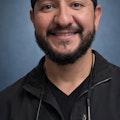 David Torres, CRDH
David Torres, CRDH
David Torres, CRDH, cohost of A Tale of Two Hygienists, is an experienced dental hygienist with over a decade of clinical expertise, specializing in patient education, preventive care, and the integration of modern dental technologies. Known for his passion for teaching, campus recruiting, and coaching, David is dedicated to elevating patient experiences while helping dental professionals improve efficiency, workflow, and long-term success.
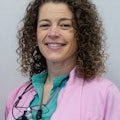 Jessica Atkinson, MEd, BSDH, RDH, FADHA
Jessica Atkinson, MEd, BSDH, RDH, FADHA
Jessica Atkinson, MEd, BSDH, RDH, FADHA, is a dental hygiene educator, clinician, and advocate dedicated to advancing the profession through innovation and education. She combines her clinical expertise and love for education to create engaging, practical learning experiences. Jessica is an Associate Professor and Senior Clinic Coordinator at Utah Tech University, co-host of A Tale of Two Hygienists, and CEO of HYGIENE edgeUCATORS, where she develops continuing education for educators and clinicians. She co-founded Hygiene Edge, a platform with over 100,000 YouTube subscribers. Recognized with the Element Award and Outstanding Service Award, she is a Fellow of the ADHA and past president of UDHA.