What faculty calibration means for dental hygiene education
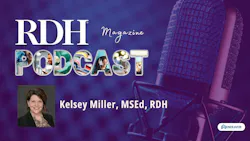




In this episode of the RDH Magazine Podcast, Jackie Sanders introduces Andrew Johnston as her new co-host and welcomes Kelsey Miller, department chair of dental hygiene at Ivy Tech Community College in South Bend, Indiana.
Kelsey joins the podcast ahead of her RDH Under One Roof Educator Program session on faculty calibration, a topic she became more interested in while reviewing CODA accreditation standards and preparing program self-study materials.
The conversation breaks down what faculty calibration means in practical terms: helping students hear a unified message from instructors, creating fairer and more consistent learning experiences, and giving faculty space to talk through the “why” behind clinical decisions.
Kelsey also discusses how calibration activities can be tailored to each program’s needs, especially in settings with multiple part-time or adjunct faculty members. She explains how documentation, case review, and group consensus can help programs clarify expectations without erasing the valuable clinical experience each educator brings.
For hygienists who are new to education—or simply curious about whether teaching could be part of their future—this episode offers an approachable look at the educator role and the behind-the-scenes work that supports dental hygiene students.
READ MORE | Must-knows about grading periodontitis
Key highlights
- Kelsey Miller explains faculty calibration using a relatable softball analogy: students should not feel like several coaches are giving conflicting instructions.
- Calibration helps dental hygiene students receive consistent, fair guidance while building confidence in their clinical skills.
- CODA requires calibration, but programs have flexibility in how they design activities that fit their own faculty, students, and clinic structure.
- Case-based discussions can help educators compare decision-making, explain their reasoning, and build consensus.
- Faculty calibration can also support onboarding, mentorship, and confidence-building for new dental hygiene educators.
Episode transcript
Jackie Sanders: Welcome back, everyone. My name is Jackie Sanders, chief editor of RDH Magazine, and today I am excited to introduce you to my new co-host.
Andrew Johnston: Hello. I'm editor-in-chief of DentistryIQ. Happy to be here, Jackie.
Man, this is like getting the gang back together again. I appreciate also this is kind of like an audition. I feel like you're like, “Hey, let me just see if you have the podcasting chops to make sure that this is going to work out.” So let's try this little interview with Kelsey and we'll see what's going on.
Jackie Sanders: Yeah, you are on the mark, so be on your best behavior, Andrew.
So Kelsey, I am excited to introduce you to our listeners today, and I'm even more excited that you get to help me initiate Andrew to this new role that he has. Tell our listeners a little bit about you, Kelsey, and where you're at and what you do.
Kelsey Miller’s background in dental hygiene education
Kelsey Miller: Sure. My name is Kelsey Miller, and I am the department chair of dental hygiene at Ivy Tech Community College in South Bend, Indiana.
I've been in that role for going on four years now. Prior to that, lots of teaching. I've been a teacher since 2015 in dental education, and then I've been a hygienist since 2005.
Pretty much most of the courses that are taught in dental hygiene programs, I've taught at one time or another and worked a lot in the clinics doing chairside instruction. I really enjoy what I do now. I get to have a bird's-eye view over all of our program, all our curriculum.
I love talking with educators. I love talking with our team at Ivy Tech, all of the educators that we have. That's sort of where I'm at now. I'm from South Bend, just south of South Bend. So yeah.
Jackie Sanders: And that is how we met.
You are actually one of the speakers this year at the Under One Roof Educator Program. You're going to be speaking on one of those topics that is a passion for you, and that's faculty calibration.
So exactly what is faculty calibration and how did you build this passion for it?
What faculty calibration means
Kelsey Miller: Yeah, that's a great question.
When I took on my role as a department chair, I began looking through standards from CODA about accreditation and putting together all of the things that I wanted to include in our self-study to help showcase our program.
Faculty calibration is one of those items that is a standard. I was digging a little bit deeper, and we put together some great activities that we tried out and loved with our team.
Basically, what calibration means is that I like to compare it a lot to softball because I played softball when I was a kid. Calibration is kind of like if you envision yourself as the player and you're up to bat, it would be like if you had a couple of coaches and a couple of parents all yelling at you to do something different. That would be not calibrated.
I think of it as really a unified voice to help students achieve what they need to achieve and build their confidence. Sometimes those challenges are things that we need to create methods to overcome, especially when we have big groups of faculty. It can be hard to say things all the same.
We all bring in so much great experience to our roles, and that's so much of a plus for our students because we've all worked in different environments as hygienists. We've all worked with different teams and groups.
Bringing all of that together is really valuable, but we also have to be mindful of streamlining our educational methodologies, the way that we speak to the students, to make it so that they are getting an equal learning opportunity.
You want to make sure that they really view everything as fair and equal, they're receiving the same message from everyone, and then they are able to focus in on their skills more and excel.
How programs decide what calibration looks like
Andrew Johnston: Do you feel like, and this isn't a field, but do you know, does CODA have a, “Hey, here's a list of all of the exercises and the tools and software, hardware, all those things,” then you just pull from the ones that are applicable for your program?
Or is this something that you say, “Okay, this is the need that we have and this is what we're going to do”?
And then part two for that is what kind of measurable outcomes are you using to know if your calibration is working or not?
Kelsey Miller: Yeah, those are great questions. From my experience, CODA is really not very prescriptive on what you need to do to accomplish this goal.
As we know, our dental education programs can look vastly different. You can have lots and lots of students, lots and lots of clinical instructors. Some are combined with dental schools and dental hygiene schools. Some are just hygiene. The environments that we do this in with the calibration piece can totally be different from one dental hygiene program.
I think a large part of this is really tailoring some of the activities that you do as a group to what kind of environment you have for your school. That's something that I got creative with and worked with our faculty, just based on our size of group and what we're all bringing in.
We tend to work with a lot of part-time or adjunct faculty. That means that to fill the hours of the clinic, there are more of them. So the calibration becomes a little trickier sometimes because you have more people that you're trying to get to say things the same way.
But the second part of your question about measurable outcomes and then?
Andrew Johnston: Evaluating if it's a successful calibration or not.
Documentation, case review, and building consensus
Kelsey Miller: Yeah. With that, documentation is actually part of that standard as well. What we like to see is that the activity you do is documented, who is present at that activity, what topic you discussed, and what the outcome of your discussion was.
A lot of what we're going to do in our workshop is really going to be as individuals. We might take a practice case or something like that, work on that individually, and then share out what we found and the why behind what we found.
Let's say students, when they bring patients in, need to classify their patients’ AAP stage and grade. There are criteria that we use to do that. But some faculty may err on the side of one stage and some may err on the side of another. That's a whole other course for a whole other thing.
But with calibration, we aren't necessarily focused in on what's right. We're focused in on what's being said that's equal and the same. The why behind what we do is really important as individuals to note that.
Then we come together as a group and we can build a consensus and say, “Okay, here's why I did it this way.” Then the next person might say, “Oh, I really see why you did it that way.”
Then kind of coming to a consensus for our group of when a patient has this, this is how we're going to do it. And here's the guide point of why we're doing it this way.
It's kind of nice to know what as individuals we do and the why behind it to build as a group what our standards are going to be for our programs.
Is this topic useful for new educators?
Andrew Johnston: Very nice. This last question is actually both for you and Jackie.
As I was thinking about this, Jackie's been doing this podcast for several years now and the audience that she's built is diverse, right? We have a lot of educators listening in. We have a lot of people who are thinking about going into education. We have a lot of students. We have a lot of all of that.
My question is more of, and Jackie, if this is not even allowed for Under One Roof for the educator track, if I was someone who was being like, “You know what, I want to kind of dip my toe into some of the nuance, some of the things that are a little bit different about education that I didn't think that the educators actually did,” would your course be a good entry-level course for them?
Or is this something that you really need to be kind of already doing, already understand the process, and already be able to contribute meaningfully in that way?
Kelsey Miller: That's great. I think this would be an excellent course if you're a new educator.
Actually, part of the course, we're going to talk about how if you take some cases and you can work through them with your faculty as calibration activities, you can include that maybe in your program manual as an onboarding practice for a new faculty.
I feel like it's really important to build that camaraderie as a group when you have a new faculty and really embrace the newer educator to help build their confidence as an educator as well.
They might get questions from students that maybe make them think a little bit. It's nice to have that group morale that boosts that new educator's confidence and gives them a mentor to go to, to really figure out the teaching world and how to field those more difficult questions.
So I think it's a great piece to onboard if you're a new faculty as well.
Jackie Sanders: And leaning into what you asked me, Andrew, yes, RDH Educator is for the seasoned educator, it's for the new educator, and it is also for those hygienists that are, as you said, dipping their toe in, seeing if this is something they really, really want to do.
The fun thing about it too is Kelsey's class on calibration is almost one of the first classes that is taught. It's actually Thursday morning, July 16 at 10:30. So if you want to learn more about calibration, you can definitely jump in on Thursday morning and hang out with Kelsey for two hours.
How to connect with Kelsey Miller
Andrew Johnston: Fun time. Kelsey, I can't wait to meet you. I'm so excited.
If any of the audience members want to reach out ahead of time and maybe ask you some questions or learn more about your course, how might they contact you?
Kelsey Miller: They can find me on LinkedIn. I'm on LinkedIn. And then also on our Ivy Tech Dental Hygiene webpage, they can select South Bend and it'll link them to my email.
Andrew Johnston: Excellent. We'll make sure we put that in the show notes. Kelsey, thank you for being here. Appreciate it.
Kelsey Miller: Thank you so much.
Jackie Sanders: Thank you, Kelsey. Always good to see you and can't wait to see you in National Harbor.
Kelsey Miller: Yes, me too.
About the Author
 Kelsey Miller, MS Ed, RDH
Kelsey Miller, MS Ed, RDH
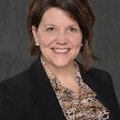
Kelsey Miller, MS Ed, RDH, empowers dental hygiene students and professionals to grow in confidence and purpose. As a Gallup Certified Clifton Strengths Coach, she mentors with passion and authenticity, encouraging others to set bold goals and exceed them. With over 20 years in clinical practice and dental education, plus experience as a CPR and first aid instructor, she designs engaging, industry-connected learning experiences. Kelsey values mentorship, networking, and confidence as foundations for lifelong professional growth.
 Jackie Sanders, MBA, RDH
Jackie Sanders, MBA, RDH
Chief Editor, RDH magazine
Jackie Sanders, MBA, RDH, is a respected dental industry leader with more than 40 years of experience in dental hygiene, marketing, and professional relations. As chief editor of RDH, she is dedicated to advancing the dental profession through education, innovation, and collaboration. Prior to this role, she served as manager of professional relations and communications for Sunstar/GUM, building strong connections with industry associations, educational institutions, and dental professionals nationwide. Jackie has also contributed her expertise through committee service with organizations including the American Dental Education Association and the American Academy of Pediatric Dentistry.