Why hygienists still need hand instruments in the age of ultrasonics
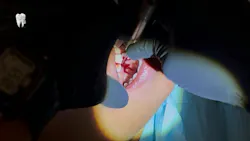



In this episode of A Tale of Two Hygienists, Jessica and Dave welcome back Dr. Emily Boge to explore the evolving balance between ultrasonic technology and hand instrumentation in modern dental hygiene.
We dive into why ultrasonics are powerful tools—but not magic wands—and why mastering hand instrumentation remains essential for effective patient care. We look into a humbling calibration story that changed the clinical approach and the importance of diagnostic instruments, assessment skills, and clinician awareness in achieving better outcomes.
This conversation is a reminder that great hygiene care is not about choosing between technology and technique — it’s about mastering both.
Key highlights
- Why mouth mirrors, explorers, probes, and scalers still matter in an ultrasonic-heavy practice
- The difference between diagnostic instrumentation and working strokes
- Why hygienists need to check their work instead of assuming the ultrasonic did everything
- How calibration can help hygiene teams improve consistency across providers
- Why “thorough” should never become “rough”
Episode transcript
Emily Boge: People need to get over this whole thought process that we don't need hand instrumentation. Because guess what? We're always going to need hand instrumentation.
You know what the mirror is? The mouth mirror? It's a hand instrument. You know what an explorer is? It's a hand instrument. A periodontal probe? It's a hand instrument. You can't tell me that you can effectively evaluate the quality of your care with an ultrasonic instrument in your hand. You still need to go back and use that mouth mirror, that probe, that explorer, and really look at that work.
I think a lot of the reason people are getting burned out is because they're treating every patient the same way. And when you slow down and you assess, you can figure out that, guess what? This is an individual, and I need to treat them in an individual manner.
Back to basics
David Torres: Welcome back, listeners, to episode 542 of the A Tale of Two Hygienists podcast. And I'm so excited because we're officially in June. This means summer. This means vacation time. This means getting to kind of wind down a little bit if we are not taking some self-care.
But Jess, I'm so excited for today's guest. Before we get there, we're talking about instrumentation in the month of June, right? And what we want to do is focus on—but I was watching a cooking show the other day. Other than it making me hungry.
Jessica Atkinson: Instrumentation is important in cooking.
David Torres: Yeah, exactly. And so I was thinking about this and I was like, you know what, oftentimes I feel like we should go back to basics a little bit.
I mean, you see Gordon Ramsay losing it because people don't know how to essentially chop an onion correctly, right? And so I'm so excited for us to be able to talk to our amazing guest. Can you tell us a little bit more about her?
Jessica Atkinson: This is—I love this human being with my whole heart. And she is the only person I know that has done all seven roles of the dental hygienist and done them very, very well: clinician, corporate, public health, researcher, educator, administrator, and entrepreneur, all in one human body.
It does help that she's 6'1", so maybe that's why. That's it. I figured it out. And now I can lower the bar for myself to 5'3".
But we have with us today the one, the only, Emily Boge. Welcome, Emily. We are so happy to have you.
Emily Boge: Why, thank you, my friend. I do have an extra foot of volume space to fill with cells. So I'll give you that.
Jessica Atkinson: Yeah, to fill with genius.
Emily Boge: Thank you for having me on. I feel like I've never been on the podcast because I've never been on the podcast with you guys.
Jessica Atkinson: It's your first time with Dave and I, and we are so excited to have a returning guest because you are that good.
We're like, hey, who do we have come on for instrumentation? And I'm like, the name that just—I know she's been on before. It's just, I need Emily Boge here to talk about hand instrumentation.
Emily Boge: It's been a little while since—that was like a whole career ago for me that I've been on the podcast. It's crazy.
Jessica Atkinson: Well, welcome back. We're happy to have you.
Emily Boge: Thank you.
Seeing the gaps in instrumentation
Jessica Atkinson: So the reason—one of the many reasons I really wanted Emily to come on to talk about hand instrumentation is not only her background as being a clinician and an educator, but also because Emily, when she finds a gap in instrumentation, she goes, I got an idea. I'm going to use this extra foot of cells and I'm going to create an instrument and I'm going to close that gap.
So not only are we going to talk today about instrumentation in general or hand instrumentation specifically, but also, when we see gaps, what do we do? How do we do that?
So Emily, why do you think hand instrumentation is still relevant in the age of ultrasonics?
Emily Boge: Where do I even start?
People need to get over this whole thought process that we don't need hand instrumentation because guess what? We're always going to need hand instrumentation.
You know what the mirror is, the mouth mirror? It's a hand instrument. Do you know what an explorer is? It's a hand instrument. A periodontal probe? It's a hand instrument.
So regardless if you're doing debridement, or biofilm disruption or biofilm retentive factor disruption with an ultrasonic unit or an air polisher or any of the multitude of other very helpful pieces of armamentarium, I'm not talking smack against things that aren't hand instruments.
However, we always are going to need hand instruments because there's that whole other group of people that can't have ultrasonics and air polishers and those devices, those power instruments used on them, because that's a whole other layer of why we need hand instruments.
So it's very, very important that we continue to have high-quality hand instrumentation. And the research that's coming out that says that there's different ways of doing things that aren't as hard on our body when it comes to hand instrumentation, I think it's really important that we start to pay attention to some of that.
Jessica Atkinson: Absolutely. And it's very satisfying. Anybody taken off calculus on the lower anteriors with a sickle, I mean, that's very satisfying.
Emily Boge: Yeah, it gives you all the ASMRs.
Jessica Atkinson: So what? The ASMRs?
Emily Boge: ASMR, ASMR. That's ASMR. I know that doesn't really exist, but that's what I say when my boys watch those videos on the TikTok.
Jessica Atkinson: Yes, it does. It does that for me. It scratches an itch for sure. ASMRs.
Emily Boge: On the Insta-face or whatever you want to call it.
Jessica Atkinson: And the tickety-talkety.
Emily Boge: Tickety-talkety.
The problem with relying too heavily on ultrasonics
David Torres: So Emily, one of the questions that popped in my head is if there's a hygienist listening to this episode and they're too comfortable with their ultrasonics, what exactly are some of the things that you're noticing? Are we just not using the scalers at all? Are we just bypassing the double-checking effect? Are we just too comfortable?
Emily Boge: I don't want to fault the people that are really, really comfortable and really, really effective with their ultrasonic.
However, it's the individuals that aren't using their diagnostic instrumentation to gather all the appropriate assessment information before they just jump in there with their ultrasonic unit. That's the part I have a problem with.
The other thing I have a problem with is the people who just go rogue with their ultrasonic or with their air polisher or whatever they're going in the mouth with, and then they're not checking their work at the end of the appointment.
Because you can't tell me that you can effectively evaluate the quality of your care with only an ultrasonic instrument in your hand. You still need to go back and use that mouth mirror, that probe, that explorer, and really look at that work.
I don't want to say that the ultrasonic isn't effective. However, there are a lot of hygienists out there saying we just don't need hand instruments anymore. And that I just—I can't buy that because there's a time and a place for everything.
Jessica Atkinson: I would say maybe we get into the habit of thinking that the ultrasonic is a magic wand. Like you're going to put it in the mouth and all of a sudden it's going to do some magic hoobity-boobity and all of a sudden everything's going to be done.
I do know clinicians that are very effective using the ultrasonic from start to finish using a full complement of ultrasonic inserts, not just one.
So with that note, I want to dig a little bit at a phrase you said that may be new to our ears: diagnostic instrumentation. Emily, can you give us a little bit more information about diagnostic instrumentation and how you think we as clinicians need to be better at this?
Diagnostic instrumentation and better assessment
Emily Boge: So what I refer to as the diagnostic instruments, some people might call the assessment instruments, but it's any instrument where you're not actually using it in a working plaque removal or calculus removal or biofilm removal working stroke, right? So you're not using it with a forceful stroke. Things like—
Jessica Atkinson: No lateral pressure.
Emily Boge: Right, no lateral pressure.
So first of all, a mouth mirror. Mouth mirrors have come a long way since the old skinny handle, rhodium surface, scratched-up, mangled and beat-up.
Now we have all these HD mirrors that have come out. You have double-sided HD mirrors. You have ultralight handles out there. You have all different things that can give you better accessibility from a visual standpoint.
You can get more light that bounces around the back of the mouth, higher reflectivity, the ability to prevent scratching of the mirrors. You have the anti-fog capability just from a mouth mirror. All the things that we've come so far.
Then things like explorers. We all know about the 11/12, but did you know that there's 11/12s now that have an added terminal shank length to them? So you can explore further interproximal or areas with greater clinical attachment loss. You can get to the bottom of that pocket with an explorer.
So there's all these innovations that are happening. From a probing standpoint, there's two offset-angle probes that have come out in the last two years.
Jessica Atkinson: Oh yeah, tell us about that.
Emily Boge: There's a lot of people that don't even know that they're out there. And so the offset-angle probe is something that was around a way long time ago, and there's still some schools that teach it.
But what we did a couple years ago is I went to a company and I said, hey, if we could make this, but make it at a 28-degree angle where it jogs out to the side a little bit, we can get around those bulbous molars and actually see the probing depth that we're measuring and not have to guess because we can't get our mirror and our hands and the patient to open in the right direction to see the probing depth.
And so there's just so many innovations that are occurring with these assessment or diagnostic instruments. For instance, how many people have a Nabers probe in the drawer for when they encounter a furcation? The Nabers probe isn't something new, but for some reason, when we leave school, people just forget that we need to collect this assessment information so we can have an accurate periodontal diagnosis.
That accurate dental hygiene diagnosis, that's part of our process of care. You can't just jump in the mouth and go to town with the ultrasound right away. We really need to slow down and start doing our job with assessment because I think a lot of the reason people are getting burned out is because they're treating every patient the same way.
And when you slow down and you assess, you can figure out that, guess what, this is an individual and I need to treat them in an individual manner.
Jessica Atkinson: And appropriate diagnostic tools lends to an appropriate classification of disease, which lends to an appropriate choice of instrumentation in order for you to remove the biofilm, calculus and—
Emily Boge: Right, and I lecture on ultrasonic use as well, power instrumentation. I love power instrumentation.
But there are certain angulations that even with the entire menu of ultrasonics at your leisure, at your hand—what do you want to say, at hand or at arm's length—if you have every single one of those attachments, there's still going to be places where you can't reach into the root concavity on the lateral surface of the root of the first premolar.
Tactile sensitivity and checking your work
Jessica Atkinson: And for me, I really appreciate the feedback that I get from a hand instrument that I don't always get from an ultrasonic.
So I may be very effective with my ultrasonic, feel like I'm doing a really good job, and I go in with an explorer and guess what? It is still there. That calculus is still there. And I'm not getting as much feedback.
And not even with the thinsert. Maybe I'm in a 6-millimeter pocket. And so that thinsert's not really helping me being able to feel a little bit better than—
Emily Boge: Tactile sensitivity is real. That tactile feeling of having—it's because you don't put as much pressure on that explorer using an exploratory grip.
Jessica Atkinson: On the ultrasonic, yeah.
Emily Boge: And then you get in there, it's just a different working stroke rather than an assessment stroke.
David Torres: That's such a good point. I mean, I want to say last week—I should mention I work with my wife, so we're both practicing literally right next door to each other. She's left-handed, I'm right-handed. I know, they're so lucky.
Jessica Atkinson: Do you ever just practice on one patient? You sit on one side, she sits on the other?
David Torres: So it's funny you mentioned that because the other day—here's the thing, but we are so focused in the appointment and that difficult SRP, you get really in there. You want to make sure the patient's numb. You want to make sure you're isolating and you're doing everything you're doing.
But there's been times, specifically last week, where she was like, hey, I just need a second opinion. I need a second consult. I need a second pair of eyes. Can you check #3 for me, right? And I was like, where? And she's like, no, just check everything. And I was like, okay.
So first thing I do is grab the explorer. And before I did that, I was like, you show me what you're feeling or how you're feeling, right? Going back to that tactile sensitivity. I realized because she's left-handed, I think she's overcompensating. Just the angle was a tiny bit wrong.
And I was like, okay, here's what it is. And then I show her how I do it. And immediately I grab the scaler. And you're so right. You can go crazy with the ultrasonic, but once you get that scaler and you go in there and you get it and you got it, it's just so satisfying, right?
And being able to kind of help each other out and show her that, it's almost as though we're doing service for the patient and ourselves because we're humble enough, even though we've been practicing for a really long time, we're humble enough to still slow down and pay attention.
And I think that's exactly what you're referring to, is that we get so caught up with the appointment, we get so caught up with running behind or so on and so forth. But when you slow down and think about the patient, think about why you're there, is why it's so important for us to kind of go back to basics, right? To being able to cut that onion correctly.
Why “advanced” instrumentation starts with the basics
Jessica Atkinson: Listen, back to the basics. I think I need a T-shirt that says, back to the basics. Emily, why do you have—
Emily Boge: A course that's back to the basics?
Jessica Atkinson: Yeah, for real.
And why do you—for me, after teaching thousands of students, being in instrumentation courses, instrumentation courses that are titled advanced instrumentation, well, newsflash, everybody, advanced instrumentation is, like Dave said, slowing down.
And like you said, Dave, it was a tiny change in angulation. A tiny change in angulation.
So Emily, tell us your feelings about why the basics, especially with hand instrumentation.
Emily Boge: I would love it if people would need to have an instrumentation course every five years to be able to keep the license. And I'm sure I'm going to get completely torn apart when people listen to this and hear me say that.
But I really think that having a refresher course every five or 10 years would benefit so many people.
Dr. Joy Void-Holmes does a program called P3, where she really focuses on hands-on education in multiple levels. I participated as an educator in her course last fall, and I encountered someone who was trying to get their license reinstated after being away from hygiene for a long, long time.
And just the skill sets that this person didn't have, they just lost. And sitting down and really going through those repetitive motions, you could see it start coming back to this individual. And it was kind of cool, the muscle memory, it was there.
But really, she didn't think that she had it, but it was in there. She just needed to slow down enough to remember it and have somebody just kind of coach her through it.
And I think that we all develop bad habits, whether we're in practice or whether we're not. And when we are not in practice, it's easy to say, oh, I just forgot it.
But when I really think about how a lot of people are out there practicing, you just kind of wonder, if we all played musical chairs and we had to flip offices every week, what would we really find? What would we learn and what would we find? What would our patients experience if we didn't get to see the same person every three or six months?
And it's just kind of one of those things where I'm like, but I really think that people develop these, I'll call them bad habits, just because they get so—they're accommodating to their environment.
And I also noticed that when I do Mission of Mercy and I don't have my regular equipment, and some of that is a good thing, right? We learn to work with the equipment that's made for our bodies and some of that's a good thing when we can have that muscle memory and we learn how to practice in a way that's ergonomic and safe over time.
But then some of it is not such a great thing because you can develop, like, I'm just going to lean up against this unit when I scale because it's the same unit that's been in my operatory forever and ever and ever. Or you can decide, oh, this chair, I can cross my legs really easily and still get close enough to the chair to practice.
And so some of that from an ergonomic standpoint, it's good and it's bad.
Thorough is not the same as rough
David Torres: If a patient could feel the difference between a hygienist who truly masters their stroke versus the one who's just getting through the appointment, what would the difference feel like to them, even if they could never name it exactly?
Jessica Atkinson: I think sometimes they do name it. And sometimes it's—I like the word thorough. I prefer the word thorough than “I've never had a cleaning”—and I don't love the word cleaning, let's just be—but this is a patient speaking.
A lot of times patients are sore. A lot of times patients—and I hope ideally it would be a situation where the patient gets the education prior of, I don't want it to be sore and let's do some type of local anesthesia or some topical anesthetic, something like that. So it's still a very comfortable experience.
But the things that I have heard is oftentimes very thorough dental hygienists aren't as palatable for some people.
Emily Boge: I think it's two different things, Jess. I think you have to say, are you talking about being thorough or are you talking about being rough? Because I have had students and I have had hygienists who are rough. And that's something you can coach.
Jessica Atkinson: Yes, and I would say that would be an incorrect instrumentation.
Emily Boge: Differentiation that's important to make.
But as far as being thorough, I think you have different levels of patients, just like you have different levels of a hygienist. You have patients that want to come in and just get the, you know, do it quick, get me in and out of here. I have a meeting in 20 minutes.
Jessica Atkinson: So you just polish me?
Emily Boge: They want that. And so you almost have to match up the practice philosophy with the patient's want.
And unfortunately, some of those patients that want that polish and go need a lot more than that. And that's when the education comes into play and you have to tell them, you know, we need to use the appropriate instrumentation to get the job done and we need to take our time because you're in a health situation where it's not such a healthy situation.
Jessica Atkinson: I think that bridge of education of, I'm maybe the first person to go to the base of your pocket, and in order for us to remove this tartar, I would recommend that we do something, a desensitizer for your comfort.
Because yes, there is—I don't think anybody should leave if they are truly a healthy patient feeling like they were just ran through a meat grinder. That is inaccurate angulation, adaptation, all of the above, which are basics.
And so if you're getting some feedback on a patient that shouldn't—you know, the data is saying this would be a comfortable cleaning, but you're getting feedback of, I'm uncomfortable, that kind of thing. It's back to the basics. Take it slow.
Calibration inside the practice
Jessica Atkinson: Hopefully you work in an office that you have somebody like Dave that you can say, hey, will you come and watch me?
I think sometimes the biggest aha moments and humbling moments I've had is when I got into education after clinical practice and recognizing, oh, oh, oh, okay, and changing some habits. I had to go back to basics. It really improved my efficacy, which had me slowing down to speed up, to be a better practitioner.
And having that—I would work in an office and then I'd go to school as a clinical educator the next day, and then I'd go to the office on Wednesday and then go back to clinical educating on Thursday. And I don't think there's ever been a time in my professional life that I was as good.
Emily Boge: Calibration is very humbling. Educational calibration is very humbling.
And one of my colleagues at my full-time job now, she was telling me that she once worked for a periodontist and they would calibrate in the office on probing.
Jessica Atkinson: I love that.
Emily Boge: They would calibrate on—
Jessica Atkinson: High five to the office.
Emily Boge: That is so cool because we all hear about educators calibrating and making sure they're all grading students equally and that they're all doing the same sequences and that they're all on the same page.
But to have a practice with multiple practitioners who's open to calibrating, man, the level of communication in that practice had to just be spectacular.
Jessica Atkinson: And trust and also humility, like, oh, I'm the one that is not up to par here. And then to be given the resources to strengthen those skills.
I was once asked to teach a hygienist who'd been working for 20 years and she graduated in the time where using an ultrasonic was a day, like a skill evaluation, right? They never used it on a regular basis. So her entire career, she had not been using an ultrasonic.
And the patient care suffered. And because she was maybe just using her hand instruments on those lower anteriors or not using hand instruments to the full complement, because hand instrumentation does take more time, right?
And my personal philosophy is I want a combination of both. And she was humble enough to have me come in and teach her how to use an ultrasonic. And I hope that changed the way that she practiced in a positive way.
I would just like, if I could use the ultrasonic like a magic wand, I would wave it over the universe and say, can we be teachable and also be kind in our correction and really look at opportunities that come our way as opportunities for growth.
And I mean, I'd use this magic wand by myself, man. Nobody likes to hear that they're not the calibrated one.
No one instrument does everything
Emily Boge: And when you look at the research, like from a—I know you have the Piezo Magneto wars going on, but I'm a Magneto girl, pretty much because that's what I learned on and that's what I feel most effective with.
And when you really look at that, the cavitation and the little tiny tornadoes that are down there stirring up all that biofilm and how effective the ultrasonic unit actually is when you look at the science, it's really hard to then say, but it's not a magic wand.
So you get so excited when you read the research, but then you have to step back and say, but wait a minute, there's a time and place for everything.
And so that balance, that's the thing that I would tell students over and over and over again. There's a balance. Everything has its place, right? When you're playing in the sandbox, you got your bucket, you got your shovel, you got your little rake. You're not going to—
Jessica Atkinson: Use that rake to hold water, that's for sure.
Emily Boge: Right. It all has its place.
And when we're doing things with patient care, it all has its place. And so it's really easy to say, oh, I have the new magic wand or I have the new magic solution to the whole world's periodontal health problems.
But guess what? There's not one magic solution. Sorry to burst your bubble, but there's not.
Jessica Atkinson: And you can't clean an entire mouth with only one instrument.
Emily Boge: Oh, girl, don't put me on that soapbox.
The people who say that, I can do the whole mouth with one instrument, I say, well, you're not going to be going in my mouth then, because what are you going to use for subgingival on the anterior or subgingival in the posterior?
Jessica Atkinson: I mean, don't be shoving that Montana Jack in places it shouldn't go.
Emily Boge: I am very sensitive to the subgingival sickle scaler placement that some people find acceptable.
Jessica Atkinson: Some people.
Emily Boge: I will die on that hill. But you know, you do you, man. If you can be effective and not beat up that tissue with a sickle scaler that doesn't have a rounded toe, then you do you, man.
Sharpening the whole hygiene team
David Torres: It's also—I do like the idea of calibration. I mean, there's four hygienists in my office and I like the idea of thinking about us like a hand instrument, right? I could be the Montana Jack, I could be the universal Columbia, and the other hygienists be another instrument.
But when you align yourself and you ask each other these questions. Do we have the right instruments? Are we servicing the patients? Are we asking each other humble questions as far as our skill and technique?
You know, it's like now the office becomes like that cassette, right? That we all want to be sharpened and we all want to be aligned and we all want to synchronize. So that if a patient that is on my schedule goes to any of these other hygienists, that they will be just as taken care of.
So I like the idea of being able to calibrate within the practice or just asking ourselves the question. Maybe go to your buddy, the one that you feel really comfortable with and say, hey, can you double check this for me?
Like, am I, you know, in your own way, am I angling this instrument correctly? Am I causing trauma? Or is it even dull? Is the instrument dull? Is there better ones that you like?
I do have a last question for you and I think it's a fun one. So I need you to comment on this one. If your favorite instrument was a person, who would they be and why? So if you had to think of a person that reminds you of your favorite instrument, who would they be?
If a hand instrument were a person
Emily Boge: Well, it's really hard for me with that question not to think of my favorite instrument and think of a person that resembles that instrument.
So since Jess said Montana Jack earlier, everybody loves a Montana Jack, right? I personally love the 23 Slim. It's like Montana Jack's much better-looking older sister. She's taller. She has a long terminal shank. She's got a short, cute little blade. She can reach all the way to the posterior.
I just love that 23 Slim. So I feel like she would maybe look like classic Barbie. I would want to pick her up all the time. I'd buy lots of outfits for her. I would want to have rings for her in every color.
David Torres: That could be your next invention. It could be like a little play set.
Jessica Atkinson: Well, there you go.
Emily Boge: There you go. And I mean, I like so many different instruments for so many different reasons, but I feel like 23 Slim could also be like Abraham Lincoln, like a solid, good belief system, did great things for the country.
Jessica Atkinson: It's just—there you go. That's a good—it's a good place to—
Emily Boge: Great hat.
Jessica Atkinson: A great hat.
Emily Boge: I love a guy with a great hat.
Jessica Atkinson: Do good things for the country of your—
Yes, the land that they love.
Make sure that you're taking good care of those. And we're going to continue off the rails and have Emily come back as our serial guest and we'll talk more about instrumentation.
Let's just, you know, every—I would love to have you every week, Emily, but you're busy.
David Torres: My pleasure.
Emily Boge: I was so excited when you texted me and I'm like, when are we doing it? Tuesday or Thursday?
Jessica Atkinson: And I said, Thursday it is.
David Torres: Thank you, Emily. Appreciate your time.
Jessica Atkinson: Thanks for coming and thanks for teaching us that hand instrumentation has a place and it has a purpose and to remember to go back to the basics and take care of your patients. Thank you, Emily.
This is a computer generated transcript, reviewed by the RDH editorial team. Minor errors may be present.
About the Author
 David Torres, CRDH
David Torres, CRDH
David Torres, CRDH, cohost of A Tale of Two Hygienists, is an experienced dental hygienist with over a decade of clinical expertise, specializing in patient education, preventive care, and the integration of modern dental technologies. Known for his passion for teaching, campus recruiting, and coaching, David is dedicated to elevating patient experiences while helping dental professionals improve efficiency, workflow, and long-term success.
 Jessica Atkinson, MEd, BSDH, RDH, FADHA
Jessica Atkinson, MEd, BSDH, RDH, FADHA
Jessica Atkinson, MEd, BSDH, RDH, FADHA, is a dental hygiene educator, clinician, and advocate dedicated to advancing the profession through innovation and education. She combines her clinical expertise and love for education to create engaging, practical learning experiences. Jessica is an Associate Professor and Senior Clinic Coordinator at Utah Tech University, co-host of A Tale of Two Hygienists, and CEO of HYGIENE edgeUCATORS, where she develops continuing education for educators and clinicians. She co-founded Hygiene Edge, a platform with over 100,000 YouTube subscribers. Recognized with the Element Award and Outstanding Service Award, she is a Fellow of the ADHA and past president of UDHA.
 Emily Boge, EdD, RDH, CDA, FAADH, FADHA, CDIPC
Emily Boge, EdD, RDH, CDA, FAADH, FADHA, CDIPC
Wife, mother, farmer, college administrator, educator, inventor, public health advocate, businesswoman, researcher, writer, editor, speaker—yet always a dental hygienist—Emily Boge, EdD, RDH, CDA, FAADH, FADHA, CDIPC, has worn many hats over 20-plus years in the dental industry. She takes pride in utilizing her inquisitive mind and honest attitude to lead faculty at her college, influence manufacturers to listen to dental professionals in product innovation, and transform students into entry-level professionals, promoting the use of inner accountability, tenacity, and empowerment. Dr. Emily currently serves as dental administrative chair at Hawkeye Community College in Waterloo, Iowa, and owns a farm and the speaking, consulting, and writing firm Think Big Dental.