Mentorship, mindset, and the future of dental hygiene: David Torres on what new grads really need
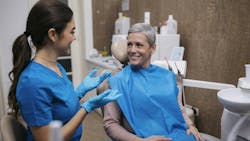



What happens when experience meets enthusiasm—and mentorship becomes the bridge between generations?
In this episode of A Tale of Two Hygienists, new host David Torres, RDH, joins Andrew Johnston for a wide-ranging conversation about the realities facing today’s hygienists and students. From preventing career-ending pain through better ergonomics to navigating influencer culture, instant gratification, and rapidly advancing technology, David brings a grounded, human perspective to what it means to thrive in modern dental hygiene.
As a campus recruiter and mentor, David works closely with hygiene students across Florida and Georgia, helping them close the gap between what school teaches and what real-world practice demands. His insights offer valuable guidance for new grads, seasoned hygienists, and anyone invested in the future of the profession.
Your attitude is one of the few things you fully control in this profession.
Episode transcript
Andrew Johnston:
Welcome back, everyone, to another episode of A Tale of Two Hour Journeys podcast, episode number 488. I'm your host, Andrew Johnston, and thank you so much for being with us today. Had a great conversation on this episode with David Torres. And as usual, we went down a bunch of different rabbit holes. David's role right now, which we probably should have spent more time on because it's a very interesting pivot, I think, for some of you to go into if you're listening and liking this.
Andrew Johnston:
But he's a campus recruiter for his company. And while his job is primarily to showcase his company in a great light and hopefully have some of those students who he's talking to come and work for them once they graduate, he takes his opportunity to a whole new level. He takes the opportunity to really act as sort like a mentor to these soon-to-be new grads and help them with things like job expectations.
Andrew Johnston:
What does social media say at dental agencies versus real life? What are the influencers saying versus what is real life? What technology's out there in the real world versus what's in the dental hygiene programs they're all attending. He explains the importance of communication. But for all of the things we talked about, he has an excitement for this profession that is absolutely contagious.
Andrew Johnston:
And it's exactly what we need these soon-to-be new grads to be exposed to. So if you love this episode, if you have any questions for them, please be sure to shoot him a message. I have the links, of course, in the show notes and he specifically asked that you all reach out to him, so be sure to give him some love.
Andrew Johnston:
Our next few episodes coming out are also looking really good. We're going to cover LANAP, which probably not many of you know too much about. We're going to talk about some adjunctive options for periodontal therapy. So things like probiotics and lasers. We're going to talk about some fascinating new AI tools. There's just so much more that we have planned for you in the next couple of episodes.
Andrew Johnston:
So be sure to come back and give this one a listen. But thank you so much for being here. Enjoy this episode with David Torres. A Tale of Two AI journeys.
Andrew Johnston:
Listeners, welcome in to the interview portion of the podcast you wanted to buy. David. David, thanks for being here today.
David Torres:
Of course man. Thank you for having me. Super excited.
Andrew Johnston:
So I want to give the listeners a little bit of insight, kind of our history. It's it's interesting. I think a lot of times as we are in this dental space, we run into people in the most obscure places.
Andrew Johnston:
And we met each other at the dental hygiene seminars. Back in it was just in January. Right? That was, oh, just this year. Yeah, it was just it was it was exciting to see you in Orlando for sure.
David Torres:
Yeah.
Andrew Johnston:
And then I was like, you have an energy about you that is infectious in all the best ways and not in the bad dental infection ways, but in all, all the best ways.
Andrew Johnston:
And and it's it's the type of personality I think that makes you successful in life. And so what I want to talk about is just a little bit about your background, like where we been. You've done a lot of things in dentistry, and then I really do kind of want to focus on on being campus recruiter tips. I think that's a really fascinating part of of what you do.
Andrew Johnston:
But let's go back in history first. You know, let's start talking about school. And what you did, you know, having your career.
David Torres:
Sure. Yeah. My passion in dentistry started in 2008. I was actually a dental assistant. And I loved it. I loved it so much that it led me to graduate as a dental hygienist in 2002.
David Torres:
Up for Miami Dade College. And. And you. I was so lucky and still so lucky, because that's where I ended up meeting my wife. So we're both graduated from the same program, same time. And since then, I've been, I got to practice in private practice. I did some temping, but eventually I found my footing in a DSO.
David Torres:
And in that DSO, they recognize, like you said, the energy, the passion, the mindset. And they're like, hey, you got to be a mentor. And I was like, say more? Tell me more. How can I do? What can I do to help? And they were like, we really are looking for hygienists to talk to hygienists about how to level up their skills.
David Torres:
And so I became a hygiene mentor in that DSO where, I was able to really find joy in, you know, how as you create and you have this change with patients' lives, how you can create that change. And it's really enlightening to be able to do the same through other hygienists. So when hygienists are also able to do the same with their patients.
David Torres:
And Chris is amazing. The ripple effect. And in the same DSO they were like, hey, how would you like to go talk to students? And so I, I've been in and it's in schools all over Florida and Georgia and those are the schools that I overlook in talking to the future of our career. And I have to tell you, it's been a lot of fun.
David Torres:
Mostly because I'm starting to notice a generational shift, but it's also very inspiring to see the future of our career and what they could be. And what I do is just talk to them about my experience and hopes that I can inspire them and motivate them and, you know, really have their careers, make it their own, if that makes sense.
David Torres:
But I've been doing that for over a year, and I've been so it's an automatic and it's awesome.
Andrew Johnston:
I we gotta peel back some onions on this though. Here's my question. Okay. So you met your wife in high school. You didn't know each other before you met there?
David Torres:
No. Meaning. I mean, picture class of, like 45 students. And the last three that walked in the class was male students.
David Torres:
And in that same class to this day, I started the professor. We all married within the class. And so if you know, you recognize that it for a potential partner, you know, you want to be on the same page and that's the best way to do it, you know? And so, yeah, we've been married for about 11 years now and it's been exciting.
David Torres:
It's been fun. We have three kids now, three boys.
Andrew Johnston:
Wow. So you know, it's it's interesting about this is because even my best hygiene friends, we don't always agree on everything. And I'm wondering if, like, is there ever a time where it's like you and your wife are like, hey, let's talk about periodontal disease. This is what you're wrong on.
Andrew Johnston:
This is what I'm wrong on. And is that healthy for your relationship? Or is this something that's like, oh man, we need to set dentistry aside so we don't keep fighting about this stuff.
David Torres:
It's comical. We actually worked together for about seven years and it was for us. It was easy because you got to remember, like we were exposed to each other from the get go as far as school.
David Torres:
And so everything she learned, I learned. So we have more or less the same philosophy. It was when we left school that there was it wasn't we weren't we weren't having enlightenment because she was learning some things in her private practice. I was learning some things in my private practice, and sometimes they didn't emerge. But when we got to work together, it became one of those that I.
David Torres:
Her strengths were my weaknesses and vice versa. And so we made, if you will, a super hygienist within that practice where if we had a certain patient that we didn't vibe with or, connect very well, my personality took over and I was able to service that person, patient. But to this day, we still talk about her after, you know, she comes home.
David Torres:
Because obviously I'm not as clinical as she is, and she asks for advice and she's like, hey, what? What do you think I should do with these things? What do you think? And most of it is the lack of, ability to get through the patient because we all hygienists do this. I honestly do believe that all hygienists want to do the best that we can for our patients, but we are backed by the patient's ability of having the proper insurance or their finances, or maybe their belief system.
David Torres:
And so where we as, hygienists become frustrated is when we want to do so much more. But we can't because we're limited to our resources, and it's our mindset shift as soon as you start seeing the cup half full rather than half empty, that's when you can kind of break through. So the best part of our career as hygienists is that it's very unlikely that we get to change that patient's life in one appointment.
David Torres:
The best part of ours is that we get to see them recur and again and again and again. And so we really chip away at those philosophies as you build a relationship with patients.
Andrew Johnston:
I'm curious about you specifically, and then maybe how this translates to other hygienists because, you know, it's always nice to say, like, hey, you have this cup half full mentality, right?
Andrew Johnston:
But it's not inherently innate for a lot of people. And it's like, is this something that you just it's already in you. And so you just you exude it. And then for the people that you're mentoring, the people that you're talking to, even the students, and you're like, hey, you need to have this positive mindset. How do you actually get them to do that?
Andrew Johnston:
Or what are the steps that they need to take to be able to chip that in their own head?
David Torres:
It's a practice I have to do and I don't. I feel like a lot of people, it's it's easier to look at the negative things. I think it's just a survival thing. Right? You're in the middle of the woods.
David Torres:
Nothing's happening. You hear some funny noises, you're like, oh, snap, I gotta run, right? It is a flight or fight mentality that we all have. It's a lot more difficult to be positive than negative just because that's in our biology. But I've never seen I haven't experienced both in my career and in my relationships with my peers, that being negative works out for me.
David Torres:
I just haven't. And I seeing that the more I, I fight the urge to hey, you said something like this that didn't land well. I literally have to translate it in my head to like, this is what they actually mean, right? And so it's a lot more difficult to be positive. So it is a practice. It's a discipline that to this day, every morning I wake up and it sets the tone in the first ten 15 minutes.
David Torres:
What am I doing that's going to shift me into that positive mindset? Just because it's so much easier to be like, oh man, like it's Monday, you know what I mean? Instead of like, it's Monday. All right, what are we going to do today? You know, so it's not easy. And as I mentor hygienists and as I, coach, the students nowadays, it is very much in our control where our attitude is very much a choice.
David Torres:
And you decide does a fun part about it. And we can, like, you can finish this conversation and be like, man, I'm going gonna I'm going to take on the day and I'm going to do what I can to make it happen. But we get so caught up with wanting everything to be 100% that we forget what is essential, including on an appointment.
David Torres:
Right? We want we want the patients to follow through treatment to have all the adjunctive services that we recommend because we believe that we can prevent. Right. But they don't know that patients don't know that they don't know what they don't know. And so we get that disconnect over that frustration where like, I just didn't close this case or I wasn't able to do this, the desensitizement or cancer screening or whatever.
David Torres:
Because you feel for that patient, but maybe just the patient's not ready with that mindset and your job or I believe our responsibility is to start with ourselves and you just control what you can control. And it's a mind shift, mind shift, that mindset shift, rather, that we have to practice that discipline.
Andrew Johnston:
Right. David, I want to go back to a couple things that you said earlier.
Andrew Johnston:
The first of them is. Yeah, I talked about your time as a mentor. One of the things you said that you like the most is like seeing that joy, like, and this might be kind of going into the whole mindset conversation your peers having. But, like, I've seen it too, you know, I, I've done this mentorship for a long time as well.
Andrew Johnston:
And it's like you go into the thing and you can like, do you say one thing and then all of a sudden like, it's like a light switch, right? Like they just light up and then they're just happy after that. What are some of the things that you saw hygienists change about themselves, or about the way they practice that help them find that joy or turn that light switch on so they could see again?
David Torres:
It's quite a that's a great question. And honestly, the scenario that pops into my head is I want you to picture this hygienist has been doing dentistry for over 25 years. So at this point she is way more senior than I am. Right? Like she's been doing it a lot longer than I have and I'm her mentor. So again, going back to the mindset is like, okay, how am I supposed to mentor somebody who's been doing this a lot longer than I have?
David Torres:
But I want to I want you to also picture the same hygienist wearing like a splint on her wrist and being very frustrated about her career just because it takes a toll. It's very taxing on the body. And so I came in and to the practice, I was, summoned by proxy for the other hygiene, but I just my I just went to that and I was like, is this going to be my future?
David Torres:
Is this going to be other people's future, like just a curiosity. Right. And so she was in pain. She was frustrated and quite frankly, we're talking about adapting technology that even happens to us. And we're talking about AI. Right? When I graduated I still had failed X-rays. Now is digital and now we have AI. So things things are really fast.
David Torres:
And so I approached her and I just asked her questions like, hey, you know, like, what's the number one frustrating thing right now in your career or your job? Right. And she says, I'm in pain. You know, I was like, okay, got it. And I was like, hey, I'm going to be in the R&D office and I'm just going to be observing.
David Torres:
Are you open to feedback? And she was like, yeah, yeah, of course. But she kind of made it seem like, what are you what feedback you're going to get. Right. And I was like, fair enough. And you know, I was observing and and I saw her with two patients and it just going back to the basics, if I can just recall for her, her ergonomics were way off her posture was way off, and she had been doing it for so long that by practicing day in and day out, you forget the most important basic things that are going to compound at the end of your career.
David Torres:
And that includes ergonomics, for example. Right. And so I was like, oh, no wonder her wrist is hurting. She if you've been a hygienist for a while, you have seen clinical arbitrage, that some of them are little tangents, like, you can barely put a dental chair in there and some of them that are like these luxury suites, that is like you can do oral surgery in there.
David Torres:
In this specific scenario, it was just a tiny little, office. And so at the end of the day, I was and him, you know, I notice a couple things. I think I can help you. Do you mind terribly if I give you some feedback? And she was like, yes. And so she had this, you know, she gave me this demeanor, like, what can you tell me now?
David Torres:
And I was like, do you mind terribly moving aside? Literally, I'm going to move your chair. And she said, yeah, okay. Of course, if you know this, even then of you, the dentures are very heavy. So I'm using my whole body weight to just shift the the chair, what seemed like two, three inches away so that she could be more comfortable moving at those 10:00, 12:00, 3:00 positions.
David Torres:
And now she has better posture. And then I told her I was like, if you only lower down the patient a little bit, you'll be able to have more comfort not pinching the nerve and so on and so forth. So in that specific scenario, I really didn't do much mentorship other than like looking at it from, an outside perspective, saying, make those little things.
David Torres:
The rest of the time that I was there, she had so much buying in what I have to say, because I physically got her out of pain, or I helped her with posture to get her out of pain. So now everything else is more receptive, right? And I think as a mentor, we always have oftentimes have this perception of like, we're going to show people and teach people, but you actually have to have the mindset of saying, what can I learn from others?
David Torres:
And I learned very quickly that if you don't take care of your posture and your ergonomics, you're going to be this hygienist who practices for a really long time better because you're in pain. And thus, besides patient interactions or, culture in the office, it starts with what we can control and what we can do. And being receptive and open minded about, the little possibilities that compound in the future of your career and how you can essentially has a, a bigger impact on a patient's life or even within yourself.
Andrew Johnston:
You know, one of the reasons why I love that so much is because I think the message is, I think kind of across everything, it's like you can't see what you're doing. You don't know. You don't know first of all. But you also can't see what you're doing. You do need as tenured as you are, as good as you are statistically or whatever.
Andrew Johnston:
You always need a second pair of eyes looking at you and with compassion, with love in the things that want someone else to help you. But as a maybe a little bit of, I would say arrogant, maybe a bit of a proud hygienist as myself. Even I need it, right? I need people looking over my shoulder, looking at my work, looking at double checking what I'm doing, giving me feedback, giving me coaching.
Andrew Johnston:
We all need it. I want to talk a little bit about. And this this might lean into this generational shift thing that you mentioned earlier. I would love to know because having you are like you're seeing today's graduates, you've been seeing the most recent some graduates. And what are you seeing as far as the shifting of, in a generational attitudes or mentalities?
David Torres:
So I believe and this is my perception, the more I get to interact with students who are in their early 20s. Right. Very few are in their late 20s but early 20s. I believe that there's a certain underlying frustration once there are in the real world, and I believe that tends to happen because they have this perception, which is their truth, their reality.
David Torres:
They have this perception that hygiene is that career is it's amazing. They're probably have seen this influencers on social media and saying, look how how far they've made it, look what they can do. So they're thinking that they, they can create the same impact in their own offices. And it could be that you may land a job where you have the doctor, you're under your same generation, right?
David Torres:
An open mind isn't. They're probably influencers as well. Or it could be that you land an office, that the doctor has been doing it for, like three years, and they're looking at you like, oh my goodness, what are you talking about? Instagram. I have no social. You got the TikTok videos, all that stuff. And so what's happening right now with this specific generation?
David Torres:
And I can relate because I also have younger siblings, is that they're getting used to, through no fault of their own being exposed to instant gratification. Right. I finished high school. I want to make over six figures, and I want to have a house by the beach and I want to drive, an amazing car just because I have four weeks of PTO.
David Torres:
Then I can travel to Europe, because that's what my friends are doing social media. And so when the reality hits that, you might not make that income, you might not have that car, you might not have those flexibility in hours. And now you have patients that are real world patients that they have their lives. They they have like this frustration because, I'll be honest, work with you and your what makes you successful is your ability to communicate with others.
David Torres:
Right. And we call that, emotion emotional intelligence. Right. We call that, positive mindset. We can we can say, what communication skills do they have that they're probably lacking or not utilizing when it comes to their world? So I am noticed that within the first year, maybe the six months, if they, if they don't see anything, I've noticed that they're like, is that what I thought it was?
David Torres:
And quite frankly, I feel like they feel heartbroken. That personally happened to me within the six months in my career. But it happened to me in a different way, because back then, when I graduated, I was graduating out of recession, timeline, where it was very difficult for me to get a job in the jobs that I take, it was the ones that nobody wanted to work at.
David Torres:
And so I was like, oh my gosh, like, I feel like I landed a career that makes me feel like I'm working at a fast food restaurant where I don't license because it's just a numbers game. And I never wanted to be the provider that just saw patients by the numbers and by what they can offer. I wanted to make an impact.
David Torres:
I believe that we all want to make an impact. It might look different. And you and I look different in this generation, and I look different in the hygienist that's been practicing for 20 years. We all want to make an impact, but if we don't know what type of impact, if we don't know how we want to do that, that's when you can get frustrated.
David Torres:
So I'm noticing that the younger generation, day one technology, and it's an expectation. So if they land a job where you don't have an iTero scanner or you don't have artificial intelligence, they immediately feel discouraged. This is like, this is like so like 20 years ago. I don't want to separate job, you know what I mean?
Andrew Johnston:
Yeah, it's it's interesting, though, because I feel like that can't be just a dental hygiene problem as far as our profession. Right. That's got to be kind of across the board where influencer culture and instantaneous like Amazon's going to bring it to me today if I pay another dollar by tomorrow, if I, if I get it for free, I could still really fast.
Andrew Johnston:
Anyway I that's going to be a whole shift for everybody. At the same time, the disease process and and fixing disease is not instantaneous unless it's something as simple as fine, this isn't really fixing the disease I guess is is just more of a reparative thing. But like cutting out decay and putting a filling or a crown on like that is kind of instantaneous.
Andrew Johnston:
So I'm wondering if the, you know, if we're going to start seeing, you know, the shift to go more towards dentist, or dental therapist and some in some cases where they get that instantaneous fix of, you know, dopamine or do they hit that they, they're looking for a we only have a couple more minutes left. I want to shift a little bit more into what you're doing when you do like your campus.
Andrew Johnston:
I would I call it recruiting, but I don't know if it's necessarily recruiting or if it's, you know, spreading the the good word of positivity and joy for our profession. Like, it seems like it's multifaceted. What do you actually do?
David Torres:
I'm glad you asked, because one of the biggest things that I've seen when I go into campuses is the hesitation of like, well, who are you, stranger?
David Torres:
Why should we let you talk to the students? And as soon as a program director identifies that I'm a hygienist myself too, they become more receptive. Honestly, what I do is I want to be able to bridge the gap between what we're lacking in school that, quite frankly, schools can't afford. So, for example, technology. Right. Like we look at all the schools in Florida and Georgia, and they're very limited to what they can teach and coach.
David Torres:
So in the real world we have iTero scanners, we have artificial intelligence. We have a way of communicating with the patients. We have reversing of charities, which is Perio. We have so many tools that we don't learn in school that I come in and I talk to the program directors and the students to say, hey, I can talk to you guys about any of this while using my experience to be able to bridge the gap of like, the perception to the reality, to in hopes what they can eventually make out of it.
David Torres:
I do recruit through my organization. Obviously, my responsibility is to be able to, build the DSO in a way that it resonates with the students. But ultimately I also want them to find their dream job. And let me rephrase that. Actually, I don't think anybody will give you a dream job, but I think we can give you the tools and the, skills and the education to be able to create your dream job.
David Torres:
And that's with anything. Right. Like you can go to any job and, you know, it's a job, right? There's a lot of great things about it. And there's a lot of things they're like, man, I wish it would be different even with our career. Andrew. I mean, I've heard a lot of the, episodes that you have, and we all carry this mindset of like, oh, but it could be so much better, right?
David Torres:
And and we're not used to it evolving so quickly. And it's time. But heck, when I graduated we couldn't do work on esthetics and we are doing the content. That's right Georgia out. There's a bill in, in in Georgia where they're going to pass lasers now. And so those things is what I like talking to students because they're going to be the ones who is also going to help us embrace that change, especially because they're the ones getting used to that instant gratification.
David Torres:
So maybe they can do more unorthodox things that we're not doing to create that change. And that's what excites me is to create that experience, be like, hey guys, no pressure, but it's all of us. Plus, you kind of secretly hoping you guys will create that chance as well, you know?
Andrew Johnston:
Yeah, well, I think that they have such a powerful platform with use, like leveraging social media and reaching out to legislators like they they it's and it's nothing for them.
Andrew Johnston:
Whereas maybe some of our older generation we're like, "Now how do we use the TikTok and Instagram?" you know. And so yeah, they're going to be absolutely amazing. I love that you get to do—you're almost like more of like an ambassador for the profession. It seems like I mean, I know you have a job to do as far as, you know, your role at Heartland, but, you know, it seems like the gaps that we all had coming out of out of school where we didn't, the all the unknowns.
Andrew Johnston:
You're kind of helping kind of give them at least a heads up of what that could be. I mean, I want to ask one final question. Again, you're such an excitable person. And I know you've been trying to, like, be more demure on this particular episode, but like in real life, you are just a force. What what excites you?
Andrew Johnston:
What what makes you, like, so excited about the future of this profession? Is there—is it AI? You mentioned AI several times. Perio—something that's still not really talked about too much on, kind of mainstream, you know, social media and all that kind of stuff. What is it that you think is going to be the thing that's going to be like, "Oh, this is great"?
David Torres:
That's a really good question. And I believe that. What's ex—I mean, what is exciting every single day to me is just change, man. I mean, we do plateau, in certain things when it comes to our clinical skills, but our technology that's coming about in how we're integrating it for the patient. Do you know how cool it is nowadays to be able to show a patient their mouths outside of their mouths instead of a study cast?
David Torres:
Now it's like digital. And then they kind of poke it around and they can zoom in like an iPad. And they can ask us the questions. So the best part about our career and I believe what's heading is that we're going to have so many educated patients asking us the questions, whereas before it was like, "Here's how we're going to do this, and here's what we're going to do."
David Torres:
It's whether it's them looking at influencers on social media, whether it's them Googling their conditions or—a patient is more educated than I've ever seen them before. You know, they're asking us questions. And so what is so exciting is I can't think of a time in our career where it has shifted so much. Where now the patients are the ones seeking for our care.
David Torres:
Whereas before it was like, "Hey, I'm here for my routine cleaning because it's free through my insurance and I just want that." And now we actually have a dynamic shift. It is slowly happening, but it will happen in the next five, ten, 15 years. I strongly believe that people are going to come in to our chairs and ask us to provide specific type of dentistry that they're seeing outside, and it is our responsibility to get ahead of the game, because after all, we're dental professionals.
David Torres:
And if you don't believe what I'm saying is true, how many of our patients are declining fluoride because they probably are thinking that it is poison because they read some something on Facebook or Instagram or whatever? They're already doing that. But if we create that positive mind shift and is like, "Oh, I'm so happy you're asking me about fluoride, tell me more.
David Torres:
Show me the article." Because, you know, at the end of the day, it is my responsibility as your dental professional to give you the facts, to give you what has worked. Because, Andrew, you are coming to me for my expertise and my experience within my field. So it is my responsibility to know what's out there and how I can serve you as a patient.
David Torres:
With that said, at the end of the day, it is your mouth, it is your health. So I'm here to help you out and I'll go as fast as you want me to go. I'll go as long as you want me to go. But it is in your control. You're my copilot when it comes to your treatment. So I believe when we're able to add that that positive mindset and we understand the patient's emotional treasure when they ask these questions in our chair, there's a huge amount of opportunity that we never had before.
David Torres:
I can't think of a time where a patient has come in my chair and asked me, for example, for veneers, aligners, or whitening because they've seen it on on the social media. It's insane. "Do you guys do this?" I even do that when I was practicing with patients taking selfies, you know what I mean? Patients go in their phone and you start recording, you know, let me get in there and I'm over here posing for a selfie.
David Torres:
That's great. And I think the other exciting part to that—and I—you got me going because you're, you're asking about my passion. But I think the best part about all of this in our careers is that we are responsible for our own brand. We're in—not—we're in an era where we work for private practice, we're temp agencies.
David Torres:
We are in DSOs, multiple of them. But at the end of the day, patients don't go to those, to the dental chair for those brands; they go for you. So if you service a patient so well, if you make them feel so comfortable, if you can relate to them, if you understand them, they're going to refer to you as the provider.
David Torres:
So we are our own brand. Wherever you end up practicing, we are the future of our own career, our own reputation. Right? And so when I had patients just refer refer to me because they had that much of—I provided that much of an impact in their life. That's what gets me going. And I strongly believe that the future of dental hygiene students and and young professionals can do the same.
David Torres:
They just don't know that they can because they think that somebody else will give it to them. But it starts with maybe asking for referrals, starts with that simple saying, "Hey, Andrew, is there anything else I could have done in this appointment to make it more comfortable?" And if you tell me your name and your grade, guess what?
David Torres:
The next question that's going to come in and I'm going to recreate the same thing or do something even more impactful to have fun. Maybe it's taking the selfie with the patient, or maybe spending an extra five minutes of asking them about their day, or maybe, just maybe, just listening to their chief complaint and actually focusing on that.
David Torres:
But it starts with our own—it starts with our own brand and starts with our own expertise and experience. So I believe the future of dentistry is going to shift. So much with the perception, the negative content. You know how back in the day, people were afraid of us? Think of the young 20-year-olds, 30 years—they maybe never had a cavity where they are afraid of the noises.
David Torres:
Maybe that's it. But they're—we're not having, like, an emergency appointment. We're not having root canals. We're not having anything. And that's our responsibility. We as hygienists created that prevention for those kids once upon a time that they're now in their adulthood and they don't—hopefully they'll never know what a root canal is or a crown or an implant.
David Torres:
You know, they're still out there, but, dynamic. And, the industry is changing to the prevention. We are now the specialists and we're prevention specialists.
Andrew Johnston:
And I—lots of great pearls to take away from that. I—you got my brain thinking a little bit about you and you—you know, we're advancing in technologies and things like that.
Andrew Johnston:
But getting our patients to, you know, talk to us and ask us for those things. And then now we actually have the solutions. Do you remember going back to you talking about like you had like the—it wasn't a dip thing probably, but it was, you know, the actual films and you're trying to be like, "Hey, you know, this little triangle right here, this is incipient decay."
Andrew Johnston:
And they're like, "I don't see anything." But now, like you said, they have iPads. They can zoom in, zoom out. We—we are living in a time that is just unprecedented. I—but I love how you bring humanity to dentistry. And I think that a lot of times, you know, we can get, yeah, frustrated. We can get all these things with it, whether it's patients or work or whether it's the profession or whatever.
Andrew Johnston:
And—and I love your perspective. I love your energy. If someone wanted to reach out and, you know, maybe ask you a question about the episode or get some clarification, how can they find you?
David Torres:
Oh, man. So I have Instagram, I have email, I can give you my email. My email is [email protected].
David Torres:
Please reach out, email me if you're a student in Georgia, in Florida. Give me a shout. I've probably been in your school or I'm planning to be in your school. But even even if you don't, even if you have a question about my experience or about the career or just want to have a candid conversation like what we're having, I think we all need a little bit more of, like, that communication with each other, because chances are life is very seasonal.
David Torres:
Right at the beginning of of your career, you have a certain mindset. Then when we've been doing this for a decade plus, right, then you're at retirement. And so life will always take us through seasons. And it's important to feel acknowledged as as a human, as a, as a, as a professional. Because chances are sometimes we just need somebody in our—to get—put their hands in our shoulder and saying like, "Hey man, I know what you're going through, let's talk about it."
David Torres:
Just feeling that announcement gives you more, more energy in your battery. And I think that's important. I think we all got to do that a little bit more.
Andrew Johnston:
You're right. You're absolutely right. Well, thank you for being here, man. I appreciate your time. And we're a little bit over but you've been awesome. So thanks so much.
David Torres:
Anytime, man. I love being able to talk about the future of dentistry.
About the Author
 Andrew Johnston, RDH
Andrew Johnston, RDH
Andrew Johnston, RDH, is your everyday hygienist who is passionate about sharing education and knowledge to others. Practicing in Washington State since 2009, Andrew enjoys utilizing his full scope of practice through traditional and restorative procedures on any given day—still working in the operatory 40-plus hours each week. In 2015, he started the wildly popular dental hygiene podcast A Tale of Two Hygienists with his cofounder Michelle Strange. Because of the podcast's success, they were able to begin a new chapter in dental audio content with The Dental Podcast Network, which consists of 10 short-format shows on different dental topics airing each day of the work week.
 David Torres, CRDH
David Torres, CRDH
David Torres, CRDH, cohost of A Tale of Two Hygienists, is an experienced dental hygienist with over a decade of clinical expertise, specializing in patient education, preventive care, and the integration of modern dental technologies. Known for his passion for teaching, campus recruiting, and coaching, David is dedicated to elevating patient experiences while helping dental professionals improve efficiency, workflow, and long-term success.