The neck check that gets skipped—and caught this RDH’s cancer



Episode Description
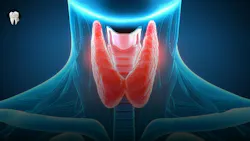
When RDH Angeli Watson went in for a routine postpartum visit, she felt completely fine—no symptoms, normal labs, nothing that suggested a problem. A quick thyroid check at the end of the appointment picked up something that didn’t match the rest of the picture, setting off a chain of follow-up she almost didn’t pursue.
What followed wasn’t straightforward. An ultrasound led to a needle biopsy that came back inconclusive, and it wasn’t until surgical biopsy that thyroid cancer was confirmed. As Angeli describes in conversation with Jessica Atkinson and David Torres, the diagnosis hinged on that initial physical exam—something simple, quick, and easy to dismiss.
For hygienists, the discussion turns back to what actually happens in the operatory. Extraoral exams are often rushed, softened, or charted without being fully performed, even though the time and access are already there. The episode points to those small moments—waiting for the dentist, asking a few risk questions, pressing a little more firmly—and what it looks like when they’re fully used.
Key takeaways
- No symptoms doesn’t mean no pathology: The thyroid cancer was discovered despite normal labs and no clear clinical signs.
- Routine exams, not complaints, often start the diagnostic process: A standard postpartum physical led to imaging, biopsy, and diagnosis.
- Extraoral exams are trained skills, but not always consistently applied: Hygienists are equipped to screen beyond oral cancer, but this step can become rushed or assumed in practice.
- “WNL” can reflect habit more than assessment: Documentation may not always match the thoroughness of the exam being performed, especially in time-constrained appointments.
- Follow-up care can uncover unrelated but critical findings: A GI referral led to the discovery and removal of a precancerous colon polyp well before standard screening age.
- Screening requires more intention, not more time: Even 30–60 seconds spent palpating, asking about risk factors, or explaining findings can change outcomes.
- Clinical experience reshapes patient empathy: Going through diagnosis and treatment shifted how the guest understands patients with complex medical histories.
Transcript
Angeli Watson
The weird part is I just didn't have any signs or symptoms at all, like the whole time. Even when my labs came back, they were normal. And the only thing, looking back, that I can think of was after I had my baby—you know how you can't lay on your back when you're pregnant? And after I had the baby, I could finally lay on my back, and I was like, it feels like I can't breathe very well.
This has taught me to keep an open mind and to just never stop learning, no matter what. Sometimes you think you're done with school and you don't need to learn anymore, but just going through all these hard things has taught me to keep learning and studying and researching to help my family and friends and patients.
I am grateful for the knowledge that I've gained and the empathy that I've gained to have with my patients that have these big, long health histories. Before, I was like, oh my goodness, these people, I feel so bad for them, but they have all these things. But now I just feel like, well, I didn't do anything to get this, and they maybe didn't either, and I just have more sympathy.
David Torres
Hello, and welcome back, listeners, to A Tale of Two Hygienists podcast, episode 533. My name is David Torres, and I'm joined with one of the best preventive specialists and educators I have ever met, my co-host, Ms.—
Jessica Atkinson
I'm Jessica Atkinson, and thanks for the intro, Dave. I appreciate you. It's always fun to be here with you.
And we are joined today by Angeli Watson. Now, I'm going to tell you a little bit about Angeli and the reason why we invited her today as a podcast guest. Angeli Watson has her bachelor's degree in dental hygiene and is a registered dental hygienist in Utah—my state, so we're state neighbors.
She is a Utah native, raised in a city named Holladay, and is a dedicated dental hygienist and mother of four living in Linden, Utah. After attending Brigham Young University and BYU–Hawaii, she graduated with honors from the Utah College of Dental Hygiene in 2009.
Over the course of 16 years, she built a strong career working in private dental practices across the state. While she now limits her work to occasional temp jobs, Angeli remains passionate about health and wellness. We invited her to be on the podcast today because she is also a cancer survivor, and we want to talk to Angeli about how she was diagnosed and how that shaped her as a practitioner.
Angeli, thank you so much for being with us.
Angeli Watson
Yeah, it's great to be with you guys. This is exciting. It's my first podcast ever, so this will be a fun new experience.
Jessica Atkinson
And we love that. You're making getting out of your comfort zone look pretty comfortable, so we're glad that you are here with us today. We want to know a little bit about what happened.
We were talking before we started, and I was expressing that I now go to the dermatologist twice a year because my skin is like a welcome mat to particularly strange-looking moles. And you were expressing that you just had a little mole—tell us more about what happened.
Angeli Watson
Initial thyroid cancer diagnosis
Yeah, I just had something weird, like a little red spot on my face. And I was like, I better get this checked out. And sure enough, it was precancerous. So I was like, oh great—this is my third type of cancer.
So the first one I had was thyroid cancer. And I’ll tell you later, but I think that it honestly saved my life, the diagnosis of thyroid cancer, because it led me to find a more serious, deadly kind of cancer. It was totally unexpected.
I had just had my third baby—a boy—and I was at my six-week postpartum checkup. At the very end, my doctor said he wanted to do a physical, and he felt my thyroid and said, “This doesn’t feel quite normal. I want you to get labs done and an ultrasound, just to rule anything out.”
Honestly, I was pretty annoyed at first. I was a mom of three little kids and thought, I don’t have time for another appointment. I feel healthy—this is just a hassle. But I couldn’t shake the feeling that something might be wrong, so I went.
I had the ultrasound on a Friday, and the tech said she was confident the radiologist would know what she found. I was like, wow, thanks for ruining my weekend.
Jessica Atkinson
You’re like, you found something.
Angeli Watson
Yeah. Then they called and said I had a thyroid nodule and needed a biopsy. They used seven needles to take samples—it was more painful and scary than I expected.
The doctor doing it said it looked fluid-filled and likely not cancerous, so I felt okay. But then the biopsy came back inconclusive. I thought that was good, but I got referred to an ENT who immediately said, “You have cancer.”
Jessica Atkinson
I thought you said it was inconclusive.
Angeli Watson
Yeah, everyone along the way said I’d be fine. Hearing that word when you have a newborn and toddlers at home—it was terrifying.
They did surgery, removed half my thyroid first, then the whole thing after finding cancer on both sides. They also checked lymph nodes, which were clear. We caught it early, so it hadn’t spread, which was really good.
Jessica Atkinson
My friend had to do radioactive iodine and had to isolate for a week.
Angeli Watson
Yeah, so scary. I was really glad I didn’t have to do that.
The weird part is I had no symptoms. The only thing I can think of is that after my baby, when I could lay on my back again, it felt like I couldn’t breathe well. I thought it was just weight gain or something like sleep apnea.
My OB said he catches a lot of issues because pregnant patients are seen so often. I’m so glad I went. Now I just follow up with an endocrinologist a couple times a year.
Jessica Atkinson
Screening opportunity in dental settings
That’s such a good point. Patients see us more often than their physician. What an opportunity we have to screen for abnormalities.
Could you feel it yourself?
Angeli Watson
No, not to the touch—just that breathing feeling. My endocrinologist actually didn’t think hygienists would know how to screen for this, but we’re trained in extraoral exams.
He said to have patients look up and apply firm pressure down the neck. It can be uncomfortable, but important. He also emphasized identifying risk factors—radiation exposure, family history, iodine imbalance, thyroid disorders, and so on.
David Torres
Wow, what a story. Listeners—whether you’re running, driving, or going to bed—try palpating your own neck. This is something we should be doing routinely.
We focus on oral cancer but forget about things like thyroid cancer. Early detection is life-saving.
Jessica Atkinson
And don’t be afraid to cause a little discomfort now to prevent something worse later. The more you screen, the more you recognize what’s normal versus abnormal.
David Torres
How many of us write WNL and never really looked?
Jessica Atkinson
Exactly.
Angeli Watson
Exactly.
Jessica Atkinson
You caught yours early, which gave you a better prognosis. But it also led to something else?
Angeli Watson
Secondary cancer found through follow-up care
Yes. After my thyroid surgery, I had severe vomiting from anesthesia, which led me to a GI doctor. Eventually, he did a colonoscopy—even though I didn’t have classic symptoms.
When I woke up, he said it saved my life. I had a precancerous polyp that would have been deadly within five years. I was around 33—way younger than typical screening age.
Jessica Atkinson
That’s not usual at all.
David Torres
I’ve heard similar stories—routine screenings uncovering cancer unexpectedly.
Angeli Watson
It was shocking. Thyroid cancer is very treatable, but colon cancer often isn’t caught early. I truly feel like one diagnosis led to the other.
Jessica Atkinson
What was the treatment?
Angeli Watson
They removed the polyp during the procedure, so it was gone. Now I just have follow-ups every few years.
Jessica Atkinson
That’s incredible. It really highlights early detection.
David Torres
Practical screening takeaways for hygienists
What can dental professionals do differently starting tomorrow? What are some of the things we can tell ourselves or ask patients to go that extra mile?
Angeli Watson
It really only takes 30 seconds. Ask about risk factors, do a quick exam, and talk to patients about it. Patients will appreciate the thoroughness.
If needed, ask your office for a few extra minutes. It could make all the difference.
Jessica Atkinson
And use the time when you’re waiting for the dentist—do the screening then. Explain to the patient what you’re doing and why.
David Torres
Just don’t go around doing colonoscopies, guys.
Jessica Atkinson
Out of my scope of practice.
Angeli Watson
Seriously.
Jessica Atkinson
How has this experience shaped you professionally?
Angeli Watson
Professional impact and patient empathy
Professionally, this has taught me to keep an open mind and to just never stop learning, no matter what. Sometimes you think you're done with school and you don't need to learn anymore, but going through all these hard things has taught me to keep learning and researching.
It influenced me in both positive and negative ways. I became somewhat obsessive at first—trying to figure out how I got cancer, changing everything in my environment and diet. That became stressful.
Now I’m in a better place, just trying to do my best and make small changes where I can. I am grateful for the empathy I’ve gained. I understand patients with complex health histories much more deeply now.
David Torres
That’s powerful. What message do you want hygienists to take away?
Angeli Watson
I would say take that extra five minutes, even when you’re stressed and busy. It will be worth it for that one person.
Even if you’re not 100% sure what you’re finding, you can be the one who points them in the right direction. We have a strong knowledge base and are a great resource for patients.
Jessica Atkinson
That was beautifully said. Thank you for sharing your story and how it can shape others.
David Torres
Thank you, Angeli. You’re an amazing person.
Angeli Watson
Thank you. I hope it helps someone.
Jessica Atkinson
I think it will.
David Torres
It already has.
Jessica Atkinson
That’s a wrap on today’s episode of A Tale of Two Hygienists podcast. If this conversation made you feel seen, inspired, or even just a little fired up, share it with a fellow hygienist or dental professional.
David Torres
Make sure you subscribe, leave us a review, and connect with us on social media so we can keep this conversation going.
Jessica Atkinson
We’re Jessica—
David Torres
And David—
Jessica Atkinson
And until next time—
David Torres
Keep learning, keep laughing, and keep showing up for yourself and for each other.
Jessica Atkinson
This has been a production of Endeavor Business Media, a division of Endeavor B2B.
About the Author
 Jessica Atkinson, MEd, BSDH, RDH, FADHA
Jessica Atkinson, MEd, BSDH, RDH, FADHA
Jessica Atkinson, MEd, BSDH, RDH, FADHA, is a dental hygiene educator, clinician, and advocate dedicated to advancing the profession through innovation and education. She combines her clinical expertise and love for education to create engaging, practical learning experiences. Jessica is an Associate Professor and Senior Clinic Coordinator at Utah Tech University, co-host of A Tale of Two Hygienists, and CEO of HYGIENE edgeUCATORS, where she develops continuing education for educators and clinicians. She co-founded Hygiene Edge, a platform with over 100,000 YouTube subscribers. Recognized with the Element Award and Outstanding Service Award, she is a Fellow of the ADHA and past president of UDHA.
 David Torres, CRDH
David Torres, CRDH
David Torres, CRDH, cohost of A Tale of Two Hygienists, is an experienced dental hygienist with over a decade of clinical expertise, specializing in patient education, preventive care, and the integration of modern dental technologies. Known for his passion for teaching, campus recruiting, and coaching, David is dedicated to elevating patient experiences while helping dental professionals improve efficiency, workflow, and long-term success.