What hygienists are missing in oral cancer screenings—and how to fix it
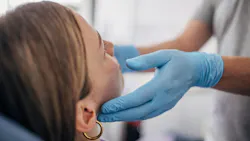



If we’re only looking, we are not going to pick up subtle changes.
Episode description
Oral cancer screening has shifted, but many clinical habits haven’t.
In this episode of A Tale of Two Hygienists, Joanne Jones, RDH, shares how the profile of oral and oropharyngeal cancer has changed and what that means for daily hygiene practice.
HPV-related cancers are now the fastest-growing segment, and clinicians are increasingly seeing younger, healthier patients with no traditional risk factors. That shift challenges long-standing assumptions about who is “high risk”—and raises the stakes for how consistently and thoroughly screenings are performed.
The conversation moves beyond awareness into execution: what hygienists are actually doing in the operatory, where shortcuts are happening, and how technique—especially palpation—directly impacts early detection. Joanne outlines specific adjustments to extraoral and intraoral exams, along with practical language for patient communication that reinforces the value of the visit.
This episode also explores the role of adjunctive technologies, team-wide education, and patient engagement in strengthening screening protocols. The focus is not on adding complexity, but on improving consistency and clinical intent within the time constraints hygienists already face.
For clinicians who feel confident they’re “doing screenings,” this episode asks a more specific question: are you doing them in a way that actually finds something early?
Key takeaways
- Risk profile is no longer reliable. HPV-related cancers and emerging atypical cases mean healthy, younger patients may still present with disease.
- “Being alive is a risk factor” reflects a real clinical shift. Screening decisions cannot be based on appearance, age, or lifestyle assumptions.
- Visual-only exams are insufficient. Palpation—extraoral and intraoral—is essential to detect submucosal or early-stage changes.
- The neck exam is frequently skipped or incomplete. Many patients report never receiving a thorough extraoral exam, representing a major missed opportunity.
- Technique matters as much as consistency. Patient positioning, unilateral and bilateral palpation, and depth of compression directly affect what is detectable.
- Time constraints require smarter communication, not less screening. Framing the visit as a life-saving screening helps patients understand the value of the appointment.
- Language shapes patient response. Terms like “biopsy” can escalate fear; alternatives like “small sampling of tissue” can preserve clarity without unnecessary alarm.
- Adjunctive tools can support detection but do not replace clinical skill. Technologies such as fluorescence devices may help strengthen screening when used appropriately.
- Patients are often not aware screening is happening. Naming the exam explicitly helps reinforce that the appointment is about more than a cleaning.
Episode transcript
Joanne Jones
I feel that our profession has so much to offer. We impact the quantity and the quality of life of every single patient we interact with, and yet it becomes a mundane, sometimes repetitive task over and over again of doing the same thing and not really recognizing the ability we have to really impact on such a deeper level.
We need to make sure that we stop looking at the person, the profile, the etiologic pathway. Smoking and alcohol still—nicotine pouches, vaping, smokeless tobacco, everything that's out there—yes, are all contributors and all, except for the newer things, are historical etiologic pathways. But by far, the fastest growing is related to HPV.
David Torres
Welcome back, listeners, to another episode of A Tale of Two Hygienists podcast. We are in episode 534, and I am your co-host, David, and I am with my amazing co-host, Ms. Jessica.
Jessica Atkinson
Hello, everyone. Thank you so much for listening in again this week. And this week we have a distinguished guest, Joanne Jones. We are so happy for her to come and speak with us today about a number of things.
I’m going to tell you a little bit about Joanne as we get into our conversation topic today. Joanne is a respected thought leader and international award-winning speaker. Joanne Jones has done over 1,000 presentations worldwide. Joanne joins the 2026 Dentistry Today CE leaders for the 16th consecutive year and is a previous DPR Top 25 Women in Dentistry.
Her expertise has also led to her participation in a film trailer for an upcoming documentary examining the rapidly changing profile of oral and oropharyngeal cancers. A passionate educator and tireless advocate, Joanne was instrumental in launching the international Check Your Mouth campaign, empowering the public to perform oral self-examinations between professional visits and strengthening early detection efforts worldwide.
A frank and open lecture style and a focus on direct knowledge translation has earned Joanne many loyal followers, both nationally and internationally. And we are happy to invite you listeners to become some of those followers.
We are here to loyally listen to Joanne Jones today, and we would like to start off with Joanne—how did you start your speaking journey?
Joanne Jones
Career turning point and entry into speaking
Okay, so thank you so much for asking. It was actually many, many years ago, and I have been blessed with a very full career and one that I probably never really even dreamt about.
All things considered, everything in my life was not good at the time. I had actually been fired from my job, which was crushing. There were some reasons for it, but it was just awful because I was so dedicated as a dental hygienist.
Two days later, my mother passed very unexpectedly while looking after my stepfather, who was dying of cancer and had six weeks to live. So don’t worry, I’m going to lift up this podcast into something very odd today. That’s a lot. It was an awful lot.
In those six weeks, I sat beside him almost every day, and he said, “What’s your dream?” And I said, “Well, I don’t really have a dream right now. I’ve got to get a job.” I was helping to support a young family, and not having a job weighed heavily.
He said, “No, what’s your dream?” No one had ever asked me that. I hadn’t given myself the time or the grace to ever say, what is my dream in life?
Finally, he said, “I want an answer, and don’t come back until you do.” So I came back with an answer. I said, I feel that our profession has so much to offer. We impact the quantity and the quality of life of every single patient we interact with, and yet it becomes repetitive and we don’t recognize the deeper impact we can have.
And then the second part was, how do we do all that in a constrained amount of time?
So I started a program called consulting as a career option. It pulled people from all over—financial institutions, insurance, retail—people with expertise. One of the first people I met was an editor of a magazine. She said, “It’s all through networking. You need to meet someone in dentistry.”
They wanted me to teach digital imaging. I came home that day—this was 25 years ago—and my two boys were sitting on the stairs. They said, “How did your interview go?” I said, “I got the job.” They said, “What are you teaching?” I said, “Digital imaging.” My son said, “You don’t even have a computer.” I said, “I’m going out to get one now.”
Sometimes you just have to say yes and figure it out. So that’s how it all got started.
Jessica Atkinson
You said yes and figured it out, and you’ve come a long way from digital imaging. What would you say your main focus is now?
Joanne Jones
Changing profile of oral cancer and HPV impact
My main focus and my total passion is saving lives. Simple as that. Teaching dental professionals how to effectively screen for today’s population.
I could see a trajectory that caught the medical and dental professions off guard. Younger people were being diagnosed with cancer. Incidence rates were increasing. Survival rates were increasing, which was confusing.
Eventually, they understood it was related to a very common virus—HPV. That’s how I got started teaching about it.
Then something personal happened. I was preparing to present when my cousin was diagnosed with late-stage tonsillar cancer. She passed 16 months later at 45—a fitness trainer, mother of three.
Jessica Atkinson
The epitome of health, you would think.
Joanne Jones
Absolutely. She lived such a healthy life. That’s why we need to take the blinders off. We need to stop looking at profiles.
Yes, smoking and alcohol are contributors, but the fastest-growing cause is HPV. And there’s another rising profile—young, healthy individuals, even HPV-negative, vaccinated.
We’re seeing patients in their 20s more often. That’s alarming. So I always say: being alive is a risk factor.
We need to remove the stigma around HPV. As the CDC states, anyone sexually active has likely had an infection. Most clear it without knowing. We need to normalize that.
David Torres
What can hygienists actually do to make a difference?
Joanne Jones
Practical screening approach in clinical settings
First, we need our team on the same page—education across the entire dental team. Our websites should educate patients before they even sit in the chair.
Most patients say no one checks their neck. They say they’re just told to stick out their tongue.
So what can we do? Educate to empower. But also use our eyes and hands. It’s looking and feeling.
For example, with the tongue: check movement, but then palpate deeply. If we only look, we miss subtle changes. Magnification and proper lighting help significantly.
We don’t have much time, so we need efficient communication strategies. But we are in a perfect position to be preventive.
Jessica Atkinson
What resources do you recommend?
Joanne Jones
I’ll also mention tools. I work with Q Optics and Velscope. Velscope uses a wavelength to detect abnormal tissue at the basement membrane level.
Cancer starts beneath the surface. Velscope helps identify areas where normal tissue fluorescence is lost. You’ll see a dark, well-defined area.
If we have these tools, is it not our ethical obligation to offer the best opportunity for early detection?
David Torres
So we have stages—visual, palpation, magnification, and then tools like Velscope. I also involve patients by letting them see through the device.
Am I doing that correctly?
Joanne Jones
You are doing it right on. If something persists more than 14 days, refer.
Also, avoid saying “biopsy.” Say “a small sampling of tissue.”
But do tell patients you’re doing an oral cancer screening. They need to understand this is a life-saving appointment, not just a cleaning.
Jessica Atkinson
How can clinicians improve their technique?
Joanne Jones
Technique refinement for extraoral and intraoral exams
Extraoral exams are critical. HPV-related cancers are often not visible, so palpation is essential.
Use proper technique—bilateral and unilateral palpation, sternocleidomastoid, supraclavicular areas.
Intraorally, focus on the palate, tongue, and floor of the mouth. Use both intraoral and extraoral fingers to compress tissue.
Positioning matters—patient upright for extraoral, supine for intraoral.
Jessica Atkinson
I started at an office and my fellow hygienist was doing extraoral exams at the end of her appointment while the patient was laying back. I thought that was more efficient, so I started doing that.
My patient was an oncologist, and I got a chew out about how I was not feeling anything because those lymph nodes were settling in the back of the neck. That was a good reminder that school teaches you good things—don’t change things for the worse.
David Torres
Jess, what a great reminder. Some of us start cutting corners for efficiency—I’ve been guilty of that. But how many times are we waiting for the next recare appointment when we could just sit the patient up and do it properly?
Are we asking about pain, burning sensations, or family history?
Joanne Jones
Patient communication and ongoing vigilance
We’re always looking for subjective feedback from our patients. Asking if they feel differences from side to side is important.
But we also need to consider past history—like infections that may cause enlarged nodes. Typically, malignant nodes are non-tender, but not always.
Encourage patients to check themselves between visits. Direct them to checkyourmouth.org.
Jessica Atkinson
You also have something going on right now?
Joanne Jones
Yes, for Oral Cancer Awareness Month, I started a campaign called elevating the standard of caring.
Q Optics is donating a custom pair of loupes, and Velscope is providing a device. I’d love your listeners to enter and tag colleagues to spread awareness.
Jessica Atkinson
Thank you so much for being with us today. I hope listeners took away something to help elevate their standard of caring.
Joanne Jones
Thank you. My pleasure. Thank you for your commitment to the message.
David Torres
Listeners, if you love hearing information like this, practice at home and implement it. You may be the individual who saves someone’s life.
Jessica Atkinson
That’s a wrap on today’s episode of A Tale of Two Hygienists podcast. If this conversation made you feel seen, inspired, or even just a little fired up, share it with a fellow dental professional.
David Torres
Make sure you subscribe, leave us a review, and connect with us on social media so we can keep the conversation going.
Jessica Atkinson
Keep learning, keep laughing, and keep showing up for yourself and for each other.
David Torres
This has been a production of Endeavor Business Media, a division of Endeavor B2B.
This episode transcript is AI-generated. While it was reviewed by editorial staff, there may be minor errors.
About the Author
 Jessica Atkinson, MEd, BSDH, RDH, FADHA
Jessica Atkinson, MEd, BSDH, RDH, FADHA
Jessica Atkinson, MEd, BSDH, RDH, FADHA, is a dental hygiene educator, clinician, and advocate dedicated to advancing the profession through innovation and education. She combines her clinical expertise and love for education to create engaging, practical learning experiences. Jessica is an Associate Professor and Senior Clinic Coordinator at Utah Tech University, co-host of A Tale of Two Hygienists, and CEO of HYGIENE edgeUCATORS, where she develops continuing education for educators and clinicians. She co-founded Hygiene Edge, a platform with over 100,000 YouTube subscribers. Recognized with the Element Award and Outstanding Service Award, she is a Fellow of the ADHA and past president of UDHA.
 David Torres, CRDH
David Torres, CRDH
David Torres, CRDH, cohost of A Tale of Two Hygienists, is an experienced dental hygienist with over a decade of clinical expertise, specializing in patient education, preventive care, and the integration of modern dental technologies. Known for his passion for teaching, campus recruiting, and coaching, David is dedicated to elevating patient experiences while helping dental professionals improve efficiency, workflow, and long-term success.