Oral cancer screening verbiage that builds trust—and helps patients follow through
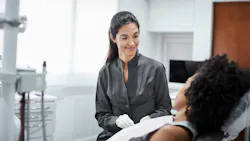



My eyes aren’t biopsies.
Episode overview
Oral cancer screening is not just about identifying suspicious findings—it is also about how those findings are communicated. In this episode of A Tale of Two Hygienists, Alyssa Aberle, RDH, shares how patient language directly influences follow-through and clinical outcomes.
The conversation is grounded in the story of Dorn, a patient who initially presented with a broken crown but was found to have a significant tongue lesion. That moment—recognizing something was not right and communicating it clearly—set the course for referral, diagnosis, and treatment.
Aberle walks through how she explains oral cancer screenings to patients, including how she describes what she is evaluating, how she sets expectations for monitoring changes, and how she reinforces the importance of acting on findings that do not resolve. Her approach centers on consistency: every patient receives the same explanation, regardless of perceived risk.
The episode also addresses a common gap in practice—treating oral cancer screening as a quick visual check rather than a comprehensive exam that includes both observation and palpation. Aberle emphasizes that while hygienists are not responsible for diagnosis, they are responsible for identifying what is not normal and ensuring appropriate referral.
For clinicians, the takeaway is practical: the language used chairside is not secondary to the exam—it is part of the exam. And when done well, it can significantly improve patient understanding, trust, and follow-through.
Key takeaways
- Communication is part of the screening. How findings are explained directly affects whether patients act on recommendations.
- Consistency builds trust. Providing the same oral cancer screening explanation to every patient helps remove stigma and reinforces importance.
- Patients need to understand what you are looking for. Explaining lumps, bumps, sores, asymmetry, and changes improves awareness and engagement.
- The 10–14 day guideline is a practical anchor. Patients should be clearly told when a finding needs further evaluation.
- “Eyes aren’t biopsies” is a useful clinical framework. Hygienists are not diagnosing but are responsible for recognizing abnormalities and initiating referral.
- Verbiage influences follow-through. Clear, confident language reduces hesitation and increases the likelihood that patients seek care.
- Oral cancer screening goes beyond a quick visual check. A complete exam includes both observation and palpation.
- Referral relationships matter. Knowing where and to whom to refer supports timely and appropriate patient care.
Transcript
Alyssa Aberle
Recognizing something beyond a broken tooth
There was a very large lesion on the left side of his tongue, and it was not just from the broken tooth. And so I was like, I don't obviously know exactly what this is because my eyes aren't biopsies.
Oral cancer screenings sometimes get overlooked. One of Susan's phrases she always says is it's more than just grabbing the tongue, because that's like what so many people have done for so long. They like, stick out your tongue, move it side to side, okay, that's the whole screening. But there's so much more going on.
I think what hygienists can have a role in is doing some research on who are you going to refer to. Not every oral surgeon is the same. Not every ENT is the same. So do some research on who's in your area that's handling these types of cases and who's going to be the best person for you to refer patients to.
David Torres
Podcast introduction
And welcome back, listeners, to the podcast, A Tale of Two Hygienists. I am your co-host, David Torres, and I am here with my amazing co-host, Ms. Jessica.
Jessica Atkinson
Introducing Alyssa and the story behind Dorn
Hello, everyone. Welcome back. And today we have a treat. I was perusing social media the other day, and I came across a very touching post.
This post was posted by Deserving Dental of Colorado. And I saw that my good friend Alyssa Aberle was mentioned in this post talking about one of their beloved patients. And so we've invited Alyssa on today to talk about their patient, Dorn.
And I'm going to tell you a little bit more about Alyssa before we get into who Dorn is and what happened. So here we have Alyssa Aberle. She is a Colorado dental hygienist with a deep understanding of our profession and a big dream for our future.
Alyssa has spent her dental hygiene career working with several local nonprofit and community health organizations, including Kids in Need of Dentistry, Salud Family Health Centers, Colorado Orthodontic Foundation, Stride Community Health Center, formerly MCPN, and currently Deserving Dental, where I found the social media post.
While working with these organizations, Alyssa pursued a master's degree in business administration to gain a deeper grasp on organizational management and leadership. Alyssa currently works in a mobile dental program serving homeless shelters and residential treatment facilities.
Alyssa also educates dental teams on OSHA and infection control as a consultant with Loudenschlager Seminars. Did I do that right?
Alyssa Aberle
That's close, yeah.
Jessica Atkinson
That's close. Loudenschlager. Maybe that's better.
Alyssa Aberle
It's a name. It's good.
Jessica Atkinson
Names are important to me. I like to say names right. Alyssa is passionate about advocacy and advancing the profession of dental hygiene.
Married to a Colorado native, Alyssa and her family of five spend most of their free time outdoors hiking, backpacking, and boating in the most beautiful places on earth. Alyssa also loves rocking out to 90s music, movie theater popcorn, and chai tea.
You can reach Alyssa at linktree backslash AlyssaRDH. And we will also link her contacts for you in the show notes.
Alyssa, thank you for coming. And thank you for a life well lived.
Alyssa Aberle
Thanks for having me.
Jessica Atkinson
We're happy to have you. Tell us a little bit about Dorn.
Alyssa Aberle
Discovering the lesion and initiating referral
Sure. So I work for Deserving Dental. It is a hygienist-owned dental hygiene practice in Colorado. A few years ago, it used to be called Dental at Your Door. That was a normal, for-profit dental hygiene practice.
And Jen, the hygienist who started it, a couple years ago transferred everything into a 501(c)(3) nonprofit so that we could get more funding and grants and things to help some of our patients.
And so we are Deserving Dental. We are completely mobile. We go to different facilities every day. And a lot of our facilities are homeless shelters, substance recovery centers, transitional housing, places like that.
And so we were at one of our facilities in Denver called Step Denver, and they're one of our favorite partners. They're awesome. But I met this patient named Dorn. The first time that he came in, he said he had a broken crown that was bothering his tongue.
He said, “I haven't been to the dentist in a while, but I have this broken crown that's really bothering the side of my tongue. Is it something that you could smooth down?” And I said, “Well, let's take a look at that.”
And I explained to him our process—we're going to do a comprehensive evaluation, take X-rays, do an oral cancer screening, periodontal evaluation, all of that. As I'm talking to him and doing my intraoral and extraoral evaluation, I take a look at his tongue.
Yes, there is a tooth with a jagged cusp. But there was also a very large lesion on the left side of his tongue, and it was not just from the broken tooth.
I told him I don’t know exactly what it is because my eyes aren’t biopsies, but I knew it wasn’t just from the tooth. We have an ENT oncologist we’re close with, so I immediately called his office and asked how soon they could see him.
They said three to four weeks. I said I really think he needs to be seen sooner, but if that’s the timeline, what can we do in the meantime?
Alyssa Aberle
They recommended a rinse—basically baking soda and salt water—and gave some guidance on nutrition since it was affecting his eating. We made the appointment and kept it on our radar.
When I went back a month later, he came to talk to us. He said it had gotten worse. He had gone to urgent care, and they told him it was an infection because his lymph node was swollen and gave him antibiotics.
That set off alarms for us. That wasn’t the solution. But fortunately, he had his ENT appointment coming up.
Alyssa Aberle
Diagnosis, treatment, and continued care
Jen went with him to the appointment and got to see how they evaluated him, including a scope, nutrition support, and ultimately a biopsy. It was squamous cell carcinoma.
They scheduled surgery. They removed seven-eighths of his tongue and rebuilt it using his thigh muscle. Jen even got to observe the surgery.
We stayed in contact with him after. He went to a rehab facility. Jen met his parents. It became a really meaningful relationship.
He was always open to us sharing his story, even before he passed, to help educate others.
Jessica Atkinson
Clarifying outcome and legacy
And now, correct me if I’m wrong, Alyssa, but he did not pass away from complications of the oral cancer?
Alyssa Aberle
They said it’s hard to tell. He passed away about two years after we first saw him. He had a strong recovery—he learned to talk and eat again.
He was a chef, so that was a big concern for him. He did really well for a while, but when he passed, they said it could have been related. It’s just hard to pinpoint.
Jessica Atkinson
And left a legacy of relationship with dental hygienists and the importance of oral screenings. When I read it, I was really impressed with the relationship you had with him and the investment Deserving Dental had in patients.
Alyssa Aberle
Lasting patient relationships and impact
Those relationships can continue outside of the operatory. Jen even got a text from him shortly before he passed—he had bought her a belt at the stock show because he thought she’d like it.
There are patients who leave an impact on you. Susan Cotton, who has taught us so much about oral cancer, always talks about that one patient who changed everything for her.
You meet patients like that, and you’re never the same afterward.
David Torres
Moving from routine care to clinical awareness
Alyssa, I wanted to double click on something you said—“my eyes aren’t biopsies.” That resonates with a lot of hygienists.
How do we go from routine care to recognizing something more important? What can we say to ourselves and to patients to make that shift?
Alyssa Aberle
Communicating and educating during screenings
I think it’s easy to get caught up in the checklist. Oral cancer screenings get overlooked. Susan always says it’s more than just grabbing the tongue. There’s so much more.
I start by telling patients we’re doing an oral cancer screening. I explain what I’m looking for—lumps, bumps, sores, asymmetry, changes.
I remind them they see themselves every day, so they’re more likely to notice changes than I am. I also tell them anything that doesn’t go away in 10 to 14 days needs attention.
People often rationalize things, like Dorn did with his broken tooth. I walk them through everything I’m doing. It educates them and builds trust.
I also talk about risk factors, including HPV, and explain that it’s not just smokers.
Jessica Atkinson
Reinforcing clinical narration
It’s like you’re rehearsing your skill evaluation from hygiene school, but with the patient, not with an instructor.
Alyssa Aberle
Exactly. I say the same things all day. But it creates consistency and reinforces learning.
David Torres
Tools, referrals, and clinical responsibility
What tools or skills can help clinicians improve?
Alyssa Aberle
There are tools like VELscope and BioScreen, but I don’t use them in my setting. They can be helpful, but they don’t replace the tactile exam.
We don’t have to diagnose—we just need to identify what’s not right and refer it. If something doesn’t look right, it’s not right.
Hygienists should take an active role in building referral networks—know who you’re sending patients to and trust that relationship.
Jessica Atkinson
Hygienists as healthcare providers
Hygienists, you are healthcare providers. You have tools—time, touch, and your team. Use them.
David Torres
Encouraging team calibration
Even calibrating with your team can help. Screen each other. Share knowledge.
Jessica Atkinson
It just takes one.
David Torres
Just takes one.
Jessica Atkinson
Thank you, Alyssa.
Alyssa Aberle
Thank you.
Jessica Atkinson
Closing remarks and call to share
That’s a wrap on today’s episode of A Tale of Two Hygienists podcast. If this conversation made you feel seen, inspired, or even just a little fired up, share it.
David Torres
Subscribe, leave a review, and connect with us.
Jessica Atkinson
Keep learning, keep laughing, and keep showing up.
David Torres
This has been a production of Endeavor Business Media.
About the Author
 David Torres, CRDH
David Torres, CRDH
David Torres, CRDH, cohost of A Tale of Two Hygienists, is an experienced dental hygienist with over a decade of clinical expertise, specializing in patient education, preventive care, and the integration of modern dental technologies. Known for his passion for teaching, campus recruiting, and coaching, David is dedicated to elevating patient experiences while helping dental professionals improve efficiency, workflow, and long-term success.
 Jessica Atkinson, MEd, BSDH, RDH, FADHA
Jessica Atkinson, MEd, BSDH, RDH, FADHA
Jessica Atkinson, MEd, BSDH, RDH, FADHA, is a dental hygiene educator, clinician, and advocate dedicated to advancing the profession through innovation and education. She combines her clinical expertise and love for education to create engaging, practical learning experiences. Jessica is an Associate Professor and Senior Clinic Coordinator at Utah Tech University, co-host of A Tale of Two Hygienists, and CEO of HYGIENE edgeUCATORS, where she develops continuing education for educators and clinicians. She co-founded Hygiene Edge, a platform with over 100,000 YouTube subscribers. Recognized with the Element Award and Outstanding Service Award, she is a Fellow of the ADHA and past president of UDHA.