Xylazine: Emerging drug threat; what dental hygienists need to know
Key Highlights
- Xylazine (“tranq”) is a veterinary sedative increasingly found in fentanyl and heroin, prolonging sedation and increasing overdose complexity.
- Dental teams should recognize high-risk clinical signs, including profound CNS depression, severe dry mouth, and necrotic skin ulcers that may appear beyond injection sites.
- Emergency response requires more than naloxone—rescue breathing and airway support are critical, since naloxone won’t reverse xylazine’s effects.
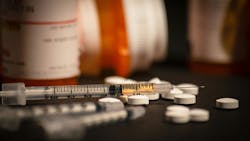
Xylazine first came to my attention through the National Geographic series, Trafficked with Mariana van Zeller, in an episode titled “The Tranq Dope Underground.”1,2 As a licensed dental hygienist providing direct patient care, I was alarmed not only by the severity of the issue presented, but also by the realization that I had never encountered xylazine in my education or continued clinical training. This prompted further investigation into its growing presence in the illicit drug supply and its implications for oral health-care professionals.
What is xylazine?
Xylazine is a potent nonopioid sedative, analgesic, and muscle relaxant that was first synthesized in 1962 and approved by the US Food and Drug Administration (FDA) in 1972 for veterinary use only.1-3 It is typically available as a liquid formulation sold in vials or prefilled syringes through veterinary pharmaceutical distributors. However, xylazine can also be obtained through internet sources in both liquid and powder forms, often without verification of veterinary licensure or legitimate medical need.4
Structurally similar to clonidine, xylazine acts as a central alpha-2-adrenergic receptor agonist, reducing the release of norepinephrine and dopamine within the central nervous system.5 Although it is not approved for human use, xylazine has increasingly entered the illicit drug market. Commonly referred to by street names such as “tranq,” “tranq dope,” or “zombie drug,” it is frequently added to fentanyl or heroin to prolong the sedative effects.1-3,6,7 Recreational use may occur via oral ingestion, inhalation, or injection, with intravenous injection being the most common route of administration.
History of xylazine
Xylazine was first identified as an adulterant in illicit drugs in Puerto Rico in the early 2000s.4 Over the following two decades, its presence in the US drug supply expanded significantly. In 2022, the Drug Enforcement Administration (DEA) released a report detailing the growing role of xylazine in illicit drug markets and noted that it is often mixed with other substances at the retail level prior to distribution.4
In April 2023, the Biden administration formally designated fentanyl combined with xylazine as an emerging drug threat to the US—the first designation of its kind.8,9 Despite its increasing public health impact, xylazine is not currently classified as a controlled substance under the US Controlled Substances Act (CSA).10
The rapid proliferation of xylazine is largely driven by its low cost, prolonged effects, and lack of regulatory oversight. Xylazine can reportedly be obtained from overseas suppliers for as little as $6 per kilogram.4 Its affordability and noncontrolled status make it an appealing adulterant for illicit drug manufacturers.4
The public health consequences of xylazine’s spread are reflected in overdose mortality data. In Pennsylvania, xylazine-related overdose deaths increased from 2% to 26% between 2015 and 2020.6 Nationally, the Centers for Disease Control and Prevention (CDC) reported a 276% increase in monthly deaths involving xylazine in combination with illicitly manufactured fentanyl.6 Additionally, it is estimated that more than 321,000 children in the US lost a parent to drug overdose between 2011 and 2021.11,12
Xylazine-related mortality is likely underestimated, as not all jurisdictions routinely test for xylazine in postmortem toxicology. Additionally, the absence of standardized testing protocols further limits accurate national surveillance.4,13
Clinical manifestations and patient health
For dental hygienists, understanding the systemic effects of xylazine is essential. Xylazine acts as a central nervous system depressant, with effects typically beginning one to two minutes after IV administration and lasting up to four hours.1 Reported effects include dry mouth, drowsiness, miosis, hypertension, tachycardia, hypotension, bradycardia, hyperglycemia, hypothermia, respiratory depression, dysrhythmias, coma, and death.4,14
One of the most concerning manifestations associated with xylazine exposure is the development of severe necrotic skin ulcers. These lesions are not limited to injection sites and frequently progress to infection, tissue necrosis, and, in severe cases, amputation.2,10
Withdrawal symptoms may include agitation and severe anxiety when xylazine use is reduced or discontinued. At present, there is no FDA-approved pharmacologic treatment for xylazine withdrawal.2
Emergency response in the dental setting
Dental professionals should conduct a comprehensive review of each patient’s medical history at every appointment and verbally inquire about recreational drug use, including the substances used and the timing of last use. Because xylazine is frequently combined with opioids, dental teams must be prepared to recognize complex overdose presentations.
If a patient exhibits signs of overdose, naloxone should be administered promptly and repeated as needed. Although naloxone does not reverse the effects of xylazine, which is a nonopioid sedative, it can counteract the opioid component of a mixed overdose and reduce mortality risk.1,3,15 A limited or absent response to naloxone should raise suspicion of xylazine involvement.
Rescue breathing is the most critical intervention in suspected xylazine-related overdoses due to profound respiratory depression.1,2 Dental hygienists and other team members should maintain the airway, provide rescue breaths at a rate of one breath every five seconds, and remain with the patient until emergency medical services arrive.3,9,16 Most states have Good Samaritan laws that provide legal protections for health-care providers and bystanders who assist during overdose emergencies.
According to the FDA, xylazine is not detected on routine toxicology screenings and is not treatable with standard opioid withdrawal medications.2,16 Health-care professionals are encouraged to report adverse events related to xylazine exposure through the FDA MedWatch Adverse Event Reporting Program, which can be submitted online at fda.gov/medwatch/report.htm.16 There is no approved reversal agent for xylazine at this time.
Frontline partners in overdose prevention
According to the Fentanyl Adulterated or Associated With Xylazine Response Plan, efforts are underway to develop rapid, point-of-care testing for xylazine and fentanyl that could be used during clinical encounters.13 While these are still in development, commercially available test strips may currently be used to detect the presence of xylazine.1,10
Beyond emergency preparedness, dental professionals play a key role in harm-reduction education. The CDC recommends several strategies to reduce overdose risk among people who use illicit drugs. These include avoiding drug use alone so that someone is available to call 911, carrying naloxone and knowing how to administer it, providing rescue breathing in an emergency, and placing the individual in the recovery position.3,10
Patient education should also address the risks associated with unpredictable drug potency and purity, which make dosing difficult to determine. Patients should be encouraged to seek prompt medical care for skin wounds and to reduce injection-related risks by using sterile equipment and rotating injection sites.3
Disclosure of financial relationships/endorsements: The author declares that she has no conflicts of interest.
Author’s note: This article was written with the assistance of artificial intelligence.
References
- Overdoses involving xylazine mixed with fentanyl: clinical and public health implications. Centers for Disease Control and Prevention. Clinician Outreach and Communication Activity (COCA). February 29, 2024. Accessed December 23, 2025. https://www.cdc.gov/coca/hcp/trainings/overdoses-xylazine-fentanyl.html
- FDA warns about the risk of xylazine exposure in humans. U.S. Food and Drug Administration. November 8, 2022. Accessed December 29, 2025. https://www.fda.gov/media/162981/download
- What you should know about xylazine. Centers for Disease Control and Prevention. May 16, 2024. Accessed December 27, 2025. https://www.cdc.gov/overdose-prevention/about/what-you-should-know-about-xylazine.html
- The growing threat of xylazine and its mixture with illicit drugs. U.S. Department of Justice Drug Enforcement Administration. October 2022. Accessed December 27, 2025. https://www.dea.gov/sites/default/files/2022-12/The%20Growing%20Threat%20of%20Xylazine%
20and%20its%20Mixture%20with%20Illicit%20Drugs.pdf - Xylazine. U.S. Department of Justice Drug Enforcement Administration. November 2022. Accessed December 26. 2025. https://www.deadiversion.usdoj.gov/drug_chem_info/Xylazine.pdf
- Kariisa M, O’Donnell J, Kumar S, Mattson CL, Goldberger BA. Illicitly manufactured fentanyl–involved overdose deaths with detected xylazine — United States, January 2019–June 2022. MMWR Morb Mortal Wkly Rep. 2023;72(26):721–727. doi:10.15585/mmwr.mm7226a4.
- National Geographic. Trafficked with Mariana Van Zeller: The Tranq Dope Underground. Season 5, Episode 3. 2020. Disney+. com. Accessed November 14, 2025. https://www.disneyplus.com/play/63048bbb-4247-45bb-8481-843f0dceade5
- Hoffman J. White House designates animal sedative as an “emerging drug threat.” New York Times. April 12, 2023. Accessed December 29, 2025. https://www.nytimes.com/2023/04/12/health/tranq-dope-xylazine.html
- Fact sheet: In continued fight against overdose epidemic, the White House releases national response plan to address the emerging threat of fentanyl combined with xylazine. The White House. July 11, 2023. Accessed December 27, 2025. https://bidenwhitehouse.archives.gov/briefing-room/statements-releases/2023/07/11/fact-sheet-in-continued-fight-against-overdose-epidemic-the-white-house-releases-national-response-plan-to-address-the-emerging-threat-of-fentanyl-combined-with-xylazine/
- Xylazine. National Institute on Drug Abuse. Accessed December 26, 2025. https://nida.nih.gov/research-topics/xylazine
- More than 321,000 U.S. children lost a parent to drug overdose from 2011 to 2021. National Institute on Drug Abuse. May 8, 2024. Accessed December 29, 2025. https://nida.nih.gov/news-events/news-releases/2024/05/more-than-321000-us-children-lost-a-parent-to-drug-overdose-from-2011-to-2021
- Jones CM, Zhang K, Han B. Estimated number of children who lost a parent to drug overdose in the US from 2011 to 2021. JAMA Psychiatry. 2024;81(8)789-796. doi:10.1001/jamapsychiatry.2024.0810
- Fentanyl adulterated or associated with xylazine response plan. The White House Executive Office of the President Office of National Drug Control Policy. July 2023. Accessed December 29, 2025. https://bidenwhitehouse.archives.gov/wp-content/uploads/2023/07/FENTANYL-ADULTERATED-OR-ASSOCIATED-WITH-XYLAZINE-EMERGING-THREAT-RESPONSE-PLAN-Report-July-2023.pdf
- Edinoff AN, Sall S, Upshaw WC, et al. Xylazine: a drug adulterant of clinical concern. Curr Pain Headache Rep. 2024;28(5):417-426. doi:10.1007/s11916-024-01211-z
- Public safety alert: DEA reports widespread threat of fentanyl mixed with xylazine. United States Drug Enforcement Administration. November 2022. Accessed December 29, 2025. https://www.dea.gov/alert/dea-reports-widespread-threat-fentanyl-mixed-xylazine
- FDA alerts health care professionals of risks to patients exposed to xylazine in illicit drugs. U.S. Food and Drug Administration. November 8, 2022. Accessed December 26, 2025. https://www.fda.gov/drugs/drug-safety-and-availability/fda-alerts-health-care-professionals-risks-patients-exposed-xylazine-illicit-drugs
About the Author
 Griselda Lopez, BSDH, RDH, CDA, FADHA
Griselda Lopez, BSDH, RDH, CDA, FADHA
Griselda Lopez, BSDH, RDH, FADHA, CH-OSE, is a licensed dental hygienist practicing in Virginia and a graduate of Wichita State University. She is a member of the National Network of Healthcare Hygienists (NNHH) and a fellow of the American Dental Hygienists’ Association. Her work focuses on elevating the visibility of dental hygienists as frontline health-care providers and advocating for a more integrated medical-dental approach to care. Contact her at [email protected].