The saliva movement: Methods, modalities, and the new era of salivary insights
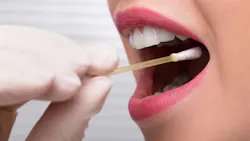
In the first installment of this series, we explored why saliva has reemerged as one of the most important diagnostic and insight frontiers in dentistry, particularly in its role in systemic health, disease detection, and prevention. Now we move into application—focusing on the methods, types, and differentiators of salivary testing available today, along with what is emerging for clinical practice.
At the center of this evolution is a critical understanding: Saliva reflects both host biology and microbial activity. The oral environment contains a complex ecosystem of human-derived components and oral microbiota, providing a uniquely integrated view of health status and disease risk.1 Saliva is not just a fluid; it’s also a feedback system.
Why is saliva important in dentistry now?
Saliva is gaining importance due to an alignment across patients, clinicians, and innovators; patients are more aware of oral-systemic health connections and clinicians are seeking earlier and more personalized diagnostics. At the same time, advances in microbiome and biomarker technologies are accelerating development and accessibility. This convergence represents a structural shift in how oral health is assessed and managed.
What does saliva actually measure?
Salivary testing can measure bacterial composition and load, pH and buffering capacity, inflammatory markers, host immune response, and metabolic and wellness indicators. Because saliva captures both microbial activity and host response, it offers a more complete picture than visual or tactile assessment alone. Thanks to generative AI and innovators, we’re seeing an uptick in the types of tools and testing methods available to us.2,3
Categories of salivary testing by method
-
In-office rapid testing: In-office tests provide results within minutes, measuring bacterial load, pH, buffering capacity, and caries risk chairside. Patients can track results over time, which increases engagement and supports behavior change.
-
At-home and direct-to-consumer testing: These tests allow patients to collect and analyze samples outside the operatory, either instantly or through lab submission. They extend care beyond the dental visit and increase patient participation across households.
-
Laboratory-based salivary testing: Lab-based diagnostics analyze microbial DNA, inflammatory markers, and host-response indicators. Emerging technologies are beginning to explore genetic predisposition to oral diseases.4 These tests support personalized treatment planning and risk-based prevention.
-
Real-time and wearable salivary diagnostics: Wearable technologies are being developed to continuously monitor salivary biomarkers such as pH, glucose, and inflammation. This represents a shift from episodic testing to continuous monitoring and predictive insight.
-
Non-saliva oral diagnostics: This category includes plaque-based and breath-based diagnostics that measure biofilm activity and metabolic output. These tools complement saliva and expand diagnostic visibility across multiple data sources. The future of oral diagnostics will not rely on a single data source but instead will rely on integrated signals.
Categories of salivary testing by clinical focus
Comprehensive oral health panels evaluate both caries and periodontal biomarkers to provide an overall view of oral health status.
Caries risk tests assess decay-associated bacteria alongside salivary function and allow clinicians to track risk over time.
Periodontal disease tests identify pathogens and inflammatory markers, supporting earlier intervention and more targeted treatment.4
Peri-implantitis diagnostics evaluate bacterial and inflammatory markers around implants to support long-term maintenance and reduce failure risk.
pH and salivary function testing remain foundational. Changes in salivary function directly influence caries risk, tissue health, and patient comfort.2 When dysfunction is identified, interventions may include lipid-based therapies, xylitol-based products, and behavioral modifications such as reducing alcohol, vaping, cannabis, and excessive caffeine use. Collaboration with the patient’s broader care team may also be necessary when medications or hormonal factors are involved.
Wellness and biomarker screenings evaluate inflammation, nitric oxide, halitosis, and metabolic indicators. These tests create a bridge between oral health and overall wellness and allow patients to engage independently while sharing results with their dental team.
Salivary diagnostics are expanding into HPV detection and oral cancer screening, strengthening the role of dental professionals in early detection and prevention.
How should salivary test results be interpreted?
Most salivary tests are not approved by the US Food and Drug Administration for definitive diagnosis. They provide data that must be interpreted by a licensed dental professional. This reinforces the role of the dental hygienist and clinician as both diagnostician and educator, translating complex data into actionable care.
The future of salivary diagnostics
Salivary diagnostics are advancing rapidly, with artificial intelligence and longitudinal data tracking expected to enhance pattern recognition and personalization. Future developments will focus on identifying trends over time, enabling predictive care, and delivering more individualized treatment strategies.
Call to action
Saliva has reached a level of visibility and alignment across clinicians, patients, innovators, and investors rarely seen in oral health. Multiple sectors are prioritizing the same focus at the same time.
Salivary diagnostics allow clinicians to move beyond visual and tactile assessments and incorporate measurable biological data into decision-making. When patients can see their data, track progress, and understand how behavior impacts outcomes, engagement increases and prevention becomes more effective. For dental professionals who want to integrate this into their practice, now is the time. Significant work is happening behind the scenes to bring these tools into everyday care, and the opportunity to lead in this space is wide open.
Editor's note: This article appeared in the June 2026 print edition of RDH magazine. Dental hygienists in North America are eligible for a complimentary print subscription. Sign up here.
References
-
Human Oral Microbiome Database. Accessed April 3, 2026. https://www.homd.org
-
Dawes C, Pedersen AM, Villa A, et al. The functions of human saliva. J Dent Res. 2015;94(12):1661-1667. doi:10.1177/0022034515605099
-
Humphrey SP, Williamson RT. A review of saliva: normal composition, flow, and function. J Prosthet Dent. 2001;85(2):162-169. doi:10.1067/mpr.2001.113778
-
Lee YH, Wong DT. Saliva as a diagnostic fluid. Am J Dent. 2009;22(4):241-248.
-
Zhang A, Sun H, Wang X. Salivary proteomics. Clin Chim Acta. 2013;415:261-265. doi:10.1016/j.cca.2012.10.021
About the Author
 Melissa Turner, BASDH, RDHEP, EFDA
Melissa Turner, BASDH, RDHEP, EFDA
Melissa K. Turner, BASDH, RDHEP, EFDA, was honored as a 2024 Marquis Who's Who in America recipient. She is Senior Executive Consultant at Cellerant Consulting Group and spearheads the Cellerant Best of Class Hygiene Awards. She is a founding board member of the American Mobile & Teledentistry Alliance, cochair of the Oral Health Prevention Summit, and serves on the executive board of the Dental AI Association. Known as @thetoothgirl, she is the cofounder of The Denobi Awards and the National Mobile & Teledentistry Conference.