From infection to healing: Antimicrobials in periodontal management
Key Highlights
- Adjunctive antimicrobial therapies can enhance scaling and root planing, improving periodontal outcomes in deep pockets and areas that are difficult to instrument mechanically.
- At-home options such as chlorhexidine and povidone-iodine may help reduce plaque and inflammation, while in-office therapies like boric acid and desiccation agents show promise for improving healing.
- Current evidence supports adjunctive therapies as complements—not replacements—for nonsurgical periodontal treatment, with more research needed to compare their long-term effectiveness.

Paradise Dental Technologies in partnership with RDH is expanding opportunities for dental hygiene students with its NEW Student Research Award Program. The following article is a recent research project submission.
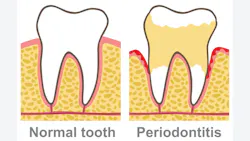
Periodontitis is a multifactorial, host-mediated chronic inflammatory disease that destroys the periodontal tissues and bone, resulting in tooth loss and systemic health issues if not managed effectively.1 The treatment focuses on arresting the progression of the disease and maintaining a stable periodontium by removing the bacteria associated with oral plaque biofilm plus supragingival and subgingival calculus.
While nonsurgical periodontal therapy such as scaling and root planing (SRP) remains the gold standard treatment for periodontal disease that aims to reduce pathogenic species, it does have certain limitations. Adjunctive antimicrobial treatments can help reduce and suppress the disease-causing microflora in areas of deeper pockets, furcation areas, and intrabony defects where mechanical instrumentation is not adequate.2 Specific chemotherapeutic agents can help prevent plaque formation in those areas, resulting in better recovery of the periodontal structures and disease prevention than SRP alone.
Adjunct at-home therapies
Chlorhexidine gluconate rinse
Chlorhexidine gluconate (CHX), a bisbiguanide rinse that disrupts microbial cell membranes, has documented benefits as an in-office and at-home short-term adjunctive treatment for periodontitis patients. CHX demonstrates broad-spectrum antimicrobial properties acting as bacteriostatic at lower concentrations (0.02%–0.06%) and bactericidal activity at higher concentrations (0.12%–0.2%).
Systematic reviews on chlorhexidine report significant reductions in plaque accumulation and gingival inflammation, with modest improvements in clinical parameters such as pocket depth, clinical attachment level, and bleeding on probing, when used as a short-term at-home adjunctive therapy.
Chlorhexidine also aids in the reduction of oral bacterial reservoirs in the saliva, tongue, and oral mucosa that are not usually benefited by routine mechanical prophylaxis. Daily use of 0.12% chlorhexidine gluconate for four to six weeks resulted in significant reduction in periodontal probing depth 180 days posttreatment along with minimal change in clinical attachment level.3
Chlorhexidine is beneficial for at-home use in patients with limited dexterity, low motivation, or decreased salivary flow. Long-term use, however, can cause taste alteration, mucosal paresthesia, dry mouth, subjective extrinsic tooth discoloration, and increased supragingival calculus formation. Despite side effects, chlorhexidine remains the gold standard, widely available for short-term, at-home use as an antimicrobial mouth rinse.4
Povidone-iodine
Povidone-Iodine is considered a low-cost antimicrobial agent that has both antifungal and antiviral properties to help fight oral microorganisms, but does not have cytotoxic effects on the human cells.5 It is proven to be bactericidal, virucidal, and fungicidal, which kills most oral bacteria and periodontal pathogens.6 In addition, the antiseptic properties of povidone-iodine interfere with glycan production, preventing plaque from adhering to the tooth surface.7 The high antimicrobial efficacy and extensive active range offered by povidone-iodine could be used as an irrigation treatment for periodontal disease.8
A systematic review carried out in April 2024 researched 799 controlled trials on povidone-iodine. Within these 799 records, they used eight studies in a meta-analysis to determine these results. The results were conducted on the pockets depth (PD), bleeding upon probing (BOP), clinical attachment loss (CAL), full-mouth plaque scores, gingival index (GI) and full-mouth scaling, but only saw clinical significance in PD and CAL. Povidone-iodine irrigation resulted with no statistical significance before six months; however, after 12 months, they had a reduction in PD from 4 mm to 2 mm, making the P value of 0.037, showing statistical significance.9
From all the 799 studies, it mainly included the clinician providing the irrigation, but only two of those studies talked about povidone-iodine as an oral rinse. While both agents offer benefits, povidone-iodine has advantages over chlorhexidine like cost-effectiveness and minimal tooth discoloration with no altered taste. Although there are studies showing the benefits, there are limited studies showing statistical significance that povidone-iodine can be effective as an at-home oral rinse to maintain or improve periodontal disease.
Adjunct in-office therapies
Boric acid
In-office use of boric acid can be a strategy to improve outcomes in managing periodontal disease. Boric acid is known for its antiseptic and antifungal properties, and has been used in cleaning products, ointments, and personal care items. Its biological properties work by disrupting the cell membrane, causing an interruption in its metabolic process and inhibiting cell wall synthesis, leading to cell damage.10 Similarly, it can inhibit gram-positive and gram-negative bacteria found in periodontal disease and may serve as an adjunct at a therapeutic level.
In clinical practice, boric acid is administered as a locally delivered subgingival either as a gel or irrigation and is applied directly into the periodontal pocket by the clinician as an adjunct to scaling and root planing, allowing for targeted delivery to sites of active disease. Bacteria such as Porphyromonas gingivalis (P. gingivalis) and Fusobacterium nucleatum (F. nucleatum) are found in subgingival sulcus and can cause destruction of the periodontal tissue, and have been linked to aiding in disease progression.11 Incorporating boric acid as an adjunctive chemotherapeutic agent into dental hygiene practice may help combat pathogenic organisms to reduce inflammation and bacterial load in the periodontal ligament around the teeth.12
In a study published in Journal of Periodontology, researchers evaluated the effects of boric acid irrigation as an adjunct to SRP.13 The randomized controlled study included 45 individuals with chronic periodontitis divided into three groups: SRP with saline irrigation, SRP with 0.2% chlorhexidine (CHX) irrigation, and SRP with boric irrigation.
The groups were assessed at baseline, one month, and three months posttreatment using clinical measurements of plaque index (PI), GI, PD, CAL, and BOP. The concentration of boric acid used was titrated and determined to be 0.75%, a level shown to be nontoxic to human gingival fibroblasts and periodontal ligament fibroblasts.
The result was that boric acid irrigation exhibited reductions in PD, CAL, and GI in comparison to the other groups at three months. These results could have been attributed to boric acid’s role in the immune response and reducing oxidative stress by increasing antioxidant agents, suggesting that adding boric acid irrigation may enhance periodontal healing when used adjunctively with SRP. However, its use may be limited in practice due to availability and provider training.
Desiccation therapy
Mechanical instrumentation is a vital element in periodontal maintenance care for the removal of supragingival and subgingival deposits in managing periodontitis. However, complete removal of subgingival bacteria can be a challenge and may still lead to constant inflammation and attachment loss. The microorganisms in the oral cavity are mostly composed of water, allowing them to thrive in moist environments such as the mouth. Exposing the calculus to a desiccant will cause its destruction and removal from subgingival areas.
Desiccation therapy is a newly noninvasive treatment being performed on periodontal debridement, NSPT, heavy bleeding, complex anatomy, and furcations.6 The desiccation properties of the agent work by dehydrating extracellular polymeric substances, softening them and allowing for more favorable removal of subgingival deposits.14 This adjunct therapy is composed of a sulfonic/sulfuric acid hydroscopic mixture in gel form in a syringe.
Following scaling and root planing, desiccation gel is delivered subgingivally via cannula to the base of the periodontal pocket both before and after instrumentation, where it targets periodontal pathogens within 10 to 30 seconds before being rinsed away, leaving a decontaminated root surface conducive to healing.
In a study published in The Saudi Dental Journal, researchers examined the adjunctive use of chemotherapeutic agents alongside nonsurgical periodontal therapy. The purpose was to evaluate the efficacy of a desiccant agent as an adjunct to SRP compared to SRP alone in treating stage III periodontitis. Participants received either SRP and desiccant HybenX or SRP alone. The study included 25 participants, with clinical periodontal parameters collected, including PI, GI, BOP, PD, relative attachment level, and gingival height. Measurements were recorded at baseline, one month, three months, and six months.
Results showed both groups improved at all intervals compared to baseline. However, the SRP and desiccant group demonstrated significantly greater reductions in pocket depths, relative attachment level, BOP, and GI compared to SRP alone. While the sample size was small, these findings suggest desiccant agents may be a beneficial adjunct to nonsurgical periodontal therapy.
Conclusion
The reviewed sources suggest that both at-home antimicrobial agents and in-office treatments demonstrate improvement in periodontal health. However, a notable gap exists within the literature, as few studies provide a direct comparison of the relative efficacy of in-office versus at-home adjunctive treatments within a single study, making it difficult to determine the most effective method for periodontal disease management. These research studies would allow for consistent evaluations of clinical outcomes, patient compliance, affordability, as well as adverse effects, providing clearer guidance on the most effective treatment recommendation as a dental hygienist.
Editor’s note: This article first appeared in RDH eVillage newsletter, a publication of the Endeavor Business Media Dental Group. Read more articles and subscribe.
References
- Khalil B, Abou Sulaiman A, Al Hajjar B. The effects of adjunctive use of a desiccant agent in the treatment of stage III periodontitis (randomized controlled clinical trial). Saudi Dent J. 2023;35(2):172-177. doi:10.1016/j.sdentj.2023.01.001
- Ramanauskaite E, Machiulskiene V. Antiseptics as adjuncts to scaling and root planing in the treatment of periodontitis: a systematic literature review. BMC Oral Health. 2020;20(1):143. doi:10.1186/s12903-020-01127-1
- da Costa LFNP, Amaral CDSF, Barbirato DDS, Leão ATT, Fogacci MF. Chlorhexidine mouthwash as an adjunct to mechanical therapy in chronic periodontitis: a meta-analysis. J Am Dent Assoc. 2017;148(5):308-318. doi:10.1016/j.adaj.2017.01.021
- Poppolo Deus F, Ouanounou A. Chlorhexidine in dentistry: pharmacology, uses, and adverse effects. Int Dent J. 2022;72(3):269-277. doi:10.1016/j.identj.2022.01.005
- Kardaras G, Christodorescu R, Boariu M, et al. A low-cost protocol using the adjunctive action of povidone–iodine irrigations and sodium hypochlorite rinsing solution in step 2 of periodontal therapy for patients with stage III–IV periodontitis: a single-blind, randomized controlled trial. Dent J (Basel). 2024;12(5):144. doi:10.3390/dj12050144
- Funes JAO, Martin P, Maass F, Valero E. Antimicrobial mouthwashes: an overview of mechanisms—what do we still need to know? 2018. https://www.researchgate.net/publication/328544309_httpswwwscience
directcomsciencearticlepiiS2211379718320771via3Dihub - Guignon AN. (2026). CE class | Desiccation therapy part 1 — a new frontier in managing dysbiotic periodontal disease. Young Innovations. 2026. https://info.youngspecialties.com/desiccation-therapy-part-1-ce-class-recording-access-now
- Nguyen MD. (2024, May 19). Subgingival 0.75% boric acid vs 1% povidone-iodine adjunctive to subgingival instrumentation in stage II and III periodontitis–a double-blind randomized clinical trial. Shibboleth authentication request. https://onlinelibrary-wiley-com.pacificu.idm.oclc.org/doi/full/10.1111/idh.12819
- Svellenti L, Karacic J, Herzog J, Tanner M, Sahrmann P. Effects of rinsing with povidone-iodine during step II periodontal therapy: a systematic review and meta-analysis. J Clin Med. 2024;13(7):2111. doi:10.3390/jcm13072111
- Abdel-Fatah R, Elhusseiny GA, Saleh W. Therapeutic potential of boric acid as a local drug delivery agent in periodontitis: a comprehensive systematic review and meta-analysis. BMC Oral Health. 2025;25(1):88. doi:10.1186/s12903-025-05445-0
- Aral K, Çelik Güler Ö, Altuğ HA, Günbay T. Antimicrobial effects of boric acid against periodontal pathogens. Int Arch Dent Sci. 2020;41(1):20-25. doi:10.5505/iads.2020.53109
- Bashir NZ, Krstic M. Boric acid as an adjunct to periodontal therapy: a systematic review and meta-analysis. Int J Dent Hyg. 2021;19(2):139-152. doi:10.1111/idh.12487
- Sağlam M, Arslan U, Buket Bozkurt Ş, Hakki SS. Boric acid irrigation as an adjunct to mechanical periodontal therapy in patients with chronic periodontitis: a randomized clinical trial. J Periodontol. 2013;84:1297-1308. doi:10.1902/jop.2012.120467
- Micu IC, Muntean A, Roman A, et al. A local desiccant antimicrobial agent as an alternative to adjunctive antibiotics in the treatment of periodontitis: a narrative review. Antibiotics (Basel). 2023;12(3):456. doi:10.3390/antibiotics12030456
About the Author
 Ebby Martinez Garcia, BSDH(c)
Ebby Martinez Garcia, BSDH(c)
Ebby Martinez Garcia, BSDH(c), is a 2026 candidate for the Bachelor of Science in dental hygiene studies at Pacific University. She earned her Bachelor of Arts in world languages: spanish from Portland State University in 2024. For more information, email her at [email protected].
 Valeria Guzman, BSDH(c)
Valeria Guzman, BSDH(c)
Valeria Guzman, BSDH(c), is a 2026 candidate for the Bachelor of Science in the School of Dental Hygiene Studies at Pacific University, Hillsboro, Oregon. She earned her Bachelor of Science in biology in 2019 from Washington State University. For more information, email her at [email protected].
 Subathra Kalamegam, BDS (India), BSDH(c)
Subathra Kalamegam, BDS (India), BSDH(c)
Subathra Kalamegam, BDS (India), BSDH(c), is a 2026 candidate for a Bachelor of Science in dental hygiene studies at Pacific University in Hillsboro, Oregon. Prior to moving to the United States, she earned her Bachelor of Dental Surgery (BDS) and practiced as a licensed associate dentist in India. Her clinical interests include preventive care, patient education, and expanding access to oral health services for underserved populations. For more information, email her at [email protected].
 Melody McGee, MBA, RDH, EPDH
Melody McGee, MBA, RDH, EPDH
Melody McGee, MBA, RDH, EPDH, is an assistant professor in Pacific University’s dental hygiene studies program, in Hillsboro, Oregon. She has spent 10 years as a clinical dental hygienist, primarily treating periodontally involved patients. She obtained her bachelor’s in dental hygiene studies from Pacific University and a master’s in business administration from Colorado Tech University. Her focus is developing new dental hygiene leaders through real-world experience while serving as a dedicated, compassionate mentor.