Implants are not teeth: Rethinking hygiene maintenance for single implants and full arches
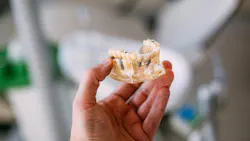



Implant maintenance can be one of those hygiene topics where every clinician seems to have heard something different. Should you probe? What should you instrument with? When is a water flosser non-negotiable? And how do you know when an implant needs more than routine maintenance?
In this episode of A Tale of Two Hygienists, Jessica Atkinson and David Torres talk with Alison Stahl, RDH, an implant care specialist who has focused much of her clinical work on implantology and full arch maintenance. Alison walks through the importance of having a consistent assessment protocol for every implant, whether it is a single implant or a full arch restoration.
The conversation covers what hygienists should be checking at each visit, including occlusion, visual tissue changes, palpation, probing, mobility, percussion for full arch cases, radiographic concerns, and implant-specific classification. Alison also explains how that assessment should guide instrumentation choices, including when titanium instruments, air polishing, irrigation, or referral may be appropriate.
The episode also gets into the patient side of implant care: why patients may mistakenly think implants are “done and done,” why full arch home care requires daily biofilm disruption, and why a water flosser is often a non-negotiable part of the routine. Alison also shares several “what not to do” considerations, including concerns around exposed threads, abrasive powders, chlorhexidine, APF fluoride, alcohol-based mouthwash, and desiccation therapy around implants.
For hygienists who want a more confident, evidence-informed approach to implant maintenance, this conversation offers a practical place to start: assess first, classify the implant, and let the findings guide what comes next.
Key highlights
- Start with assessment, not instrumentation. Alison emphasizes that every implant needs a consistent assessment protocol before deciding whether or how to instrument.
- Baseline probing matters. The number alone does not tell the whole story; changes from baseline, especially with bleeding, exudate, or separation, should raise concern.
- Every implant gets its own classification. A patient with multiple implants may have multiple implant health statuses in the same mouth.
- Full arch home care has to reach underneath the prosthesis. A toothbrush alone will not disrupt biofilm under a screw-retained prosthetic, which is why Alison considers a water flosser non-negotiable for full arch patients.
- Implants are not teeth. Instrument choice, polishing approach, mouthwash recommendations, and fluoride use all need to account for implant materials and peri-implant anatomy.
Episode transcript
David Torres: Welcome back, listeners, to another episode of A Tale of Two Hygienists podcast. I am your co-host David, and I'm here with my amazing co-host, Miss Jessica Atkinson.
And Jess, how about June? I feel like it's getting hotter and hotter every single day.
Jessica Atkinson: It's definitely hotter where I live. We both live in hot places. But you're in the rice cooker, and I'm just in the oven.
David Torres: It's just so humid down here. What is the hottest that it gets over there? Is there a record?
Jessica Atkinson: Actually, I'm curious what the record is in St. George, Utah. I'm looking that up. Would you know what it is in Florida?
David Torres: I don't know, but I know inside my car it feels like 110. I've been tempted to put an egg and let it cook for me, but—
Jessica Atkinson: I think I could definitely cook an egg in St. George. The hottest temperature ever recorded was tied July 5, 1985, and July 10, 2021, at 117 degrees.
David Torres: Good Lord. I feel like things start melting at that point.
Jessica Atkinson: So I definitely think that I could cook an egg at 117 degrees in my car.
David Torres: That is so wild. That's crazy.
So let's talk about today's guest. Can you give us a little bit more information?
Introducing Alison Stahl and the topic of implant maintenance
Jessica Atkinson: I can. I guess it's kind of like cooking an egg in a hot car. Not everybody has an opportunity to live in a hot place and cook eggs in their car. I've never done that, but this is a very loose segue into what we're going to be talking about.
We're going to be talking about instrumentation of implants.
As an educator and a clinician, I see implants often, but I don't see them all the time, every day, and I always have questions about how to do instrumentation well. And so we have a pro with us today. We have Alison Stahl.
She's a registered dental hygienist who for the past 10 years has focused her clinical practice on the field of implantology. She has amassed an unparalleled record of over 10,000 fixed full arch prosthesis removals. That's a big deal.
Alison serves as a certified speaker for industry leaders like ClearChoice and Straumann, combining eight years of formal experience as a hygiene educator with her also-in-the-trenches clinical experience.
She facilitates hands-on workshops that help demystify implant maintenance, and what she really wants is dental teams to have evidence-based protocols and the technical confidence that is needed to ensure the lifetime success of full arch restorations and implants themselves.
So we are so grateful to have Alison here with us. Welcome, Alison. We're happy to have you.
Alison Stahl: Well, I'm happy to be here as well and share some of the information that I've learned over the last 20-plus years, but especially the last 10 as an implant care specialist.
Jessica Atkinson: What would you say to demystify the implant maintenance appointment? What information do you have for us?
Alison Stahl: I think some of the problem is the lack of consistency with information that students are taught in school, as well as seasoned hygienists that have been out for a long time. They hear different messages from different people on what to do, and some are following the evidence and some are just following opinion.
So what is most important, whether you're fresh out of school or you've been practicing a long time, is to have a protocol, whether it's a single implant or a full arch.
You want to make sure that every implant you see, you have a protocol for how you're assessing it. So then, based on what your assessment is and what your classification is, how you're going to move into instrumentation, if it's needed for that implant, is going to be based on your assessment first.
Building an implant assessment protocol
Jessica Atkinson: What would you recommend for an assessment protocol based on your experience and evidence-based research?
Alison Stahl: It's having a protocol, for one.
If we ask people, “Do you have a protocol?” most people say, “Well, no, not really. What should I do? What shouldn't I do?” And there's a lot of confusion on that.
But what you want to make sure you're doing with every implant every time, occlusion is an important part. We know there's a difference in anatomy between a tooth and an implant. We don't have those periodontal ligaments to act as a natural shock absorber with an implant. And we also don't have the gingiva connecting to the metal surface like it does to a tooth.
So that affects some of the things that you're going to be doing or teaching your patient about with the anatomy difference.
But also because there's no ligaments, occlusion should be checked regularly when someone has an implant because we don't want it hitting heavy. That heavy pressure, people who are bruxers, can be a problem and contribute to failures if it's out of alignment.
So being prepared to make sure your doctor, you can have the articulating paper out, whatever you're using, which should be checking occlusion at every visit.
But beyond that, you want to do a visual inspection.
A visual inspection of the implant is very, very important. Is the tissue pink? Is it keratinized or is it inflamed? Do you see signs visually of mucositis or inflammation? Because that can be something, if it's inflammation, maybe reversible, but if it's not treated and controlled, can lead to implantitis, which is bone loss around the implant.
And if we lose too much bone, we lose an implant just like we lose a tooth. So we want to do that visual inspection.
If you're dealing with somebody that has an All-on-X and they have a full arch prosthesis and that prosthesis is coming out, you want to check the percussion.
So checking percussion would mean the bridge is off and you have the exposed abutments. You use a mirror to kind of tap on each one. You're trying to listen for that solid sound. If you're going around and you're tapping, everyone should sound solid.
If you tap one and it will sound very different if it's losing integration, maybe that implant is failing and you need to take additional radiographs, or maybe it's just the abutment that's loose.
So again, on a single implant, you're not going to tap. But if somebody has a full arch, that's an added step of assessment. Does it sound normal everywhere?
Side note to that, zygomatic implants can sound a little different because they're placed all the way up in the zygomatic bone. And so it's going to sound different because the length of the implant is so long, and it doesn't mean necessarily that something's wrong.
But if you see enough of those or experience enough of those, you'll know that it's because it's zygomatic. It has a different sound.
Why palpation matters every time
Alison Stahl: You want to palpate every implant every time.
I can see patients every day whose tissue might look pink, firm, beautiful. And then I bidigitally palpate from the apices to the margin, and there's separation or exudate coming out from around it.
So you can't solely rely on visual assessment to assume something is healthy. Always palpate, especially our tobacco users, right? Their tissue, because of the vasoconstriction, might look pink and be deceiving, and it can be a very unhealthy implant.
So palpation is one of the most important steps, every implant, every time, even a single implant. Always palpate and make sure you're not seeing separation or exudate coming out from around it.
If you do, you need a radiograph, preferably a three-dimensional CBCT or ICAT, because often you can take a PA or a pano and the bone loss on implants often starts on the buccal or lingual, and you're not seeing it from a traditional PA or vertical bitewing.
So if you have access to three-dimensional radiography, then that's going to be preferred to help you see more, or the doctor to see more, around what's going on if there's separation or exudate.
Probing implants and watching for change from baseline
Alison Stahl: Probing is very important around an implant. Now, we have that fragile peri-mucosal seal around an implant. So you don't use as much pressure as you would use with a natural tooth.
And what's important to establish is within a year of loading, you want to make sure that we get a baseline number.
You can have somebody that at baseline has five millimeters in their sulcus, and that's perfectly fine, depending on the type of abutment that was used or how that implant was placed.
But you want to have that baseline number because at future visits, maybe somebody was a 2-3-5 going across with three of those probing numbers. And then they're that way for the first two years, and now all of a sudden they're coming in and they're 6-4-7. That's a change from baseline.
That's where we get concerned, especially if there's also bleeding in association with that or any separation or exudate.
So it's not so much the number that's dictating health, but it's a change in those numbers from baseline that starts to say something's happening here. So you want to have those baseline numbers to have something to compare to.
You want to check for any mobility. An implant should not be mobile. Mobility could be a sign of loss of integration where the implant is failing, but also mobility possibly could be a sign of a mechanical failure where maybe a screw is broken and it's not, whether it's a single crown or the full implant bridge, retaining.
Jessica Atkinson: It might not be the actual abutment. It could be just the crown on top.
Alison Stahl: It could be the screw that's become loose or the restoration is loose.
So checking for mobility, and there should not be any pain. You can ask the patient, on a scale of one to 10, that visual analog scale, are they experiencing pain? They should not have pain, especially if you're checking mobility.
If there's pain when you're checking mobility, you're going to be critically thinking toward the line of maybe an implant has lost its integration.
If it's just a mechanical structure with one of the parts, the abutment or the screw, there usually won't be pain associated with that. And that's something that can be repaired or replaced with a new screw, or maybe something can be tightened.
Assessing full arch components and classifying implant health
Alison Stahl: So that's pretty much your steps going through, is you're checking for those steps with the visual assessment, the occlusion, the palpating, the probing, percussion if you're taking off a bridge.
And then also, if you're taking off a bridge, you're going to add an assessment step that would include the actual components. You're looking at the components.
If you have access to look at the abutment, is it intact? Are there any cracks in the rim where the screw isn't torquing anymore? You're looking at the bridge. How much plaque or biofilm is around that implant or underneath the intaglio of the bridge? Is the patient doing a good job with their home care? Do we need to modify what they're doing at home?
So all of that data kind of leads you then to, what is my periodontal assessment?
There was a new classification that came out in 2017 by the AAP. Just like we have staging and grading for natural dentition, implants also have their own classification system.
So an implant is classified as either periodontally healthy, peri-mucositis, meaning no bone loss, comparable to gingivitis, or it's peri-implantitis, meaning we have bone loss.
Is this implant just ailing and we're trying to keep it from getting worse, but still maybe being able to maintain it? Or is it implantitis to the point where it needs surgical replacement or intervention to control that?
Jessica Atkinson: I was going to say, a note for clinicians is every single implant gets its own classification. Correct? So if you have four implants in a mouth, you have four different classifications.
Alison Stahl: Potentially, yes. Absolutely.
Let assessment guide instrumentation
Alison Stahl: And so once you have that classification, that classification then guides your instrumentation, right? So implants are not teeth. We don't necessarily have to scale the heck out of them.
So if we have something that's healthy, we have choices in instrumentation there where maybe all we need to do is, if you have access to glycine powder, you can kind of get biofilm off with that. That's the least abrasive, least intrusive type of way of managing that.
Or even just, if you're not taking off the structure, you might just be able to polish with a silica. You don't want to use an abrasive polishing paste.
Flossing, using tape can be done to get around there, but you would never want to floss if there's any exposed threads because there's research that shows the floss can shred those fibers, and that can lead to residue that can cause mucositis or implantitis down the road.
So you want to be careful to never be flossing around any exposed threads if they've had bone loss.
But those are ways, if you're not taking off a prosthesis, that you can try to break up some of that biofilm, using floss or glycine powder.
There are instruments that are made of titanium that can help access if you're trying to get under a bridge or under a crown that are curettes that are titanium based.
So your scalers, if you need to use them, if you have calculus or you have a lot of plaque or biofilm that you need to disrupt, you can use scalers, but they should be titanium grade, medical grade 4 titanium.
Titanium, stainless steel, and why residue matters
Alison Stahl: There's a lot of research that shows if you look under an electron microscope, the titanium—let me backtrack on this for a second.
Rockwell hardness is something a lot of hygienists are not familiar with. So the Rockwell hardness is something that is used to measure the hardness of a metal.
If we looked at an implant, an implant on a scale of one to 100 on the Rockwell hardness is going to range between 28 and 34, probably, depending on the manufacturer. And a diamond, for example, would be 100 on that scale.
If we look at titanium scalers, those that are medical grade 4 titanium usually have a hardness between 28 and 31. So they are not as hard or no harder than the implant. So they are not going to scratch or leave residue on that implant.
If we go into a stainless steel scaler, yes, can you remove deposits on that? Yes. But you are also going to likely scratch the surface of the titanium on the implant, or you're going to leave residue behind.
And if we have anything leaving residue behind, that leads to affecting the biocompatibility of that implant over the next couple of years.
It's not so much that if you scratch it, you can attract more plaque to it, but it's the residue that is the greater concern if we're leaving residue behind.
And even with ultrasonics, ultrasonics may be another option. There are companies out there that make titanium tips for their ultrasonic piezos. That's something I use in private practice. So I'm not scratching when I'm using ultrasonic.
But if I use a stainless steel tip, we're going to have problems again with residue or even corrosion, possibly removing that titanium dioxide layer. And then if that implant starts flaking because it doesn't have that protective layer, it leads to possible corrosion, which is another complication of failure.
Plastic, graphite, PEEK tips, and air polishing around implants
Alison Stahl: We also have the graphite instruments or the plastic instruments. Those, because they're not metal, use the B scale on Rockwell hardness. And they only have a hardness on the B scale of about 11 or 12.
But to be comparable to a titanium scaler, it would have to be about 100 on that level to be as effective. So that's why most people hate those plastic scalers, including myself. They're kind of worthless. They don't really do much. And under the electron microscope, they leave residue, which again affects that biocompatibility.
Same thing with ultrasonics that are not titanium based.
So if you have ultrasonics, there's the ones that have the little blue plastic tip you put on the magnetostrictive. If you're using it around the crown, you're okay; the smooth collar, the abutment, you're okay; or just irrigating the sulcus, you're okay.
But if you bring that in contact with the metal of the implant, you are likely going to leave residue again behind. And that's a problem for implant failure and biocompatibility.
There are also ultrasonic tips that have PEEK, polyether ether ketone, tips. Those are good for irrigation. And sometimes they have those tips associated with some of the guided biofilm therapies. And those are a little bit safer to use. Those are acceptable, but again, more for your irrigation, not for actually if you have exposed threads that you're trying to get any calculus deposits out of.
You're going to want to be using something of titanium nature to debride that if debridement was necessary.
Again, an implant's not a tooth. So if you don't have any calculus to remove and you're not seeing any biofilm, you may not need to use that instrumentation at all.
So if everything is healthy—but most of the patients I see have mucositis or implantitis. So I'm typically using a titanium ultrasonic almost every day to flush out that sulcus. And sometimes I have to use the scalers as well if they've got exposed threads and there's some tenacious calculus in there.
So that's some of the instrumentation there.
The glycine powder or the erythritol powder with air polishing, if you have a subgingival piece of equipment—if you have an older machine that does supragingival sodium bicarbonate, you're not going to want to use that on an implant. It's too abrasive. That's meant for above the gum only, natural teeth or crowns. You don't want to use that on an implant.
But if you have one of the pieces of equipment that can go subgingival with the special tips for subgingival to be used with erythritol or glycine, those can be great first steps in treating mucositis to break up more of that biofilm before you scale. So that's another tool at your disposal.
Irrigation, molecular iodine, and when to refer
Alison Stahl: I will irrigate around an implant that is showing signs of infection and we want to try to treat non-surgically as hygienists first. And one of the emerging options we have is molecular iodine.
Molecular iodine is bactericidal and can, almost on contact, kill a lot of those pathogens. Now they can resurface over time, but irrigating with a syringe, if they're showing that, might be an effective way to get that under control after you've done any debridement that was necessary.
But we want to bring these patients back. If they have mucositis, the inflammation, we want to try to bring them back within six to 12 weeks to see, did our non-surgical efforts work? Were they effective? In addition to teaching them home care, were they effective in treating disease? And did we get this to stabilize?
If not, it might be time to refer back to the specialist.
Same with implantitis. If they had implantitis where we see bone loss with radiographs, then we want to try to treat non-surgically. But if our non-surgical efforts are not effective and they're presenting with those symptoms at two consecutive appointments, we need to consider referral because they might need to try other interventions to try to preclude that implant from actually failing.
So you want to have those steps. Like I said, those steps are so important every time. You need to assess first to see what this patient's implant status is looking like.
And based on that status, that should be guiding whether you need to instrument and what type of instrumentation is going to be safe and effective because we don't want to create conditions where we are creating an environment because we're using the wrong instrument that leads to us maybe causing corrosion or sloughing, or flaking of those titanium particles into the tissue that can lead to implant failure and biocompatibility down the road.
I know that's a lot, but once you get into the habit, that assessment moves very, very quickly when you're doing the same thing every time, every patient. Then that's going to guide your decision-making and build your confidence.
Full arch restorations and patient home care
David Torres: That's such impactful information.
I want to, can we talk a little bit about the full arch restorations? Because I know when I hear something like that, I'm thinking $20,000 to $50,000. This is expensive treatment.
And at the end of the day, these are cases that you are very familiar with. Have you noticed any patients treating their oral hygiene any different? Because let's just call it for what it is: essentially a Mercedes in there, right? A high-end luxury item with their 401k, potentially, right? Their kids' college. It's a huge investment.
Alison Stahl: It's huge. And there's a lot of patients that assume, “I have implants. I don't have to worry anymore,” right?
And they don't have to worry about decay, but it's so important that they understand early on, even maybe before they do the procedure, that implants are still susceptible to periodontal conditions just like teeth, right?
It's really important that as hygiene educators, we make sure our patients also understand the mouth-body connection. Yes, they don't have to worry about a cavity or a root canal anymore, but I also explain, well, because implants don't have a nerve like a tooth, you could have an infection and maybe not be feeling anything, right? But your implant is still susceptible to periodontal disease.
And then I go into the whole mouth-body connection, that if we don't disrupt this plaque and biofilm that we all have in our mouths effectively, that's going to trigger that immune response.
And then that's not only going to possibly lead us into mucositis or implantitis and bone loss around these implants we've invested in, but the potential for those pathogens to enter our bloodstream, increasing our risk of heart attack, stroke, Alzheimer's, uncontrolled diabetes, and on and on.
All those risk factors we know with perio are still there with the implant, and the patient needs to understand that. So they're motivated to protect that $50,000, $60,000 investment that they've made if they've got two arches of full arch.
So they have to understand that their home care is equally as important, if not more, with their implant investment as it was with their teeth. And so disrupting that biofilm is critical, and we have to educate them about what is going to work.
The water flosser as a full arch non-negotiable
Alison Stahl: In my opinion, the most important tool that the patient can be using to help disrupt that biofilm underneath is a water flosser of some type. There's a lot of different ones and brands on the market, but the water is going to help them get underneath.
Their toothbrush cannot get underneath that screw-retained prosthetic. So yes, they're going to brush the prosthetic still to try to break up some of the plaque and biofilm they have in their mouth, but it's not getting underneath that bridge. So they need to get something that will get underneath.
And flossing is very difficult for these patients. Often that gap, that wash-through space between the bridge and the gum tissue can be very, very tight. And sometimes even getting floss underneath can be very challenging.
Or they may have, our elderly population, which is the majority of people in these prosthetics, not all, I have young patients as well, but the majority of them may have arthritis or their hands just don't work very well. And it's very challenging for them to try to use some of those other supplemental aids.
So the most important thing that they should be doing twice a day, every day, is using a water flosser to try to use that to help break up that biofilm underneath.
I'll tell them if they want to use floss, I make sure they understand how, but not to use floss if they have exposed threads, because again, we don't want to have the fibers possibly shredding on those threads, leaving something behind that could start the cascade of mucositis.
So usually the water flosser is the most important tool, but they need to be using a full tank of water. They have to do it long enough, not just to get the food that they may see coming out, but they need to allow time for the biofilm to come out as well.
So it's not five seconds in the mouth. They need to drain their whole tank of water nice and slow.
There's a lot of different tips that are out there for getting underneath with different brands, but it's finding the one that's going to help them fit and get the food and biofilm out.
If they have room between the prosthesis and the gingiva, they can also use rubber tip stimulators to try to get the tissue more keratinized by pressing the rubber tip against the gum tissue if it will fit. They can also do the same with the proxy brushes by pushing those in there, or the soft picks if they can fit.
Again, you don't ever want it to hurt. You don't want them forcing something in where they're causing discomfort, but they have a lot of tools at their disposal. The most important tool is going to be the water flosser.
Manual versus electric toothbrushes during healing
Alison Stahl: And they can use an electric or soft bristle manual toothbrush, but I usually tell them not to use electric until they're in their final restoration.
When an implant is placed, it's like putting a fence post in wet cement. There's that integration period between the bone and the implant that needs to occur. And we don't need all that extra vibration or possibly aggressiveness that they might experience if they're not using an electric brush properly.
So just a very soft manual toothbrush during that healing phase.
And then if they prefer electric or sonic, they can move into that afterward when they're in the final restoration. And it's personal preference.
I have a lot of patients, again, they don't have to worry about a cavity. So if they do a good job with a manual toothbrush, I'm fine with that. But if they prefer the electric, yes, it's going to break up more biofilm.
Some of them think it tickles. They have different sensation when they have a full arch compared to just a single tooth implant. So some of them don't like the way that some of those devices feel that they maybe had been used to using before.
David Torres: So what I'm hearing is that you obviously do all these precautions in the chair in your operatory. Same expectations for them at home care.
Are there any other non-negotiables that you're like, this is so imperative that the patient has to follow and us as dental professionals?
Alison Stahl: Again, non-negotiable is a water flosser if they have a full arch. If it's a single one, not necessarily, but definitely it's beneficial for that as well.
But I think that's pretty much the non-negotiable.
And then also trying to disrupt that biofilm twice a day. There's going to be times where life gets in the way and they didn't get to do it twice, but you definitely don't want to be skipping days.
We know as hygienists that everybody's immune system is a little different. That's kind of the wild card, is how sensitive is our immune system to reacting to disrupted biofilm? But on average, we know with research that that's going to start kicking in within about 48 hours.
So people can't think that doing it once a week is going to be effective. They're going to have ongoing problems.
And again, our implants don't have nerves like teeth. And you can't see, if it's a full arch restoration, you can't see your gum tissue because your prosthesis is covering that. So you could be having a whole party going on with inflammation and bacteria pathogens that you're not aware of.
So you have to be disrupting that every single day. Twice a day is ideal. That's probably the most important thing that I tell my patients that they've got to be doing with their implants to keep everything healthy.
Mouthwash, chlorhexidine, fluoride, and corrosion concerns
Alison Stahl: Mouthwashes are another thing to consider. What I make sure patients know if they want to use mouthwash, it should be alcohol-free.
The alcohol that's in mouthwash is not even a therapeutic or an active ingredient. If you look at the back of a bottle of Listerine, for example, it'll say 21.9% alcohol, inactive ingredient. It's a preservative for the active ingredients.
But the difference with implants, the problem is with the anatomy, the gum tissue can't attach to the metal. So if the mouth gets overly dried from the alcohol-based mouth rinses, the tissue might actually distend away a little bit.
Now you've got an environment where that peri-mucosal seal is not as tight, and you might have more pathogens getting in the pocket. So if they want to use a mouthwash, it should be alcohol-free.
Some are better than others with regard to how long the substantivity is. Your stabilized chlorine dioxide lasts longer. They're not going to destroy the fibroblasts like some of the other mouth rinses can. And they are also antifungal, antiviral. So those are great ones over the counter that patients can pick up.
If I'm seeing a lot of mucositis or implantitis, I'll move them toward the molecular iodine as a higher level bactericidal to use at home.
And what patients really shouldn't be using is chlorhexidine.
Chlorhexidine has been shown to be corrosive to titanium. And there's still a lot of oral surgeons that are putting patients on that after surgery. And it does just interfere with the fibroblast activity as well.
So chlorhexidine is definitely, if they're going to be using it, should be very short use. But I would recommend not using it at all because of the corrosive potential to the titanium dioxide layer.
Also fluoride, you want to make sure if the patient has a mix of natural teeth and implants, fluoride is not needed for the implant itself. So I wouldn't even apply it to the implant, maybe the surrounding teeth, but it definitely needs to be neutral sodium.
You don't want anything APF or acid-based because it can corrode that titanium dioxide layer. And a lot of hygienists are not aware of that. So that's something that's important with regard to the corrosion risk factor, to not be using APF around the implants.
So there's a lot of what not to do in addition to what to do, right?
Safe steps hygienists can use across implants
Jessica Atkinson: Well, I'm grateful that we have you as a resource, Alison, because even in the last 30 minutes, hearing everything that you have to share, I'm sitting here thinking, what is my implant protocol? How do I need to make it more effective?
Because just as every patient, every implant is different, and we don't always have the history of that implant.
And so the things I took away from you today are things that can be used on every implant. I can do a glycine polish on every implant. I can use a Waterpik on every implant. And I have a resource if I have questions.
Alison has a company called Precision Peri Implant Academy, and she does more continuing education. She'll even do one-on-one coaching. She is your resource.
So if you are leaving today going, “I have more questions now,” please feel free to contact Alison, and she can take you on an implant journey that will help preserve the investment of our patients.
Thank you, Alison.
A final caution on desiccation therapy around implants
Alison Stahl: One other thing I want to say as a what-not-to-do: another emerging treatment that we're seeing with teeth and implants is the desiccation therapy.
A lot of people are using that to break up hard deposits on teeth before they scale. And it basically dehydrates those pathogens. And the manufacturers of those products state that these are safe for implants.
Basically these are acids, and there's been other research that has come out recently that says do not use this around an implant because it can remove that titanium dioxide layer. It's an acid. You're dissolving that, and if we don't have that protected, that implant is going to corrode.
So even though the manufacturers are saying desiccation therapy is just fine around your implants, other research that has come out says this can be detrimental to your implant. And we have that whole problem of biocompatibility if we take off that oxide layer.
So I do not use those desiccants on the implants. They're great, a lot of promise on natural teeth, but I would avoid using those around your implants.
Jessica Atkinson: So look for the safe things across the board because we never know where our implants are coming from, unfortunately.
Alison Stahl: Right.
Jessica Atkinson: Thank you, Alison.
David Torres: Alison, thank you so much for everything. It's truly impactful, all the work that you have done and all the time spent and all these prosthetics.
You have definitely taught us and the listeners what to do, what not to do, and where to get more information. So we appreciate your time.
Alison Stahl: You're welcome. Thank you for having me.
About the Author
 Jessica Atkinson, MEd, BSDH, RDH, FADHA
Jessica Atkinson, MEd, BSDH, RDH, FADHA
Jessica Atkinson, MEd, BSDH, RDH, FADHA, is a dental hygiene educator, clinician, and advocate dedicated to advancing the profession through innovation and education. She combines her clinical expertise and love for education to create engaging, practical learning experiences. Jessica is an Associate Professor and Senior Clinic Coordinator at Utah Tech University, co-host of A Tale of Two Hygienists, and CEO of HYGIENE edgeUCATORS, where she develops continuing education for educators and clinicians. She co-founded Hygiene Edge, a platform with over 100,000 YouTube subscribers. Recognized with the Element Award and Outstanding Service Award, she is a Fellow of the ADHA and past president of UDHA.
 David Torres, CRDH
David Torres, CRDH
David Torres, CRDH, cohost of A Tale of Two Hygienists, is an experienced dental hygienist with over a decade of clinical expertise, specializing in patient education, preventive care, and the integration of modern dental technologies. Known for his passion for teaching, campus recruiting, and coaching, David is dedicated to elevating patient experiences while helping dental professionals improve efficiency, workflow, and long-term success.
 Alison Stahl, BS, RDH
Alison Stahl, BS, RDH
Alison Stahl, BS, RDH, has 23 years of dental industry experience, including 10 years specializing in implantology and more than 11,000 fixed full-arch prosthesis removals. A certified speaker, hygiene educator, and founder of Precision Peri-Implant Academy, she leads hands-on workshops that help dental teams build evidence-based protocols and clinical confidence in implant maintenance. Contact her at [email protected] for training, speaking engagements, or master class workshops.