What cancer treatment does to the mouth—and how hygienists can help
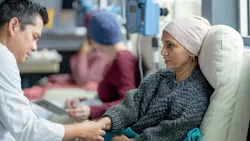



Cancer treatment can affect nearly every aspect of a patient’s daily life—including their ability to eat, speak, sleep, and maintain oral health. In this episode of A Tale of Two Hygienists, Jessica Atkinson and David Torres talk with hygienist Melia Lewis about the oral side effects patients experience during chemotherapy and radiation, including oral mucositis, xerostomia, taste changes, and tissue sensitivity.
Lewis also shares the personal experience that shaped her passion for this area of care: supporting her father through pancreatic cancer treatment and witnessing firsthand how little attention oral complications sometimes receive during oncology care.
The conversation explores practical ways hygienists can support patients through prevention, home care education, gentle treatment adaptations, and compassionate communication—while also recognizing the emotional weight many patients and families carry throughout cancer treatment and survivorship.
Key takeaways
- Why oral mucositis can become severe during chemotherapy and radiation
- How biofilm management may help reduce complications during treatment
- What xerostomia changes clinically during hygiene appointments
- Why gentle home care instruction matters more than complex recommendations
- How flavor sensitivity affects product tolerance and patient compliance
- Why empathy and individualized communication are critical in cancer care
- The role hygienists could play within interdisciplinary oncology support teams
Episode transcript
David Torres:
And welcome back, listeners, to another episode of The Tale of Two Hygienists, episode 536. And I am your co-host, David Torres. And I am also joined with my co-host, the one and only prevention specialist, educator, and my curly-haired co-host queen, Miss Jessica.
Jessica Atkinson:
Hello, everyone. I like the curly-haired dirt. I like that one. That's a new one. I like that a lot.
And today we are joined with one of my dearest dental hygiene friends, Melia Lewis. Thank you for being with us today, Melia.
Melia Lewis:
Yeah, I'm so excited. I'm so proud of you guys. You guys are doing such cool things.
Jessica Atkinson:
I will tell you something.
Melia Lewis:
Your curly hair.
Jessica Atkinson:
Yeah, our curly-haired hair. I've got to tell you, Melia has been a long-time supporter of me living my dream of being a podcast co-host. So in part, Melia, this is your support in fruition.
Melia Lewis:
I'm like celebrating inside for you all the time because I just love it. So I think it's the perfect place. You have the best chats. So I just love it. I appreciate that.
Why cancer care matters in dentistry
Jessica Atkinson:
Thank you very much. And we have brought Melia on today for many a reason. One could be that she is the owner and operator of Hired You and Edge. Another one could be that she's the co-owner of Acuity Dental Sharpening. Another could be that she's adjunct at Colorado Northwestern Community College, or that she is a clinician at Aspen Heights Dental.
To not say everything that she does, but we brought Melia on today for a personal reason and something that has far reaches not only in her dental world, but also in her personal world as well. And today we've invited Melia to come and talk to us about cancer and the impacts that it has on patients, clinicians, family members, and the whole lot. So thank you for being here on such a personal note.
Melia Lewis:
Yeah, no, I love it. It's one of my favorite topics because everyone, for the good and bad, everyone can kind of like relate to have someone in their life, community, family member, potentially has been or will be diagnosed with cancer.
And there's a lot of side effects that come along with it with treatment. There's lots of different treatments, number one, but there's a lot of different oral side effects, overall side effects. And definitely oral sometimes doesn't get talked about, I feel like.
So it's been a great passion project for me to learn a lot more. And I totally can see how hygienists, which I'm all about supporting dental hygienists and dental professionals to help in the medical field, I could totally see dental professionals really supporting this part of medicine, oncology departments, hospitals while these patients are undergoing treatment to prevent these oral side effects from happening.
Because a lot of them are preventable with like knowledge and education and home care. So I'm excited to be here and chat more.
Jessica Atkinson:
We're happy that you're here. Start off a little bit telling us about how you became so passionate about cancer patients in particular. What happened in your life that had you shift from a clinician knowing a little bit about it to now a clinician knowing a lot about it?
Melia Lewis:
Yeah, and I will say I don't know everything. There's more coming out. The nice thing about cancer research is there is a lot of research coming out. So there's a lot of professional organizations that I can give you that you can do more research and keep an eye on. I try to keep an eye on it too, see what people are recommending.
But let's roll back to I was born to a father that was a dentist. He absolutely loved being a dentist, which as I was actually telling a patient this yesterday, it was like, I'm like, "It's kind of interesting because then after I graduated hygiene school and I would work with different dentists, I'm like, not everyone likes their job," which was so weird because my dad always had really loved being a dentist. I thought it was really fascinating and did a lot of research, loved the human, like the mouth-body connection, loved like up-and-coming things with dentistry.
So that was pretty much my whole life. My earliest memories were in his dental office and for pathetic, like pathetically, but it was kind of fun to look back at that thing.
Jessica Atkinson:
Purposefully.
Melia Lewis:
So he loved being a dentist. Unfortunately, this ties to cancer because he was diagnosed with pancreatic cancer in 2018.
And it was very rapid. He had a very kind of aggressive form of cancer. First cancer patient or condition that I personally had been close to. You hear people or you have friends of friends or whatever that have it, and then you hear all the things. But just having someone like in your day-to-day life that experiencing all the things is pretty fascinating to see the inside scoop, going to the appointments, like seeing the, what the port goes in from down to the end days is kind of fascinating.
So that was kind of the sort of the ball rolling because again, he was a dentist, loved being a dentist, was pretty much a brilliant dental mind, if I do say so myself, but he did have some oral side effects that no one really talked about.
I went to a couple of his first appointments when he was like diagnosed and like they were talking about treatment. They really didn't talk about it that much. Looking back, I'm like, they probably didn't want to overwhelm because it's a lot of information at once. It's big, heavy conversation that you have when they first talk about it. So I totally understand where they're coming from, not being like, "Oh, and this might happen and this might..." you know.
So, but it wasn't really never talked about at, especially at the beginning. I think sometimes if a patient brings it up during treatment, then they'll be like, "Oh yeah, that's totally normal," and things like that. But sometimes it's not standard to talk about it at first.
I think it's becoming more and more because some of the oral side effects like oral mucositis, and that's when you get a really bad sore in your mouth, they're really hard to heal when you're undergoing radiation or chemotherapy.
Jessica Atkinson:
And they're like daily interruptions.
Melia Lewis:
Oh no, it affects your whole life. Like you can't eat, it's super hard to talk, super hard to drink, which we know nutrition is so important when it comes to healing. Some people even elect to like stop treatment because their mouth sores are so bad and they won't heal until the medication stops.
And that is like the last thing we want is a patient to have to stop their life-saving treatment based on something that is pretty much preventable. So with spoiler alert, really good home care.
So anyway, he did experience some oral side effects. He had good home care. He was a dentist. He didn't really get oral mucositis that much, but he did have other ones that are very common, like taste changes, dry mouth, which of course will lead to a lot more caries, sleep issues, so many side effects that unfortunately sometimes happens with these really strong medications.
I mean, I'm very grateful that they have these medications and they have come a long way. But I think, again, dental professionals can really help support and buoy up our communities or our patients or our family or friends when these weird things do pop up and maybe they weren't brought up before.
And some people are like, "Is this normal? Is this not?" We can be a sounding board for these patients. So unfortunately, my dad did pass away with pancreatic cancer not too long after he was diagnosed. It was pretty aggressive. So it was kind of interesting to see that whole cycle of the treatment go through.
So that's where it definitely didn't stop when he passed away. It's been so fun to do a lot more research, see what's happening, what's recommended now, what's not, and go from there and be able to support my community members.
Honestly, I think the biggest thing with knowing more as a dental professional is a lot of times it's like your neighbor or your friend or your family member or your whatever. Because sometimes patients are not coming to the dental office undergoing chemotherapy if maybe they're not recommended to because they're so immunocompromised or like they can't afford it or it's just like the lowest totem pole because they feel awful.
I wish they were every time so we could help educate them and support them. But sometimes that's not a top priority, which makes sense. So we in the community instead can be really helpful and supportive that way, which I love for dentistry. I could see dentistry in so many different aspects of the community.
So that's kind of where it started. I still love learning about it and research again. I'm part of a couple professional organizations and kind of attend their webinars to see what they're talking about, see what's new, because things change with research, with cancer in general, like things change pretty rapidly.
So it's nice to see what's new and what they're recommending and what prescriptions we can give them and what not, or who should we talk to if they're doing this or X, Y, and Z.
David Torres:
So Melia, thank you so much for sharing that because I think you're absolutely on point where there's different types of cancers, different stages, and dental professionals, we all tend to kind of look at it in a different way. And sometimes we don't know what we don't know.
I personally had my little cousin who was diagnosed with eye cancer at age 6, and that was hard. I remember going to work and getting that phone call and just immediately the very next patient that I saw, I was like, "Let's do an oral cancer screening," right? Like it just like switch.
So with that said, how is it that if a hygienist or dental professional listening to this episode, what are some of the things that they can have that light switch moment where automatically we can either tailor the treatment to that surviving cancer patient or the one that's going through treatment? What are some of the things that we can do?
Because you mentioned something that was very impactful. Some of these side effects are so severe that they even stop their treatment, right? Like, I can imagine an ulcer or change the taste of food that they're just so, the patient could be so aggravated and just stop treatment.
And what are some of the things that we can kind of help supplement and help prevent, since we're preventive specialists, with some of these patients, being that you went through this with your dad and you're a dental hygienist yourself?
Melia Lewis:
Yeah, I think just really educating on the importance of home care. Again, the first thing to go when you feel gross is any kind of preventative home care, right? Like the last thing you want to do is brush or drink water or maybe use your Waterpik or whatever if you're feeling really, really not the best. And I totally get it. I totally feel for people that go through it.
So really focusing on home care because one, like you mentioned, oral mucositis is when you're undergoing any kind of like chemo or radiation, it's pretty tough on cells. Cells are not developing the same as they normally do, especially rapid developing cells, which is our oral mucosa. So they're just not producing the same as they normally would. We don't have that same overturn as before.
Now, if we're not being able to heal as well in our mouth and we have all this bacteria built up or fungus or whatever that's available in our biofilm, it's just hanging out on those like compromised cells, you're gonna get like a secondary infection. So we're really getting it from two sides. We're getting the inside can't heal, the outside is being bombarded, and just the two together is really, really tough.
It's kind of interesting because whenever I love to talk about this with dental professionals, a lot of times after like lectures or courses, I'll have hygienists or dentists come up to me and be like, "Oh, I was diagnosed with cancer. I had treatment," or whatever. They're like, "I never got oral mucositis." And I'm like, "Yeah, that totally checks out because you understood the benefit of removing that bacteria." So you didn't get to that point of getting these open wounds from the outside.
So just really good home care is a key and really like basic home care. It's just kind of interesting as we talk to people who maybe again, aren't being seen regularly in a traditional dental office. How were they taught to brush? Were they taught to like share toothbrushes or do they have their own? How do they store their toothbrushes? Are they all together with their whole family? Are they in their own? They can transfer bacteria and fungus between brushes, especially if you're immunocompromised.
So just a really, really basic, basic home care is so key to prevent bacteria from building up, right? It's just back to the basics, which is kind of a boring, like spoiler alert, but that's totally it. It's just really good, simple, basic day-to-day prevention is so key to keep patients happier and healthier and feeling better about themselves.
David Torres:
That's a really, really good point, because oftentimes when we, I just, I feel guys, like hygienists, we all do this. We're very like overthinkers, right? But we have Melia here. Yeah, no way. You would have never guessed, right?
But we have Melia saying that oftentimes the true thing that matters in that appointment essentially could be just very much going back to basics, right? Like, show me how you're brushing your teeth. Like, here's a toothbrush. Show me how you're doing your oral care at home. So going back to basics is very important.
Beefing up the basics
Jessica Atkinson:
My question for you, Melia, is how would you, what was your recommendation for patients to beef up the basics? Like I'm thinking in my mind how to optimize those basic biofilm-removing daily habits. The first thing I think of is you got a toothbrush, swap it out for a mechanical toothbrush. So walk us through some of those basics and how you now having these experiences would optimize those daily habits.
Melia Lewis:
So this is a great question, but it's very patient specific. So it's so hard to be general because everyone's level and like skill is at a different spot depending on age or where they grew up, their background, they're such an individual human, which actually makes hygiene so fun, because everyone is so different.
So yes, you could totally switch out a regular for a mechanical. I do want them to use it correctly, though. I don't want them to cause trauma, especially because they can't heal as well. So proper use of the mechanical toothbrush is key. If you ever watch any reality TV, no one uses their toothbrush right. Have you seen that? You're like,
So just even just teaching like this is how you use an electric toothbrush. This is the best way. You want to change your head out regularly. Just those little baby things make a big difference.
It is really, really nice too, if before a patient starts their treatment, if we can get them to see us as the hygiene team or the dental team before they start treatment, that's key. Because if we can get that infection down, like everything, if we can get that infection down first, they're going to heal so much better.
So I would love, I would love a patient pathway to be like oncology, hygiene, treatment, every time. But, one can dream, hopefully one day. And then we're good about it.
So yeah, you totally switch. Extra soft toothbrushes are key if you don't have any, especially if they just have a really tender mucosa. Again, we don't want them to cause trauma to their tissue if they're a really fast scrubber, brusher.
Jessica Atkinson:
Would you say a surgical toothbrush is a little too soft or is that kind of what we're going for?
Melia Lewis:
No, yeah, just the softest as possible, just so we can just ensure that we're not, we're having effective biofilm removal, but as gentle as possible. Because if you cause a cut, you know, in the tissue, it just doesn't heal as well.
So good home care. I mean, flossing, meh, like if they haven't been flossing before, what's the chance of them flossing now? So maybe something else, like an interproximal brush, really, really soft or gentle. Maybe some kind of water flosser, again, really, really low and soft and gentle as well.
I know some people do recommend like a medicament in a water flosser. I always just recommend dental professionals to like talk, if you can in theory, talk to the oncology team. I'd hate to recommend something like molecular iodine or chlorhexidine or something like really strong that could inhibit their treatment.
So I usually try not to like be like jump on the bandwagon of like, here's extra medicaments and be like, then the oncology team's like, no. So if we could work in collaboration, that would be amazing.
Jessica Atkinson:
Wouldn't it be great if we were part of the oncology team?
Melia Lewis:
I know. Wouldn't that be amazing? That's my, that's a bucket list of things. I'm not going to.
David Torres:
Part of the treatment, like being a preventive, you know, being in the prevention field, part of being a treatment in the oncology team, right? Like, check, you gotta go see your hygienist.
Melia Lewis:
Yeah, like you're gonna see nutrition, you're gonna see hygiene, you're gonna see your dental, you're gonna see, you know, just like part of the system would be amazing. I think the outcomes would be better too.
Because again, if you have a sore in your mouth and you don't know what to do and it hurts, I don't know if you've ever had a canker sore. They hurt. That's all you can think about all the time. And sometimes they're not that big. They're little like on the inside of your lip or your tongue. And then you bite it again and it hurts even more. It's just kind of a vicious cycle.
Well, if you have multiple of those, you don't, if you never grew up in dental, you have no idea what's happening. It's kind of scary.
So just to have that support, I think would be amazing for patients that are going through an already very kind of overwhelming, scary time. So yeah, I think just really play into the patient and just figure out what's working for them right now. And then if we can tweak it slightly, we don't want to overwhelm them again.
A lot of patients experience dry mouth. So if that's a side effect that they're experiencing, I want to catch it really, really fast. Start them on maybe something to help with remineralization, either an MI Paste or a Prevident if they have enough saliva or, you know, a prescription of some sort, just a topical to really help stimulate or substitute the saliva is important.
And good products. Like if they're like, "I have dry mouth, I've been using this." Well, what's the product they've been using? Is it pH neutral? Is it actually benefiting them or is it not at all? And maybe we could switch it slightly. That could be key.
Again, and as well, what that comes with the mucosa, it can be kind of tender, like it can hurt and be kind of sore. So the flavor of things make a big difference too.
I just had a patient just when two days ago, who her, she was telling me her father was, had underwent chemo and radiation for a cancer. And he's still, I mean, he's finished the medication, but his mouth is still kind of sore. He still can't handle like mint-flavored things.
So she's like, "Put on his chart, like when he comes next week, make sure you just use bubble gum on him," like instead of the mint, you know?
So even just day-to-day life, like sometimes mint is too strong for patients' mucosa. So looking for products that have no flavor or really a mild flavor or even like a light fruit flavor can make a big difference for patient compliance.
There's so many things you can do for our patients. It's kind of fascinating as you go down the rabbit hole. But so lucky that hygienists, you know, we think a lot. So we know a lot. Like you said. We think, we think a lot.
Caring for patients during and after treatment
David Torres:
So, Melia, let's double click on the everyday-to-day hygiene appointment.
Have you had a patient where they have sores or cuts or so much dry mouth that you're like, let's reschedule this appointment? Or if you chose to still see them, what were some of the, what were some of the techniques that you use with them to not compromise the hygiene appointment, but still cater to that specific patient going through treatment?
Melia Lewis:
Like in my operatory? You mean like with like a patient?
Again, this is so patient specific. So it's kind of, it's like, I know. So I'm trying to think. Okay, so my, like, because we'll see patients like clinically, like we'll see them years after treatment. And they're still having the side effects or issues, either like physiological, but at least like mental, emotional, all the side effects. I feel like cancer therapy follows you throughout.
It was actually kind of interesting too, because I had a, I think because I've been thinking about this podcast, so things would keep popping up with my patients.
A couple of days ago, I had a patient. I was like, "I'm going to do your oral, this is a little side note. I was going to do oral cancer screening. I'm like, is that okay if I like feel around your face?" Because I just want to ask her to make sure.
And she kind of started to tear up. And I was like, "Are you okay?" And she's like, "Well, my nephew actually passed away from oral cancer." And she's like, "And every time someone talks about it, it really just brings..." I'm like, "Yeah, totally." Like this lives with you forever.
So sometimes even just like those words with our patients can kind of like bring in a little bit of grief, which makes sense. We never know when grief is going to happen.
So really just like catering and showing how much you love and care for them can make a big difference. Some, again, some patients have so severe xerostomia after that we just have to use lots of water through the treatment.
Sometimes even polishing is tricky if they have no saliva because we're like constantly using water throughout. Some patients, depending on their cancer, can still do the ultrasonic. Some patients cannot, especially if they have so much dry mouth. They don't, you don't get as much calculus, but their teeth are like more brittlely. So sometimes you might have to change your ultrasonic, use a lighter, lighter, like a thinner tip or either like less power, like the least amount of power that you can.
Jessica Atkinson:
More like a lavage situation.
Melia Lewis:
Yeah, exactly. If their teeth, you know, those teeth that are just like brittle almost, they feel and look like brittle. That can be a side effect again of hyposaliva.
So it definitely is patient. But I think just hygienists, we're so good at it. Just like having that rapport with that patient, really understand where they're coming from, being able to work with them and support them through this time or after their time or their family member going through that time, I think can be really empowering for them to feel comfortable to come back to their dental and tell you all the things.
And you just really can make a difference in their life on the individual aspect.
Jessica Atkinson:
Absolutely. I was thinking, because cancer is such like a catalystic experience for people and it really changes every aspect of their life moving forward. And as a practitioner to be able to meet somebody where they're at, like you evidenced for us, you exemplified, like that is, I think, one of the biggest skills that we can cultivate is how to meet people where they are at and to take a step with them on addressing whether they are a cancer patient, going into treatment, coming out of treatment, knowing someone who's been in treatment or isn't in treatment, and giving them practical things to move on, to act on.
Melia Lewis:
Yeah. And every patient's so different. Like I'll have some come in and they'll be like, They'll tell me a little life story with their cancer. You know, it's on their health history. It's their cancer diagnosis. They'll tell me everything. They'll tell me what medications they're on. They feel comfortable talking about all the things when I bring it up.
And some patients are like, they don't want to, they just, they're like, "Yeah, I had it. It was this many years ago." And they don't want to talk about it again. Like they want to really like prioritize or like compartmentalize that part of their life, which I'm like, yeah, totally. It's so stressful. And it can be lots of feels.
So again, kind of just like treating them like a human. Everyone is so different, really meeting them where they're at and feeling comfortable and confident with them that you can help and support them no matter where they want that support.
We still want to see them as a human instead of a cancer patient or a periodontal patient or like an X patient or a patient that gets tons of decay. You know what I mean? They're still a human and there's so much behind that one side of story.
Jessica Atkinson:
Patient who has cancer, not the.
Jessica Atkinson:
Yes, exactly. Focusing on the humanity first.
David Torres:
Well, that's the fascinating part about our career, right? Being dental professionals is, you know, you get to know so much over your patients and kind of have a relationship and a rapport with them.
And it's kind of weird, guys. Like sometimes I've had patients where, you know, that conversation comes up and like you said, really, they don't want to talk about it. But if it's a family member, now they're asking you a bunch of questions for them, right? Like, "Oh, what toothbrush do you recommend? Well, how often do you think they should come in?"
I find it helpful because it is also very taxing to practice day in and day out for the patients that I care about to not also take effect in me when I find out that they're going through cancer.
So I find it helpful to kind of remove, not remove, but like talk to that experience of a family member, like getting that vibe and energy that the patients are talking about for their family member and treating my patient that's going through that cancer treatment as if they were my, you know, this is what I would do. This is what some of the suggestions that I recommend. We got this. Let's be excited about this.
Because we don't know what people go through until they share that with us. And oftentimes it's very proactive or it's very reactive. I've had a patient tell me about her cancer journey as in like, "I'm a survivor and here's why," right? And wearing the t-shirt, "I'm a breast cancer survivor," like telling me all the amazing, beautiful things. And it's hard not to like high-five her, right?
And then you have that patient where they're telling you about it, but they don't really want to talk about it. And it's hard not to give them a hug because that they're struggling with it.
And all we can do, guys, as dental professionals is continue to build that rapport with them, encourage them, and maybe even just distract them from their quote-unquote reality and just have a good time. And just treating our patients like humans, like what Melia was saying, is very impactful as well.
Jessica Atkinson:
In what ways, Melia, did caring for your dad shape the kind of hygienist you are today versus the kind of hygienist you were before he was diagnosed?
Melia Lewis:
That's a good question. I think just again, you kind of, even though like, let's say when it came to like oral side effects, right? Like he was a dentist, he like probably textbook knew all the things, but until you actually like see them or experience them yourselves, it's sometimes tricky to be able to like connect the dots sometimes.
So I found that with myself, even just seeing things that he was going through or talking to him about like, "Oh my gosh, now I can apply this to my patients." I think just life, life experience really helps being with a clinician.
And then, just seeing his, even during his therapy, still very passionate about dentistry and just like supporting other patients going through it was really great. So just seeing his kind of spark with that really was great as well.
Again, it just is a great reminder that everyone has like a backstory and there's so much going on behind the scenes and I know if you have a patient come in maybe that's like maybe not so kind to you as a clinician, just remembering like they probably have so much going on behind the scenes that I have no idea what's happening.
So it's just a good reminder that again, everyone is so different, unique. They have different upbringings and if things are important and not important and stressors and non-stressors and there's no two people that are exactly the same.
Jessica Atkinson:
You added to your empathy well.
Melia Lewis:
Yeah, exactly.
Remembering Melia’s father
Jessica Atkinson:
At the risk of getting emotional, I know this is an emotional topic for you. And something that I believe that if your dad is listening to us having this conversation, what would you want to tell him?
Melia Lewis:
You should have prepped me for this. I should have made something really eloquent, beautiful, since he's listening, Jess. I don't know. I just think, like, I don't know. That's a great question.
Jessica Atkinson:
I just imagine him watching what you've done with his passion and the things that he loves and how you have created a life that is, I am getting emotional.
Melia Lewis:
Stop.
Jessica Atkinson:
But like you've created a platform that reaches a lot of people. And I think that having his story be a part of your purpose is really lovely.
Melia Lewis:
Yeah, thanks, Jessica. That's so lovely of you. Yeah, it's been, it's been fun. I think about it pretty regularly. Like, I was at a conference last weekend and I was like walking the floor and I'm like, "Oh, that'd been so weird. Like, if he was still here, we could do this together," you know? Now we could, he would love it. He would eat it up. So it would be like, it's just a different way to keep that going and just progressing. And then it, you know, and who knows what will happen in the future. So.
David Torres:
The capacity to withstand or to recover quickly from difficulties, toughness is described or defined rather by resilience. And I think I have to imagine that's something that he will say is you're very resilient and everything that you have done and everything you continue to do to help us dental professionals kind of like go to work and think about these things on the day and treat our patients with the best possibility, possible care that we can give them.
We owe that to you. And listeners, she also wrote an article about this very much topic. We'll link it in the show notes. I think it's worth the read. And it's a good reminder that what we do each and every single day can make somebody's life a little bit smoother.
Jessica Atkinson:
Thank you for being with us, Melia.
Melia Lewis:
Thanks for having me. You guys are doing amazing things, spreading all the good dental words. So I appreciate you guys.
Closing
Jessica Atkinson:
Thanks for helping us spread the word. That's a wrap on today's episode of A Tale of Two Hygienists podcast. If this conversation made you feel seen, inspired, or even just a little fired up, share it with a fellow hygienist or fellow dental professional. Share it with your neighbors, your friends, share it with everyone. That is how this community grows.
David Torres:
Make sure you subscribe, leave us a review, and connect with us on social media so that we can keep on going with this conversation. Remember, your career, your voice, and your story matter here. We're David.
Jessica Atkinson:
And Jessica.
David Torres:
And until next time.
Jessica Atkinson:
Keep learning, keep laughing, and keep showing up for yourself and for each other.
David Torres:
This has been a production of Endeavor Business Media, a division of Endeavor B2B.
About the Author
 Melia Lewis, MEd, RDH
Melia Lewis, MEd, RDH
Melia Lewis, MEd, RDH, is a dedicated clinical dental hygiene professional with a passion for advancing oral health education and patient care. Currently, she practices at Aspen Heights Dental in Highland, Utah, and is an adjunct professor at Colorado Northwestern Community College. She is cofounder of Hygiene Edge, an online education platform full of helpful tips and tricks to make dental professionals’ lives a little bit easier, and owns and operates Acuti Sharpening, a dental hygiene instrument sharpening company.
Beyond her work as a dental hygienist and educator, Melia is committed to advancing the profession. Her innovative approach and dedication have earned her recognition as a leader in the field of dental hygiene. Reach out to her at [email protected] or on Instagram @hygieneedge and @meliardh.
 Jessica Atkinson, MEd, BSDH, RDH, FADHA
Jessica Atkinson, MEd, BSDH, RDH, FADHA
Jessica Atkinson, MEd, BSDH, RDH, FADHA, is a dental hygiene educator, clinician, and advocate dedicated to advancing the profession through innovation and education. She combines her clinical expertise and love for education to create engaging, practical learning experiences. Jessica is an Associate Professor and Senior Clinic Coordinator at Utah Tech University, co-host of A Tale of Two Hygienists, and CEO of HYGIENE edgeUCATORS, where she develops continuing education for educators and clinicians. She co-founded Hygiene Edge, a platform with over 100,000 YouTube subscribers. Recognized with the Element Award and Outstanding Service Award, she is a Fellow of the ADHA and past president of UDHA.
 David Torres, CRDH
David Torres, CRDH
David Torres, CRDH, cohost of A Tale of Two Hygienists, is an experienced dental hygienist with over a decade of clinical expertise, specializing in patient education, preventive care, and the integration of modern dental technologies. Known for his passion for teaching, campus recruiting, and coaching, David is dedicated to elevating patient experiences while helping dental professionals improve efficiency, workflow, and long-term success.