Special needs oral care: What hygienists need to know to better support patients and families



Key Highlights
- Why special needs oral care often comes down to understanding the “how,” not simply telling families what they should do.
- How a thorough medical history review can uncover important safety considerations for medically complex patients.
- The importance of approaching parents and caregivers with support instead of judgment.
- How questioning “the way things have always been done” can lead to better, evidence-based patient care.
- Practical strategies for improving comfort, trust, and cooperation during oral hygiene care.
Episode Description
Caring for patients with special needs requires more than clinical knowledge—it requires curiosity, flexibility, and a willingness to meet patients and families where they are.
In this episode of A Tale of Two Hygienists, Jessica Atkinson and Dave Torres talk with dental hygienist Candi Kidd about her experience caring for her daughter Miley, a medically complex patient with unique oral health needs. Candi shares how becoming a parent changed the way she viewed special needs dentistry, why medical history review matters, and how hygienists can better support families who are already navigating countless appointments and challenges.
From adapting home care techniques to questioning long-standing practices and advocating for evidence-based decisions, this conversation highlights the impact hygienists can make through small changes, compassionate communication, and a commitment to lifelong learning.
A Tale of Two Hygienists Podcast – Episode 546
Understanding the challenges of special needs oral care [05:30]
Candi Kidd:
When we were in dental hygiene school, I remember taking geriatrics, but there wasn’t a class on special needs. I remember thinking a couple of times, “I really could have used some help.”
When my third daughter was born, she had a condition called hydrocephalus, which means there is too much fluid on the brain. Unfortunately, the only way to treat hydrocephalus at the time was brain surgery. She’s 10 years old now and has had 10 brain surgeries.
Navigating that process forced us to live with uncertainty and become more comfortable with things that I definitely wasn’t comfortable with before. Because of that experience, when we talked about expanding our family, we were open to adopting a child with special needs because we were already living in that world.
Through what I think was Divine Intervention, we learned about a little girl named Miley.
Miley is one of seven kids. She has six brothers and is the only girl. Her mom passed away unexpectedly, and Miley ended up in foster care. Her dad tried, but he wasn’t in a position to care for her.
When we met her, she was living with an 80-year-old woman at a medical foster home. The home had about eight or ten children, along with nurses and CNAs rotating through.
I remember walking in and seeing Miley for the first time, and it was like her heart knew my heart. She was mine, and I was hers. Instantly, I felt the same feeling I felt when I met my biological kids in the hospital.
I remember looking at her and thinking my whole being was going to explode because it was this feeling of, “She’s my child.”
And then the other part of my hygiene brain kicked in and thought, “Oh, she has something going on periodontally. I can smell something.”
I remember thinking, “Dang, hygiene school ruined me,” because this was one of the most spiritual, powerful experiences of my life, and I could still notice those things.
That’s something I could only share with a hygienist.
Miley had a lot going on medically, from head to toe. She has seizures, she’s non-ambulatory, and we see 19 specialists.
Learning how to care for Miley’s oral health [08:00]
Candi Kidd:
I thought, “What? I have a bachelor’s degree in dental hygiene. I can at least handle from her nose to her chin.”
But then she came home and had blood on her pillow. Because of her complex social history, she didn’t want to be touched by me, and she didn’t want me to brush her teeth.
I thought, “Oh my gosh, I really do not know what to do with this child.” Especially with her mouth, because that was the area where I thought I would know what to do.
The first thing we did was take her under anesthesia for a good exam. They pulled, I think, eight teeth, cleaned everything, and stabilized her.
Then we started doing a lot of sensory work. My husband is an occupational therapist, so he helped, but I would also recommend that people work with an SLP or occupational therapist when appropriate.
We did a lot of motor work, a lot of trust-building, and a lot of small steps.
It took a long time before she would even let me brush teeth eight and nine. Just getting into her mouth was a process.
With clean hands, I would fish-hook her lips and rub them, just getting her used to someone touching her mouth.
The first time I took her to get her teeth cleaned, I don’t know what I was expecting, but I think I was expecting a gold star. I had never been on this side of the chair as a parent.
Instead, I got a lecture about how we could do better.
I remember thinking, “You have no idea how far we’ve come.” She’s letting you in her mouth. I was just so happy that she was allowing this experience to happen.
Every day we were doing something for her oral health. I wasn’t sitting around doing nothing. I was actually working to help her become more open to better care.
Then the dentist walked in, grabbed the air-water syringe, and started to spray into her mouth.
I said, “Hey, we don’t use water. She’s a high aspiration risk.”
I left that appointment and drove home thinking, “That was so terrible. This is how a lot of parents must feel.”
And I have a bachelor’s degree in dental hygiene, and I was overwhelmed. I didn’t know what to do.
That experience led me to a lot of research, experimentation, and learning—not only to feel comfortable caring for Miley, but also to help other providers understand that there is a different way to approach these situations.
Meeting patients and families where they are [11:00]
Dave Torres:
Candi, you got me going because I’m a parent and a hygienist. These are things that hit home.
I have three kids, and you have five, so I have a lot of respect for everything you’re managing.
The last thing I think we want to do as hygienists is walk into a situation and say, “You should have, could have, would have.”
It takes a lot for us to slow down and understand that every person has a story. Everyone comes from a different background and has different challenges.
Now that you have this platform and are able to be a voice for hygienists, what are some tips and tricks we can use starting on Monday to better understand a difficult case like this?
A lot of times, we don’t know what we don’t know. The last thing I want to do is make a parent feel like I’m not recognizing their effort or that they’re not doing enough.
I want to get to the level of understanding where I can have sympathy and provide support.
Candi Kidd:
I love that question, Dave. I would definitely take Miley to both of you.
I think now I recognize two big things.
One thing I didn’t understand before having Miley is how many oral-systemic connections there are.
For example, if a patient has a pacemaker, there are certain things you have to consider. It would be very rare, but you don’t want to set a smartwatch on their pacemaker.
High aspiration risk is another example. We’re not going to use ultrasonic. We’re going to use two-handed hygiene.
Making sure you’re really reviewing the medical history before the appointment is important. You want to make sure you’re keeping everyone safe.
The other thing I recognize now is that parents of medically complex kids are already carrying so much.
They are at appointment after appointment. There is already stress and expectation because most parents know they should be brushing their child’s teeth.
The challenge is figuring out how.
Helping hygienists understand the “how,” not just the “why” [13:45]
Candi Kidd:
I was talking to a dentist, and she said, “Do you think we are miracle workers? Do you think we can suddenly work on their child’s teeth if they aren’t doing it at home?”
And I thought, I bet a lot of them don’t know how.
It’s not that parents don’t understand that they should be brushing their child’s teeth. The challenge is figuring out how to do it when a child will not open their mouth or tolerate someone touching them.
There are comforting techniques that can help. I don’t love the word restraints, but there are ways to safely position a child and make oral care more manageable.
For example, we lay Miley in my lap, and I put my legs over her so she feels safe.
When we brush a child’s teeth, or even my own children’s teeth, we come from behind so they get used to that position.
With children with Down syndrome, sometimes it can be challenging to get the tongue out of the way, so understanding positioning and techniques matters.
If you are teaching parents how to do these things, and you don’t know the techniques yourself, that is something to focus your continuing education on.
When I was clinically practicing hygiene, my goal was that every patient left with a new tip or trick.
I would say, “Your floss is getting stuck? Let me show you how to get out.”
I don’t think clinically I was necessarily the best hygienist in the world, but patients left thinking, “That was the most informative cleaning I’ve ever had.”
Moving beyond assumptions in special needs care [16:30]
Jessica Atkinson:
One of the biggest takeaways here is that hygiene school cannot teach you everything you need to know to care for every patient population.
One thing I want to highlight is the importance of medical history review.
What would it look like if you called a parent before an appointment and said, “I see Miley is on our schedule tomorrow. Is there anything you’re concerned about? Is there anything we can do to make this a safer and better experience?”
I think about Miley’s medical history. If I saw Down syndrome and Ehlers-Danlos syndrome, I don’t know if I would have immediately connected that with aspiration risk.
I know that now because I know this story. I’ve had conversations about it. I’ve taken continuing education on it.
But before that, I’m not sure I would have made that connection right away.
That’s why it is so important to be really good at medical history review and to continue learning outside of the operatory.
I’m curious, Candi, have you ever been with another medical professional and thought, “You should have known this”?
Candi Kidd:
Definitely.
I love that you brought that up because I don’t think I made the connections that I do now.
If I see someone has a G-tube, I’m pretty much assuming they have aspiration risk.
Miley has a G-tube and she doesn’t eat orally, so my brain connects those things differently now.
But before having her, I didn’t necessarily think that way.
When you talk about thinking someone should know something, it reminds me of what happened when Miley had her teeth cleaned under anesthesia for the first time.
We were at Boston Children’s Hospital, and when she came out, there was calculus caked on the occlusal surfaces.
I opened her mouth and asked the dentist, “How come you left all this calculus on the occlusal surfaces?”
This is a Harvard program at Boston Children’s Hospital, which is considered one of the top hospitals in the world.
And I thought, these are the people who should know.
The dentist very confidently told me, “We do this as a caries prevention measure.”
And I thought, “Oh my gosh. I should have known that.”
I started thinking everyone else probably knew this except me.
But I couldn’t get it out of my mind. I started researching and researching.
The research showed that children like Miley who are tube-fed have different microflora than people who eat through their mouths.
The bacteria in their mouths puts them at a very high risk for aspiration pneumonia and a lower risk for cavities.
Challenging “the way it’s always been done” [19:00]
Candi Kidd:
I started thinking, okay, they are at higher risk than any other population for aspiration pneumonia. Pneumonia is one of the leading causes of death in this population, but they are also at lower risk for cavities.
I thought, I must be missing something.
So I called and eventually got ahold of the person in charge at Harvard. It took a lot of phone calls, and I was dismissed a couple of times.
I asked, “I’m looking at this research, and it’s showing that children like Miley are at high risk for aspiration pneumonia and low risk for cavities. Why are you leaving occlusal calculus?”
He was a little rude to me at first. He said things like, “No one has ever asked this.”
I explained, “I’m a hygienist, and this is my child. I need to understand why.”
He said, “I’m not kidding. We’re Harvard, and this is the way we’ve always done it.”
I was at a pretty frustrated point in my life because it was the end of spring break, and I finally said, “She’s my baby. We don’t do things because it’s the way they’ve always been done. We don’t have that luxury. For Miley, we make evidence-based decisions.”
I told him I had contacted other universities and they were not doing this. They were removing the calculus on the occlusal surfaces.
He agreed to review all of my research.
I sent him everything, and within a couple of days, they had a meeting and changed their policies.
Boston Children’s Hospital and Harvard will now remove occlusal calculus.
But it was a really good example for me because I was having those thoughts of, “They know and I don’t.”
If you have questions, do the research and look for yourself instead of assuming there is only one answer.
There are so many things we do because they are the way they have always been done, without questioning them or using critical thinking skills to look at the research.
Growing as clinicians through curiosity and critical thinking [22:00]
Jessica Atkinson:
We get into what are called legacy errors.
We are doing something because it has always been done.
I’m guilty of it because I was taught one way, and then I started teaching that same way.
It even filters into the new things I’m teaching because I’m learning as I go.
Recently, I realized I had combined some ideas that took me down a path that wasn’t where I wanted to go, and I had to course-correct.
What I love about this story is that we shouldn’t get caught up in “you should know,” and we also shouldn’t get caught up in thinking we know everything.
Dave Torres:
It’s important to recognize that these conversations can be difficult.
Calling an office, or in this case Harvard, and asking for research-based answers can feel intimidating.
One thing I think we can improve in our practices is asking patients if there are special accommodations they need when they schedule a new patient appointment.
“What accommodations do you need for us to have a smooth and comfortable appointment?”
A lot of times we get stuck thinking everything has to be perfect. It has to be 100%.
But you are a great reminder that sometimes we have to take baby steps to get to that level of care.
Maybe the first appointment is simply getting to know the patient, building trust, and having a conversation about oral hygiene.
With kids specifically, I always encourage parents to bring their children to their own appointments so they can become familiar with what a dental hygienist and dentist are.
Being able to say, “I’m a caregiver, I’m a mom, I’m a hygienist, and I’m doing my research for my loved one” can create real change.
The way you were able to impact policy is amazing.
I just want to give you a high five because that is incredible.
Staying open to learning and changing our approach [24:30]
Candi Kidd:
I think, like you said, we get into our routines or what we’re doing without stopping to ask, “Are we providing evidence-based care? Are we questioning things?”
When I called Harvard, I honestly thought I was missing something.
I had spent hours researching, but I still thought, “I must definitely be missing something.”
Jessica Atkinson:
You’re missing something.
Candi Kidd:
Exactly.
And thankfully, the person who was initially rude on the phone was actually very gracious.
He came back and said, “Let me review this. Let me apologize. Let me bring this to the committee and make a change.”
That was a lesson for me too because sometimes it’s easy to dig your heels in and not be willing to change.
Jessica Atkinson:
We don’t like being wrong.
We have education. We have experiences. We have a knowledge base that we are working from.
But there is always room to grow, add to that knowledge base, and improve.
That is one of the wonderful things about dental hygiene. There is no finish line. It’s a continual evolution of how we can be better for our patients.
Sometimes it’s a small adjustment, like the type of toothbrush you’re recommending or the type of dentifrice someone is using.
Finding the small changes that make care more successful [26:00]
Jessica Atkinson:
When you’re caring for Miley, you want to get the biggest impact from what you’re doing.
You’re thinking, “I’m going to have her lay down. I’m going to create a safe environment. I’m going to help her feel comfortable with me brushing her teeth.”
That is very different from chasing after her while trying to brush her teeth.
There are things we can do that make our efforts more effective, even if we don’t get that elusive gold star.
Are there other things you’ve added that have been especially helpful or that have made a noticeable difference in her oral health?
Candi Kidd:
Initially, Miley wasn’t very receptive to an electric toothbrush, but I knew that because we didn’t have as much time in her mouth, it would be a good thing for her to become comfortable with.
If we’re not able to brush for the full two minutes, I want to make the time we have count.
We also use Live Fresh, the activated dathamyl tooth gel.
Jessica Atkinson:
I was curious about the dathamyl because I wondered why that would be the choice for a dentifrice.
Candi Kidd:
Children who are G-tube fed build a lot of calculus, even when they have really great home care, because they have a different microflora.
If you haven’t cleaned the teeth of someone who is tube-fed, it’s hard to explain how much calculus and how quickly it accumulates. It’s unlike anything I had seen before.
Once we started using that, we noticed less plaque and less calculus.
When I took Miley to a new dentist, that dentist actually switched many of her patients over because she was shocked at the difference that happened just from changing the toothpaste or tooth gel we were using.
Jessica Atkinson:
Because it prevents the calculus from adhering.
It’s like—I’m trying to remember the science behind it. The dathamyl prevents the adherence of the pellicle, and then the calculus can’t build.
Did I get that right? Somebody fact-check me.
Candi Kidd:
I think there is a reduction in plaque.
My only complaint is that the flavors aren’t great. They’re usually mild mint and things like that.
I’ve emailed them.
Jessica Atkinson:
We’re waiting for that policy change.
Candi Kidd:
Yes, we’re waiting for that change.
But Miley has been able to tolerate it, so we continue using it.
We use an electric toothbrush, and I also use a little tiny toothbrush that lights up and vibrates.
Children with Down syndrome are often thought to have macroglossia, but really, they typically have a normal-sized tongue with very narrow upper and lower jaws.
Because of that relationship, the tongue can appear larger, and it can make cleaning more challenging.
So we use a tiny toothbrush that lights up.
I joke that if you hated having your teeth brushed and your new mom came at you every night with a light attached to her glasses, that would probably be terrible.
But now, at school, they told me she requests to brush her teeth all day.
She even used her communication device to tell her teacher she was going to be a dentist.
So I think we might have done too good of a job desensitizing her because now she loves brushing her teeth.
Small wins create big changes [30:00]
Candi Kidd:
Those are some of the changes we’ve made.
And it was amazing because when Miley first came to us, other kids didn’t want to play with her because there was such a strong smell.
Now people will randomly say things like, “Her shampoo smells so good.”
And I think, “Oh, they can smell other things now.”
That’s a really good feeling.
Jessica Atkinson:
The perio isn’t masking the Pantene Pro-V anymore. Now the shampoo can shine through.
Hopefully, hopefully it’s delicious.
I think with any child, anything that creates a barrier to being engaged with makes things so much more difficult.
Having a mother and father and a home life that have helped her flourish has shown me how little changes and extra effort from us as providers can make a huge difference.
We have the opportunity to be cheerleaders, to give families support, options, and the things they need to keep trying and make small differences in situations that are already incredibly challenging.
Candi, thank you so much for coming on and sharing your experience with Miley.
I hope listeners take away some tips and tricks from your story and continue their work as dental professionals.
Whether it’s in the operatory or on a podcast, nobody leaves a conversation without something to take away from Candi Kidd.
Dave Torres:
Thank you, Jessica.
Candi, your story reminds me of that saying: little hinges swing big doors.
It’s the consistency, the little wins, and the small successes that keep us moving forward.
Your story is truly inspiring, and thank you for sharing it.
I’m sure there is so much more you could tell us, and we’ll probably have you back.
I’m excited to start making those little changes in the way I practice and hopefully inspire the other hygienists in my practice.
I’ve had special needs patients where a parent has stopped everything and said, “Thank you so much for taking extra care of my child.”
And I always think, “I was just doing the best I could.”
I don’t know if it was extra care, but I was doing what I knew how to do.
Candi Kidd:
And I think that’s what all of us do. We do the best with what we have.
I think sometimes we need to remember that parents are doing the best with what they have too.
Instead of thinking, “They’re not doing this” or “They’re not doing that,” we should think, “What can I do to help them? What can I do to make this easier?”
Because that’s what we want. We want to help people.
Jessica Atkinson:
Candi, thank you so much for being here and sharing your story.
Thank you for being willing to ask questions, challenge things, and make changes.
That is how we continue to improve as a profession.
Dave Torres:
Absolutely.
Thank you so much for joining us today, and thank you to everyone listening.
Remember, every patient has a story, and sometimes the best thing we can do is slow down enough to hear it.
We’ll see you next time on A Tale of Two Hygienists.
About the Author
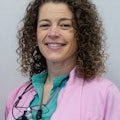 Jessica Atkinson, MEd, BSDH, RDH, FADHA
Jessica Atkinson, MEd, BSDH, RDH, FADHA
Jessica Atkinson, MEd, BSDH, RDH, FADHA, is a dental hygiene educator, clinician, and advocate dedicated to advancing the profession through innovation and education. She combines her clinical expertise and love for education to create engaging, practical learning experiences. Jessica is an Associate Professor and Senior Clinic Coordinator at Utah Tech University, co-host of A Tale of Two Hygienists, and CEO of HYGIENE edgeUCATORS, where she develops continuing education for educators and clinicians. She co-founded Hygiene Edge, a platform with over 100,000 YouTube subscribers. Recognized with the Element Award and Outstanding Service Award, she is a Fellow of the ADHA and past president of UDHA.
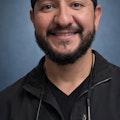 David Torres, CRDH
David Torres, CRDH
David Torres, CRDH, cohost of A Tale of Two Hygienists, is an experienced dental hygienist with over a decade of clinical expertise, specializing in patient education, preventive care, and the integration of modern dental technologies. Known for his passion for teaching, campus recruiting, and coaching, David is dedicated to elevating patient experiences while helping dental professionals improve efficiency, workflow, and long-term success.