Bone health is a dental hygiene conversation, too




Key Highlights
- Bone loss or recession that doesn't seem to match a patient's biofilm and home-care habits can be a reason to look more closely at the patient's overall health history.
- Health history questions can open important conversations. Discussions should move beyond medications and medical diagnoses to questions about hormones, menstrual cycles, sleep, airway concerns, lifestyle, family history, and other potential risk factors.
- CBCT imaging and dental radiologycan add another dimension to the clinical conversation.
- Individualized care matters. Metabolic and bone health are complex, and hygienists should avoid assuming that one recommendation or intervention applies to every patient.
Episode Description
Kristin Evans joins Dave Torres and Jessica Atkinson to talk about a connection dental hygienists see every day but may not always consider from a systemic perspective: bone health. After her own unexpected diagnosis of severe osteoporosis, Kristin began taking a deeper look at the relationship between systemic bone health, hormones, lifestyle, and what clinicians see in the dental chair.
The conversation covers health-history questions, unexplained or horizontal bone loss, recession in patients with excellent home care, menopause and hormones, back pain, CBCT imaging, individualized care, and the importance of recognizing patterns that may warrant a broader conversation or referral. Kristin also shares how her personal experience changed the way she thinks about screening and prevention—and why she believes dental hygienists have an important role in recognizing early warning signs.
A Tale of Two Hygienists Podcast – Episode 558
Meet the guest — and a five-star patient review — 01:33
Dave Torres: Welcome back, listeners, to another episode of A Tale of Two Hygienists podcast. I am Dave, and I'm here with my amazing co-star Jessica. How are you?
Jessica Atkinson: I am doing well. Hello, Dave. I'm excited to be here today. We have a really great guest.
Dave Torres: Yes, tell us about her. And I have also a fun activity that our guests can participate in. I just thought about this today because I was seeing patients and I just—
Jessica Atkinson: We'll keep everybody in suspense. Maybe you can hear her voice and see if you can guess who she is before I introduce her during our little activity here. So what do you got, Dave? What have you been thinking about?
Dave Torres: All right, so check this out. So today I had a patient and she told me, she was like, you know, I looked up your reviews, your Google reviews. And I was like, how interesting is that, practicing in a world where everything is reviews, right? Even in this podcast, we're being reviewed and all that stuff.
And so I wonder, I was like, what if we can review our patients? And so I have my one-star review for a patient and I have my five-star review. But because I'm a positive guy, I want to start with my five stars.
So if I were to review my patient that is five stars, they come in on time. They confirm the appointment before they come in on time. They bring their updated insurance. They go to the restroom before they sit in the dental chair.
Jessica Atkinson: We can only hope. We can only hope.
Dave Torres: Yes. And they are open to anything prevention because they recognize and understand that at the end of their day, they want to make sure that dentistry does not become a pebble in the road, in their road, right?
With that said, I also have my one-star review. You want to hear it?
Jessica Atkinson: I want to hear your one-star review.
The one-star patient: suction control, anyone? — 02:58
Dave Torres: Well, so I wrote this down because I was like, all right, I had to think about this because I actually have a lot of stories of multiple patients. But what about that patient that wouldn't open all the way, kept talking with the hands in their mouth, right?
And kept making out with their suction. Like they just can't keep the suction where you put it and they start going and it just goes all over and it just chokes on them.
And then most importantly, they can't be leaned back all the way down. That's my one-star review. You know who you are.
Jessica Atkinson: I'll tell you, I know that a lot of hygienists will allow their patients to control the suction. I am not one of those hygienists.
I'm like, I will put the suction where I need the suction. Please let me know if I'm uncomfortable. I'm not like, “Don't tell me any, like, you have any say”, but I don't give it to them because otherwise they're crossing my field of vision.
And when I have my loupes on, that's very disorienting. And it's, I will do some aerosol and saliva control for you. I will do that for you. I got you. I got you.
When students don't read the instructions — 04:36
Jessica Atkinson: It got me thinking about reviewing patients, or in my case, my quote-unquote patient population is mostly seen by students. And so I wonder if I reviewed students. But I have really good students. I really do.
I think if I—anything that would give them a plus is if they read the things I send them.
Kristin Evans: I actually heard that recently. That students, like this generation that is kind of coming up, is really struggling with reading information that their instructors are giving them. And I'm like, what?
Jessica Atkinson: Like, that's part of the—I'll do a video. I'll do whatever you need.
Kristin Evans: Or [they’ll ask] “Can you just tell me? I don't want to read it.” It's like we need to learn to read and we need to be professional.
Jessica Atkinson: Reading is essential. Reading is essential. I really love a culture of questions and curiosity and clarification, and repetition is the mother of retention. I enjoy those things, and I enjoy it even more when a student comes to me and says, “This is what I read, and this is what I read, I have a clarifying question.” Instead of—
“Hey, I went to—” I just had an experience this week. We have an assignment that's due. They have to sign that they have read the addendum for the course, and they have to sign that they received all the instruments that they had. And both of these documents are on the addendum.
And I had a few students reach out to me and say, we don't know where this document is. And I go—
“Hmm. Is it because you didn't scroll all the way down, or do I need to make this clearer?” Or usually it's a combination of both, and reading is essential. So let's get some five pluses.
Meet Kristin Evans — 06:36
Jessica Atkinson: And we have today with us a 5-plus! We have Kristin Evans, who has a bachelor's of science and is a registered dental hygienist, but is known as the PHRDH, which has a very lovely alliteration. I really like it.
And she brings more than 30 years of clinical experience and a passion for prevention and education to our profession. She's a graduate of Idaho State University and a national speaker and educator focused on the oral-systemic connection, hormones, bone health, and the impact of pH on oral health.
Through research, education, and her own personal journey, Kristin helps dental professionals recognize early warning signs, connect oral and systemic health, and use practical strategies to improve patient outcomes.
But of all these titles that Kristin carries, one of her favorites is Gram K. So cute. Gram K. Outside of dentistry, her greatest joy is her family, especially being Gram K, being a grandma to five beloved grandchildren. That personal connection to family health and quality of life is part of what fuels Kristin for helping people to protect their health for the long haul.
And before we get into the sciency stuff and the research, I want to know, Kristin, what happened in your own personal journey? Like what happened personally that made the bone health, pH, all of these things, all these connections, specifically important to you?
Kristin's journey into pH and bone health — 08:23
Kristin Evans: I love that. Thanks, Jessica. And thank you guys so much for having me. I'm very excited.
I will tell you that most everything happens for a reason. And everybody, a lot of people know if they follow me, I'm a very big God person. So I just believe that He is part of our life and that things happen.
And many times I think things happen to us so that we can explore and then help others. I believe this journey is not just a journey we take alone, that we actually journey along this path and we can grab others along the path or pick them up or help them.
And so, this happened really in a pretty hard time in my life when my last child was leaving home. She had, in her senior year, some severe cystic acne, was really struggling with just her own hormones and health. And I was trying to find answers.
And I had been leading up to more of a holistic life. I was trying to find more natural things to help her. I didn't want to do what some of the mainstream was telling me to have her do. I didn't feel comfortable. She didn't feel comfortable.
And that got me kind of into this whole-health wellness. And the pH part came before my bone health because, again, I'm on a journey and we know when we're on a journey, as soon as we get up one mountain and then you're like, I'm at the vista, then you go down and all of a sudden you see another mountain.
And so, it's a continual process that we do as we go through life.
And so I had struggled. I was going through menopause. And then my child, my last child, left home, left me with no one in the state but my husband as family. And I really struggled with some mental health and physical health.
And so that's where this whole— I got in contact. I was like, I had severe back pain, by the way. I couldn't do more clinical hygiene. I still do one day a week. I was doing two days. Couldn't do more of that.
I had to really think outside the box, and I was able to connect with a dental company, Arm & Hammer. And I started doing lunch and learns for them and started educating dental offices and found a huge love for not only pH, meaning, you know, baking soda, getting down that pH to it, or getting up the pH to a more basic level to support wellness.
I just started deeper diving, like, what does all this mean? And that's where I became the PHRDH. I started speaking more nationally because some of the offices were like, you have so much to share beyond what you're sharing. Could you please do this more? And so that's where it kind of began.
Again, that was one hill. The next hill came a few years later after I had my national platform. And that is my bone health journey. And that is a very passionate journey now that I'm on.
“We are the bone specialists” — 11:37
Kristin Evans: This journey is…I was diagnosed four, almost four years ago with—I guess it was actually three years ago. Three to four years ago, I was diagnosed with severe osteoporosis.
Jessica Atkinson: It came as a shock?
Kristin Evans: A complete shock. Like seriously, if you would have put a list of all of the inflammatory, any like diseases in front of me, osteoporosis would have been at the very, very bottom. For one thing, we are just not educated in dentistry about osteoporosis, and we are the bone specialists.
Jessica Atkinson: I'm like, we look at bone every day.
Kristin Evans: We look at bone. I'm a hygienist. I've been taught my whole life by my dentist. He's always said—I've worked for my dentist for 30—it just turned 33 years.
Jessica Atkinson: Congrats, that's awesome.
Kristin Evans: I know, a long time in the same office. He's always said, “I'm the tooth specialist.” We really work on the teeth. And even though we do too, but—
He says, “You guys are the bone and tissue specialist. Like we really need you for that because you can have a Hollywood beautiful smile, but have nothing to hold them in.”
And so I've prided myself in being the bone specialist. But I'm going to tell you right now, we don't understand bone. And as I've been diving now, for the last three years, into systemic bone health, I have absolutely connected and have a passion for that we need to help support systemic bone. Because if we don't have systemic bone health, we don't have bone health in our job. We don't have oral bone health.
No matter what you do, no matter how many SRPs, no matter how much brushing and flossing, water picking, all of the things we need to be doing, no matter how much you do, if you don't have systemic bone health, you cannot support it. And so my passion is really finding the root cause and individualizing patient care.
And so it's trying to find the patient and then what is the root cause? What is really causing this? Because we've been, I feel, very narrowed in thinking it's always bacteria, but it may not be bacteria. It actually may be lifestyle. It may be airway. It may be hormone imbalance, which I'm passionate about.
And so we have to take that patient and really start to break down and find it. And sometimes it takes time.
I'm a very big advocate on salivary testing. And I'm a very big advocate in elevating hygienists to be primary care screeners for all diseases in dentistry. And I believe we have the capacity to do this. And I think salivary testing is going to take us into a new level of that.
And that is going to be able to position us to know what is the root cause, what are we looking at, what therapeutics are working, and then being able to analyze much more than just what we think of salivary testing, which is—finding bacteria, the red, orange, yellow, green. It's going to go beyond that. It's going to go into hormone testing. It's going to go into proteins and enzymes. It's going to go into pH. It's going to go into doing blood work and glucose, which is insulin so important.
So I have so much because I just believe that we're on the tip of an iceberg, we have no idea what's underneath it. And we are going to put so much health and healing and so much better health outcomes into the world as dental hygienists elevate themselves.
Read further: Recognizing biological signals that may point beyond the obvious clinical findings.
What should make a hygienist stop and ask, “What’s going on here?” — 15:22
Jessica Atkinson: Oh, Kristin, I love that. And as I sit with you and Dave, we're all here together on the tip of this iceberg.
Let's imagine having a patient with us on the tip of this iceberg. Maybe we don't have salivary testing yet in our office—yeah, everybody contact Kristin—yet. What are some particular periodontal findings or patterns of bone loss that should make us stop and ask what's going on here?
Dave Torres: Yeah, give us the red flags.
Kristin Evans: Yes. So some of the red flags, they're not just our oral signs.
Start with the health history — 15:57
Kristin Evans: So we also have to have a good health history. I'm very big on starting with a health history.
You cannot have the window open to your patient without a health history that is detailed. And I'm not talking about the one that was done five years ago. I'm talking about the questions asked today in your chair.
That's including blood pressure, checking that with your patient, asking them if they have dry mouth, asking them what medications they're currently taking, asking them if they're having airway issues, sleeping, snoring, anything like that.
And then also personally, I believe that we need to elevate that into hormones. And that's definitely blood sugar with insulin, but that's also our sex hormones. So for a woman, are you having a regular menstrual cycle? People think that is absolutely insane for me to ask being a dental hygienist.
Jessica Atkinson: Anybody sees a cyclical, like when you have a patient that's come in, has been on prophylaxis, and then sometimes their probe depths or bleeding index is different and sometimes not, but nothing's changed in their habits. And I'm like, hmmm…Yes.
Kristin Evans: And if we know that we've been taught in hygiene school about pregnancy gingivitis, how do we not understand that hormones can control so much? And so asking about a cycle, are they cycling or how long have they not been? And then if they're on HRT, which is really important too.
So those are important questions. And again, those are super deep. We don't probably have time to talk about all of them today. So absolutely jump on a call with me, talk more with me. I would love to have a Bone and Balance course that, a program I can help people with. But just understanding, we have to find the root cause.
Read further: Explore how hormonal changes during midlife can affect oral health.
Look beyond the mouth: lifestyle, genetics and medications — 17:53
Kristin Evans: Also smoking, alcohol, if anybody's had anybody in their family that's had osteoporosis previously.
And then you really have to look at the age and the ethnicity. So white, thin white women. Sorry. And I'm going to tell you that some medications we have right now are making people all look like super, super thin white women. And so maybe not white women, but very, very thin.
And so you have to look at their muscle too, because that impacts, if they don't have a lot of muscle, they're not going to have a lot of bone.
And so there's just, there's red flags that we can look at. Genetics is definitely key. Corticosteroid use, PPIs, SSIs, those can all lead to that. And again, sleep, if they're in a high cortisol, they're not sleeping well, those are things that drive it.
But in the mouth, when we start to see, I would say it's more horizontal bone loss with no bleeding on probing. So you have these A-plus patients come in and you're like—
Jessica Atkinson: Wow, five-star patients.
Kristin Evans: Five-star, they really are your five-star patients. They're amazing. They're on the ball. They are doing everything you ask and they keep coming in and you're getting more and more recession. And you're like, are you grinding? Is there airway?
Now, you have to look at those. Again, we have to see the root cause. But again, we have to also take into consideration this patient may have a systemic bone health issue to where they cannot support the bone, especially if there's any inflammation, especially if there's any movement.
Again, if the bone is not healthy and you get this movement in it regularly, that bone is not going to be able to stay as tight and as healthy as we think it should.
Kristin’s own osteoporosis diagnosis — 19:55
Kristin Evans: And so I have been able to diagnose many of my patients as soon as I was diagnosed, because I have 4 molars and Class I furcation, and I'm a dental hygienist with no bleeding and probing.
Like we couldn't figure out why. It was like, is it that I did 3 rounds of ortho to try to get my teeth straight? And I'm like, I'm done with that.
Like, was it something? Oh yeah, it was something. It was something that would have blown me out and blew my mind.
And it was because of my brother, who's a primary care physician, that asked me to get a DEXA scan. And by the way—
Jessica Atkinson: I'm just so curious, like what was happening in your life for your brother to say, let's get a DEXA scan?
Dave Torres: That doesn't really happen. My brother hasn't told me to get one.
Kristin Evans: Okay, well, I will tell you: one in two women over 50 fracture.
One in two. That's the stats. One in two women over 50 will fracture because of low bone density.
One in three women have low bone density. One in four men. But let me tell you, like 86% of men are not, they're underdiagnosed. Because why? Because the screening right now for women is still at 65 years old. Wrong, bad. We don't even have a baseline, which is my passion, is getting the baseline.
Why early screening matters — 21:17
Kristin Evans: But if we don't have a baseline and we don't, we wait until they're 65, which I had someone this week or last week reach out to me, 2 fractures she's had and she's 60 years old. She's active. An active 60-year-old, 2 fractures and hadn't had a bone scan.
And she got one and she has osteoporosis. So she contacted me.
So what we have to know that men, it's, I think, David, I think men are like 75 or 80 years old. If you make it that long, they'll finally test you. But low testosterone is key to men. Or they don't have enough muscle. So men that are very thin, they're not working out a lot, they have sleep issues, they have obstructive sleep apnea, cortisol levels high, they're not getting that testosterone reset.
That is a key, a big ding, ding, ding red flag that we need to be looking for that.
But for me in my life, I was trying to eat a super clean diet. I had kind of gone a little more vegan. I wasn't getting enough protein. I was thin. I had started to lose weight and I hadn't ever been really—from, I had been the same weight for most of my life.
And all of a sudden, I started losing weight and I looked really—I did, my kids even commented, "Mom, you look really thin." And I'm like, I'm eating and I don't know what's wrong. I actually thought I had cancer.
Jessica Atkinson: Which is terrifying.
Kristin Evans: That's a terrifying thought.
From a shocking diagnosis to a new focus on prevention — 22:50
Kristin Evans: And I was actually sort of thrilled that I had osteoporosis, which is so odd, because at least I've been able to actively work on it, even though it scared me to death too, to think about that I could have a fracture that could limit my life forever, if not end my life.
And I was severe osteoporosis at 54. Now, if I would have waited till 65 years old, like that would have been horrible. I would have fractured.
And again, we are not screening this.
I have a slide on my presentation I gave at Under One Roof that talks about the urgency behind osteoporosis right now. And the aspect from the medical community, and the medical community says, this is going to be a huge problem.
There is not enough education. There is not enough support. And they already know it's going to drive health care costs. But we can do it in dentistry. CBCT scans can actually see with a dental radiologist—and I'm working on that. I wish University of Utah, I could do research, everybody pray for me today that University of Utah will be able to get my research project going.
Jessica Atkinson: But we have, that's a, that's—you know, we all need more research.
Kristin Evans: And if they won't, if they even isn't up there, anyone who's listening, anyone who's listening.
What CBCT can show — 24:20
Kristin Evans: Yes, we need clinical research, but a CBCT scan read by a dental radiologist, that is key. That is the most amazing, beautiful X-ray that we don't take enough, like we don't, we don't use it to that ability that it could.
That X-ray can see so many amazing things in somebody that could be lifesaving, like carotid artery.
Jessica Atkinson: I just had one taken.
Kristin Evans: You did?
Jessica Atkinson: I just had one taken. I did because I went scuba diving and I had—I know I had a root canal done about a year ago. And I went and it hasn't bothered me, but then I went scuba diving and I felt a lot of pressure.
So I went to get it screened to see what was going on. And gratefully, there's not a recurrence of, there's not a recurrent abscess. So gratefully, gratefully. But we had to take a CBCT.
And the reason why we had to take a CBCT instead of a PA is because I've had a Le Fort I. So we're just thinking that it just—I had probably some congestion and it just put extra pressure on that area that a lot of things are really close together. But now I'm curious what a dental radiologist would say about my CBCT.
Kristin Evans: So one thing we’ve been using in dentistry forever, a 2D. The 2D X-ray is so flat, we can't see. The CBCT scan is this 3D beautiful— slices thinner than any other cone beam or CT scan we have out there.
Because why? Because they created it in dentistry because the teeth were so small that they had to take the layer so thin. Ear, nose, and throat doctors are starting to buy our CBCTs in dentistry because they can see all the little ear bones and the canals and all the sinuses and they're understanding the critical importance that it is.
So have a dental radiologist read every single one of them because you may be liable for it too. And inside there, I know from the dental radiologist that I have talked to from University of Utah, he puts in his report, this person may need to see their doctor for low bone density, possible osteoporosis.
He says, “I don't know what they do with it. I give them the report. They may or may not read it. The dentist may or may not do anything with it.”
And I'm going to tell you right now, you need to do something with it because we will have women and men who are losing implants that aren't healing well, that are losing that full perio surgery that may never ever heal from that.
Yeah, we need to just, anything that involves this jaw and the teeth and this jaw, we need to make sure we're healthy. So, putting an implant in a woman or a man that you don't know the quality of the bone is really not very kind and I believe it's like not ethical.
Three things hygienists can start looking for — 27:41
Dave Torres: But that's a really good point. Like if you could give dental hygienists out there like 3 things that you could start doing tomorrow to better recognize all these relationships between hormones, bone health and oral health, what would that be?
Because this is, you know, you have opened up my eyes a lot more. I do get those patients that come in and they're telling me like, yeah, Dave, like I'm in my 40s and I'm taking testosterone shots, right? Like these things are, we're seeing it out there.
So what are some of those three things that we can kind of help navigate for ourselves that we can do to help us recognize with these, you know, these relationships all together?
Kristin Evans: One of the things that I always preface is that this is such a complicated, individualized disease.
Metabolic health is super individualized. Osteoporosis is a metabolic bone disease. And when you're talking about metabolic, there are so many aspects of it.
So, I always caution against giving a lot of like, hey, you should do this, you should do that, you should do that. Because the problem is somebody may already be osteoporotic, and then it could worsen it.
Like if we say resistance training is amazing, you have to build this in order to do it.
Jessica Atkinson: You're pretty good-looking guns there, Kristin.
Kristin Evans: Yes, for 57. Yeah.
Jessica Atkinson: Way to go.
Kristin Evans: So I work out three times a week, but guess what? I do it with a trainer. It's online and anybody can message me.
But I do it with a trainer online that specifically talks about you cannot do this with osteoporosis. “You need to do this. If you're feeling too much, you shouldn't do that.” And she has a 30-day osteoporosis-friendly program.
And by the way, back pain is a huge key to if you're osteoporotic is. And by the way, that is a whole nother story about me going to PT and going to anybody to help my back that was in so much pain. And it was that I have severe osteoporosis in my back.
Probably also from being like, this is a dental hygienist for over 30 years.
Jessica Atkinson: I mean, but that combination, that combination and thinking that it is because of your profession when there is something systemically going on.
Kristin Evans: Yes. Yeah. And you could live your whole life that way and not know that it's something different.
And my thing was I started going to PTs and chiropractors 8 years prior to me being diagnosed. If they would have, and I've been speaking to PTs and trying to get my voice out to them, is if they would have screened me when I came in with severe back pain and I was a white thin woman, I would have had eight years to prevent what I had.
And I wouldn't have had that chronic, horrible back pain at work. I had to limit my work because of it.
What Kristin changed in her own health — 30:37
Kristin Evans: And now I feel amazing. My back feels so much better.
I'm not saying I'm totally free from that because I still have osteoporosis.
I built back about 10% of my bone. So I'm less osteoporotic. Yeah, so I'm working on it. And my back has never felt better.
But we do resistance training. I will tell you: hormone balancing hormones is essential. Getting enough protein, fiber, healthy fats, keeping that insulin at a really—we want to be insulin sensitive, not resistant.
And I love talking about that with patients and with people. Again, my Bone and Balance program, anybody can call and talk to me about that. But I have a really hard time. I can't give absolute specifics because we don't know.
Jessica Atkinson: No, you can't do that. Everybody has a unique presentation.
And that's why what I love when you started our conversation, you said, I'm a huge proponent of individual care. So patient-centered care.
Taking the conversation back to the hygiene chair — 31:43
Jessica Atkinson: And what I'm going to take away today from you, Kristin, is maybe have a dental radiologist take a look at my CBCT scan because I'm curious now.
And I think I'm going to go buy myself an avocado.
Kristin Evans: You need some protein too, Jessica.
Jessica Atkinson: I'll eat an avocado. I've got some almonds right next to me. So I eat.
Kristin Evans: More than almonds. You can call me.
Jessica Atkinson: I'll call you.
I really think that making a few changes and being aware of the next time I have a patient in my chair that is complaining about leaning back.
It might be one of Dave's one-star patients here because their back hurts so bad and maybe they are fitting a demographic that now I have a few more questions to ask and ask them—
Tell me about that back pain. How long have you been experiencing that? When was the last time you had a DEXA scan?
And starting those conversations before that 60-year mark. Thank you, Kristin.
Why early screening is Kristin’s goal — 32:51
Kristin Evans: Because in all honesty, you guys, I want—my goal is early screening.
I want hormones around 22 years old. I want to know what your baseline hormone is. Because if you don't know until you start having issues when you're in your 40s, then you don't know. You don't even know what you were when you were at your most prime. And that's usually around 20 to 20—before 25 is usually your most prime for hormones.
As long as you're healthy. Again, it's individual.
But we have to have that. So this is not an old woman's disease. We have 15-year-olds with osteoporosis. We have elite athletes with osteoporosis. We have people with PCOS that has osteoporosis.
So this is not—we have GLP-1 med patients. I have a whole course on GLP-1s and bone health. And so GLP-1s are something we have to be critically educating our patients about. And the PHRDH comes in on that too with Ozempic mouth.
So we have to screen early for hormones and then we have to screen early for the bone health because peak is 30 years old. And if you don't know what your peak is and that you're deficient and you've got to build it as high as possible by the time you're 30, because after 30, you're going to just be coming down. And it just depends on how your lifestyle and everything, how fast you come down. And that's what we want to prevent.
And that's why I'm here. I'm here to educate, to change the world with early screening, to use CBCT scans to help dentistry, and to just get the word out to get people to have a baseline, whether their insurance pays for it or not. And I'm going to tell you, it may not, but I can try to help you, support you in that.
And we're going to change the world, though.
Dave Torres: Let's change the world. One hygiene appointment at a time.
Jessica Atkinson: One hygiene appointment at a time. Thank you, Kristin.
Dave Torres: Thank you, Kristin.
Kristin Evans: Oh yeah, thank you.
About the Author
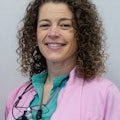 Jessica Atkinson, MEd, BSDH, RDH, FADHA
Jessica Atkinson, MEd, BSDH, RDH, FADHA
Jessica Atkinson, MEd, BSDH, RDH, FADHA, is a dental hygiene educator, clinician, and advocate dedicated to advancing the profession through innovation and education. She combines her clinical expertise and love for education to create engaging, practical learning experiences. Jessica is an Associate Professor and Senior Clinic Coordinator at Utah Tech University, co-host of A Tale of Two Hygienists, and CEO of HYGIENE edgeUCATORS, where she develops continuing education for educators and clinicians. She co-founded Hygiene Edge, a platform with over 100,000 YouTube subscribers. Recognized with the Element Award and Outstanding Service Award, she is a Fellow of the ADHA and past president of UDHA.
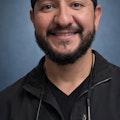 David Torres, CRDH
David Torres, CRDH
David Torres, CRDH, cohost of A Tale of Two Hygienists, is an experienced dental hygienist with over a decade of clinical expertise, specializing in patient education, preventive care, and the integration of modern dental technologies. Known for his passion for teaching, campus recruiting, and coaching, David is dedicated to elevating patient experiences while helping dental professionals improve efficiency, workflow, and long-term success.