Beyond the interview: Exploring your options when a dental office wants to evaluate your skills
Key Highlights
- Working interviews can reveal clinical skills and communication, but clarify compensation before providing patient care or performing productive work.
- Job shadowing offers a view of office culture and daily routines, though it may not demonstrate your clinical competency.
- Skills demonstrations and case-based questions can help employers assess technique and clinical reasoning in different ways.
- Meet the team, ask about expectations and patient care, and observe how staff interact.
- Use the second interview to decide whether the practice offers the support and environment you need to thrive.

The initial interview went well, and now the dental office wants to take the next step. Congratulations! You may be invited back for a second round of the hiring process. After an initial interview, an office may want to spend additional time evaluating your clinical skills, observing how you approach certain patient scenarios, and determining whether you would be a good fit for the practice. This is a normal part of the hiring process, especially in dentistry, where clinical competency, communication, and patient care are essential. However, remember the interview process goes both ways! You are interviewing the office just as much as the office is interviewing you. This is your opportunity to observe the team, understand the office culture, ask questions, and decide whether this is somewhere you can see yourself working.
What to expect from a job interview follow-up
In dentistry, the two most common approaches to a second-round evaluation are the working interview and job shadowing. However, there are several other options worth considering.
Working interviews
A working interview allows the office to observe you performing actual job responsibilities. For a dental hygienist, this might include providing patient care, completing periodontal assessments, demonstrating instrumentation, educating patients, and working alongside the dental team.
Advantages of a working interview
- Allows the employer to evaluate your actual clinical skills
- Provides an opportunity to demonstrate patient communication and time management
- Gives you a realistic look at the daily responsibilities of the position
- Allows both parties to evaluate whether the working relationship is a good fit
Disadvantages of a working interview
- Can be stressful, especially when working in an unfamiliar environment
- May not provide access to the same instruments, technology, or systems you are accustomed to using
- Evaluates speed and efficiency without considering unfamiliarity with the office
- Important wage and liability considerations
An important note about payment: Working interviews should not be viewed as free labor. Under the federal Fair Labor Standards Act (FLSA), employers generally must compensate employees for time spent performing work that they are required or permitted to perform. The fact that an employer calls something a "working interview" does not automatically make it exempt from wage requirements. When a candidate is providing actual patient care or performing productive work that benefits the practice, compensation is an important legal consideration. The specific circumstances determine whether the time is compensable, so a brief, supervised skills demonstration may be treated differently from performing regular job duties.
When I first graduated more than 15 years ago, it wasn't uncommon to see dental offices asking candidates to complete working interviews without compensation. Unfortunately, concerns about this practice still exist. In one reported situation in my home state, a dental office was alleged to have repeatedly brought dental hygienists in for working interviews over months, without hiring them or paying them for their work. This is exactly why candidates need to understand their rights and why employers need to structure their hiring practices appropriately. If you are asked to provide patient care or perform productive work, clarify compensation before agreeing to the working interview.
Job shadowing
Another common option is shadowing, which allows you to observe another dental hygienist or team member throughout part of their workday. Rather than performing clinical duties, you observe how the office operates, usually for just a few hours.
Advantages of shadowing
- Allows you to see the office culture and team dynamics
- Provides insight into patient flow, scheduling, and daily expectations
- Helps you determine whether the practice aligns with your professional values
- Generally offers a lower pressure experience than a working interview
Disadvantages of shadowing
- Does not demonstrate your actual clinical competency
- May only show you a small portion of the office's daily operations
- Could be influenced by the fact that the team knows they are being observed
Skill demonstration
Other industries use several approaches beyond working interviews and job shadowing that could work well in dental practices, too. An employer may ask you to demonstrate specific skills using a typodont, instruments, or other educational materials. This might include instrumentation, fulcrum placement, ultrasonic technique, or ergonomics. This allows the employer to evaluate your clinical competency in a controlled environment without involving patients. However, it doesn't necessarily demonstrate how you perform in a real clinical setting.
Selling your skills in the second interview
The employer may present a clinical scenario and ask how you would approach the situation. For example, how would you manage a patient presenting with generalized 5–6 mm periodontal pockets, bleeding on probing, and heavy subgingival calculus? This is a great way to evaluate clinical reasoning and critical thinking, although explaining what you would do isn't always the same as demonstrating it.
You may also have an opportunity to meet with other members of the dental team, including hygienists, assistants, and front office staff. This allows the employer to evaluate your communication and teamwork while giving you a chance to get a feel for the office culture and the people you may work alongside.
Another option is to share your continuing education, certifications, professional involvement, or other examples of your experience. This is an opportunity to showcase your commitment to lifelong learning and professional growth, although it may not demonstrate your current hands-on clinical skills.
There isn't one perfect way to be evaluated as a dental hygiene candidate. A combination of clinical assessments, case-based questions, and observation may provide a better picture than relying on a working interview alone.
Don't forget that the evaluation goes both ways
The second interview is your opportunity to learn about the practice, too. Ask about daily expectations, appointment scheduling, periodontal therapy, continuing education, and team culture. Pay attention to how the team interacts with one another and how patients are treated. You want to find an office where you feel supported, respected, and able to provide quality patient care.
Don't look at a second-round interview as simply jumping through another hoop to get hired. Look at it as an opportunity to decide whether this is a practice where you can be successful, supported, and happy. You aren't just looking for a paycheck; you're choosing where you'll spend a significant portion of your life.
About the Author
 Shelley Brown, MEd, BSDH, RDH, FADHA
Shelley is a dental educator, speaker, content creator, and mobile clinician dedicated to advancing accessible and innovative dentistry. As co-owner of HYGIENE edgeUCATORS, she empowers dental educators through professional development. Since 2009, she has taught at the Utah College of Dental Hygiene and founded Homebound Smiles, a mobile dental practice serving underserved patients. She received the 2026 Sunstar World Dental Hygienist award for her work in public health. You can find her on social media as Shelley_The_Hygienist and at www.shelley.dental.
Related
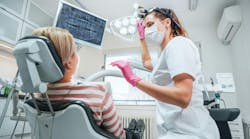 Dental hygienists need to come prepared for a working interview.
 Thinking