From clinician to educator: Preparing dental hygienists to step into their new role with confidence
Key Highlights
- Transitioning from clinical practice to dental hygiene education requires developing teaching, evaluation, and communication skills beyond clinical expertise.
- Objective clinical assessments, faculty calibration, and specific, actionable feedback help create consistent expectations and support student growth.
- Mentoring, explaining clinical reasoning, and embracing lifelong learning can help experienced hygienists prepare for rewarding careers in education.
Editor’s note: This is part one of a two-part series.
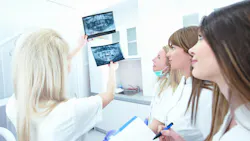
You have been doing this for years. You know when instrumentation just does not look right. But then you step into your new role as an educator and suddenly, something changes. Your job is no longer to simply show students how to perform a task. Instead, you must determine whether their approach meets the established level of competence. If it does not, you must explain how to make the necessary changes, while providing feedback in an honest, compassionate, and meaningful manner.
For seasoned clinicians, years in the operatory create a solid foundation for the transition into dental hygiene education. However, knowing how to perform a skill and knowing how to effectively teach someone else how to perform that skill are two very different concepts. This transition deserves intentional preparation centered around the willingness to develop an entirely new set of skills, just as important as clinical expertise.1,2
Learning to teach and evaluate beyond your own experience
Over time, most dental hygienists develop their own personal routines, techniques, and clinical preferences. These individual habits can certainly enrich clinical instruction; however, educators must be careful not to rely too heavily on these habits when evaluating students. A key part of the faculty's role is to explain how to instrument correctly and then to objectively observe and evaluate whether students can demonstrate clinical skills required to meet established competencies.
Consider this: A student approaches instrumentation with their 11/12 explorer differently than you would in your own clinical practice. Is the technique incorrect, or is it simply different from your preferred approach?
New educators must learn to distinguish between gaps in clinical competence and variations in technique. This shift requires more than simply using the evaluation rubric provided in a clinical setting. Educators must truly understand the criteria, recognize what competency looks like, and apply expectations objectively.
In competency-based education, differences in how faculty interpret evaluation criteria can lead to inconsistent student evaluations and reduced inter-rater reliability. This is where faculty calibration within dental hygiene education comes into play. It is not about creating faculty who teach identical to one another. Instead, calibration helps to establish consistent program expectations and ensures students are being evaluated using established criteria rather than individual preferences or bias.3
Although clinical experience is valuable, effective educators must learn how to translate that experience into consistent, evidence-based evaluations. This is accomplished by maintaining high clinical standards and expectations while ensuring students develop the knowledge, clinical skills, and critical thinking necessary to provide safe, effective care that meets the standard of care independently.
The soft skills of being an educator
Anyone who has completed dental hygiene school knows that it is not an easy feat. Setbacks are a natural part of the learning process, and some of the most valuable teaching moments happen when a student can learn from their mistakes. Students may struggle, repeat errors, and even fall short of expectations at times, but addressing these concerns is part of an educator’s professional responsibility. Knowing how to approach these conversations is a skill that takes intentional practice. For clinicians transitioning into educator roles, these conversations may feel uncomfortable, but avoiding them will only hinder students’ personal and professional growth.
Having these conversations requires a careful balance of honesty, support, and accountability. Not every conversation will be comfortable, and students may not always agree with the feedback they receive. The focus, however, should remain on student development rather than personal criticism. This means communicating expectations clearly, identifying specific areas of concern, explaining why it matters, and working with the student to help them understand what they can do to improve. Accountability does not need to require an authoritative or intimidating approach. Educators can be supportive and approachable while maintaining high expectations.
Effective feedback should be specific, objective, timely, and actionable. For example, instead of telling a student “You need to improve your technique with the posterior sickle,” educators must explain what was observed, why it is important, and help them self-assess to recognize what they can do differently. It is imperative for feedback in the clinical setting to be individualized.4 In addition, just because feedback was provided does not always mean it was received. Students process information uniquely, so educators must embody patience as students ask questions and implement suggestions, while providing clarity and demonstration as needed.5
Equally important for new educators is resisting the temptation to provide every answer. Despite the wealth of knowledge that experienced clinicians possess, asking students to explain their clinical reasoning and reflect on their own performance helps encourage critical thinking and allows students to take ownership of their learning. As educators, our goal is not to prove to students that we have all the answers; it is to develop competent dental hygienists who trust their own clinical decision-making abilities.
More than a career change: The rewards of dental hygiene education
While the transition into education can come with challenges, it also offers opportunities that extend beyond a new title. Educators have the opportunity to mentor future professionals and positively influence the next generation of dental hygienists. Having a front-row seat to the growth that happens along the way is an incredibly rewarding part of this role. Whether it is the moment an instrument technique finally clicks or a lecture concept comes to life during patient care, these seemingly small moments are just a sliver of what makes a role in education so worthwhile.
Academic careers may also offer benefits including insurance, retirement, paid time off, and potentially more predictable schedules. Due to the nature of dental hygiene program schedules, some educators also enjoy reduced workloads in the summer months and holiday breaks. Roles in education may also provide opportunities for leadership, professional development, and long-term career growth. For clinicians who are accustomed to full-time patient care, pursuing a teaching position could also offer fewer physical demands.1
Another rewarding aspect of dental hygiene education is the opportunity to work alongside other dental hygienists who share a passion for the profession and its future. Collaborating with colleagues brings together a variety of clinical experiences, perspectives, and teaching philosophies to guide professional growth. There is something truly fulfilling about working alongside individuals who understand the profession, share a commitment to its advancement, and inspire you to continue growing as both a clinician and an educator. When considering transitioning into education, it is important for clinicians to look beyond the salary amount and consider the additional benefits, quality of life, and overall career satisfaction.
Preparing for the transition
There are several practical ways dental hygienists can begin developing the skills needed to help them be effective educators before accepting a faculty position.
No. 1: Start teaching before you become an educator
Mentor a new colleague, lead staff training, reflect on and strengthen your patient education skills. Practice explaining complex concepts, communicating clear expectations, and adapting your approach to different learning needs. Learning to be patient and allowing others the time, space, and support needed to work through challenges instead of jumping in and taking over are valuable skills for future educators.
No. 2: Practice thinking and communicating like an educator
Stop going through the motions and start explaining the “why.” Experienced clinicians may perform procedures almost automatically. Teaching requires you to articulate the rationale behind your actions. Modeling confidence in your own clinical judgment is an important step toward helping others develop their own.
No. 3: Be willing to be uncomfortable
Yes, you read that correctly. Entering the world of education means becoming a learner once again. There will be challenges, and you may not always have the answer right away. Embrace those moments and remain committed to learning. Developing a growth mindset is a great place to start!
Becoming an educator is a professional learning process
Clinical expertise provides the foundation for dental hygiene education, but effective teaching requires intentional practice, reflection, and feedback. For clinicians transitioning into education, the opportunity to influence the profession expands beyond individual patient care to shaping the next wave of the dental hygiene workforce. Becoming an educator is not simply a career change; it is a commitment to lifelong learning and advancing the profession.
Despite the individual preparation, creating effective educators is a shared responsibility. Dental hygiene programs must provide the guidance, resources, and support for faculty success.6 Structured onboarding and ongoing calibration provide faculty with support and guidance while promoting consistency in clinical evaluation.
In part two of this series, “Beyond orientation: Building consistency through clinical faculty onboarding and calibration,” we will explore how dental hygiene programs move beyond informal orientation methods to create sustainable approaches for faculty development.
Additional reading:
- Demystifying successful leadership in dental hygiene education
- How dental hygiene educators can build a healthier academic culture
Editor’s note: This article first appeared in RDH eVillage newsletter, a publication of the Endeavor Business Media Dental Group. Read more articles and subscribe.
References
- Wingrove DP. Experiences of junior dental faculty transitioning from clinician to educator. J Dent Educ. 2024;88(10):1347-1357. doi:10.1002/jdd.13587
- Fehrenbacher JE. Dental professionals as clinical educators: a transcendental inquiry into training needs. J Dent Educ. 2025;89(7):1084-1096. doi:10.1002/jdd.13782
- Kornegay EC, Harmon JB, Brame JL. Transition to a competency-informed dental hygiene clinical evaluation system. J Dent Hyg. 2021;95(5):56-63.
- Torpey C, Bono L, Gurenlian J. Effective clinical dental hygiene educators: a qualitative study of perspectives of students and educators. J Dent Educ. 2026;90(5):616-627. doi:10.1002/jdd.70028
- Mohd Noor MN, Fatima S, Cockburn JG, et al. Systematic review of feedback literacy instruments for health professions students. Heliyon. 2024;10(10):e31070. doi:10.1016/j.heliyon.2024.e31070
- Mays KA, Burns LE, Branch-Mays G, Quock R. Junior faculty perspectives on the academic environment: a call for development and onboarding. J Dent Educ. 2022;86(7):804-813. doi:10.1002/jdd.12903
About the Author
 Danni Linton, MSDH, RDH, CDA
Danni Linton, MSDH, RDH, CDA, is a tenured associate professor at Delta College in Michigan and a graduate of the University of New Mexico's Master of Science in Dental Hygiene program. She also coordinates the Helen M. Nickless Volunteer Dental Clinic, improving community access to care while providing students with valuable clinical experiences. As founder of DH with Danni Education & Consulting, she supports dental hygiene educators, strengthens clinical instruction, and empowers students to become confident clinicians. Contact her at [email protected].
Related
 dental_hygiene_instructor